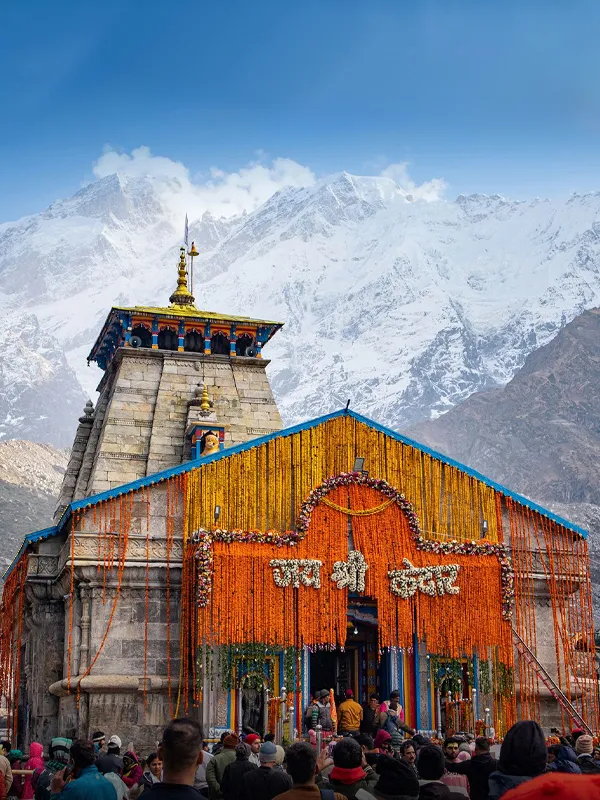
Best Time to Visit Kedarnath & Weather Guide

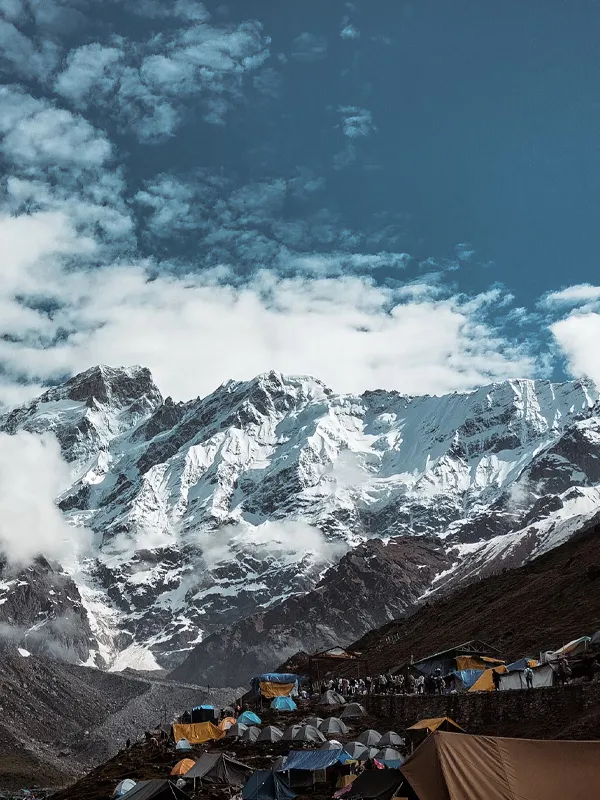
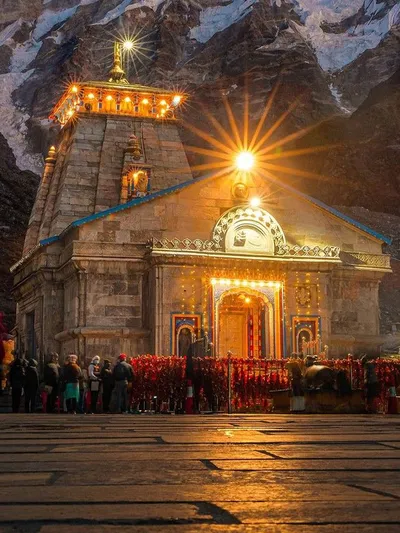
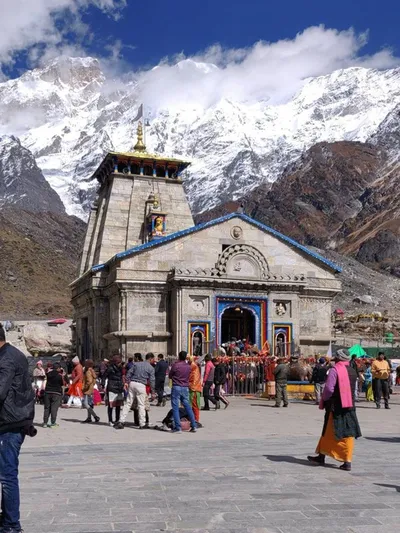
Kedarnath temple sits at 3,583 metres (11,755 ft) in the Rudraprayag district — one of the 12 Jyotirlingas of Lord Shiva and the highest of the four Char Dhams. The temple is open for around six months a year, from late April or early May until October–November. Outside this window, the entire region is under snow and inaccessible.
Kedarnath weather changes faster than most pilgrims expect. A clear morning can turn into a cold, wet afternoon within a couple of hours. Knowing what each month actually looks like — temperature, road conditions, crowd levels, and travel distance — is the only way to plan a Kedarnath trip that doesn't get disrupted.
Month-Wise Temperature Table
| Month | Day Temp (Max) | Night Temp (Min) | Weather Highlight | Temple / Trek Status |
|---|---|---|---|---|
| January | -1°C to -3°C | -17°C to -20°C | Heavy snowfall. Region buried. | Closed — inaccessible |
| February | -2°C to -4°C | -15°C to -20°C | Snowfall continues. | Closed — inaccessible |
| March | 2°C to 5°C | -8°C to -12°C | Snow clearing starts. | Closed — prep begins |
| April | 6°C to 10°C | -2°C to -5°C | Snow receding. Opening preparations. | Opens late April (Akshaya Tritiya) |
| May | 10°C to 15°C | 0°C to 4°C | Clear weather. Best pilgrimage month. | Open — peak season begins |
| June | 14°C to 17°C | 4°C to 7°C | Warm days, cool nights. | Open — warmest month |
| July | 15°C to 17°C | 7°C to 9°C | Monsoon active. Rain and clouds. | Open — road disruptions likely |
| August | 13°C to 16°C | 7°C to 9°C | Heavy rainfall. Landslide risk. | Open — risky road access |
| September | 12°C to 14°C | 3°C to 6°C | Monsoon recedes. Weather improving. | Open — improves late Sept |
| October | 8°C to 12°C | 0°C to 3°C | Clear post-monsoon. Good darshan. | Open — closes around Bhai Dooj (Oct/Nov) |
| November | 2°C to 5°C | -5°C to -10°C | Snowfall begins. Temple closes. | Closes on Bhai Dooj — deity to Ukhimath |
| December | -2°C to -5°C | -15°C to -20°C | Deep winter. Heavy snow. | Closed — no access |
Note: these are typical seasonal ranges built from historical patterns. Mountain weather can shift within hours, so always check a live forecast 2–3 days before you travel — see the FAQ on checking real-time Kedarnath weather below.
Season Summary Table
| Season | Period | Highlights | Verdict |
|---|---|---|---|
| Summer / Opening Season | May – June | Peak pilgrimage season. Temple open. Clear weather. Average temperature: 10–17°C days, 0–7°C nights. | Best time to visit |
| Monsoon | July – September | Landslide risk on Gaurikund road. Temple stays open but access disrupted. Fewer pilgrims. | Caution — flexible itinerary needed |
| Post-Monsoon / Autumn | October – early November | Clear skies, excellent visibility, light crowd. 8–12°C days. Temple closes around Bhai Dooj. | Very good — underrated window |
| Winter | Mid-November – April | Heavy snowfall. Temple closed. Deity moved to Ukhimath. Region inaccessible. | Not possible — temple closed |
Best Month to Go for Kedarnath Yatra
The most preferable time to do your Kedarnath Yatra is between May and June. Daytime temperatures in May range from 10 to 15°C. June is slightly warmer — 14 to 17°C in the day — and is considered the most comfortable month for the trek.
During the monsoon season (July to September), it's advisable to avoid the trip if possible, because the roads can get blocked due to heavy rain and landslides.
The temple closes on Bhai Dooj — two days after Diwali, in October or November — not in October itself. If you're planning a late-season visit, confirm the exact 2026 closing date at bktc.net or badrinath-kedarnath.gov.in before booking.
Best Time for Snowfall and Less Crowd
If you prefer a quieter Kedarnath with fewer pilgrims, October is the window to consider.
October temperatures range from 8 to 12°C in the day and drop to 0 to 3°C at night. Light snow is possible in the second half of the month. Darshan queues are shorter, accommodation is easier to find, and post-monsoon mountain views are the clearest of the entire season. The temple closes around Bhai Dooj — confirm the exact date before travelling.
Is Kedarnath Yatra Safe to Travel
Summer (May–June) is the safest and most accessible season for the Kedarnath Yatra. Roads are in their best condition, weather is predictable, and SDRF teams and medical posts are fully staffed on the trek route.
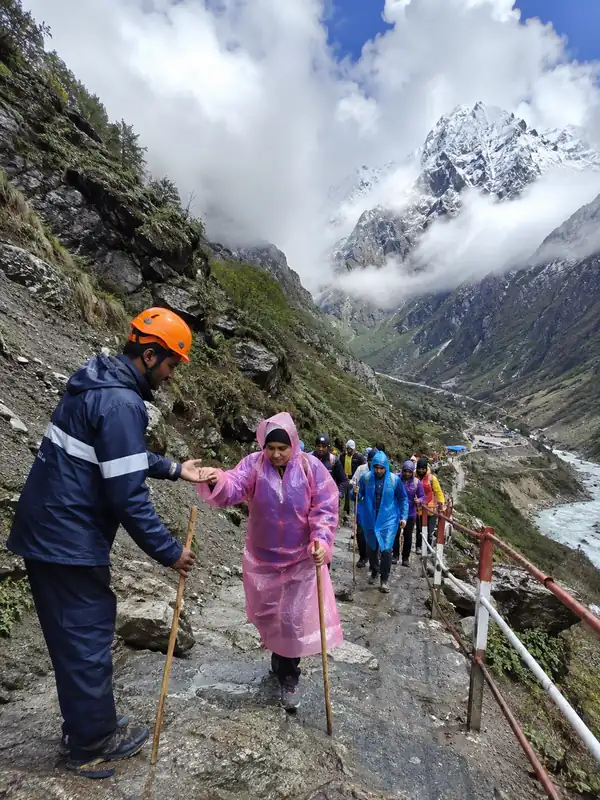
Heavy rain can trigger landslides that make footpaths slippery, especially in the hills, and flash floods are also possible during peak monsoon downpours. Winter, on the other hand, brings the harshest and most unlivable weather — the temple is completely buried in snow and inaccessible.
There is no version of the Kedarnath Yatra that takes place between mid-November and late April — those suggesting otherwise are misinformed.
Altitude Sickness (AMS) at Kedarnath — What Pilgrims Need to Know
Kedarnath is at 3,583 m. AMS (Acute Mountain Sickness) is the most common and underestimated health risk on the trek. It affects fit and unfit people equally. People often dismiss early symptoms as tiredness and keep walking, which is when it becomes dangerous.
Symptoms to watch: persistent headache that doesn't ease with rest or water, nausea or vomiting, dizziness, shortness of breath at rest, unusual fatigue, confusion. If two or more of these appear — stop, sit down, drink water slowly. If symptoms don't ease in 30 minutes, start descending. Medical posts are staffed along the Gaurikund–Kedarnath route and at the temple, and as of the 2026 season a dedicated oxygen ward and additional ambulances are also stationed along the Char Dham circuit.
Prevention: don't rush the 16 km ascent from Gaurikund, drink 3–4 litres of water through the day, avoid alcohol from the day before, eat light on the trek day, and — if your schedule allows — spend a night in Guptkashi before Gaurikund to let your body adjust to the altitude gradually.
Tips to Cope with Cold Weather
1. Altitude Awareness
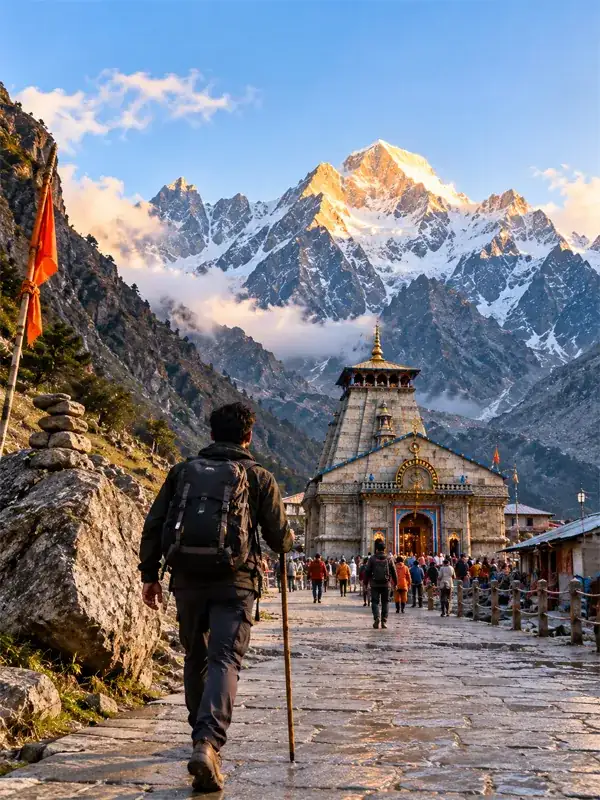
Kedarnath sits at 3,583 m. The air has roughly 35–40% less available oxygen than at sea level. If you haven't been to high altitude before, go slow — especially on the Gaurikund to Kedarnath trek. Take a break every 30–40 minutes. Don't try to match faster walkers. Your body needs time to adjust, and the 16 km climb is not the place to push limits.
2. Sun Protection
UV radiation at 3,583 m is significantly more intense than at sea level. You can get a bad sunburn in two hours without protection, even on a cold or overcast day. Carry SPF 50+ sunscreen, UV-protection sunglasses, and a cap. Snow and ice reflect UV back up, making it worse than many expect.
3. Water Safety
Don't drink water directly from streams on the trek, no matter how clean they look. Carry bottled water or use purification tablets. Glacier runoff can carry bacteria that cause stomach illness, and getting sick halfway up a 16 km mountain trek is a problem you don't want.
4. Wind Protection
The exposed sections of the Kedarnath trek — from Bheem Bali onwards especially — get strong cold winds without warning. A windproof outer layer is more useful than an extra sweater. Wind chill can make an 8°C day feel like 2°C very quickly.
5. Weather Monitoring
Mountain weather at 3,583 m can be completely different from Gaurikund. Don't rely only on a phone app — ask at checkpoints each morning before starting. At the first sign of darkening skies or dropping visibility, find the nearest shelter and wait. Don't try to outrun a sudden storm on an open mountain trail.
Oxygen Level at Kedarnath
At 3,583 m, the air at Kedarnath contains about 35–40% less usable oxygen compared to sea level (the oxygen percentage in the air stays around 21% everywhere — what drops is atmospheric pressure, so each breath delivers less oxygen). This is enough for most healthy people to notice — even a slow walk uphill will feel more effortful than at lower altitudes. Shortness of breath, a faster heartbeat, and mild headache are normal for the first few hours as your body adjusts.
What's not normal: a headache that keeps getting worse, nausea, dizziness that doesn't go away, or confusion. These are AMS symptoms, not just altitude adjustment. Don't push through them. Pilgrims with heart conditions, respiratory illness, or severe anaemia should consult a doctor before attempting the trek and consider the helicopter option instead. Read more…
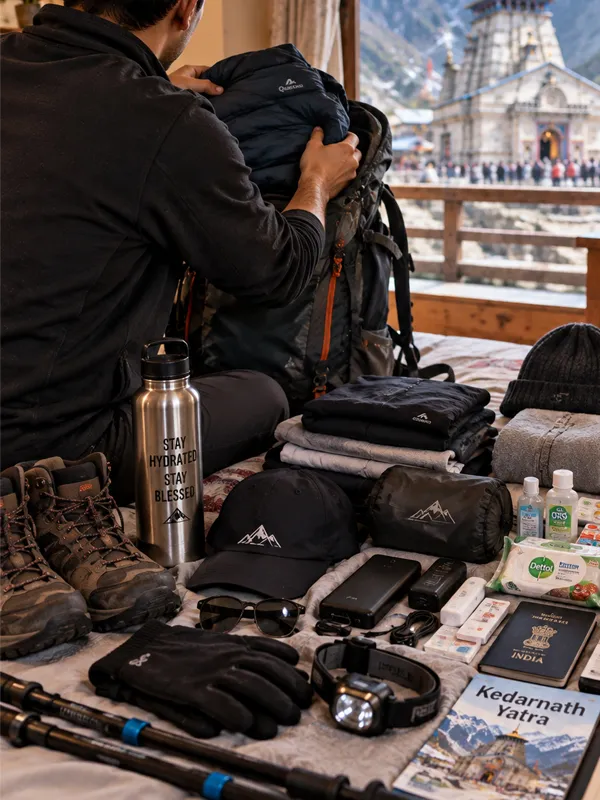
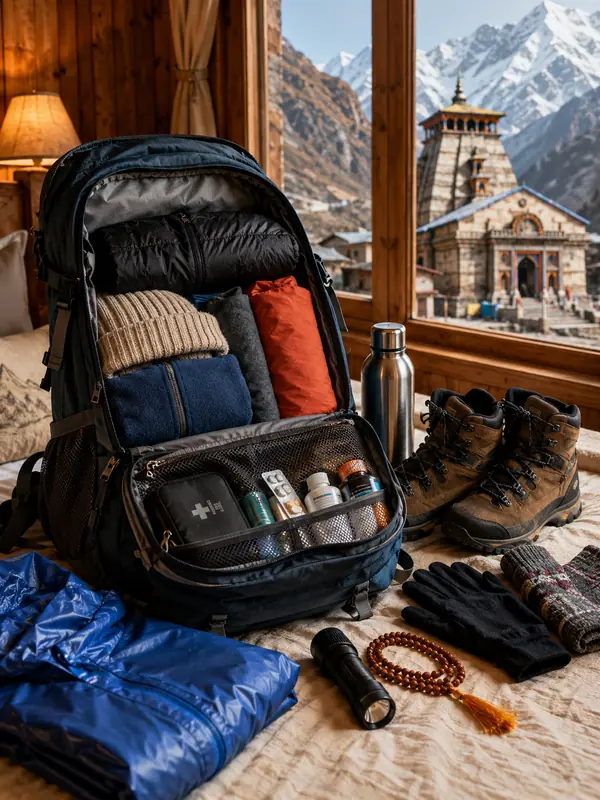
What to Carry (Season-wise Packing)
| Item | May – June | July – Sept | October |
|---|---|---|---|
| Thermal base layer | Yes | Yes | Yes (heavier weight) |
| Fleece / Woollen jacket | Medium weight | Light–medium | Heavy weight |
| Windproof/waterproof shell | Yes | Essential | Yes |
| Warm cap and gloves | Yes | Optional | Essential |
| Trekking boots (waterproof) | Yes | Yes | Yes |
| Trekking pole | Recommended | Recommended | Recommended |
| Rain poncho | Useful | Essential | Useful |
| SPF 50+ sunscreen | Essential | Yes | Yes |
| UV sunglasses | Essential | Yes | Yes |
| AMS tablets (Diamox) | Doctor's advice | Doctor's advice | Doctor's advice |
| ORS / Electrolytes | Yes | Yes | Yes |
| 2 litres water (from start) | Yes | Yes | Yes |
| Printed Yatra Pass + ID | Mandatory | Mandatory | Mandatory |
| Cash (min Rs. 2,000) | Yes | Yes | Yes |
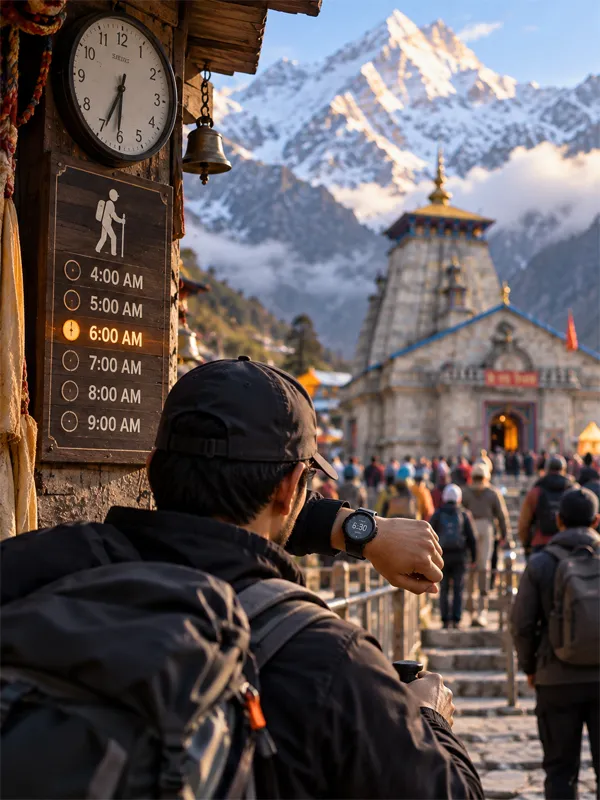
| Headlamp | Yes (4 AM start) | Yes | Yes |
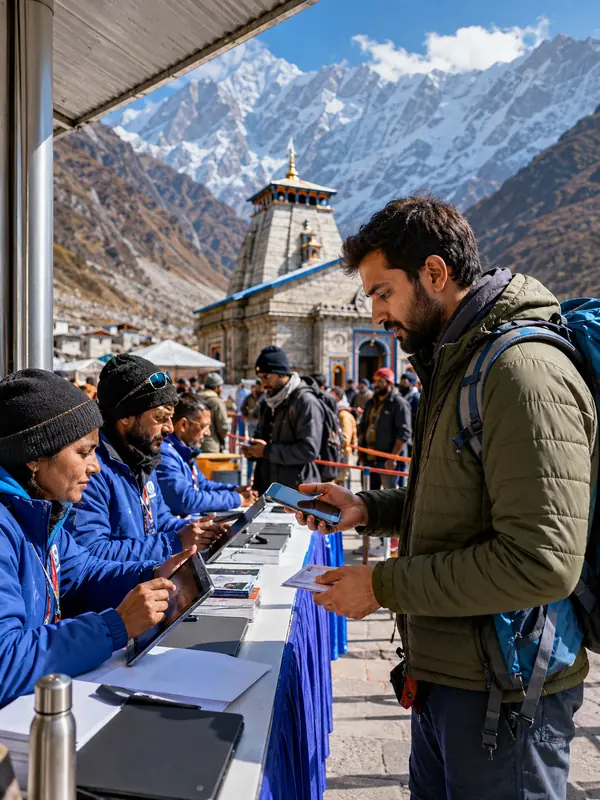
Kedarnath Yatra Registration — Mandatory for 2026 All pilgrims must register online at registrationandtouristcare.uk.gov.in before travelling to Kedarnath. Print the Yatra Pass and carry it — checkpoints on the Kedarnath route check for it. Showing up at Sonprayag or Gaurikund without a pass means you'll be turned back. During May–June, slots fill fast, so register from home before leaving.
Weather at Other Panch Kedar Temples
Kedarnath is the most famous of the five Panch Kedar temples, but the other four sit at very different altitudes — which means very different weather windows:
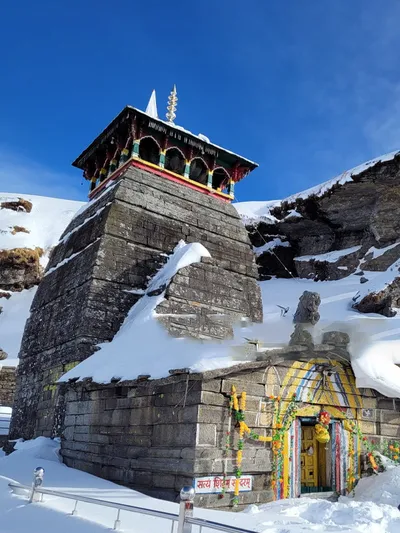
- Tungnath (3,680 m) — the highest Shiva temple in the world, reached via a short but steep 3.5 km trek from Chopta. Colder than Kedarnath at night due to greater exposure; best visited May–June or September–October, closed in heavy winter.
- Rudranath (2,286 m) — a quiet forest shrine reached by a longer trek through rhododendron woods; milder daytime weather than Kedarnath because of the lower altitude, but the trail itself is longer and more remote.
- Madhyamaheshwar (3,289 m) — a high-altitude shrine with views of Chaukhamba and Kedarnath peaks; weather pattern is close to Kedarnath's, cold nights even in peak season.
- Kalpeshwar (2,200 m) — the only Panch Kedar temple open all year round, since its lower altitude keeps it accessible even in winter, making it a good option if you're visiting outside the Kedarnath season.
If you're combining a Panch Kedar circuit, plan the higher shrines (Kedarnath, Tungnath, Madhyamaheshwar) for May–June or September–October, and treat Kalpeshwar as your flexible, any-season stop.
FAQs
Q1. What is a good time to visit Kedarnath Dham?
Ans: May and June are the best months — weather is clear, temperatures are manageable (10–17°C days), and the 16 km Gaurikund trek is safe. October is also excellent for fewer pilgrims and clear views. July–August should be avoided due to monsoon landslide risk.
Q2. What is the off-season to visit Kedarnath Temple?
Ans: September and October see noticeably lower crowds than May. October is a good in-between window: clear post-monsoon skies, shorter queues, easier accommodation. The temple closes around Bhai Dooj — confirm the exact date before a late-season visit.
Q3. Can we visit Kedarnath in December?
Ans: No. The temple closes from around Bhai Dooj (October/November) until Akshaya Tritiya (April/May) the following year. In December, the temple and region are completely under snow, and the deity is worshipped at Ukhimath. There is no darshan possible in December.
Q4. What temperature should I expect in May at Kedarnath?
Ans: May daytime temperatures range from 10°C to 15°C, dropping to 0°C to 4°C at night. It feels cold after sunset, so pack thermal inners, a heavy fleece, and a windproof jacket regardless of the daytime reading.
Q5. When does the Kedarnath temple open in 2026?
Ans: The Kedarnath Temple opened for devotees on 22 April 2026, as officially announced by the temple committee on Mahashivratri at Omkareshwar Temple, Ukhimath.
Q6. When does the Kedarnath temple close in 2026?
Ans: Kedarnath closes on Bhai Dooj, two days after Diwali. For 2026, Bhai Dooj falls on 11 November, so this is the expected closing date — but the final confirmation comes from BKTC around Dussehra. After closing, the idol moves to Ukhimath for winter.
Q7. Is Kedarnath open during monsoon (July–August)?
Ans: Yes, the temple stays open during monsoon. What becomes risky is the road and trek access — the Gaurikund road and the Gaurikund–Kedarnath trek are affected by landslides and heavy rain. Travel is possible but needs flexibility and real-time road checks each day.
Q8. Is registration mandatory for Kedarnath Yatra in 2026?
Ans: Yes. All pilgrims must register at registrationandtouristcare.uk.gov.in before travelling. The Yatra Pass is checked at Sonprayag and Gaurikund. Online registration is faster than walk-in counters, which get heavily crowded in May.
Q9. Can I do the Kedarnath trek with no trekking experience?
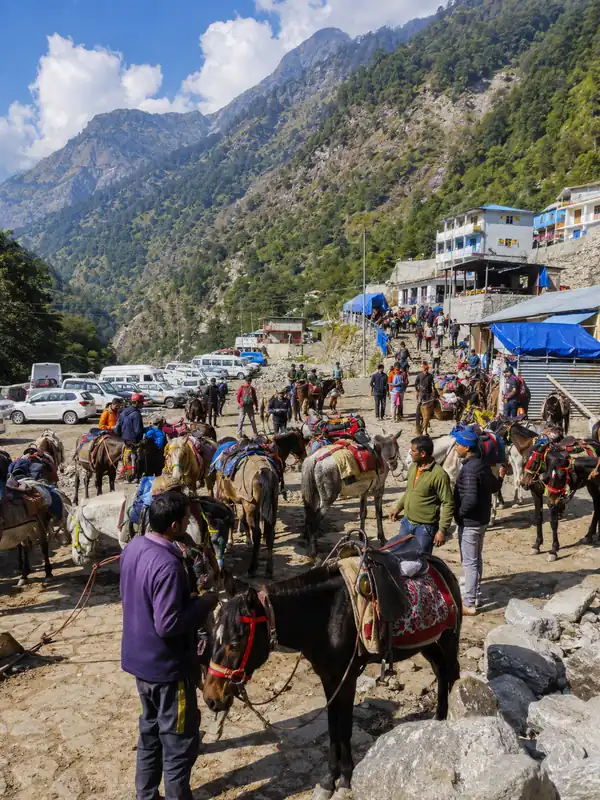
Ans: Yes, with preparation. The trek is 16 km uphill from Gaurikund, gaining about 1,600 m in elevation. Start daily walks 2–3 weeks before your trip, begin at 4 AM on trek day, take regular breaks, and don't rush the first half. Pony, palki, and helicopter options are available if needed.
Q10. What helicopter options are available for Kedarnath, and how far are the helipads?
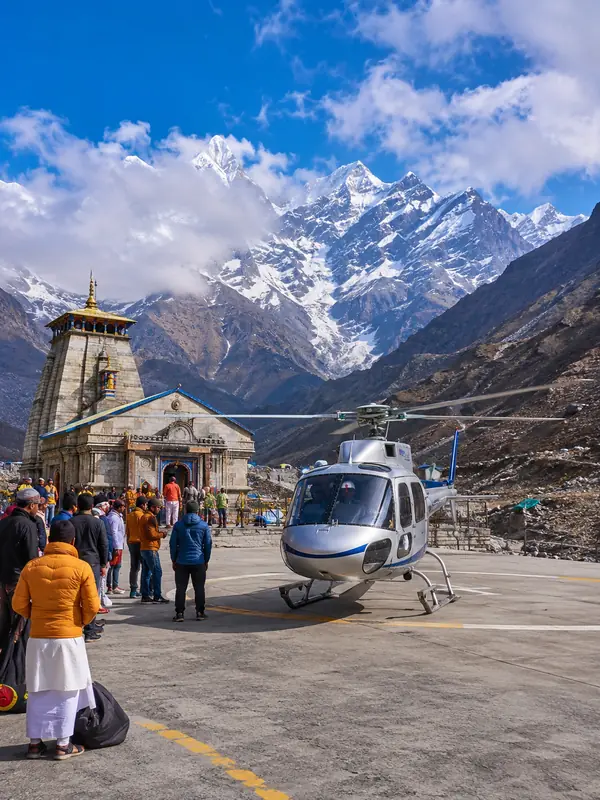
Ans: Helicopter service to Kedarnath runs from Sersi (~23 km, ₹3,043 one-way), Phata (~31 km, ₹4,840 one-way), and Guptkashi (~45–46 km, ₹6,077 one-way) — official 2026 UCADA fares. Book only through heliyatra.irctc.co.in; May–June slots fill weeks in advance, and flights are weather-dependent.
Q11. How far is Kedarnath from Rishikesh, Haridwar and Delhi?
Ans: By road to Gaurikund (the last motorable point), it's roughly 210–220 km / 8–9 hours from Rishikesh, 220–230 km / 9–10 hours from Haridwar, and 450–470 km / 12–14 hours from Delhi — followed by the 16 km trek or a short helicopter ride.
Q12. How many days should I plan for the Kedarnath Yatra?
Ans: Most pilgrims need 4–6 days for a comfortable trip from Haridwar/Rishikesh, including travel, one night for acclimatisation at Guptkashi or Sitapur, and a buffer day for weather. Helicopter packages can compress this to 1–2 days.
Q13. Is Kedarnath's weather safe for senior citizens and children?
Ans: It can be demanding — cold nights, thin air, and a long trek are hard on both age groups. A medical fitness check is advisable, and the helicopter route is generally safer and more comfortable than the trek for seniors, young children, or anyone with heart or lung conditions.
Q14. What is the weather like at Tungnath and other Panch Kedar temples?
Ans: Tungnath (3,680 m) is colder at night than Kedarnath due to its higher, more exposed location. Madhyamaheshwar (3,289 m) follows a similar cold pattern. Rudranath (2,286 m) and Kalpeshwar (2,200 m) are milder because of their lower altitude — Kalpeshwar is even open year-round.
Q15. Where can I check live Kedarnath weather before travelling?
Ans: Check the India Meteorological Department (IMD) forecast for Rudraprayag district, or a mountain-weather app, 2–3 days before departure. Weather can change quickly at 3,583 m, so also ask at checkpoints along the route on the morning of your trek for the most current, on-ground update.
Conclusion
Kedarnath's weather swings hard between seasons — from sub-zero, snow-bound winters to a short, clear summer window that makes the Yatra possible at all. May–June remains the safest and most comfortable time to go, October is the best-kept secret for fewer crowds and clear views, and July–September calls for real flexibility around monsoon disruptions. Whichever month you choose, plan around the temperature table above, register in advance, and keep a weather check on the morning of your trek — that's the difference between a smooth Kedarnath Yatra and a disrupted one.
Kedarnath Travel Guide





Kedarnath Travel Packages


Important Safety Notice
Beware of Fake Char Dham & Kedarnath Helicopter Booking Websites
Fake websites, WhatsApp accounts and advertisements may impersonate genuine travel companies or helicopter operators. Always verify before paying.