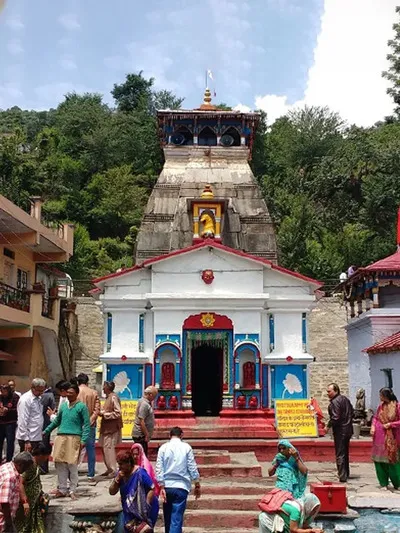
Rudranath – The Third of the Panch Kedars
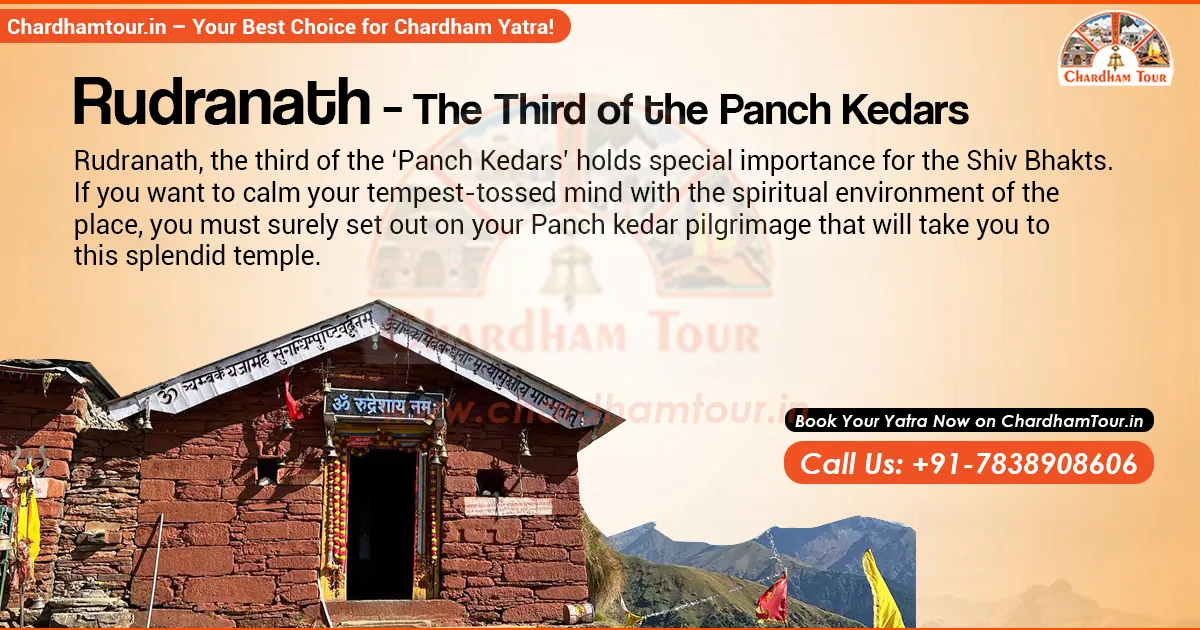
Chamoli district's own tourism page calls the trek to Rudranath "by far the toughest and most exciting trek out of the Panchkedar." That's not a trekking blog talking itself up — that's the government describing its own district's terrain, and it's the one claim about this trek I'd stand behind without hedging.
The temple opened for the 2026 season on 18 May, and it's due to close for winter around 17 October — this is the pattern the temple has followed in past years too, closing dates around mid-October are typical here. The trek runs 20–22 km one way from Sagar village, the most commonly used base, and it's genuinely difficult. Not "moderate with a nice payoff." Difficult.
Quick Information
| Detail | Info |
|---|---|
| Region | Chamoli district, Garhwal Himalayas |
| Altitude | 2,286–2,290 m per Chamoli district government pages; many trek operators list ~3,600 m instead |
| Panch Kedar rank | Third in the pilgrimage sequence (after Kedarnath, Tungnath); commonly called the Fourth Kedar |
| Trek distance | 20–22 km one way from Sagar, per the district administration |
| Road distance | Rishikesh to Sagar: 219 km |
| Difficulty | Difficult — officially described by Chamoli district as the toughest of the five Panch Kedar treks |
| 2026 opening | 18 May |
| 2026 closing | Expected around 17 October, following the temple's usual pattern |
| Trek bases | Sagar (most common), Mandal, or Helang/Urgam side |
| Nearest airport | Jolly Grant, Dehradun — about 258 km from Gopeshwar |
| Nearest railhead | Rishikesh — about 241 km from Gopeshwar |
The Altitude Question, Settled
Two different pages on the Chamoli district government site give the temple's elevation as 2,290 m and 2,286 m. That's a tight range and it comes from the same authority both times. Almost every trekking operator's website, on the other hand, quotes something close to 3,600 m. I don't think the 3,600 m figure is made up — it's used too consistently across too many operators for that — but I also can't find it on any government page. If you're planning logistics around altitude sickness risk, go with the lower, government-sourced number as your baseline and treat 3,600 m as the commonly repeated but unofficial one.
Where Rudranath Sits in the Panch Kedar Circuit
Rudranath is the third temple pilgrims typically visit in the Panch Kedar sequence, after Kedarnath and Tungnath. Locally, and in most Hindi-language reporting on the temple, it's referred to as the Fourth Kedar — Chaturth Kedar. Both labels are correct; they're just counting different things. Here, Lord Shiva is worshipped in his face form, known as Neelkanth Mahadev, and the shrine itself is a naturally formed rock representation rather than a carved idol.
The Legend
Like the rest of the Panch Kedar temples, the story traces back to the Mahabharata. After the Kurukshetra war, the Pandavas were weighed down by guilt over killing their own kin and went looking for Lord Shiva to seek forgiveness. He didn't want to see them and took the form of a bull, disappearing into the Garhwal hills. When they finally cornered the bull, it dove into the ground and resurfaced in five pieces — the hump at Kedarnath, the arms at Tungnath, the navel at Madhyamaheshwar, the hair at Kalpeshwar, and the face here.
The Doli Yatra and Temple Rituals
For winter, the deity moves to Gopinath Temple in Gopeshwar, where worship continues year-round. The 2026 return followed roughly this timeline: the palanquin left Gopeshwar around 16 May, reached the temple around 17 May, and the kapat opened on 18 May. Sources differ on the exact opening hour — some say early morning, one says early afternoon — so I'm not going to publish a specific time I can't confirm. The current officiating priest, per 2026 reporting, is Ved Prakash Bhatt.
Morning and evening rituals happen daily at the temple during the open season. Four kunds near the shrine — Surya Kund, Chandra Kund, Tara Kund, and Mana Kund — are associated with the site and traditionally used by pilgrims.
Getting There: Sagar Is the Default, Not the Only Option
Sagar village is where most pilgrims start. The district government's own figures put this at 219 km by road from Rishikesh, then a 20–22 km trek from Sagar to the temple. Route: Rishikesh → Devprayag → Rudraprayag → Karnaprayag → Gopeshwar → Sagar.
Mandal village, reached via Gopeshwar, runs through Anusuya Devi Temple before joining the main trail — a good option if you want that temple on the itinerary anyway.
Helang/Urgam, on the other side, connects toward Kalpeshwar, making it the natural choice if you're combining two Panch Kedar shrines in one trip.
There are other documented approaches too, including one from Gangolgaon that's shorter on paper but steeper. Sagar remains the practical default because it has the most basic infrastructure and the most experienced local guides.
A Sample Itinerary from Sagar
- Day 1: Drive Rishikesh to Sagar — a full day on the road.
- Day 2: Trek to Panar Bugyal, through oak and rhododendron forest, gaining altitude steadily.
- Day 3: On to Lyuti Bugyal, then the Pitradhar ridge crossing — one of the more demanding stretches of the route — and down into the temple. Overnight nearby.
- Day 4: Morning Darshan, then begin the descent.
- Day 5: Finish the descent to Sagar and drive back.
Some trekkers compress this to four days. I wouldn't recommend it unless you're already fit for multi-day high-altitude walking — the distance adds up faster on the ground than it looks on a map.
Registration and Forest Rules
Forest check-post registration is commonly mentioned as a requirement for this route, but I couldn't find a current government notice locking in an exact fee, and unsupervised personal camping rules seem to vary by source. Confirm both at Sagar or Gopeshwar before you leave — don't build your plan around a number from an old blog post. Carry a government photo ID regardless.
When to Go
May and June, right after the temple opens, and September into early October are the two windows most consistently recommended. Monsoon months bring rain that makes the trail slippery on the steeper sections, and this isn't a route where that's a minor inconvenience — the terrain doesn't forgive a bad step the way an easier trek might. Winter closes the main shrine entirely; worship shifts to Gopinath Temple in Gopeshwar until the following May.
What to Pack
- Broken-in trekking shoes, not new ones
- Warm layered clothing for cold nights, even in the May–June window
- Rain gear — weather at this altitude shifts fast in any season
- ORS packets and energy-dense snacks for the long climbing days
- Basic first aid
- Government photo ID for check-post registration
- A power bank; don't count on charging facilities past Sagar
Who This Trek Actually Suits
If you've done a multi-day Himalayan trek before and you're reasonably fit, Rudranath is a serious but doable target. If this would be your first multi-day trek at altitude, I'd point you toward Tungnath or Madhyamaheshwar first — both are part of the same circuit and considerably more forgiving. Rudranath isn't the place to find out the hard way that long uphill walking days don't agree with you.
Common Mistakes
- Treating the Pitradhar stretch as just another section — it's where most people struggle.
- Going in peak monsoon and hoping the trail cooperates.
- Skipping forest registration because a blog said it wasn't needed.
- Assuming mobile coverage will hold up past Gopeshwar. It doesn't, reliably.
- Underestimating how many days the descent takes — it's not a quick walk down.
Frequently Asked Questions
Q1. When did Rudranath Temple open in 2026?
8 May 2026. The palanquin left Gopeshwar around 16 May and reached the temple the following day, ahead of the kapat opening.
Q2. When does it close?
Around 17 October is the figure most 2026 reporting points to, consistent with the temple's usual closing pattern. Confirm the exact date locally as the season progresses.
Q3. How tall is Rudranath, really?
Chamoli district's own government pages say 2,286–2,290 m. Most trekking operators quote around 3,600 m instead. Plan around the lower, government-sourced figure.
Q4. How far is the trek?
20–22 km one way from Sagar village, per the district administration. Other routes have different distances.
Q5. Is Rudranath really the hardest Panch Kedar trek?
Chamoli district's own tourism material describes it as the toughest of the five, and that matches what most trekkers who've done multiple Panch Kedar treks report.
Q6. Where does the trek start?
Most pilgrims start from Sagar village, reached by a 219 km road journey from Rishikesh. Mandal and Helang are the other two commonly used starting points.
Q7. Do I need a permit?
Forest check-post registration is commonly required. Confirm the current process and any fee locally at Sagar or Gopeshwar — this isn't something to lock in from an old blog post.
Q8. Is this trek suitable for a first-time Himalayan trekker?
Not really. Consider Tungnath or Madhyamaheshwar first if you haven't done a multi-day high-altitude trek before.
Q9. Where does the deity stay in winter?
Gopinath Temple in Gopeshwar, where worship continues through the closed season.
Q10. What's the accommodation like along the route?
Basic, and it varies by season — simple guesthouses at Sagar, and shelters or camps at intermediate points depending on conditions. Confirm what's actually open before you go.
Conclusion
The number that matters most on this page isn't the one most articles lead with. It's not 3,600 m — it's 2,286 to 2,290, straight from the district government, and it's worth getting right before you plan around the wrong one. Past that, the trek is exactly what Chamoli's own tourism page says it is: the hardest of the five Panch Kedar routes, with real distance and real elevation gain to earn the darshan at the end. Go in May–June or September–October, register at the check post, and don't compress the itinerary to save a day you don't need to save.
Chardham Travel Guide
Chardham Travel Packages

Hotels in Chardham
Beware of Fake Char Dham & Kedarnath Helicopter Booking Websites
Fake websites, WhatsApp accounts and advertisements may impersonate genuine travel companies or helicopter operators. Always verify before paying.