The Hindu temple of Kedarnath is one of the holiest and most sacred shrines in India. Situated high among the Garhwal Himalayan range at a height of 3,583 metres above sea level, the temple site offers its visitors some of the most panoramic and scenic views of the surrounding landscape. This temple is dedicated to Lord Shiva, and as history dictates, this prime center of pilgrimage was established by the Pandava brothers. The temple is not directly accessible by road and can only be reached after covering an uphill trek of approximately 16 km (the older pre-2013 route measured around 17–18 km), which commences from Gaurikund, gaining roughly 1,600 metres in elevation along the way. Apart from being one of the significant parts of the Chota Char Dham Yatra, the temple is also one of the 12 primary Jyotirlingas of India.
Kedarnath can only be reached during the summer and autumn months when the snow has melted and the roads have been cleared for the journey — though exact road-clearance timing can vary a little each year depending on winter snowfall. The gates open at the onset of the summer months on the eve of Akshaya Tritiya, which falls during the months of April and May. During the open season, several thousand devout Hindu pilgrims undertake this journey to cleanse their souls and attain moksha in life. There are numerous options to reach Kedarnath Dham if you are not too keen on walking all the way. Mules and palanquins are available for a more comfortable journey. Additionally, helicopter services for the Char Dham Yatra are also provided for people seeking a convenient alternative. These options are usually taken up by senior citizens and people suffering from some sort of physical ailment.
Good preparation for the Kedarnath Yatra makes the difference between an exhausting ordeal and a genuinely fulfilling pilgrimage. If you are planning to undertake this potentially life-changing journey, follow these preparatory guidelines:
1. Complete Your Char Dham Registration
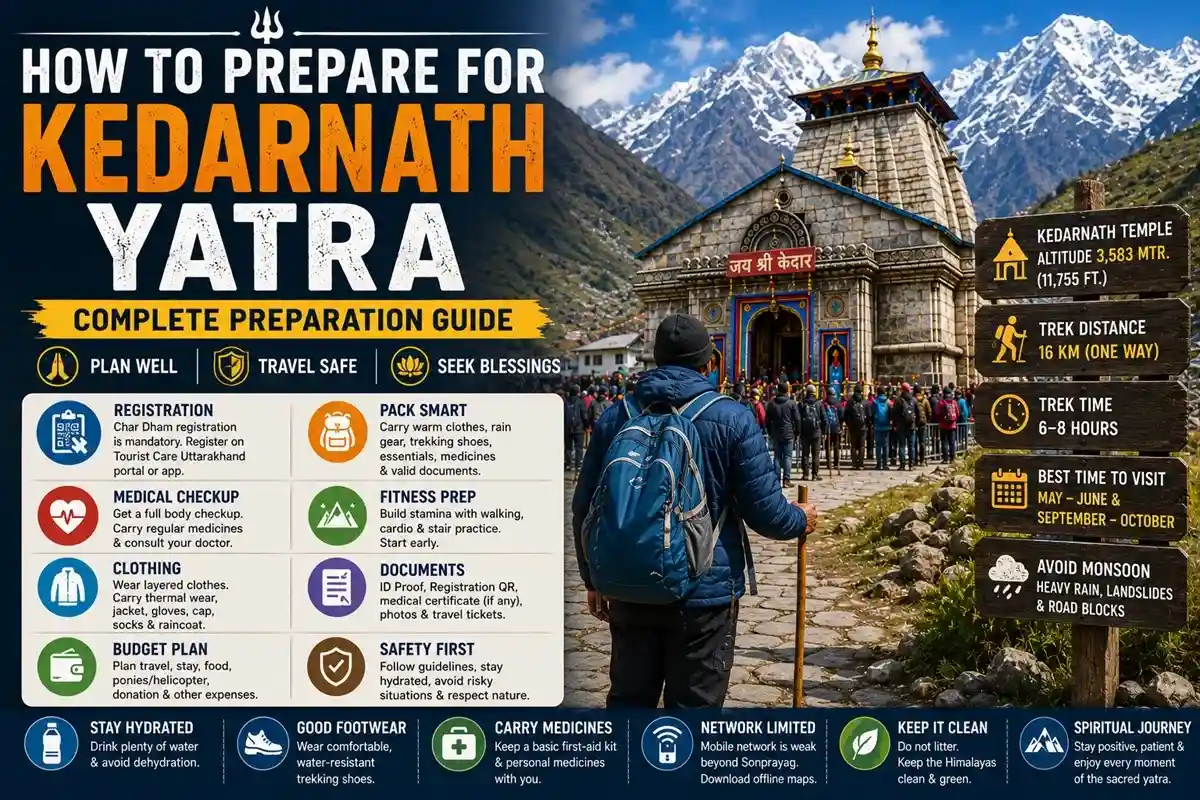
Before you plan anything else, know that Char Dham Yatra registration has been mandatory for every pilgrim since 2024, whether you travel by road, trek, or helicopter. Register free of cost at registrationandtouristcare.uk.gov.in, or through the “Tourist Care Uttarakhand” app, using a valid ID like Aadhaar, Passport, or Voter ID. You’ll receive a QR code that’s checked at checkpoints including Sonprayag. Register as early as possible, especially during the busy May–June season — authorities may also regulate daily pilgrim movement during peak periods or adverse weather, so earlier registration gives you more flexibility.
2. Check for Timings:
First and foremost, remember to undertake this pilgrimage during the appropriate time. Keep an eye on the opening dates of Kedarnath Dham, which usually occur between the months of April and May, on the eve of Akshaya Tritiya, and are officially announced each year by the Badri-Kedar Temple Committee (BKTC). The temple stays open through the monsoon months of July and August, but this period brings heavy rainfall, and the region becomes more vulnerable to landslides and mudslides, making the journey considerably more difficult and risky — it’s best avoided if your dates are flexible. September, right after the rainy season, is one of the best times to visit the Dham. The temple doors close for the season around Bhai Dooj, a couple of days after Diwali, typically falling between late October and mid-November depending on the year.
3. Trek Start Time and Checkpoints
Most pilgrims begin the Gaurikund-to-Kedarnath trek between 4:00 AM and 7:00 AM, giving themselves a comfortable buffer before the administrative cut-off (generally around 1:30 PM at Gaurikund, with QR verification at Sonprayag typically completed by 1:00 PM). Night trekking isn’t permitted, and authorities may also temporarily suspend movement due to heavy rain, landslides, or poor visibility — always follow on-the-spot instructions at checkpoints.
4. Consider a Tour Operator:
First-time pilgrims may find it easier to travel with an experienced, registered tour operator, who can help with accommodation, food options, nearby sightseeing, registration formalities, and darshan timings. This isn’t compulsory — many pilgrims travel independently too — but it can reduce the guesswork, especially on your first visit.
5. Medical Checkup:
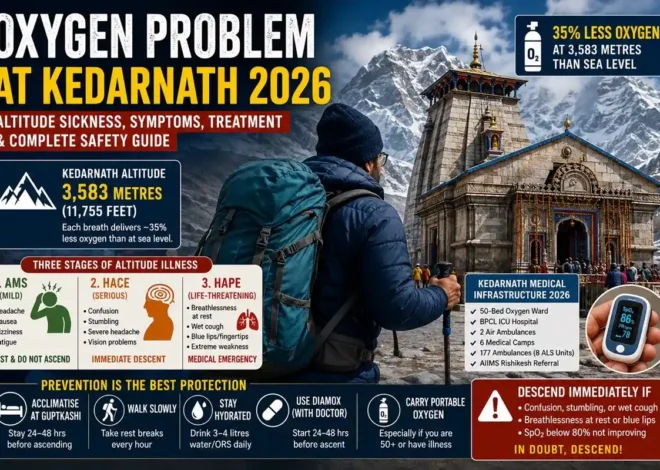
To cover this journey, people need to be reasonably fit. Ideally, begin health preparation 2–3 months before departure, with a thorough check-up to confirm you’re fit for the strenuous trek. Be sure to get checked for high blood pressure, diabetes, cardiac disease, or any related health issues. Carry your required medications for the entire journey and seek appropriate treatment before starting your yatra. Since the temple sits above 3,500 metres, it’s also worth discussing Acute Mountain Sickness (AMS) risk with your doctor beforehand, especially if you have any respiratory or heart-related concerns. If AMS symptoms like headache, dizziness, or nausea persist rather than easing with rest, descend and seek medical evaluation rather than continuing upward.
6. Build Basic Fitness Before You Go
A medical clearance is the first step, but building some stamina beforehand makes the 16 km trek far more manageable:
- Start brisk walking or light cardio a few weeks before your trip, gradually increasing distance and, if possible, incline.
- Practice stair-climbing to build leg strength for the steady uphill gradient.
- If you can, do a few practice treks or long walks with the same shoes and daypack you plan to carry, to avoid surprises on the actual trek day.
7. Understand Altitude Acclimatization
Kedarnath’s altitude gain — roughly 1,600 metres from Gaurikund (which sits at about 1,980 m) up to the temple at 3,583 m — is the real challenge behind this pilgrimage, more than the distance itself. A few habits help your body adjust:
- Walk at a slow, steady pace rather than rushing; reaching Kedarnath a little later in good condition beats arriving early feeling unwell.
- Stay well hydrated throughout the trek, and avoid alcohol and heavy smoking in the days leading up to your climb.
- Watch for early AMS symptoms and rest, or descend if needed, rather than pushing through.
- Rest stops like Jungle Chatti, Bhimbali, and Linchuli offer a good chance to pace yourself, and basic medical posts with first-aid and oxygen support are available at select points along the route during the yatra season.
8. Clothing
Being situated at a high elevation among snow-capped mountains, it is advisable to carry a heavy warm jacket, woolen clothes, warm gloves, and trekking boots. Night temperatures can approach or fall below freezing during the colder parts of the season (early May and late October in particular), though peak summer nights in May–June are usually milder — pack layers you can adjust either way. You should also carry mufflers, winter caps, sunglasses, and sunscreen to protect your skin from sunburn. A lightweight raincoat or poncho is worth packing too, since mountain weather can turn quickly even outside the monsoon.
9. Luggage Requirements
Avoid carrying heavy and bulky luggage, as it will only slow you down during the journey. You can use Haridwar or Rishikesh as your base camp, where you can leave unnecessary heavy baggage. Only carry small bags with your essentials, such as packets of dry fruits for energy during your yatra, limited clothing, your medicines and first aid kit, a torch or headlamp, and a power bank.
10. Documents Checklist
Keep these ready and easily accessible, ideally in both physical and digital form:
- Char Dham Yatra registration QR code and confirmation
- A valid photo ID (Aadhaar, Passport, or Voter ID)
- Any prescribed medicines along with a note of your dosage, in case of a medical emergency
- Emergency contact numbers, including a family member back home and the Uttarakhand Police helpline (112)
- Hotel or GMVN booking confirmations, if applicable
11. Budgeting for the Yatra
Costs vary depending on your travel mode — bus and trek being the most economical, and helicopter plus private stay being the most expensive. Factor in transport, accommodation, food, pony/palki charges if needed (book these in advance during peak season), and a buffer for unplanned expenses like an extra night’s stay if you miss a checkpoint cut-off. Planning your budget in advance helps you avoid rushed, costlier decisions once you’re on the road.
12. Safety Tips for Solo and Women Travellers
- Prefer travelling in a group or with a registered tour operator, especially for the early-morning start from Gaurikund.
- Share your live location or itinerary with a trusted contact back home before starting the trek each day.
- Book accommodation in advance rather than arriving without a confirmed stay, particularly during peak season.
- Keep emergency numbers saved offline, since mobile network is unreliable beyond Sonprayag.
Best Time to Prepare: Month-Wise Guide
| Months | Conditions | Suitability |
| April – Early May | Temple opens; road and weather conditions vary year to year | Book with some flexibility, weather can be unpredictable |
| May – June | Generally pleasant, roads mostly clear | Best time, but crowded — register well in advance |
| July – August | Monsoon, landslide risk | Avoid if your dates are flexible |
| September – Early Oct | Clear skies, cooler, fewer crowds | Excellent time to visit |
| Late Oct – Mid Nov | Cold, temple closing around Bhai Dooj | Only early part suitable |
FAQ
Q1: Is Char Dham registration compulsory before the Kedarnath Yatra?
Yes, registration has been mandatory since 2024 and can be completed for free at registrationandtouristcare.uk.gov.in.
Q2: How far in advance should I start preparing for the Kedarnath Yatra?
Ideally, start 2–3 months in advance to allow time for a medical checkup, fitness building, and registration.
Q3: Is the Kedarnath trek distance 16 km or 18 km?
The current reconstructed trek from Gaurikund is approximately 16 km; the older pre-2013 route measured around 17–18 km.
Q4: Does the Kedarnath Yatra stop during the monsoon season?
No, the temple remains open through July and August, but heavy rainfall and landslide risk make travel considerably harder, so it’s best avoided if your dates are flexible.
Q5: What medical conditions should I get checked before the yatra?
Get checked for blood pressure, diabetes, and cardiac health, and discuss Acute Mountain Sickness risk with your doctor given the high altitude.
Q6: What is the best month to visit Kedarnath?
September, right after the monsoon, along with May and June, generally offers the best weather and road conditions.
Q7: When does the Kedarnath temple close for the season?
It typically closes around Bhai Dooj, a couple of days after Diwali, usually between late October and mid-November.
Q8: What time should I start the Kedarnath trek?
Most pilgrims start between 4:00 AM and 7:00 AM, well ahead of the administrative cut-off at Gaurikund, generally around 1:30 PM.
Q9: What should I pack for the Kedarnath Yatra?
Warm clothing, trekking shoes, a raincoat, sunscreen, medicines, dry snacks, a torch, a power bank, and your Char Dham registration QR code are all essentials.
Q10: Can senior citizens or people with health issues do the Kedarnath Yatra?
Yes, but a helicopter ride or pony/palki service is recommended over the full trek, along with a doctor’s clearance beforehand.
Q11: What documents should I carry for the Kedarnath Yatra?
Carry your registration QR code, a valid photo ID, medicine details, emergency contacts, and any booking confirmations, ideally in both physical and digital form.
Q12: Is it safe for solo or women travellers to do the Kedarnath Yatra?
Yes, but it’s safer to travel with a group or registered operator, book accommodation in advance, and keep emergency numbers and your itinerary shared with someone back home.
Conclusion
Preparing for the Kedarnath Yatra is about more than packing a bag — it starts with completing your Char Dham registration, getting a proper medical checkup, and building enough fitness and altitude awareness for the 16 km trek. Time your trip around the temple’s opening season, pack for both cold nights and sudden weather changes, keep your documents organised, and budget realistically for the journey ahead. With the right preparation, this demanding but deeply spiritual trip to one of Lord Shiva’s holiest shrines can be both safe and unforgettable.