The journey from Char Dham in Uttarakhand is challenging yet a wholesome experience — it tests your endurance and faith. In the traditional Char Dham sequence, Kedarnath comes third, right after Yamunotri and Gangotri. If you’re planning this leg of the sacred trip, Haridwar to Kedarnath is one of the most common routes, since Haridwar is the main gateway for Kedarnath Dham.
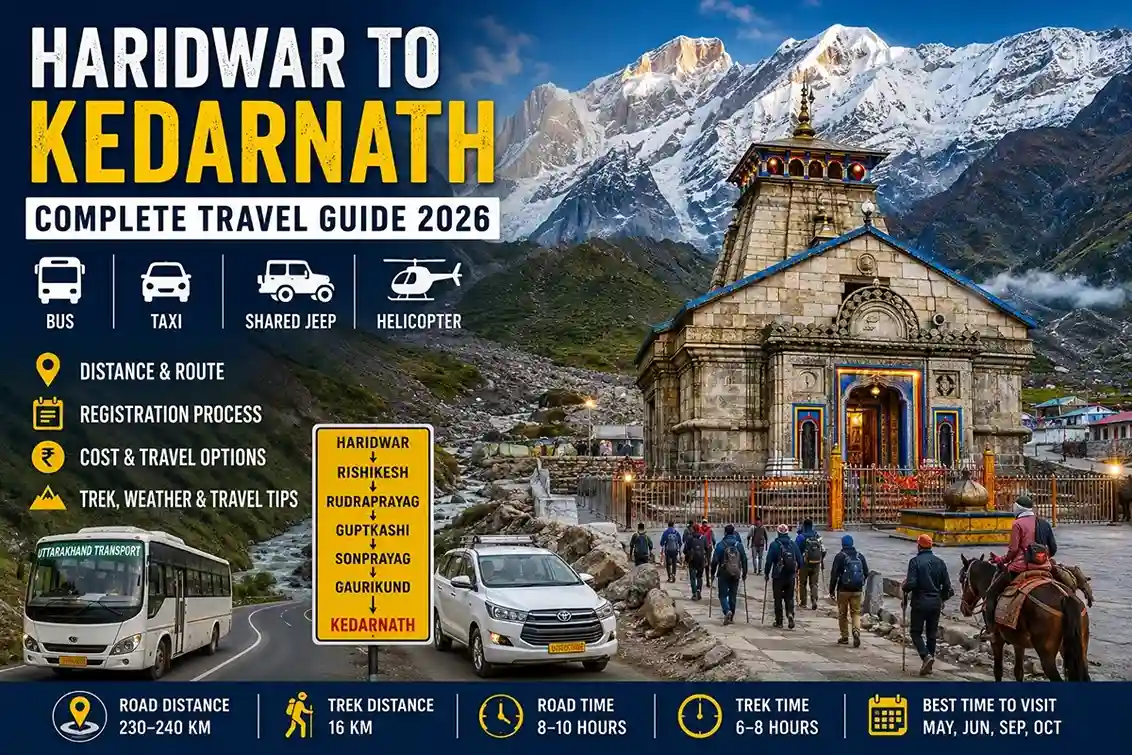
Quick answer: The Haridwar to Kedarnath distance is approximately 230–240 km by road up to Gaurikund, followed by a 16 km trek to the temple. The full journey usually takes 8–12 hours by road plus 6–8 hours on foot, depending on traffic and weather.
This updated 2026 guide covers the best routes, distance, cost, registration steps, and practical tips to make your Kedarnath pilgrimage tour from Haridwar smooth and hassle-free.
Quick Overview
| Detail | Information |
|---|---|
| Haridwar to Kedarnath road distance | Approx. 230–240 km (Haridwar to Gaurikund) |
| Gaurikund to Kedarnath trek | Approx. 16 km (some sources report 14–17 km depending on the measurement point) |
| Total distance (road + trek) | Approx. 250–255 km |
| Road travel time | 8–9 hours off-season; 10–13 hours in peak season or bad weather |
| Trek time | 6–8 hours |
| Temple altitude | Approx. 3,580 metres (11,745 ft) |
| Best months to visit | May, June, September, and October |
| Kedarnath Dham opening | Announced yearly around Maha Shivratri by BKTC — check the latest date before planning |
| Registration | Mandatory for all pilgrims |
| Nearest helipads | Sirsi, Phata, Guptkashi |
Route from Haridwar to Kedarnath
The journey to Kedarnath is sacred, and there’s no direct road all the way to the temple. Haridwar is the starting point for most pilgrims heading to Kedarnath Dham.
Typical route: Haridwar → Rishikesh → Devprayag → Srinagar → Rudraprayag → Guptkashi → Sonprayag → Gaurikund → Kedarnath.
From Rudraprayag, continue to Guptkashi, where shared vehicles are available toward Sonprayag. Sonprayag is the last point with regular public transport — private vehicles are typically parked at the Sonprayag Checkpost parking area, and a local shuttle covers the short stretch to Gaurikund. Most pilgrims prefer staying overnight at Guptkashi or Sonprayag, since these towns offer far more hotel options than Gaurikund, before starting the 16 km trek to Kedarnath the next morning.
How to Reach Kedarnath from Haridwar
Haridwar to Kedarnath by Bus
Seasonal government and private buses operate from Haridwar, though the exact drop point can vary — some run up to Rudraprayag or Guptkashi, while others go all the way to Sonprayag, depending on the season and road conditions. From wherever your bus terminates, a local shuttle or shared jeep covers the remaining stretch to Gaurikund, where the 16 km trek to Kedarnath begins. This is the most budget-friendly option, though buses take longer — often 10–13 hours in total.
Haridwar to Kedarnath by Taxi Service
Taxis offer a more comfortable, personalised journey at your own pace. Book one in advance or hire on the spot at Haridwar, with options ranging from budget to premium vehicles. A private taxi usually covers the Haridwar-to-Gaurikund stretch in about 8–9 hours in normal conditions, though peak-season traffic can stretch this further.
Haridwar to Kedarnath by Sharable Jeeps
Shared jeeps are a more economical option, but a single direct jeep from Haridwar all the way to Sonprayag isn’t guaranteed. Typically, pilgrims take one shared vehicle from Haridwar to Rishikesh or Rudraprayag, and then switch to another shared jeep onward to Guptkashi and Sonprayag. It’s economical since the cost splits among co-passengers, but expect one or two changeovers along the way.
Kedarnath via Helicopter
A helicopter ride is the fastest, least tiring way to reach Kedarnath. The main helipads are Phata, Sirsi (Sersi), and Guptkashi, with Sitapur also used near the Sersi area. Flight duration varies by helipad:
- Sirsi/Sitapur: approx. 7–11 minutes
- Phata: approx. 8–10 minutes
- Guptkashi: approx. 12–15 minutes
Booking note for 2026: Tickets must be booked only through the official IRCTC HeliYatra portal (heliyatra.irctc.co.in). Char Dham registration is mandatory before booking, and fares are announced fresh each season — always check the official portal instead of relying on last year’s prices. Most operators allow only 2–5 kg of hand baggage per passenger, so pack light. After landing, Kedarnath temple is a short walk from the helipad.
Bus vs Taxi vs Helicopter: Which Should You Choose?
| If you are… | Best option |
|---|---|
| On a tight budget | Bus + trek |
| A family with kids or elders | Private taxi + pony/palki |
| Short on time or have mobility concerns | Helicopter |
| A solo traveller wanting flexibility | Shared jeep or taxi |
Char Dham Yatra Registration (Mandatory)
Registration is compulsory for every pilgrim visiting Kedarnath, whether travelling by road, trek, or helicopter, and is checked at checkpoints including Sonprayag.
Quick steps to register:
- Visit registrationandtouristcare.uk.gov.in or download the “Tourist Care Uttarakhand” app.
- Enter your name, age, address, and a valid ID (Aadhaar, Passport, or Voter ID).
- Receive a QR code by SMS/email.
- Carry the QR code and ID for checkpoint verification.
Register 10–15 days in advance if travelling in the peak May–June season, since daily pilgrim numbers are capped. Elderly pilgrims or those with existing health conditions should also carry a basic medical fitness note, as authorities occasionally conduct health screening at high-altitude checkpoints during the yatra.
Best Time to Visit and Weather Guide
| Months | Weather | Suitable for Travel? |
|---|---|---|
| May – June | Pleasant, roads generally clear | Best time, but crowded |
| July – August | Monsoon, landslide risk | Avoid if possible |
| September – Early Oct | Clear skies, cooler | Excellent, fewer crowds |
| Late Oct – Nov | Cold, temple closing soon | Only early part suitable |
Sample Itinerary Options
- 1-Day trip (helicopter-based): Early morning drive/stay at Guptkashi, take the first available helicopter slot, darshan, and return same day.
- 2-Day trip (mixed): Day 1 — Haridwar to Sonprayag/Gaurikund; Day 2 — trek to Kedarnath, darshan, descend by evening or stay overnight.
- 3-Day trip (relaxed): Extra day added for rest at Guptkashi or Sonprayag, useful for senior citizens, families, or first-time trekkers.
Estimated Travel Cost from Haridwar to Kedarnath
Costs vary by season and demand, so treat these as approximate 2026 ranges:
- By bus + trek: ₹2,000–₹4,000 per person
- By shared jeep + trek: ₹3,000–₹5,500 per person
- By private taxi (round trip): ₹12,000–₹20,000+ for the vehicle in peak season, depending on car type
- By helicopter: check current IRCTC HeliYatra fares before budgeting, since rates are revised each season
- Add roughly ₹1,000–₹2,500 per person for basic stay and food along the way
For self-drive travellers: Budget for fuel (the last major petrol pumps are at Rudraprayag and Guptkashi) and highway tolls along the route. EV charging infrastructure in this hill stretch is still very limited as of 2026, so an electric vehicle isn’t currently a practical choice for this route.
Pony, palki, and dandi rates at Gaurikund (approximate, negotiable and season-dependent — official rate cards are usually announced by local authorities each yatra season):
- Pony: ₹2,000–₹5,000 one way
- Palki (palanquin): ₹4,000–₹10,000 one way
- Dandi (basic carry-chair, mainly for elderly or unwell pilgrims): similar to palki rates, confirm locally
Trek Difficulty, Route Points, and Parking Info
The Gaurikund-to-Kedarnath trek is rated moderate, with an altitude gain of roughly 1,600 metres over approximately 16 km. The trail passes through well-known stops such as Jungle Chatti, Bhimbali, and Linchauli (with the old Rambara stop no longer on the current route after the 2013 floods), along the banks of the Mandakini River. Basic medical camps with oxygen support, along with drinking water points, are available at intervals for emergencies.
Private vehicles from Haridwar are usually parked at the Sonprayag parking area, from where a local shuttle or shared taxi takes you the rest of the way to Gaurikund.
Useful Tips to Follow During Kedarnath Yatra
- Start early to reach Gaurikund before evening, since mountain roads aren’t ideal for night driving.
- Book hotels at Guptkashi, Phata, or Sonprayag in advance — these towns have far more stay options than Gaurikund itself.
- Always check the weather before starting the yatra. If conditions look poor, it’s safer to wait a day.
- Carry warm clothes, sturdy trekking shoes, and a basic first-aid kit. Staying hydrated and eating light snacks regularly will help you manage the trek.
- Mobile network is patchy beyond Sonprayag — BSNL and Jio tend to offer relatively wider coverage in the higher stretches, but don’t rely on constant connectivity.
- Carry sufficient cash, since UPI can be unreliable in remote stretches. The last reliable ATMs are at Guptkashi and Sonprayag.
- Download offline maps (Google Maps offline mode) before you leave network coverage, in case you need directions or emergency location sharing.
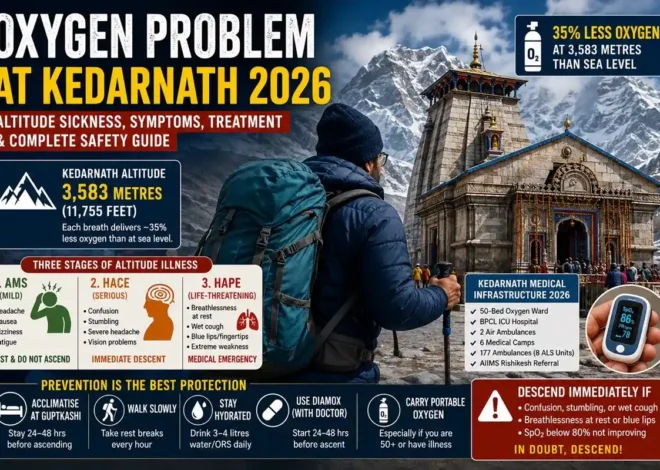
- If you have a history of breathlessness or heart conditions, consult a doctor before attempting the high-altitude trek, since mild Acute Mountain Sickness (AMS) is common above 3,000 metres.
- Save emergency numbers before you start: Uttarakhand Police helpline (112), SDRF disaster response, and the local BKTC (Badri-Kedar Temple Committee) helpdesk, which are also displayed at registration checkpoints.
Attractions Near Kedarnath for Sightseeing
Once you arrive, the surrounding Himalayan landscape offers several places worth exploring, though most require an additional short trek and are subject to local weather and route conditions:
- Kedarnath Temple: The main Shiva shrine, one of the twelve Jyotirlingas.
- Gandhi Sarovar (Chorabari Tal): A glacial lake near the mouth of the Chorabari glacier, about a 4 km trek from Kedarnath. Access can be restricted at times due to weather or landslide-related safety concerns, so check locally before heading out.
- Vasuki Tal: A pristine high-altitude lake surrounded by snow-clad peaks, roughly an 8 km trek from Kedarnath. This route is more demanding, so a local guide is recommended, and it’s best attempted only if you’re acclimatised with an extra day to spare.
- Gaurikund Temple: Dedicated to Goddess Gauri (Parvati), located right at the base of the trek, where she is said to have performed penance to win Lord Shiva.
- Triyuginarayan Temple: Believed to be the site of Shiva-Parvati’s wedding, located a short drive from Sonprayag.
- Shankaracharya Samadhi: A shrine near Kedarnath temple dedicated to Adi Shankaracharya.
- Bhairavnath Temple: An ancient temple just above Kedarnath temple, dedicated to the guardian deity of the region.
- Kalimath Temple: A temple dedicated to Goddess Kali, located en route between Guptkashi and Ukhimath.
Food Options Near Kedarnath
Given Kedarnath’s remote, high-altitude location, food options are basic rather than restaurant-style. For a full breakdown, see our dedicated guide to food options during the Kedarnath Yatra. In general, you’ll find:
- GMVN canteens and basic dhabas near the temple and base camp, serving simple vegetarian meals (dal, rice, roti, sabzi).
- Community langars, run by charitable trusts and volunteer groups, offering free meals to pilgrims — a long-standing tradition along this Himalayan pilgrimage route.
- Tea stalls and snack points along the trek at stops like Jungle Chatti and Linchauli, useful for quick energy during the climb.
Frequently Asked Questions
Q1: What is the distance from Haridwar to Kedarnath?
The road distance is approximately 230–240 km up to Gaurikund, plus a 16 km trek — around 250–255 km in total.
Q2: How long does it take to reach Kedarnath from Haridwar?
Road travel takes 8–9 hours off-season and up to 10–13 hours in peak season, followed by 6–8 hours for the trek.
Q3: Is there a direct bus from Haridwar to Kedarnath?
No. Seasonal buses run up to Guptkashi or Sonprayag; from there, a shuttle or shared jeep takes you to Gaurikund, and the temple is reached only by trek, pony, or helicopter.
Q4: Do I need to register before visiting Kedarnath?
Yes, Char Dham Yatra registration is mandatory and free at registrationandtouristcare.uk.gov.in.
Q5: What is the cheapest way to reach Kedarnath from Haridwar?
Taking a government or private bus followed by a shared jeep to Gaurikund is the most economical option.
Q6: How do I book a Kedarnath helicopter ticket from Haridwar?
Complete Char Dham registration first, then book only through the official IRCTC HeliYatra portal.
Q7: Is it better to stay in Gaurikund or Sonprayag before the trek?
Sonprayag and Guptkashi have more comfortable hotel options; Gaurikund’s stay facilities are more basic.
Q8: What is the best time to travel from Haridwar to Kedarnath?
May–June and September–early October offer the clearest roads and most pleasant weather.
Q9: Is oxygen available during the Kedarnath trek?
Yes, basic medical camps with oxygen support are stationed at intervals along the trek route.
Q10: Is the Haridwar to Kedarnath road safe during monsoon?
It’s best avoided — July–August sees frequent landslides on the hill stretches, and helicopter services are often suspended too.
Q11: Where can I park my private vehicle before the Kedarnath trek?
Vehicles are typically parked at the Sonprayag parking area, with a local shuttle covering the remaining stretch to Gaurikund.
Q12: Are pony or palki services available for the Kedarnath trek?
Yes, ponies, palkis, and dandis are available at Gaurikund for pilgrims who cannot complete the full 16 km trek on foot.
Q13: Is an ATM available near Kedarnath?
The last reliable ATMs are at Guptkashi and Sonprayag; don’t expect one at Gaurikund or Kedarnath itself.
Q14: Can children or senior citizens do this trip?
Yes, but helicopter, pony, or palki is recommended over the full trek, along with a doctor’s advice if there are any health concerns.
Conclusion
The journey from Haridwar to Kedarnath covers roughly 250–255 km in total, combining a scenic 230–240 km road drive with the final 16 km trek from Gaurikund. Whether you travel by bus, taxi, shared jeep, or helicopter, remember that Char Dham registration is mandatory and should be completed well ahead of time.
This journey from Haridwar to Kedarnath is more than a road trip — it’s a sacred Himalayan pilgrimage that rejuvenates the mind, body, and spirit. Plan ahead, check the latest weather and registration updates, and this holy journey to one of Lord Shiva’s most revered shrines is one every devotee should experience at least once in a lifetime.