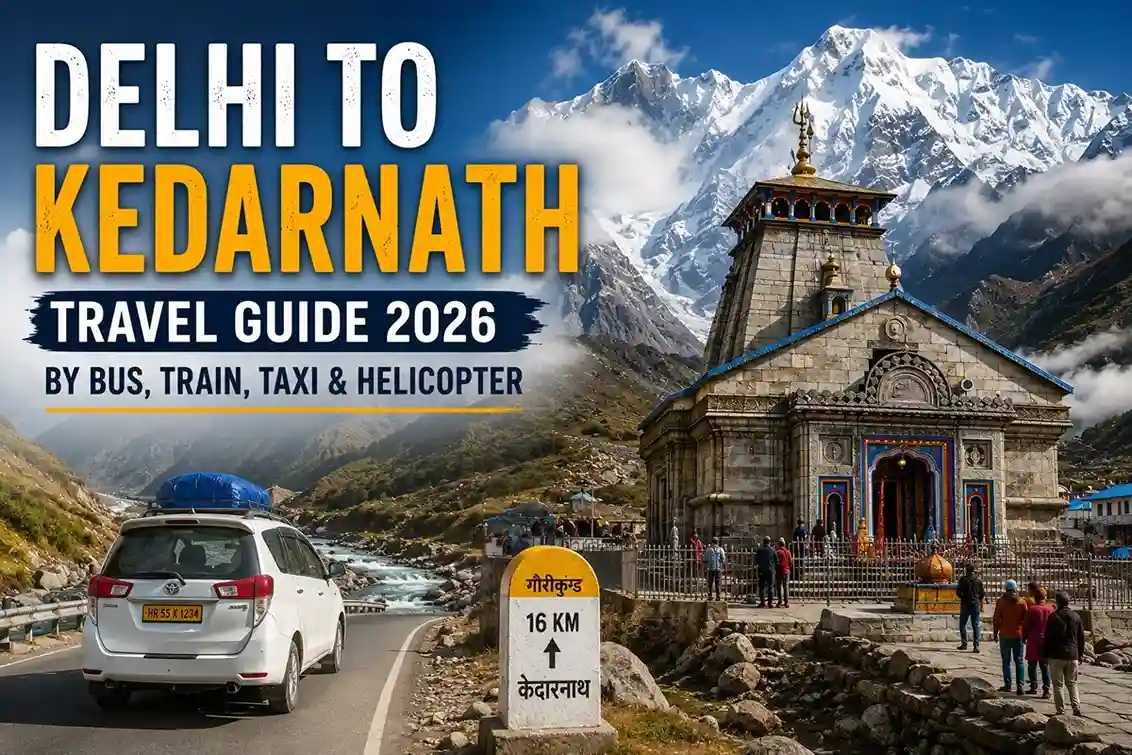
Thinking about how to reach Delhi to Kedarnath? Every year, thousands of pilgrims begin their journey to Kedarnath from Delhi to seek blessings at one of the twelve sacred Jyotirlingas of Lord Shiva.
There are several ways to make this trip — by road, train, bus, taxi, or helicopter. Each route suits a different budget and travel style. This guide covers the complete Delhi to Kedarnath route, distance, registration steps, cost, and the best time to travel, based on the latest 2026 information, so you can plan your Kedarnath yatra without confusion.
Quick Facts
| Detail | Information |
| Road distance | Approx. 445–460 km (Delhi → Sonprayag) + 16 km trek |
| Total travel time | 12–16 hours by road + 6–8 hours trek |
| Nearest railway stations | Haridwar Junction and Rishikesh |
| Nearest airport | Jolly Grant Airport, Dehradun (approx. 235–250 km from Gaurikund) |
| Nearest helipads | Sirsi, Phata, and Guptkashi |
| Temple altitude | Approx. 3,583 metres (11,755 ft) |
| Registration | Mandatory for all pilgrims |
Ways to Reach Kedarnath from Delhi
By Flight
Jolly Grant Airport in Dehradun is the nearest airport to Kedarnath. Daily flights connect it with Delhi’s Indira Gandhi International Airport (DEL).
From Dehradun, you have two options:
- Take a bus or taxi to Rudraprayag or Guptkashi, and continue by road to Gaurikund.
- Combine the flight with a helicopter ride from Phata, Sersi, or Guptkashi. The road journey from Dehradun to these helipads takes roughly 6–7 hours, and the short heli-hop covers the rest, offering superb Himalayan views.
By Train
If you’re travelling by train, book a ticket from New Delhi Railway Station to either Haridwar Junction or Rishikesh Railway Station — both are the nearest major railheads and are well connected by regular trains.
From either station:
- Hire a bus, taxi, or shared taxi toward Rudraprayag and onward to Sonprayag.
- Private vehicles generally stop at Sonprayag. From here, a short local shuttle takes you to Gaurikund, where the 16 km trek to Kedarnath begins.
- Pony and palanquin (palki) services are available at Gaurikund if you’d rather not walk the full stretch.
By Road
Road travel remains the most popular way to cover the Delhi to Kedarnath distance, with scenic Himalayan foothill views along the way.
- The road distance from Delhi to Sonprayag is approximately 445–460 km, depending on the exact route taken. Adding the 16 km trek from Gaurikund, the total journey works out to roughly 460–475 km.
- Travel time by road is usually 12 to 14 hours in normal conditions, but can stretch to 14–16 hours during peak yatra season (May–June) due to traffic, or longer if there’s a landslide or road repair underway.
- Self-driving is possible, but hire a driver experienced with hill roads if you’re not confident on mountain terrain, especially in low visibility or rain.
By Bus
Government and private buses from ISBT Kashmiri Gate in Delhi run to Rudraprayag, Guptkashi, and Sonprayag, and this remains the most budget-friendly way to travel. Overnight buses are common and help save a day. Once you arrive, local taxis or shared jeeps take you the rest of the way to Gaurikund, where the Kedarnath trek starts.
Note: regular shared-taxi networks for the onward route typically start from Haridwar, Rishikesh, or Rudraprayag rather than directly from Delhi — plan your bus ticket up to one of these towns first.
By Taxi
For more comfort, book a private taxi from Delhi all the way to Sonprayag or Gaurikund. App-based cabs like Uber or Ola can be used for the Delhi-to-Haridwar/Rishikesh leg, though availability for a long-distance hill trip depends on driver acceptance. For the complete route, it’s more reliable to book a dedicated taxi through a local travel operator.
By Helicopter
A helicopter ride from Sirsi, Phata, or Guptkashi is the fastest way to complete the last leg — cutting the 16 km trek down to a short flight of about 7 to 15 minutes, depending on the helipad:
- Sirsi: approx. 7–8 minutes
- Phata: approx. 8–10 minutes
- Guptkashi: approx. 12–15 minutes
Booking note for 2026: Kedarnath helicopter tickets can be booked only through the official IRCTC HeliYatra portal (heliyatra.irctc.co.in). Char Dham registration is mandatory before booking, and the booking window usually opens a week or two before the yatra season starts. Fares are announced fresh each season and vary by helipad and operator, so always check the official portal for current rates rather than relying on last year’s numbers.
Avoid third-party websites or agents claiming “guaranteed” helicopter seats outside IRCTC — such offers are frequently reported as scams.
Helicopter baggage limit: Most operators allow only 2–5 kg of hand baggage per passenger. Check the exact limit with your operator before you fly, since heavier bags may not be permitted onboard.
Char Dham Yatra Registration (Mandatory)
Char Dham Yatra registration is compulsory for every pilgrim heading to Kedarnath, whether you travel by road, trek, or helicopter. Registration is checked at multiple checkpoints along the route, including Sonprayag, so it’s best completed well before you leave Delhi.
How to register — quick steps:
- Visit registrationandtouristcare.uk.gov.in or download the “Tourist Care Uttarakhand” app.
- Fill in your name, age, address, and ID details (Aadhaar, Passport, or Voter ID).
- Submit and receive a QR code by SMS/email.
- Carry a printout or digital copy of the QR code and your ID.
- Show it for verification at checkpoints along the way.
Since daily pilgrim numbers are capped, register 10–15 days in advance if you’re travelling in the peak May–June season.
Delhi to Kedarnath Route Map with Distance
| Route Segment | Approx. Distance |
| Delhi to Haridwar/Rishikesh | 225–240 km |
| Haridwar/Rishikesh to Rudraprayag | 140–160 km |
| Rudraprayag to Sonprayag/Gaurikund | 75–80 km |
| Gaurikund to Kedarnath (trek) | ~16 km |
At Sonprayag, private vehicles usually park in the designated parking area, and a local shuttle or shared taxi covers the last stretch to Gaurikund.
Best Time for the Delhi to Kedarnath Trip
The Kedarnath temple stays open for about six months a year, closing for winter due to heavy snow. The exact opening and closing dates change slightly every year and are officially announced by the Shri Badarinath-Kedarnath Temple Committee (BKTC) around Maha Shivratri — so it’s worth checking their site closer to your travel date rather than relying on a fixed date here.
Month-wise weather guide:
| Months | Weather | Good for Travel? |
| May – June | Pleasant, clear roads | Best time, but crowded |
| July – August | Monsoon, landslide risk | Avoid if possible |
| September – Early Oct | Clear skies, cool | Excellent, less crowded |
| Late Oct – Nov | Cold, temple closes | Only early part suitable |
Helicopter services are usually suspended during peak monsoon months (July–August) due to poor visibility.
Sample Itinerary Options
- 2-Day trip (helicopter-based): Day 1 — Delhi to Phata/Guptkashi by road; Day 2 — early helicopter to Kedarnath, darshan, return flight, drive back toward Rishikesh.
- 3-Day trip (mixed): Day 1 — Delhi to Guptkashi/Sonprayag; Day 2 — Gaurikund trek to Kedarnath, darshan, overnight stay; Day 3 — descend and return toward Rishikesh/Haridwar.
- 4–5 Day trip (relaxed, by road): Extra day added for rest at Rishikesh or Guptkashi before and after the trek, useful for senior citizens or families with children.
Estimated Travel Cost from Delhi to Kedarnath
Actual costs shift with season, fuel prices, and demand, so treat these as approximate 2026 ranges:
- By bus + trek: ₹2,500–₹5,000 per person (most economical)
- By shared taxi + trek: ₹4,000–₹7,000 per person
- By private taxi (round trip, sedan): ₹16,000–₹24,000 for the vehicle
- By private taxi (round trip, SUV): ₹18,000–₹30,000+ for the vehicle
- By helicopter (road + heli combo): varies by season and helipad — check current IRCTC fares before budgeting
- Add roughly ₹1,500–₹3,000 per person for basic stay and food along the route
Pony, palki, and dandi rates at Gaurikund (approximate, negotiable and season-dependent):
- Pony: ₹2,000–₹5,000 one way
- Palki (palanquin): ₹4,000–₹10,000 one way
- Dandi (basic carry-chair, mainly for elderly or unwell pilgrims): rates similar to palki, confirm locally
Trek Difficulty and What to Expect
The Gaurikund-to-Kedarnath trek is rated moderate, with an altitude gain of roughly 1,600 metres over 16 km. Expect:
- Rest points, tea stalls, and basic medical camps at intervals like Jungle Chatti, Bhimbali, and Linchauli
- Drinking water points along most of the route
- Steeper sections in the final stretch before the Kedarnath base camp
Start early morning to avoid crowding and sudden afternoon weather changes.
Practical Tips: Network, Cash, and Medical Facilities
- Mobile network: Coverage is patchy beyond Sonprayag. BSNL and Jio tend to work better than other networks in this stretch, but don’t rely on constant connectivity.
- Cash and UPI: Carry sufficient cash. UPI and card payments can be unreliable in remote stretches due to poor network.
- Medical facilities: Basic medical aid posts are available along the trek route and at Kedarnath. If you have a heart or respiratory condition, carry a doctor’s note and consult before attempting the high-altitude trek.
- ATMs: Limited ATMs are available at Sonprayag and Guptkashi; don’t expect one at Gaurikund or Kedarnath.
What to Pack for the Trip
- Warm layered clothing (temperatures can drop below 5°C even in May–June)
- Sturdy trekking or walking shoes with good grip
- Raincoat or poncho, since mountain weather changes quickly
- A walking stick, water bottle, and energy snacks
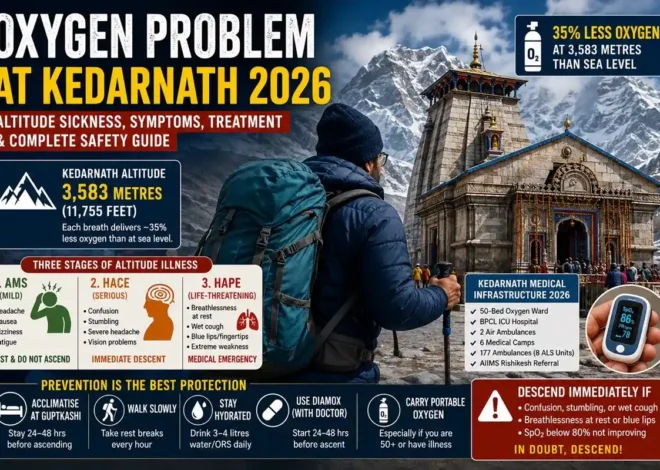
- Basic medicines; mild Acute Mountain Sickness (AMS) is common above 3,000 metres, so ascend slowly and stay hydrated
Nearby Places Worth Visiting
If you have extra time, consider visiting:
- Triyuginarayan – the mythological site of Lord Shiva and Parvati’s wedding
- Vasuki Tal – a scenic high-altitude lake, reachable via a side trek from Kedarnath
- Bhairavnath Temple – located just above Kedarnath temple, dedicated to the guardian deity of the region
Frequently Asked Questions
Q1: What’s the cheapest way to reach Kedarnath from Delhi?
A government or private bus from ISBT Kashmiri Gate to Rudraprayag or Guptkashi, followed by a shared taxi to Gaurikund, is the most budget-friendly option.
Q2: How far is Kedarnath from Delhi by road?
The road distance from Delhi to Sonprayag/Gaurikund is approximately 445–460 km, plus a 16 km trek to the temple.
Q3: How long does the Delhi to Kedarnath trip take?
Around 12–16 hours by road to Gaurikund, plus 6–8 hours for the trek, depending on traffic and weather.
Q4: Is one day enough for the Kedarnath trip from Guptkashi?
Yes, if you take an early helicopter, but a road-and-trek visit needs at least 2 days from Guptkashi.
Q5: Do I need to register before visiting Kedarnath?
Yes, Char Dham Yatra registration is mandatory and free at registrationandtouristcare.uk.gov.in.
Q6: How do I book a Kedarnath helicopter ticket?
Complete Char Dham registration first, then book only via the official IRCTC HeliYatra portal.
Q7: Is a direct bus available from Delhi to Kedarnath?
No. Buses run up to Rudraprayag, Guptkashi, or Sonprayag; Kedarnath itself is reachable only on foot, pony, or helicopter.
Q8: What is the best time for a Delhi to Kedarnath road trip?
May–June and September–early October offer the clearest roads and best weather.
Q9: Is oxygen available at Kedarnath?
Basic medical camps with oxygen support are stationed along the trek and near the temple for emergencies.
Q10: Can senior citizens or children make this trip?
Yes, but helicopter, pony, or palki is recommended over the full trek, along with a doctor’s clearance if there are health concerns.
Q11: Is a Delhi to Kedarnath bike trip possible?
Yes, many riders take this route via Rishikesh and Rudraprayag, but it demands hill-riding experience and careful weather checks.
Q12: Are hotels available near Kedarnath?
Yes, GMVN guesthouses and private hotels are available at Kedarnath, Gaurikund, and Guptkashi, though advance booking is recommended in peak season.
Q13: Is Delhi to Kedarnath by road safe in monsoon?
It’s best avoided — July–August sees frequent landslides, and helicopter services are usually suspended too.
Q14: What documents are required for Kedarnath registration?
A valid photo ID such as Aadhaar, Passport, or Voter ID, along with basic personal details for the online registration form.
Q15: Is there an ATM near Kedarnath?
Limited ATMs exist at Sonprayag and Guptkashi; none are reliably available at Gaurikund or Kedarnath itself.
Conclusion
The journey from Delhi to Kedarnath covers roughly 460–475 km in total — mostly by road, with the final 16 km on foot from Gaurikund. Whichever mode you pick — bus, train, taxi, or helicopter — remember that Char Dham registration is mandatory and should be completed well ahead of time.
This trip is more than a road journey; it’s a spiritual yatra to one of the holiest Jyotirlingas of Lord Shiva. Plan ahead, check the latest weather and registration updates, and your Delhi to Kedarnath pilgrimage should go smoothly.