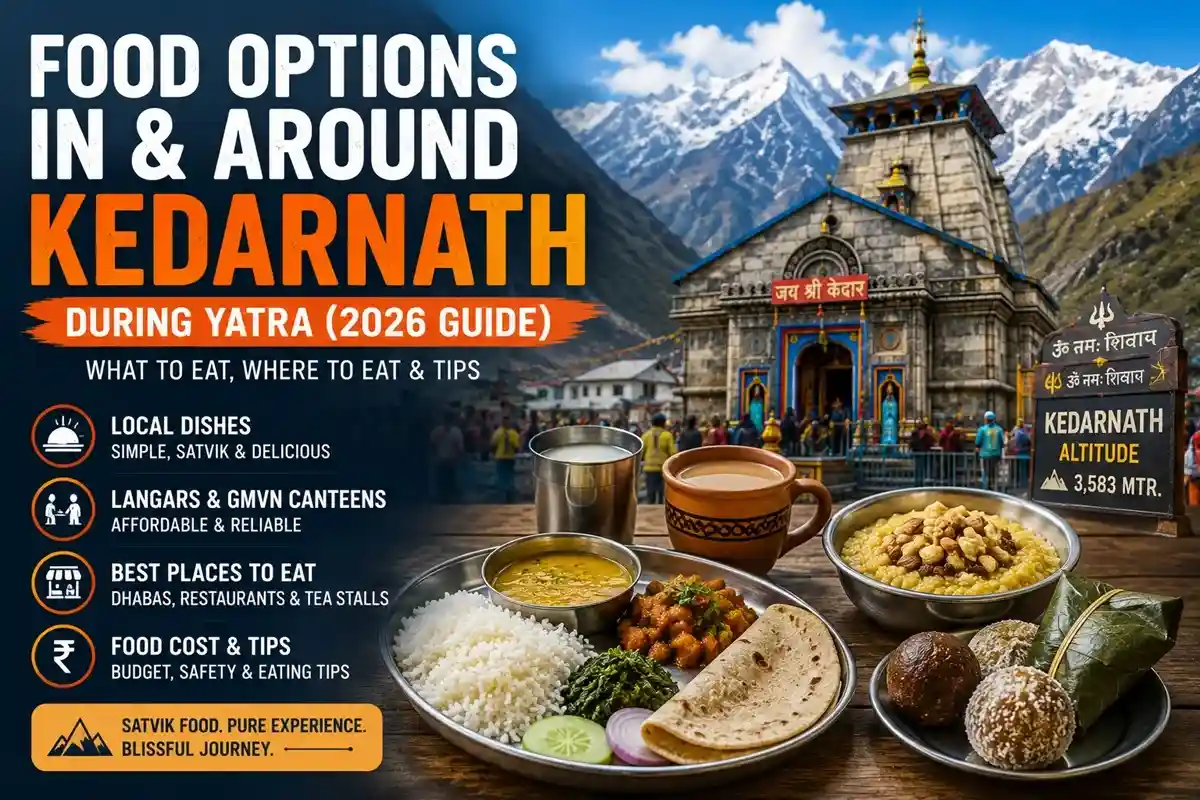
Finding good food at over 3,500 metres isn’t as difficult as many pilgrims expect. Kedarnath offers simple vegetarian meals, GMVN dining facilities, community langars, and small dhabas throughout the yatra season — enough to keep any pilgrim fuelled on the way to the sacred Kedarnath Temple.
Food options in Kedarnath during the yatra range from tea stalls and market dhabas to GMVN canteens and free community langars. In this guide, we’ll walk you through what’s actually available to eat in and around Kedarnath Dham, along with approximate prices, safety tips, and practical dining advice for this demanding high-altitude pilgrimage.
A Gastronomic Journey: Kedarnath Dham
Traditional Himalayan Fare
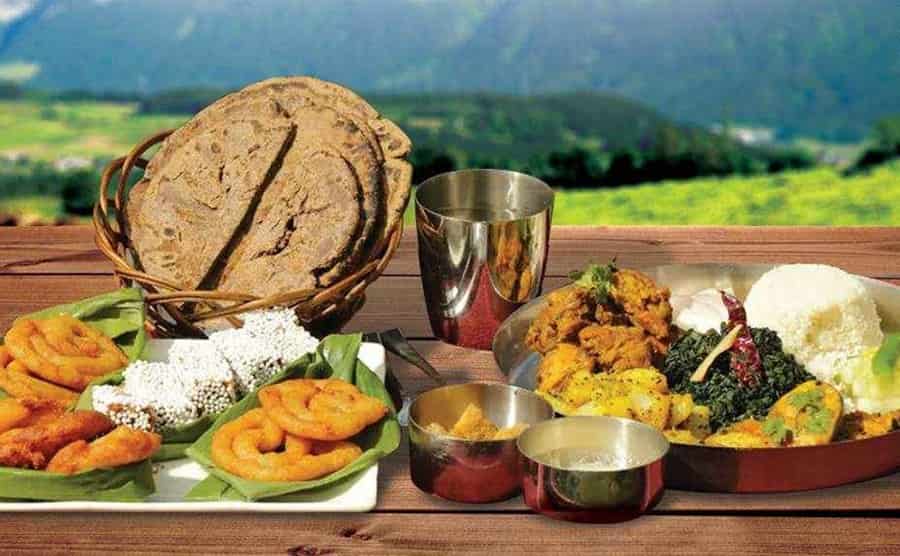
The culinary richness of the Kedarnath region centers on the age-old food culture of the Garhwal Himalayas. Traditional vegetarian dishes like Rajma, Kafuli, and Chainsoo are true regional specialties reflecting local ingredients and taste. Rajma, made of kidney beans flavored with fragrant spices, gives you a fulfilling meal after a tiring hike. Kafuli, a nutritious green leafy preparation made with spinach and fenugreek leaves, is a Garhwali classic. Chainsoo, made from ground and roasted urad dal (black gram), is a protein-rich, hearty dish popular across the hills. Mandua ki Roti, made from finger millet flour, is another wholesome Garhwali staple you’ll often find alongside these dishes.
A quick note on this: since Kedarnath temple town itself follows a strict satvik (pure vegetarian) food tradition due to its religious sanctity — and alcohol, tobacco, and non-vegetarian food are not appropriate near the temple premises — this guide focuses on the vegetarian regional dishes you’ll actually find here, rather than meat-based specialties from the wider Garhwal region that aren’t served in the temple town itself.
Local Vegetarian Delights
Vegetarians will enjoy an array of flavorful dishes sourced from local ingredients — and since Kedarnath serves almost entirely vegetarian food, this is what most pilgrims will actually eat during the yatra. Bhang ki Chutney, made from hemp seeds, has a distinctive nutty taste and pairs well with rice or flatbread. Aloo Ke Gutke, a spicy potato dish, is a top pick for authentic Himalayan flavor. Gahat ki Dal, a nutritious lentil soup made from horse gram and native herbs, rounds out a warming, wholesome meal.
Savoring Sweet Temptations
Kedarnath’s food trail isn’t just about hearty meals — it has a sweet side too. Bal Mithai, a traditional dessert made from roasted khoya, is soft, rich, and melts in your mouth. Singori, made of grated coconut and jaggery wrapped in a malu leaf, offers a fresh, sweet finish to any meal. Both sweets are more strongly associated with the Kumaon region but are commonly sold across Uttarakhand, including near Kedarnath. Many pilgrims also head to a warm halwa and tea stall after darshan — a simple, comforting way to end the visit.
Dining Amidst Natural Splendor
Pilgrims making their way through the hilly terrain of Kedarnath get to enjoy spell-binding mountain views while they eat. Many small-scale dhabas and tea stalls are set up along the route, letting travelers refuel while soaking in the Himalayan landscape — from a warm plate of Rajma to a sweet bite of Bal Mithai.
Langars and GMVN Dining Facilities
Alongside private dhabas, two of the most important — and often overlooked — food sources during the Kedarnath Yatra are:
- Community Langars: Free meals served by charitable trusts and volunteer groups along the trek route and near the temple. This is a long-standing tradition of the pilgrimage and often the most reliable source of a hot, simple meal, especially during peak season when private eateries can get crowded.
- GMVN Dining Facilities: GMVN-operated accommodation complexes generally include dining facilities during the yatra season, offering standardised, affordable meals. Since exact canteen setups can vary by season, treat this as a dependable category of budget-friendly food rather than one fixed outlet.
Tea stalls and snack points along the trek — at stops like Jungle Chatti and Linchauli — are also useful for a quick energy boost during the climb, typically serving tea, Maggi, and basic biscuits or snacks.
Best Places to Eat in Kedarnath
Rather than relying on specific business names, which can change ownership or shut down between seasons, it’s more reliable to know the categories of food available in Kedarnath:
- Main market vegetarian dhabas: Small eateries in Kedarnath’s main market area, serving thalis, dal-rice, and simple vegetarian dishes suited to pilgrims.
- GMVN dining facilities: A dependable, government-linked option for an affordable, standardised meal.
- Seasonal bhojanalayas: Vegetarian dining halls that operate through the yatra season; names and operators can vary year to year.
- Sweet shops: Local shops selling traditional Garhwali and Kumaoni sweets in the main market area.
- Halwa and tea points: Popular post-darshan stops for a warm, sweet snack after visiting the temple.
- Community Langars: Free, simple meals run by various trusts — look out for these along the market road and near the temple complex.
Since Kedarnath’s small eateries operate only during the yatra season and can change between years, it’s worth confirming what’s currently open once you arrive, rather than planning around a single specific name.
What Food Is Easily Available? Quick Reference
| Food Item | Availability in Kedarnath |
|---|---|
| Tea | Widely available |
| Maggi | Widely available |
| Veg thali (dal, rice, roti, sabzi) | Widely available |
| Dal-rice | Widely available |
| South Indian food (dosa, idli) | Limited |
| Fast food (pizza, burgers) | Very limited |
| Non-vegetarian food | Not available near the temple town |
Prasad and Food Customs at Kedarnath Temple
Like most Shiva temples, Kedarnath doesn’t typically offer a large cooked-food prasad; pilgrims usually receive small tokens like Bel patra, or can purchase basic sweets from shops near the temple to distribute as prasad. Since the temple town maintains strict religious sanctity, it’s respectful to avoid carrying non-vegetarian food, alcohol, or tobacco anywhere near the temple premises.
Estimated Food Cost in Kedarnath
Food prices here run higher than in the plains, given the remote location and the difficulty of transporting supplies up the mountain. These are approximate 2026 ranges and can shift with season, weather, and transport costs:
- Tea: ₹20–50
- Maggi: ₹80–150
- Simple veg thali: ₹150–300
- Basic breakfast (paratha/poha with tea): ₹80–200
- Bottled/packaged water: ₹30–50
- Langar meals: Free (voluntary donations welcome)
Carry sufficient cash, since UPI and card payments work inconsistently due to patchy network beyond Sonprayag.
Food Safety and Eating Tips at High Altitude
Eating well during the Kedarnath Yatra isn’t just about taste — at over 3,500 metres (the temple sits at approximately 3,583 m), it directly affects how comfortable your body feels at altitude:
- Stick to freshly cooked, hot food, and avoid raw salads or cut fruit from roadside stalls where hygiene can’t be confirmed.
- Drink only boiled, packaged, or purified water. Carrying a bottle with a purification tablet or filter is a good backup, especially where refill points aren’t clearly marked.
- Eat light, easily digestible meals before and during the trek — heavy, oily food can worsen nausea or discomfort at altitude.
- Limit caffeine and avoid alcohol during the trek, since both can worsen dehydration. Note that light meals and good hydration support your comfort at altitude — they help, but don’t guarantee prevention of Acute Mountain Sickness (AMS) on their own.
- Carry your own dry snacks — nuts, energy bars, glucose biscuits, and electrolyte/ORS sachets — as a backup for the trek, especially useful if you feel low on energy between stalls.
- If you have digestive sensitivities, it’s wise to avoid unfamiliar street food right before a long trekking day.
- Remember that most eateries close once the temple shuts for winter and reopen only when the yatra season resumes.
Food Tips for Families, Kids, and Special Diets
- For children: Simple options like khichdi, plain rice, and dal are usually easier on young stomachs than spicy dhaba food.
- For senior citizens: Stick to light meals, soups, and khichdi, and avoid overeating right before the trek or a helicopter flight.
- For diabetic travellers: Food choices are limited at altitude, so carrying your own suitable snacks and medication is strongly recommended.
- For vegan travellers: Vegan meals may be possible at some eateries if ingredients are available, but this isn’t guaranteed everywhere — small seasonal kitchens often have limited stock, so it helps to ask in advance.
- For Jain travellers: Some dhabas can prepare simple no-onion, no-garlic meals on request, though this depends on the individual eatery, so it’s worth checking directly.
Tips to Eat in Kedarnath
- Look for eateries that are crowded with locals: Locals tend to know where the food is fresh and reliably prepared, so a busy dhaba is usually a good sign.
- Try the regional specialties: Kedarnath’s food carries as much regional character as its spiritual surroundings — trying a local dish like Aloo Ke Gutke, Kafuli, or Singori adds to the experience.
- Communicate dietary preferences in advance: Most eateries in Kedarnath serve vegetarian food by default, so mention any additional restrictions (vegan, Jain, allergies) ahead of ordering.
- Support local eateries and langars: Choosing local dhabas and contributing to langars helps sustain the community that keeps this pilgrimage route running.
FAQ
Q1: Is non-vegetarian food available in Kedarnath?
No, almost all eateries right at Kedarnath serve pure vegetarian food due to the temple town’s religious sanctity.
Q2: Are free meals (langar) available during the Kedarnath Yatra?
Yes, community langars run by trusts and volunteer groups serve free meals along the trek route and near the temple, especially during peak season.
Q3: Is GMVN dining a reliable food option in Kedarnath?
Yes, GMVN-operated complexes generally include dining facilities offering affordable, standardised meals during the yatra season.
Q4: Is it safe to drink tap water in Kedarnath?
It’s best to avoid untreated tap water. Stick to boiled, packaged, or purified water throughout your stay and trek.
Q5: What local vegetarian dishes should I try during the Kedarnath Yatra?
Try regional specialties like Aloo Ke Gutke, Kafuli, Gahat ki Dal, and Chainsoo, along with sweets like Bal Mithai and Singori.
Q6: How much does food cost during the Kedarnath Yatra?
Expect roughly ₹20–50 for tea, ₹80–150 for Maggi, and ₹150–300 for a simple veg thali, though prices vary with season and transport costs.
Q7: Are vegan or Jain food options available in Kedarnath?
Some eateries can accommodate vegan or Jain requests if ingredients allow, but this isn’t guaranteed everywhere, so it’s best to ask in advance.
Q8: What should I eat before starting the Gaurikund-Kedarnath trek?
Choose a light, easily digestible meal — heavy or oily food can worsen discomfort at high altitude, so avoid overeating before the climb.
Q9: Do restaurants in Kedarnath stay open year-round?
No, most eateries operate only during the yatra season, roughly from late April to early November, and close once the temple shuts for winter.
Q10: Are tea stalls available along the trek route?
Yes, tea stalls and snack points are available at intervals like Jungle Chatti and Linchauli, useful for quick energy during the climb.
Q11: What kind of prasad is offered at Kedarnath Temple?
Kedarnath doesn’t offer a large cooked-food prasad; pilgrims usually receive small tokens like Bel patra or buy sweets from nearby shops to offer and distribute.
Q12: What food options work best for children or elderly pilgrims?
Simple, light meals like khichdi, plain rice, dal, and soups are generally easier to digest for both children and senior citizens at altitude.
Conclusion
The food scene at Kedarnath is simple, but it plays a real part in the pilgrimage experience — from a warm plate of Rajma at a roadside dhaba to a free meal at a community langar, or an affordable meal at a GMVN dining facility. Since the temple town keeps things pure vegetarian out of respect for its religious character, most of what you’ll eat here is wholesome, satvik fare rooted in Himalayan tradition. Eat light, stay hydrated, and let the food options in Kedarnath add one more layer of warmth to your sacred journey.