Kedarnath Dham History and Legends

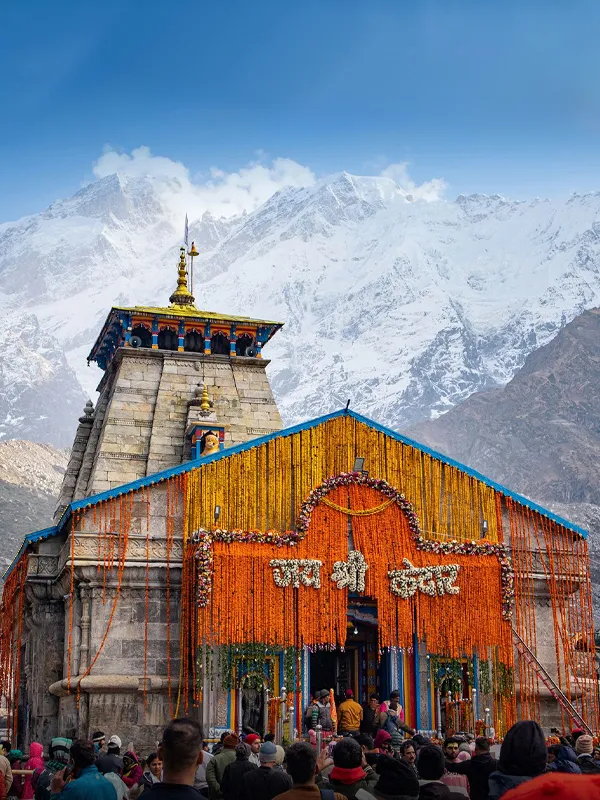
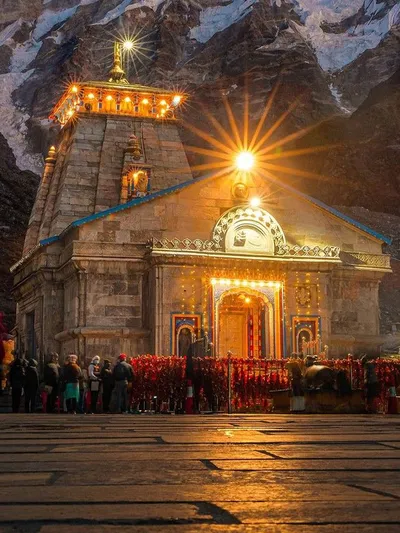
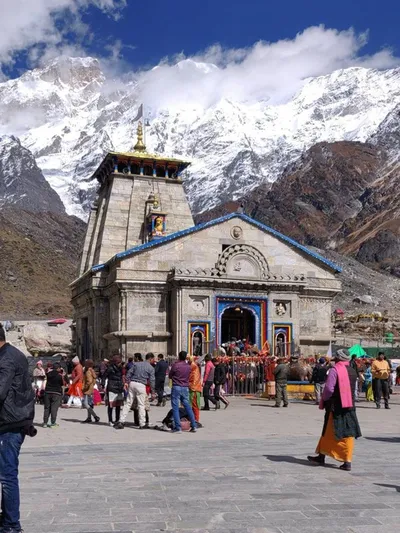
Perched at approximately 3,583 metres in the Garhwal Himalayas, Kedarnath Dham carries a history that blends scripture, legend, and science. This guide on Kedarnath history and legends separates religious tradition from documented history, so pilgrims get an accurate picture before their Himalayan journey. Understanding the real Kedarnath Dham story — not just the popular version — also makes the pilgrimage far more meaningful.
Legend of the Pandavas
The most well-known Kedarnath legend traces back to the Mahabharata era. After the Pandava brothers won the Kurukshetra war by killing their own kin, they felt burdened by this sin.
On the advice of sage Ved Vyasa, they travelled toward the Himalayas via Haridwar. They were searching for Lord Shiva to seek forgiveness.
Near Guptkashi, they found Shiva disguised as a bull, hiding among a herd. Bhima recognised the bull and tried to stop it from escaping — different versions of the story describe this moment differently, so no single detail should be read as fixed fact.
As the bull began sinking into the earth, its hump remained visible at the spot now known as Kedarnath. This is why the sacred lingam here has a distinctive triangular, hump-like shape.
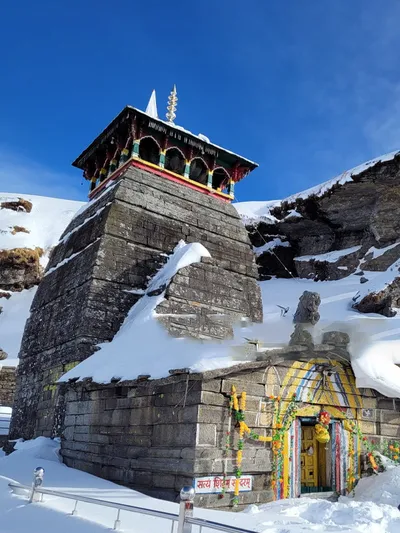
According to tradition, the bull's other body parts appeared at four more locations: the arms at Tungnath, the navel at Madhyamaheshwar, the face at Rudranath, and the hair at Kalpeshwar. Some versions also place the head at Pashupatinath in Nepal. According to Hindu tradition, the Pandavas are believed to have established worship at these five sacred sites — a story closely tied to the Skanda Purana's Kedarkhand section.
Legend of the Self-Manifested Lingam
The Kedarnath lingam is not a carved idol. It is worshipped as a naturally occurring, triangular rock formation.
Devotees consider it Swayambhu, or self-manifested, and believe darshan of this lingam helps cleanse accumulated sins. Most Jyotirlingas share this naturally-formed style, but Kedarnath's shape is uniquely tied to its own bull-hump origin legend — which also answers a common question pilgrims ask: why is the Kedarnath lingam triangular in the first place?
Swargarohini and the Pandavas' Onward Journey
After receiving Lord Shiva's blessings, tradition holds that the Pandavas and Draupadi continued toward the high Himalayas in search of Swarga (heaven) — a path known as Swargarohini.
Most Hindu texts associate this final journey primarily with the Badrinath–Mana region and the Satopanth area. Some local traditions also connect the upper Kedarnath valley, near Vasuki Tal, to this legend, though this is a less dominant version of the story.
Panch Kedar Connection
Hindu tradition holds that five body parts of Lord Shiva's bull form appeared at five Himalayan locations, together forming the Panch Kedar. Kedarnath, representing the hump, is the most prominent of the five and the customary first stop on the circuit.
The other four — Tungnath, Rudranath, Madhyamaheshwar, and Kalpeshwar — are usually visited afterward. Together, they make Kedarnath central to Himalayan Shaivism and to the wider Char Dham Yatra tradition.
Who Built the Present Kedarnath Temple?
This is one of the most-asked questions about Kedarnath, and honestly, there is no single confirmed answer. Three explanations are commonly cited:
- Pandava tradition: Hindu belief credits the Pandavas with establishing the original shrine during the Dwapara Yuga.
- Adi Shankaracharya's revival: Most historians link the temple's present stone structure and organised worship to the 8th century CE, during Adi Shankaracharya's time.
- Later renovation theory: Some regional accounts mention Raja Bhoj of Malwa contributing to the temple's structure around the 11th century, though this is less widely documented.
No conclusive archaeological evidence has been published confirming the Pandavas' involvement, so this part of the story remains a matter of faith rather than verified history.
Historical Account: Adi Shankaracharya's Role
Kedarnath's documented history connects strongly to the 8th-century philosopher-saint Adi Shankaracharya. Born in Kaladi, Kerala, he travelled extensively across India, establishing mathas, temples, and pilgrimage centres.
He is widely credited with reviving pilgrimage traditions and strengthening organised worship across the Himalayas, including at both Kedarnath and Badrinath.
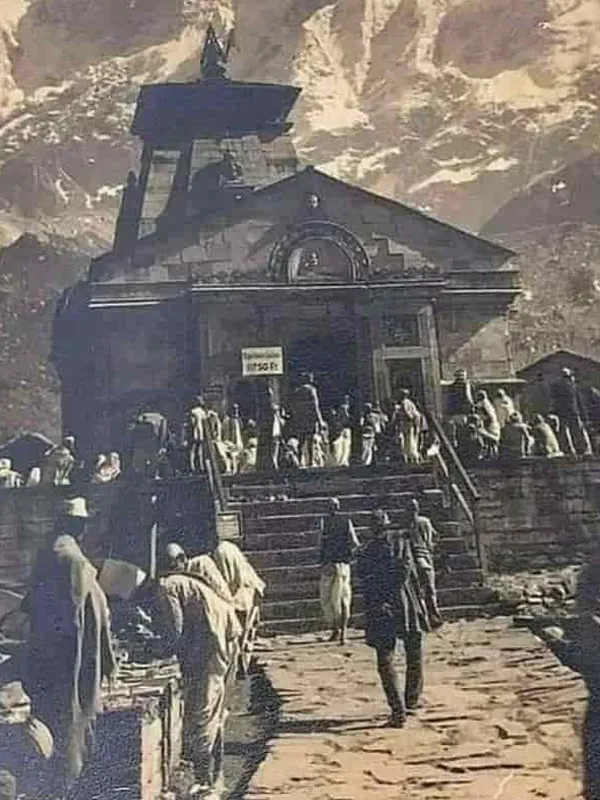
Tradition holds that he spent his final years at Kedarnath and attained samadhi behind the temple. Some accounts place his final days at Kanchipuram or Kerala instead — historians treat the exact location as unresolved. A memorial shrine behind the main temple honours him; after the 2013 floods, it was rebuilt with reinforced, partly underground construction.
Buried in Snow for 400 Years
The exact construction date of Kedarnath Temple is still undetermined. A study by the Wadia Institute of Himalayan Geology, Dehradun, offered one useful clue.
Researchers found yellowish striations on the temple's outer stone walls, consistent with glacial movement. Their lichenometric dating suggested — not confirmed with certainty — that the temple may have remained under snow and ice for close to 400 years during the Little Ice Age (roughly 1300–1900 CE).
This is a widely cited scientific interpretation rather than an uncontested historical fact. What is verified, however, is that the core temple structure survived the devastating 2013 flash floods with comparatively minor damage, even as much of the surrounding township was destroyed.
Is Kedarnath Mentioned in the Mahabharata?
The Mahabharata itself does not name "Kedarnath" as a temple. The broader Pandava pilgrimage to the Himalayas after the war, however, is mentioned in the epic and its associated Puranic literature.
The detailed bull-and-hump story, along with the specific Panch Kedar geography, comes primarily from later texts such as the Skanda Purana's Kedarkhand section, not the Mahabharata's core verses.
What the Scriptures Say
Kedarnath appears in classical Hindu texts, most notably in the Kedarkhand section of the Skanda Purana, which describes the region's sanctity and its connection to Lord Shiva. The Shiva Purana also references Kedareshwar as one of the twelve Jyotirlingas.
These textual mentions, alongside the Pandava legend, support Kedarnath's long-standing status as a major Shaivism pilgrimage site — separate from, and not to be confused with, the Ganga-origin legends associated with Gangotri and Gaumukh.
Why the Name "Kedarnath"?
"Kedar" is one of Lord Shiva's names, associated with this Himalayan region, and "Nath" means lord or master. Together, Kedarnath translates roughly to "Lord of the Kedar field" — a fitting name for a shrine set in a high Himalayan meadow long associated with Shiva worship.
Legend vs Documented History: A Quick Fact-Check
To keep this guide accurate, here is a clear split between religious tradition and what research actually supports:
- Sacred tradition (belief-based): The Pandavas establishing worship here, the bull-hump origin of the lingam, and Adi Shankaracharya's samadhi location at Kedarnath.
- Reasonably documented history: Adi Shankaracharya's 8th-century revival of Himalayan pilgrimage traditions, and Kedarnath's mentions in the Skanda Purana and Shiva Purana.
- Scientific interpretation: The Wadia Institute's glacial-burial findings and the temple's confirmed survival of the 2013 floods.
This distinction doesn't make the legends less meaningful. It simply helps readers know which parts are matters of faith, and which are backed by evidence.
Conclusion
The history of Kedarnath is a layered mix of Mahabharata-era tradition, scriptural reference, and later scientific study. From the Pandavas' search for forgiveness to Adi Shankaracharya's revival of pilgrimage traditions and the Wadia Institute's glacial research, Kedarnath's legacy is as remarkable as its Himalayan setting. Knowing which parts of this Kedar Dham story are legend and which are documented makes the pilgrimage itself far more meaningful.
Frequently Asked Questions
Q1. What is the history of Kedarnath Temple?
Ans: A mix of Mahabharata-era Pandava tradition, an 8th-century revival credited to Adi Shankaracharya, and later scientific study of its Little Ice Age survival.
Q2. What is the main legend of Kedarnath Dham?
Ans: The Pandavas sought Lord Shiva's forgiveness; the bull form's hump reportedly appeared here, forming the sacred lingam.
Q3. Why are the Pandavas associated with Kedarnath Temple?
Ans: Hindu tradition credits them with establishing worship here after the Kurukshetra war, on sage Ved Vyasa's advice.
Q4. Who built the present Kedarnath Temple?
Ans: No single answer is confirmed; theories include Pandava tradition, Adi Shankaracharya's 8th-century revival, and a possible later Raja Bhoj renovation.
Q5. Is Kedarnath older than Badrinath?
Ans: Both are ancient; historians generally date organised worship at both to Adi Shankaracharya's 8th-century revival, so a precise age comparison isn't established.
Q6. Is Kedarnath mentioned in the Mahabharata?
Ans: The epic mentions the Pandavas' Himalayan pilgrimage, but the detailed bull-hump story comes mainly from the later Skanda Purana.
Q7. Why is the Kedarnath lingam triangular?
Ans: Tradition says it represents the hump of Lord Shiva's bull form, which is why it has a natural triangular shape.
Q8. Is the Kedarnath lingam natural or man-made?
Ans: It is worshipped as a naturally formed (Swayambhu) rock, not a carved idol.
Q9. What are the Panch Kedar temples?
Ans: Kedarnath, Tungnath, Madhyamaheshwar, Rudranath, and Kalpeshwar, forming the Panch Kedar pilgrimage circuit.
Q10. Did Adi Shankaracharya die at Kedarnath?
Ans: Tradition says yes, though some accounts place his final days at Kanchipuram or Kerala; the exact location is historically unresolved.
Q11. Was Kedarnath Temple really buried under snow for 400 years?
Ans: A Wadia Institute of Himalayan Geology study suggests this, based on glacial striations on the temple walls, though it's a scientific interpretation rather than settled fact.
Q12. Is there archaeological evidence of the Pandavas at Kedarnath?
Ans: No confirmed archaeological evidence exists; the Pandava connection remains a matter of religious tradition.
Q13. What is the age of Kedarnath Temple?
Ans: Its exact construction date is unknown; its revival is generally dated to around the 8th century CE.
Q14. Which scriptures mention Kedarnath?
Ans: Mainly the Skanda Purana's Kedarkhand section and the Shiva Purana, both referencing its Jyotirlinga status.
Q15. What does the name "Kedarnath" mean?
Ans: It roughly translates to "Lord of the Kedar field," referring to Lord Shiva.
Q16. What is the Swargarohini legend connected to Kedarnath?
Ans: It refers to the Pandavas' final Himalayan journey toward heaven; most traditions link this primarily to the Badrinath–Mana region.
Kedarnath Travel Guide










Kedarnath Travel Packages



Important Safety Notice
Beware of Fake Char Dham & Kedarnath Helicopter Booking Websites
Fake websites, WhatsApp accounts and advertisements may impersonate genuine travel companies or helicopter operators. Always verify before paying.