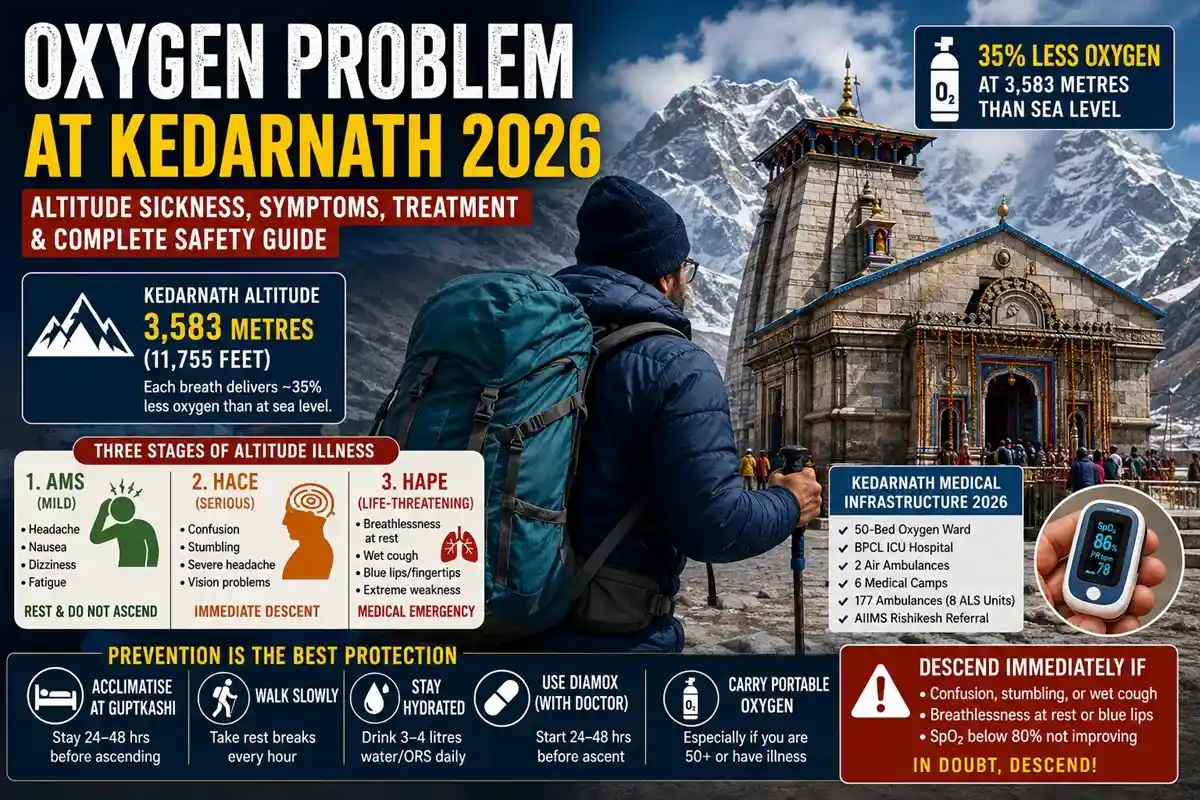
The Kedarnath temple, standing at approximately 3,583 metres (11,755 ft) in the Himalayas, is one of the most important pilgrimage sites in India. The walk to the temple is both beautiful and tough, so it’s a good idea to start early. Beginning your Kedarnath trek in the early morning helps you avoid the cold, beat the crowd, and comfortably reach the temple before the official cut-off.
Weather in hilly areas can change quickly, so it’s important to follow the trek timings to stay safe. When you follow the trek schedule, you can enjoy the journey without worrying about your safety or comfort. This travel guide covers the ideal Kedarnath trek starting time, checkpoint cut-offs, altitude and elevation gain, and what to do if you miss the window.
Quick Reference
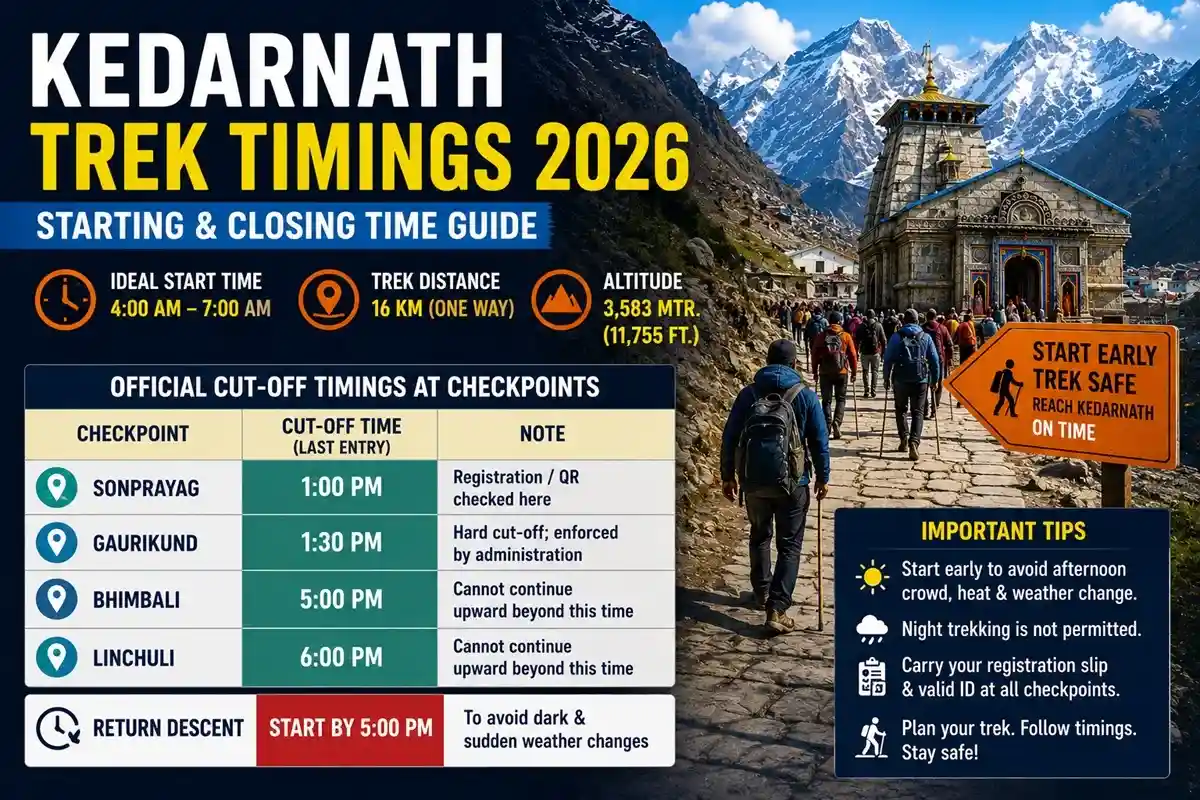
| Checkpoint | Cut-Off Time (Last Entry) | Note |
| Sonprayag | 1:00 PM | Registration/QR checked here |
| Gaurikund (trek start) | 1:30 PM | Enforced by Rudraprayag administration |
| Bhimbali (mid-route) | 5:00 PM | Cannot continue upward beyond this time |
| Linchuli (mid-route) | 6:00 PM | Cannot continue upward beyond this time |
| Return descent from Kedarnath | Start by 5:00 PM | Strongly advised, to avoid dark and weather changes |
These are operational timings set by the Rudraprayag district administration and can change on short notice due to weather, landslides, or crowd management — always check for same-day notices at Sonprayag and Gaurikund before you start.
Recommended start time: Most pilgrims begin the 16 km Gaurikund-to-Kedarnath trek between 4:00 AM and 7:00 AM, since it typically takes 6–8 hours to complete. Note: the trek measured around 18 km on the older pre-2013 alignment; current guidance uses the shorter, reconstructed ~16 km route.
Important Updates on Kedarnath Trek Timings for Your Safety
- Completing the trek requires both physical effort and spiritual belief.
- The District Magistrate of Rudraprayag has set these trek timings to help protect pilgrims.
- The rules exist because bad weather can affect the pilgrimage route, and darkness on mountain trails is genuinely dangerous.
- These timings are enforced through registration QR checks at Sonprayag and Gaurikund, so make sure your Char Dham registration is completed and handy before you arrive.
- Since these are administrative, operational timings, they can be tightened further on short notice — for instance, during heavy rain or fog, officials may bring the Gaurikund cut-off forward, so check locally on the morning of your trek.
Trek Altitude and Elevation Gain
Understanding the altitude change helps you judge how demanding the trek really is:
| Point | Approx. Altitude |
| Sonprayag | ~1,829 m |
| Gaurikund (trek start) | ~1,980 m |
| Kedarnath Temple | ~3,583 m (11,755 ft) |
Pilgrims gain roughly 1,600 metres of elevation over the 16 km climb from Gaurikund, which is why the trek feels tougher than the distance alone suggests, and why a slow, steady pace with regular breaks matters more than speed.
Ideal Time to Start the Kedarnath Trek
While the official cut-off at Gaurikund is 1:30 PM, waiting until the last minute isn’t a good idea. Most pilgrims start the 16 km trek between 4:00 AM and 7:00 AM, for good reason:
- An early start avoids the midday sun and afternoon crowd at the trek route and checkpoints.
- It gives you a comfortable buffer of 6–8 hours to reach Kedarnath, rest, and still have time for darshan before the temple’s evening timing.
- Night trekking is not permitted on this route, so starting early keeps you well within the safe daylight window.
Which start time suits you best?
| Traveller Type | Suggested Start Time |
| Young adults, fit trekkers | Around 5:00 AM |
| Families with children | 4:30–5:30 AM |
| Senior citizens | Before 5:00 AM |
| Pony/palki users | Before 6:00 AM |
| First-time trekkers | Around 4:30–5:00 AM |
Morning Departures, Return by Afternoon
- Pilgrims need to start their trek from Gaurikund to Kedarnath before 1:30 PM — treat this as the absolute latest, not the target time.
- Starting early gives you enough time to travel safely and enjoy the journey without rushing.
- Trekking in the mountains after dark is dangerous, so make sure to start well before the cut-off.
Safe Return from Kedarnath
- After praying at Kedarnath temple, it’s important to start the return journey without delay.
- Pilgrims are strongly advised to begin descending by around 5:00 PM to avoid darkness and rapidly changing mountain weather — this is a safety recommendation rather than a formally published legal cut-off, but it’s treated seriously by local authorities.
- Coming down may seem easier, but it also needs full focus and care, just like the climb, since fatigue sets in after a long day.
What Happens If You Miss the Cut-Off
If you arrive at Gaurikund after 1:30 PM, you won’t be permitted to start the upward trek that day. In this situation:
- You’ll need to stay overnight at Gaurikund or Sonprayag, where GMVN and private guesthouses are available, and start the trek early the next morning instead.
- Trying to push through after the cut-off isn’t allowed and isn’t safe, given how quickly weather and visibility can change in the mountains.
- Planning your day so you reach Sonprayag well before 1:00 PM gives you a comfortable buffer to clear checkpoints and start the climb on time.
Timing Tips for Elderly Pilgrims, Children, and Pony/Palki Users
Not everyone covers the 16 km trek at the same pace, so timing needs adjusting accordingly:
- Elderly pilgrims or those with health conditions: Start as close to sunrise as possible, since walking pace is naturally slower and the trek may take closer to 8–10 hours with rest stops. Anyone with asthma, heart disease, or uncontrolled blood pressure should consult a doctor before attempting the climb.
- Families with children: Build in extra time for breaks, and start early enough that a slower pace still comfortably beats the 1:30 PM cut-off.
- Pony or palki users: These are faster than walking but still depend on early booking and daylight hours — starting early also means better animal and porter availability before peak-hour rush.
- If time feels tight: A helicopter from Phata, Sirsi, or Guptkashi (booked via the official IRCTC HeliYatra portal) removes the trek-timing pressure entirely for those short on time or physically unable to walk the full distance.
Kedarnath Temple Darshan Timings
Darshan at Kedarnath Temple is generally available from around 4:00 AM to 12:00 noon and again from 3:00 PM to 9:00 PM during the yatra season. These are typical seasonal hours rather than fixed daily timings — special pujas, festivals, or BKTC instructions can shift them, so it’s worth confirming locally if your visit falls on a specific ritual day. Morning darshan is usually recommended to avoid the heaviest queues, especially during peak season (May–June).
Rest Points, Medical Posts, and Facilities Along the Route
The Gaurikund-to-Kedarnath trail has several designated stops that make the climb more manageable:
- Rest points: Jungle Chatti, Bhimbali, and Linchuli are the most commonly used halts, offering tea stalls and a place to catch your breath.
- Medical posts: First-aid and basic emergency medical assistance, including oxygen support at select points, are available along the route during the yatra season — though this shouldn’t be relied on as a substitute for proper acclimatisation and pacing.
- Toilets: Public toilets are available at the major halts along the trek.
- Drinking water: Refill points and packaged water are available at intervals; carry a bottle and stay well hydrated throughout the climb.
- Weather closures: Authorities may temporarily suspend trekking movement during heavy rain, landslides, rockfall, or poor visibility — always follow on-the-spot instructions from officials at checkpoints.
What to Carry for an Early Morning Start
Since most pilgrims begin well before sunrise, a few essentials make the early start easier:
- A torch or headlamp, since it’s still dark when many pilgrims set off from Gaurikund.
- Warm layers, as early mornings in the hills are noticeably colder than midday.
- A walking stick, water bottle, and light snacks to keep your energy up through the 6–8 hour climb.
- A printed or downloaded copy of your Char Dham registration QR code, since mobile network can be unreliable along the route.
Perfect Balance of Safety
- The trek timings for Kedarnath are planned carefully to respect tradition and ensure safety.
- Officials work hard to make sure pilgrims are safe in the challenging Himalayan terrain, where weather can shift with little warning.
A Reminder to Stay Alert
Pilgrims won’t be allowed to start their journey to Kedarnath from Sonprayag after 1:00 PM or from Gaurikund after 1:30 PM. Similarly, no one can continue the trek beyond 5:00 PM from Bhimbali or 6:00 PM from Lincholi. These mid-route cut-offs exist because reaching Kedarnath very late in the day leaves little daylight margin if weather turns bad. Remember, these are administrative timings tied to current advisories, so it’s worth checking for same-day updates at the checkpoints.
- Also Read: Kedarnath Yatra Route Map
FAQ
Q1: What time should I start the Kedarnath trek from Gaurikund?
Aim to start between 4:00 AM and 7:00 AM; the official cut-off is 1:30 PM, but starting early gives you a much safer buffer.
Q2: What is the Kedarnath trek cut-off time?
Pilgrims must leave Sonprayag by 1:00 PM and Gaurikund by 1:30 PM to be allowed to start the trek that day; these are operational timings that can change.
Q3: What happens if I miss the 1:30 PM cut-off at Gaurikund?
You won’t be allowed to start the trek that day and will need to stay overnight nearby, then begin early the next morning.
Q4: How long does the Gaurikund to Kedarnath trek take?
It typically takes 6–8 hours, depending on your fitness level, weather conditions, and the number of rest breaks.
Q5: What is the altitude of Kedarnath Temple?
Kedarnath Temple stands at approximately 3,583 metres (11,755 ft), with pilgrims gaining roughly 1,600 metres from Gaurikund.
Q6: Is night trekking allowed on the Kedarnath route?
No, night trekking is not permitted, which is why starting early and following the trek timings matters.
Q7: What time does Kedarnath Temple open for darshan?
Darshan is generally available from 4:00 AM to 12:00 noon and 3:00 PM to 9:00 PM, though these are typical seasonal hours and can shift on special days.
Q8: By what time should I start descending from Kedarnath?
It’s strongly advised to begin your return trek by 5:00 PM to avoid darkness and sudden weather changes on the way down.
Q9: Are medical facilities available during the Kedarnath trek?
Yes, basic medical posts with first-aid and oxygen support are available at select points, though proper acclimatisation and pacing still matter most.
Q10: Do I need registration to pass the Sonprayag and Gaurikund checkpoints?
Yes, valid Char Dham Yatra registration and QR verification are required at these checkpoints before you can proceed.
Q11: How should elderly pilgrims plan their Kedarnath trek timing?
Start as close to sunrise as possible, since the trek may take 8–10 hours at a slower pace, and consider pony, palki, or helicopter options.
Q12: Can the Kedarnath trek be temporarily closed due to weather?
Yes, authorities may suspend trekking movement during heavy rain, landslides, or poor visibility, so always follow on-the-spot checkpoint instructions.
Conclusion
Following the Kedarnath trek timings is essential for both safety and a smooth pilgrimage experience. Starting early — ideally between 4:00 AM and 7:00 AM from Gaurikund — gives you ample time to reach the temple, enjoy darshan, and avoid the cold, rather than cutting it close to the 1:30 PM cut-off. Since weather in the hills can change quickly and these checkpoint timings are operational rather than fixed forever, respecting the schedule at Sonprayag, Gaurikund, Bhimbali, and Linchuli isn’t just a rule — it’s what keeps the journey safe. Plan to begin your return by around 5:00 PM, and these Kedarnath trek timings will help you complete your sacred pilgrimage safely while staying focused on the spiritual journey itself.
Suggested Tour