The Highest Shiva Temple in the World

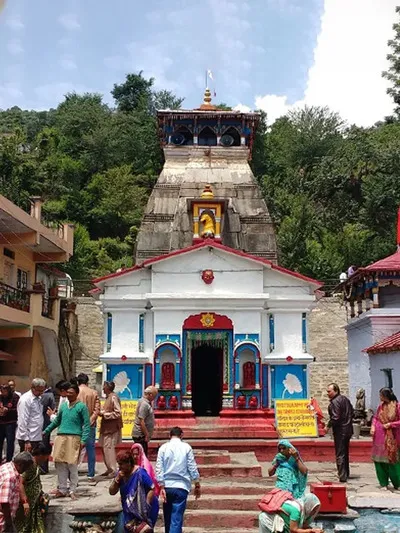
Tungnath Temple sits at 3,680 metres (12,073 ft) in the Garhwal Himalayas of Uttarakhand's Rudraprayag district — the highest Shiva temple in the world. Its name is traditionally read as "lord of the peaks." Tungnath is the third and highest of the Panch Kedar shrines, where Lord Shiva is worshipped in the form of his arms. The setting does most of the work here: alpine meadows, rhododendron forest, and a wall of snow peaks that stays with you longer than the trek itself does.
Tungnath at a Glance
| Detail | Information |
|---|---|
| Location | Rudraprayag district, Uttarakhand |
| Altitude | 3,680 m (12,073 ft) |
| Trek starts from | Chopta |
| Chopta to Tungnath | Approx. 3.5 km one way |
| Trek duration | Roughly 2–4 hours one way |
| Tungnath to Chandrashila | Approx. 1.5 km further |
| Religious significance | Third of the Panch Kedar shrines |
| Winter seat of the deity | Makkumath, near Ukhimath |
| Open season | Late April/early May to early November (varies yearly) |
| Best months | May–June, September–October |
The Story Behind the Tungnath Temple
According to Hindu tradition, Tungnath's origin ties back to the Mahabharata. After the Kurukshetra war, the Pandavas wanted Lord Shiva's forgiveness for killing their own kin. Shiva avoided them, taking the form of a bull and vanishing into the ground. His body is believed to have reappeared at five spots across Garhwal — his arms surfaced at Tungnath, which is why it counts among the five Panch Kedar shrines.
Chandrashila, the peak just above the temple, carries its own legend: Hindu belief holds that Lord Rama meditated there after his war with Ravana. Local tradition also connects Tungnath's revival to Adi Shankaracharya, who is credited across several Himalayan shrines with reviving pilgrimage sites during his travels — though the specific historical record for Tungnath's rediscovery isn't something we'd claim to have pinned down conclusively. Treat it as tradition, not settled history.
Architecture
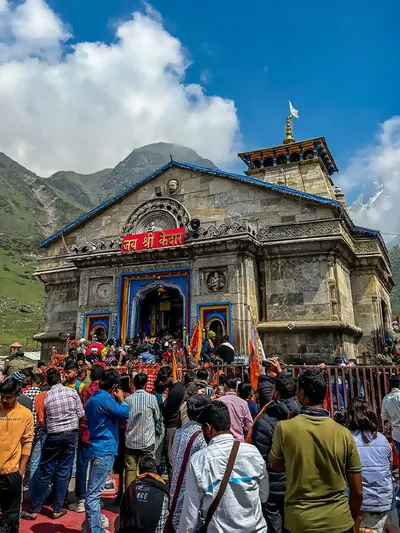
Tungnath is a small, unassuming stone shrine, not a grand structure, and that's part of its appeal. Local tradition credits Arjuna with building it. The Shiva lingam, representing Lord Shiva's arms, sits in the Garbha Griha, the temple's inner sanctum. The stonework carries the wear of centuries of Himalayan winters, and that's visible the moment you're standing in front of it.
Tungnath Trek Experience
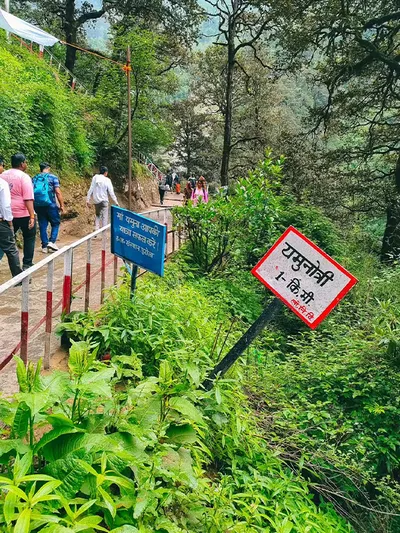
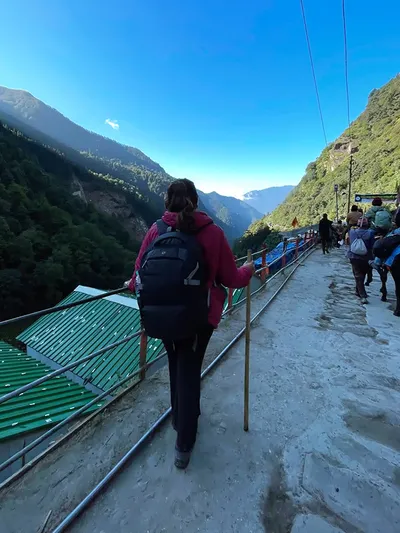
The trek starts at Chopta and covers roughly 3.5 km one way. The elevation gain runs somewhere around 800 to 1,000 metres depending on exactly where you start counting from — short in distance, but a genuine climb. Most trekkers cover it in 2 to 4 hours, with the range depending on fitness, pace, and how the weather is behaving that day. The trail is well-marked and moves through oak and rhododendron forest, open meadows, and rocky, exposed stretches higher up. On a clear day, the trail itself gives you views of Chaukhamba, Nanda Devi, Trishul, and Neelkanth.
Winter is a different story. The temple closes for the season, and heavy snow can make the trail difficult or genuinely inaccessible depending on conditions that year. Monsoon carries its own risk — rain, slippery sections, and the possibility of landslide-related disruption on the road up to Chopta. Neither season is the one to plan around unless you know exactly what you're getting into.
Important Things to Know Before Visiting Tungnath Temple
- The temple follows the region's traditional local priestly practice, distinct from the South Indian priesthood at some of the other Kedar shrines.
- Tungnath operates seasonally — roughly late April/early May to early November — and the exact dates shift each year based on the Hindu Panchang. Confirm the current year's dates before you travel rather than working off last year's calendar.
- You reach Chopta first by road, then trek roughly 3.5 km, which takes about 2 to 4 hours each way.
- The trail passes through Kedarnath Wildlife Sanctuary territory. Entry procedures and any applicable fees are set by the forest department and do change, so check current requirements at the checkpost and carry a valid photo ID — don't assume it's optional.
Things to Do in Tungnath
Trek to Chandrashila
Chandrashila summit is only about 1.5 km beyond Tungnath Temple, generally put at around 4,000 metres (different sources round this slightly differently, so treat it as approximate). It isn't a separate trek — just a further climb from the temple, on trail with no proper stairs. In Hindu belief, this is where Lord Rama meditated after his battle with Ravana. On a clear day, it's a 360-degree Himalayan panorama.
Stargazing
Chopta's altitude and low light pollution make it a genuinely good stargazing spot. On a clear night you'll see a dense spread of stars and, sometimes, a meteor. Carry warm layers — night temperatures drop fast even in summer, no matter how warm the day was.
Kanchula Korak Musk Deer Sanctuary
This sanctuary near Chopta protects the endangered Himalayan musk deer along with other high-altitude wildlife. Worth a stop if wildlife and forest walks interest you more than the temple itself.
Birdwatching
The forest around Chopta and Tungnath is rich in Himalayan bird species — pheasants, woodpeckers, and several high-altitude varieties that are harder to spot elsewhere. Early morning is the best window; bring binoculars if birding is a priority for you.
Places to Visit Near Tungnath
Madhyamaheshwar
Another Panch Kedar shrine dedicated to Lord Shiva, worshipped here as a lingam. It involves its own separate trek from Ransi village and rewards visitors with wide Himalayan valley views — popular with pilgrims and trekkers alike.
Gaurikund
Best known as the traditional roadhead for the Kedarnath temple trek. Hindu belief holds this is where Goddess Parvati meditated to win Lord Shiva's favor.
Kalimath
Sitting near Ukhimath — the winter seat of Kedarnath's deity — Kalimath is a prominent Shakti shrine in Uttarakhand, dedicated to Goddess Kali. It draws large crowds during Navratri.
Gopeshwar
A quiet Chamoli-district town linked to a local legend of Lord Shiva taking the form of a Gopi to join Krishna's Raas Leela — hence the name Gopeshwar Mahadev. It's a peaceful stop if you're travelling through the region rather than a full day-trip destination on its own.
Best Time to Visit Tungnath
May–June and September–October are the two windows worth planning around. Weather is more stable, and the trail isn't fighting you.
| Season | Months | Conditions |
|---|---|---|
| Summer | May–June | Cool days, cold mornings and evenings, generally the best trekking window |
| Monsoon | July–early September | Rain, slippery trail, possible landslide-related road disruption toward Chopta — worth avoiding unless you have no other window |
| Post-monsoon/Autumn | September–October | Clearer skies, cooler air, good visibility — the other strong window |
| Late season | Early November | Cold, occasional early snowfall, temple close to closing |
| Winter | Mid-November–April | Temple closed for the season; heavy snow can make the trail difficult or inaccessible |
What to Pack for the Tungnath Trek
- Layered clothing — thermals, a fleece, and a windproof/waterproof outer jacket, even in summer
- Sturdy trekking shoes with good grip; broken-in, not brand new
- A daypack, refillable water bottle (at least 1.5 litres), and energy snacks
- Sunscreen, sunglasses, and a cap — UV exposure is stronger at altitude
- A basic first-aid kit and any personal medication
- Cash in small denominations — card and digital payment access thins out fast once you're past Ukhimath
Health, Fitness and Altitude Tips
Tungnath is non-technical and rated easy-to-moderate, and a fair number of reasonably fit people — families with older children included — get through it without trouble. But don't read "easy-to-moderate" as "no different from a flat 3.5 km walk." The altitude gain is the real factor, not the distance.
- Walk at a steady, unhurried pace rather than rushing the incline.
- Start early morning. It buys you clearer views before the clouds build, and daylight in hand for the way back.
- Watch for early signs of altitude discomfort — headache, dizziness, breathlessness beyond what the climb itself explains — and rest or turn back if these don't ease.
- Fitness and health matter more than age alone. If you have any heart, lung, or other condition that altitude could aggravate, talk to a doctor before you commit to this trek — that applies at any age.
- Carry a valid photo ID; the forest checkpost verifies it before you enter the sanctuary trail.
How to Reach Tungnath Temple
- By Air: The nearest airport is Jolly Grant, Dehradun. From there, it's still a substantial road journey — well over 200 km — toward Chopta via Rishikesh, so don't mistake landing at the airport for being close to Tungnath.
- By Rail: Rishikesh is the nearest major railhead, well connected to most Indian cities. From Rishikesh, it's roughly 210–220 km by road to Chopta.
- By Road: Chopta is reached via the Rishikesh–Devprayag–Srinagar–Rudraprayag–Ukhimath route, roughly 210–220 km. Travel time varies a lot with traffic, weather, and road conditions — don't lock in a fixed number of hours when you're planning the day. Taxis and buses run this route regularly. From Chopta, it's a 3.5 km trek to the temple.
Route Map
Delhi → Haridwar → Rishikesh → Devprayag → Srinagar → Rudraprayag → Augustmuni → Syalsaur → Kund → Ukhimath → Duggalbitta → Baniyakund → Chopta → Tungnath → Chandrashila.
Cost and Budget Breakdown
Exact pricing changes with season and demand, so treat this as a planning guide, not a quote.
| Expense | What to Expect |
|---|---|
| Kedarnath Wildlife Sanctuary forest entry fee | A per-person fee applies since the trail runs through the sanctuary. Rates differ for Indian and foreign nationals and are set by the forest department — confirm the current amount at the Chopta checkpost rather than relying on an old figure. |
| Local guide | Optional but useful if you're new to the region. Rates vary by season and group size — agree the fee before you start. |
| Budget stay in Chopta (per night) | ₹800–2,500, depending on how basic or comfortable you want it |
| Meals in Chopta/Duggalbitta | ₹150–400 per meal |
| Taxi from Rishikesh to Chopta | Varies widely with shared vs. private and vehicle type — get a quote for your specific dates rather than budgeting off a generic number |
Accommodation Facilities
A small number of basic rooms are sometimes available right near Tungnath itself during the open season — enough for a night if you want an early-morning darshan, but don't count on availability without checking ahead. Chopta has a wider spread of guesthouses and camps, mostly simple mountain stays rather than anything resort-grade. Camping options exist at spots like Baniyakund and Duggalbitta along the approach road; camping rules for the Chopta meadow itself can change, so it's worth checking current local guidance before you plan around it.
Festivals at Tungnath
Basant Panchami, Dussehra, and Diwali are all observed here, on a smaller scale than at the main Char Dham temples given how remote the shrine is. Puja follows the local priestly tradition, distinct from the South Indian priesthood associated with some of the other Kedar shrines.
Opening and Closing Dates
Tungnath's kapat don't open on a fixed calendar date. The date is set each year by the Badri-Kedar Temple Committee, based on the Hindu Panchang, typically announced around Baisakhi or Maha Shivratri. For 2026, reported opening dates across sources have varied between late April and early May — which tells you the safest approach is to check the current year's official announcement rather than trust any single fixed date, including this one. Closing generally falls in early November, after which the deity moves to its winter seat at Makkumath near Ukhimath, though the exact date is usually confirmed closer to the season's end.
Common Mistakes to Avoid
- Starting the trek too late in the day. Afternoon clouds and fading light make the descent harder. Start by mid-morning at the latest.
- Skipping the forest checkpost. Trekkers without ID or the required entry paperwork can get turned back — don't treat it as optional.
- Wearing new, unbroken-in shoes. Blisters on a steep climb ruin the day fast.
- Underestimating the monsoon. July–August isn't just uncomfortable; slippery trail sections and possible road disruption make it a genuinely poor window to plan around.
- Underestimating the cold. Even in May–June, temperatures at the temple and Chandrashila drop sharply the moment the sun goes behind cloud cover.
Pro Tips
- Trek early morning. Clouds tend to build by late morning and can block the views you came for.
- If your fitness allows, add the 1.5 km extension to Chandrashila in the same trip.
- Carry cash. Digital payment and ATM access thin out well before Chopta.
- Book Chopta accommodation ahead during May–June and September–October, when demand peaks.
- Pace yourself instead of pushing hard early. Altitude tires people out here, not distance.
Frequently Asked Questions
Q1. How difficult is the Tungnath trek?
Non-technical, and generally rated easy-to-moderate. The distance is short at about 3.5 km, but the altitude gain makes it more demanding than the number alone suggests.
Q2. What is the altitude of Tungnath Temple?
3,680 metres (12,073 ft) — the highest Shiva temple in the world.
Q3. How far is Tungnath from Chopta?
About 3.5 km one way, taking roughly 2 to 4 hours depending on pace and conditions.
Q4. How far is Chandrashila from Tungnath Temple?
About 1.5 km further up from the temple, reaching an altitude generally put at around 4,000 metres.
Q5. When does Tungnath Temple open and close each year?
Roughly late April/early May through early November, but the exact dates are announced yearly by the Badri-Kedar Temple Committee based on the Panchang and do shift. Check the current year's announcement before you travel.
Q6. Can senior citizens or children do the Tungnath trek?
Some do complete it comfortably at a steady pace, but fitness and health matter more than age. Anyone with a heart, lung, or other condition altitude could aggravate should check with a doctor first, regardless of age.
Q7. Is a permit required for the Tungnath trek?
The trail runs through the Kedarnath Wildlife Sanctuary, and entry fees apply. Confirm the current requirement and fee at the checkpost, and carry a valid photo ID.
Q8. What is the best time to visit Tungnath?
May–June and September–October offer the more stable weather and clearer views.
Q9. Is Tungnath open during the monsoon?
The temple itself may still be operating, but July–August trekking carries real risk from slippery trails and possible road disruption. Worth avoiding unless it's your only window.
Q10. Where can I stay near Tungnath?
A few basic rooms exist right at Tungnath, but most travellers stay in Chopta, which has a wider range of guesthouses and camps.
Q11. How is Tungnath connected to the Char Dham Yatra?
It's not one of the four main Char Dham shrines but is part of the separate Panch Kedar pilgrimage circuit, often combined with a Kedarnath visit.
Q12. Is mobile network available on the Tungnath trek?
Connectivity can be unreliable on the trail and thins out further past Chopta. Download offline maps beforehand and tell someone your plan before you start.
Conclusion
Tungnath packs a lot into a short climb: real altitude, real silence, and a temple that's still standing after centuries of Himalayan winters. It's the third of the Panch Kedar shrines and the highest Shiva temple anywhere. Plan for May–June or September–October, sort your permit at the checkpost, pack for cold you won't feel until you stop moving, and add the 1.5 km to Chandrashila if your legs and the weather allow it. The temple, the trek, and stops like Chopta and Kalimath together make for a solid few days in the Garhwal Himalayas — just confirm the season's opening and closing dates before you book anything.
Chardham Travel Guide
Chardham Travel Packages
Hotels in Chardham
Beware of Fake Char Dham & Kedarnath Helicopter Booking Websites
Fake websites, WhatsApp accounts and advertisements may impersonate genuine travel companies or helicopter operators. Always verify before paying.