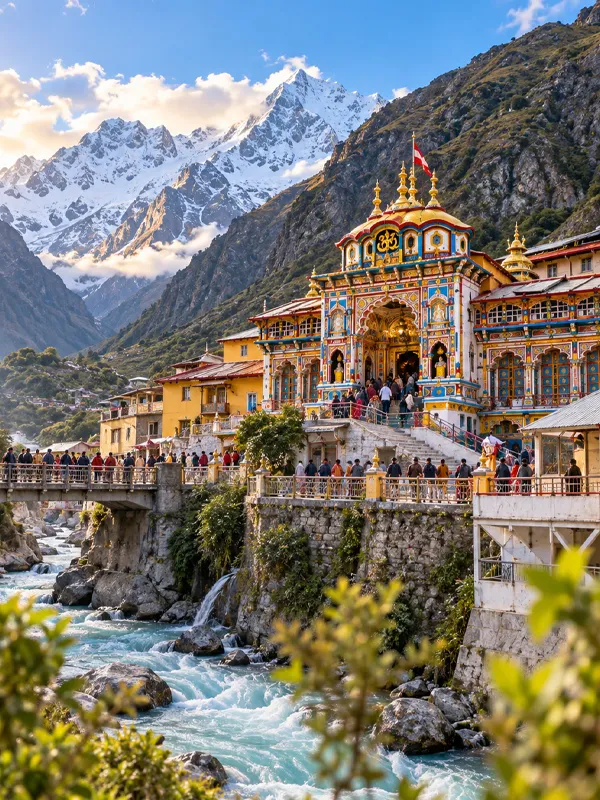
Badrinath Dham, Uttarakhand
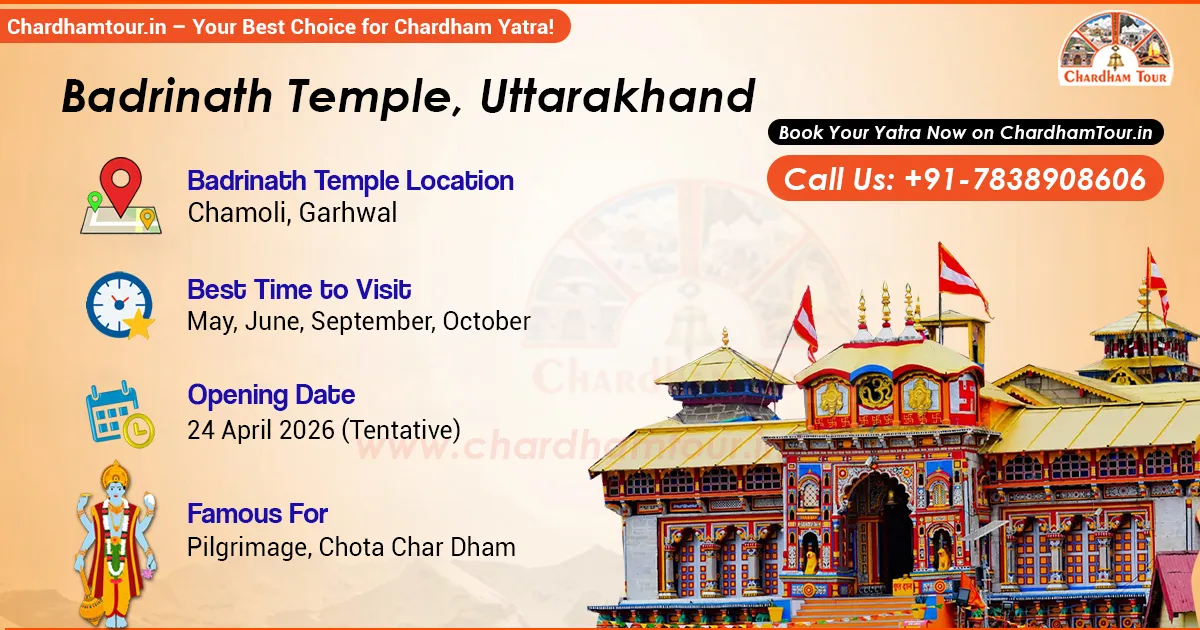
3,133 m
Badrinath altitude
No Trek
Road reaches temple town
23 Apr 2026
Opening date
Free
Mandatory registration
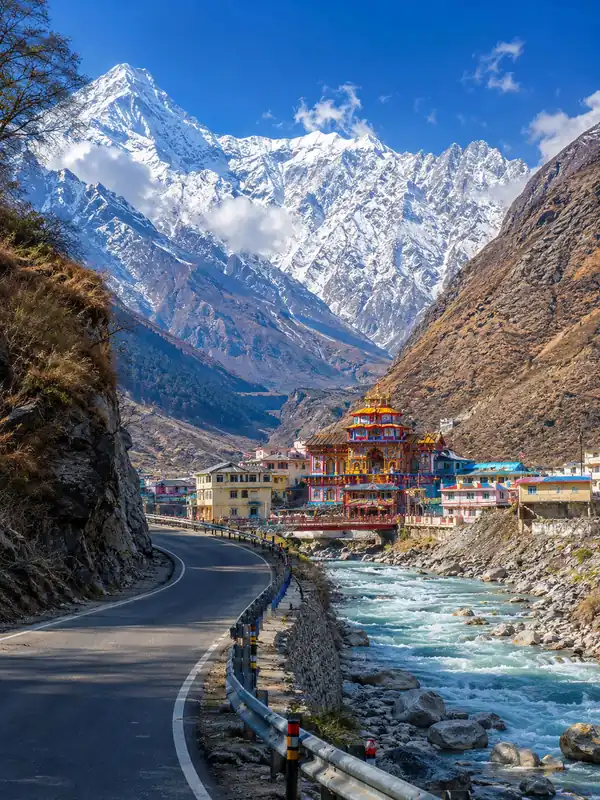
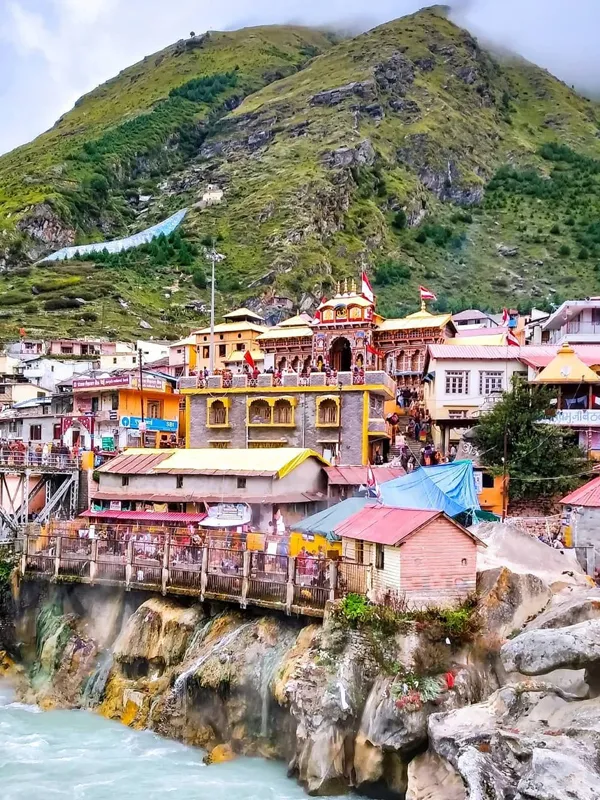
Badrinath sits at 3,133 metres in the Chamoli district of Uttarakhand and is traditionally the final shrine in the Uttarakhand Char Dham circuit ( Yamunotri → Gangotri → Kedarnath → Badrinath). Unlike Kedarnath or Yamunotri, you don't need to trek to get here — the road runs right up to the temple town, which makes it a more manageable option for travellers who want to avoid a long pilgrimage trek.
This guide covers everything you need before you go: how the temple came to be, what the yatra actually looks like day by day, what it costs, how registration works, and when to travel. If you already know the basics and just want a package, jump straight to the packages section below. If you're still deciding, read on — most of the questions people ask us on WhatsApp are answered somewhere on this page.
Dates, prices, distances, and registration details on this page were checked against Uttarakhand Tourism's official Tourist Care portal and other government sources in August 2026. Time-sensitive details — especially the exact 2026 closing date and daily temple timings, which the government portal itself lists as "to be announced" — should be reconfirmed closer to your travel dates.
Quick Facts
| Fact | Details |
|---|---|
| Location | Chamoli District, Uttarakhand |
| Duration | 1 Day (helicopter) to 5 Days (road, from Delhi) |
| Difficulty | Easy to Moderate — no trekking required |
| Best Time | May–June and September–October |
| Altitude | 3,133 m (10,279 ft) |
| Road distance from Haridwar | ~320 km (~10–12 hrs) |
| Road distance from Rishikesh | ~300 km |
| Registration | Mandatory, free of cost (online e-registration) |
| Ideal For | Pilgrims, families, senior citizens, NRIs |
| Nearest Airport | Jolly Grant Airport, Dehradun (~317–330 km by road) |
| Nearest Railhead | Rishikesh |
| Presiding Deity | Lord Vishnu (Badri Vishal) |
| 2026 Opening | 23 April 2026, 6:15 AM (confirmed by Uttarakhand Tourism) |
| 2026 Closing | Expected around mid-November 2026; official date is announced on Vijayadashami and confirmed by temple authorities closer to the closing ceremony |
What is Badrinath Dham?
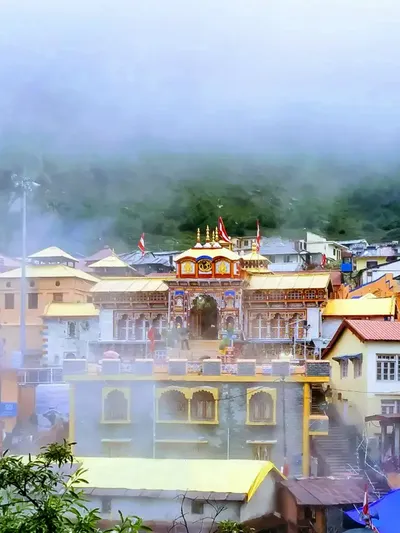
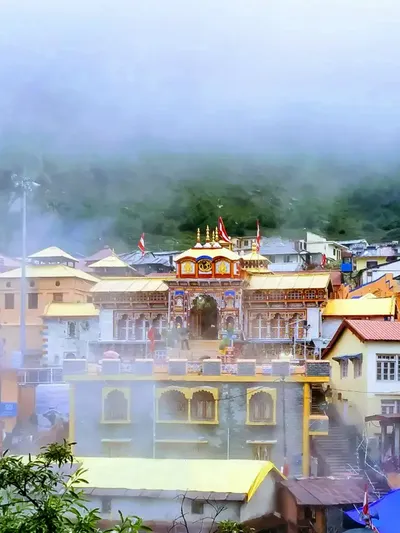
Badrinath is one of the four Char Dhams of Uttarakhand and also one of the 108 Divya Desams — sacred Vishnu temples spread across India that are considered especially holy in Vaishnavite tradition. The presiding deity is a black stone image of Lord Vishnu, shown in a meditative posture.
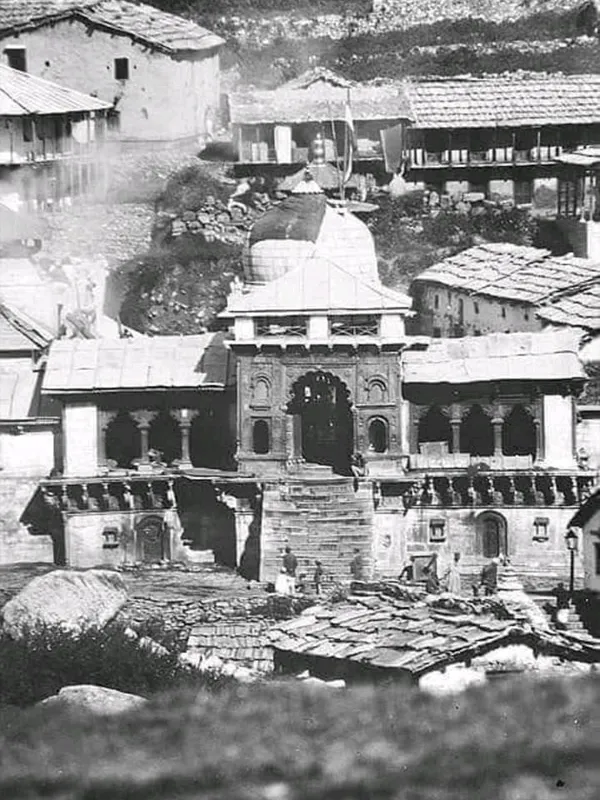
Badrinath Temple is traditionally believed to have been established (or re-established) by Adi Shankaracharya in the 8th century — this is the account given on Uttarakhand's own tourism portal, and it's worth treating as tradition rather than settled archaeological fact, since the site's earlier history is contested among historians.
One detail worth knowing: when people say "Char Dham," they might mean two different things. Adi Shankaracharya's original all-India Char Dham refers to Badrinath, Puri, Dwarka, and Rameswaram — one in each direction of the country. What most North Indian pilgrims call "Char Dham" today (Yamunotri, Gangotri, Kedarnath, Badrinath) is technically the "Chota Char Dham," a regional Uttarakhand circuit. Badrinath is the one temple that belongs to both lists, which is part of what makes it uniquely significant.
Read more: Badrinath Dham History
Spiritual Significance and Legends
The story most commonly told about Badrinath is that Lord Vishnu came here to meditate, and Goddess Lakshmi took the form of a badri (a wild berry tree) to shield him from the elements while he was in penance — which is how the place got its name.
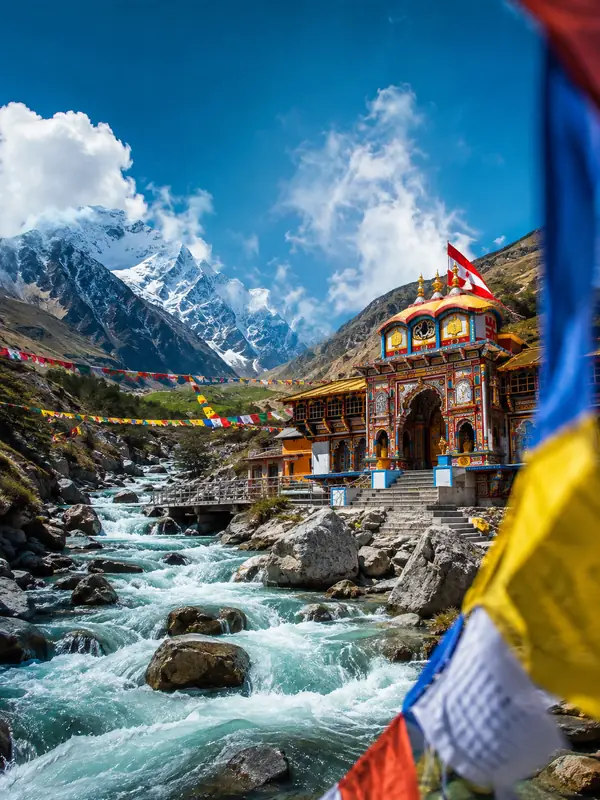
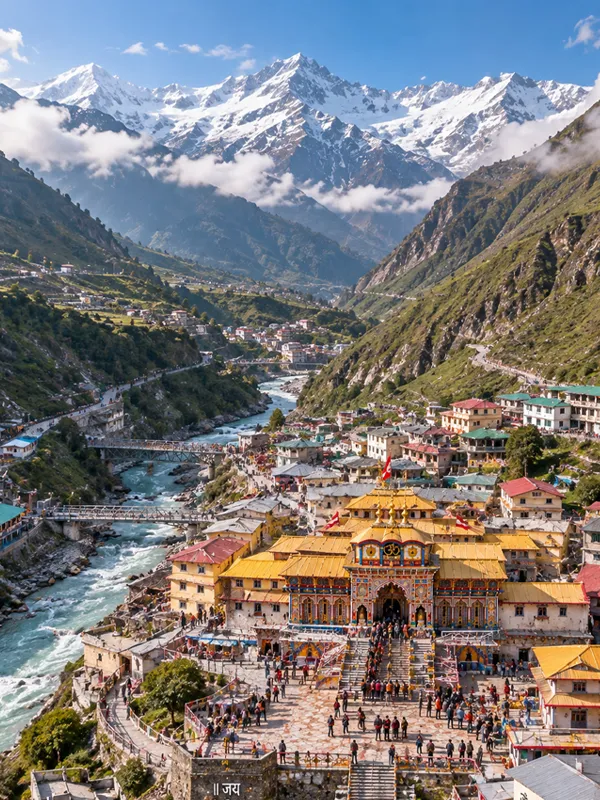
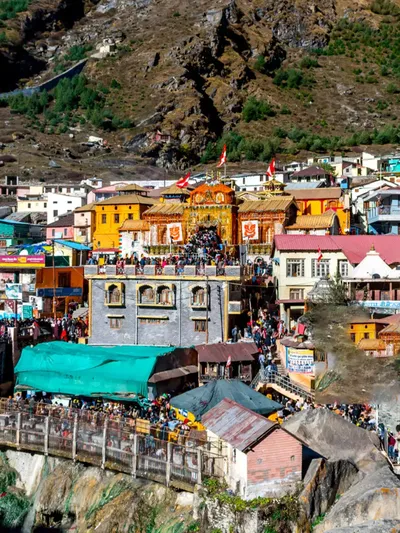
The temple stands between two mountain peaks known as Nar and Narayan, named after twin sage-forms of Vishnu in Hindu mythology. Right below the temple is Tapt Kund , a natural hot-water spring believed to have medicinal properties, where pilgrims traditionally bathe before entering for Darshan.
A short walk from the main temple is Brahma Kapal , a flat rock platform on the banks of the Alaknanda River where many families come specifically to perform Pind Daan and other ancestral rites, believing that rituals done here carry particular spiritual weight.
There's also a natural pairing in Hindu belief between Kedarnath (Shiva) and Badrinath (Vishnu). Many pilgrims feel the Char Dham Yatra is spiritually incomplete without visiting both, since together they represent the two major deities of the tradition.
Why Visit Badrinath
Badrinath draws people for reasons beyond faith alone, though that's the primary pull for most visitors.
- Merit and moksha — pilgrims traditionally believe a visit to Badrinath, especially combined with a Tapt Kund bath, helps free them from the cycle of birth and rebirth.
- Accessible terrain — the road goes all the way to the temple town. If you're travelling with elderly parents or young kids and don't want the physical strain of Kedarnath's trek, Badrinath is the more accessible option.
- Mana village nearby — officially described by Uttarakhand Tourism as the last Indian village before the Tibet border, Mana sits about 4 km from Badrinath and makes for an easy half-day add-on with its own mythological sites. (You may also see it promoted in some tourism material as the "First Village of India" — a framing choice rather than a change in its geography.)
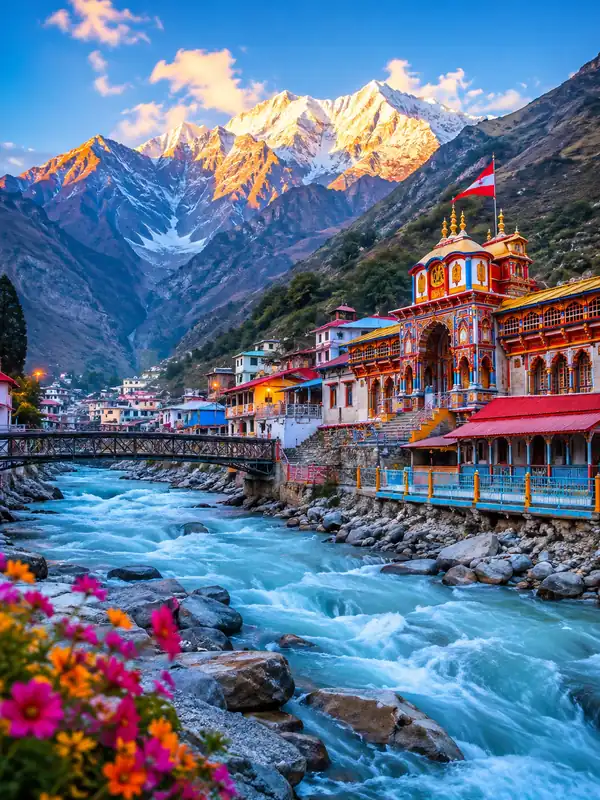
- Scenery — the Neelkanth peak towers behind the temple town, and the Alaknanda river runs right through it. Even non-religious travellers find the setting worth the trip.
- Shorter overall commitment — a full Char Dham road itinerary commonly takes around 10–15 days depending on the starting point, route, and rest days built in. Badrinath alone, or Badrinath paired with Kedarnath, can be done in far less time, which matters if you have limited leave or are travelling with someone who can't manage long trips.
Badrinath vs Kedarnath: Which Should You Do First?
Since these two are so often booked together as a "Do Dham" trip, it's worth laying out how they actually differ.
| Feature | Badrinath | Kedarnath |
|---|---|---|
| Deity | Lord Vishnu | Lord Shiva |
| Access | Fully motorable road | ~14–16 km trek from Gaurikund (distance varies by route/measurement), or helicopter |
| Difficulty | Easy to Moderate | Moderate to Difficult |
| Altitude | 3,133 m | 3,583 m |
| Suitable for Seniors | More accessible than trek-based Dhams, though altitude and travel time still matter | Yes, but helicopter or pony recommended |
| Typical Pairing | Usually combined with Kedarnath | Usually combined with Badrinath |
If you can only manage one temple and mobility is a concern, Badrinath is the easier of the two. Some itineraries place Kedarnath first, since its route is more physically demanding, and finish with the more accessible Badrinath — though the order really comes down to what works for your own itinerary and fitness.
Explore: Badrinath Kedarnath Yatra by Helicopter
Badrinath Route Map
The standard road route to Badrinath from the plains runs like this:
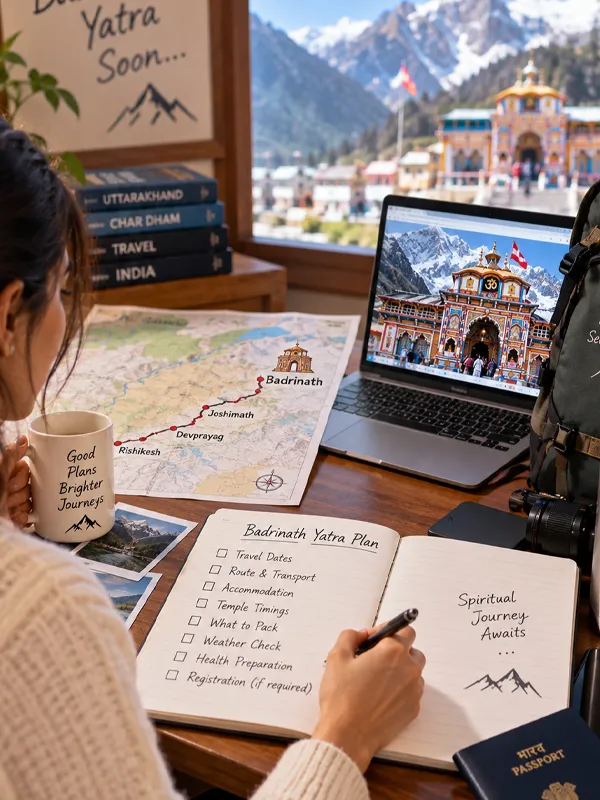
Haridwar / Rishikesh → Devprayag → Rudraprayag → Karnaprayag → Chamoli → Joshimath → Badrinath
From Haridwar, this is approximately 320 km (Uttarakhand Tourism's official figures put it in the 310–320 km range) and takes around 10–12 hours of driving in favourable conditions — actual travel time can run longer because of traffic, road work, or weather. Most travellers split this into two days with an overnight halt around Rudraprayag, Karnaprayag, or Joshimath. Joshimath in particular is worth treating as more than a passing stop — it sits at a lower altitude than Badrinath, and an overnight halt there can make the onward climb more gradual, though individual responses to altitude vary.
View: Rishikesh to Badrinath Route Guide
Detailed Itinerary
Here's a sample 5-day road itinerary starting from Delhi — actual duration depends on road conditions, traffic, weather, and how many rest stops you build in:
Day 1: Delhi → Haridwar / Rishikesh: Pickup from Delhi, drive to Haridwar or Rishikesh. Evening Ganga Aarti if timing allows. Overnight stay.
Day 2: Haridwar → Rudraprayag or Karnaprayag: Scenic drive along the Alaknanda river valley. Overnight halt to break up the journey.
Day 3: Karnaprayag → Joshimath → Badrinath: Continue to Joshimath, then on to Badrinath. Check in, visit Tapt Kund, attend the temple darshan, and take in the evening aarti.
Day 4: Badrinath → Mana Village → Rudraprayag: Morning darshan, then a short excursion to Mana village to see Vyas Gufa, Bhim Pul, and the Vasudhara Falls trailhead. Begin the return journey.
Day 5: Rudraprayag → Haridwar / Rishikesh → Delhi: Drive back and drop-off at Delhi airport or railway station.
If time is tight, Chardham Tour also runs a 1-day helicopter package departing from Dehradun's Sahastradhara Helipad, flying directly to the Badrinath/Mana helipad and back the same day — useful for pilgrims who can't spare more than a weekend. Separately, Uttarakhand's civil aviation authority (UCADA) has also been setting up a Gauchar–Badrinath helicopter shuttle route for the 2026 season, which is a different service from the Dehradun charter model — check current availability before assuming either route is guaranteed to be flying on your travel dates.
Explore: Badrinath Yatra from Delhi
Badrinath Yatra: Our Package Starting Prices
Pricing depends mainly on how you travel and where you start from. The figures below are Chardham Tour's own current package starting prices, not a universal market rate — other operators and government-run packages may price differently.
| Package Type | Approx. Cost (per person, starting price) |
|---|---|
| Road — from Haridwar (3D/2N) | ₹12,600 onwards |
| Road — from Delhi (5D/4N) | ₹19,600 onwards |
| Panch Badri Yatra (7D/6N) | ₹22,500 onwards |
| Helicopter (1 Day) | ₹1,10,000 onwards |
| Badrinath–Kedarnath Combined Helicopter | ₹1,30,000–1,35,000 onwards |
For context, Uttarakhand Tourism's own government-run packages give a useful benchmark — its listed Do Dham itinerary, for instance, is priced from around ₹25,000 per person, and its Rishikesh–Kedarnath–Badrinath packages vary by season (roughly ₹26,000–₹33,000 depending on month). Government and private packages aren't always directly comparable since inclusions differ, but it's a useful reference point.
Road packages typically include hotel stays, breakfast and dinner, all ground transfers, and darshan assistance. Helicopter packages add helipad transfers and ground handling on top of that. None of these include personal expenses, travel insurance, or any separately-purchased VIP darshan or puja tickets at the temple — confirm exactly what's covered (regular darshan vs. VIP darshan vs. specific puja bookings) before you book.
See full breakdown: Badrinath Yatra Packages
Do Dham Yatra vs Badrinath-Only Trip
A lot of pilgrims aren't sure whether to book Badrinath as a standalone trip or combine it with Kedarnath as a Do Dham Yatra . Here's how the two stack up:
| Factor | Badrinath Only | Do Dham (Badrinath + Kedarnath) |
|---|---|---|
| Duration | 3–5 days | 5–7 days |
| Cost | Lower | Moderate to higher |
| Physical Effort | Minimal (no trek) | Moderate (Kedarnath trek or pony/heli) |
| Best For | First-timers, tight schedules, seniors with limited mobility | Pilgrims wanting the fuller spiritual experience |
| Helicopter Option | Yes, 1-day | Yes, combined package |
Choose Badrinath alone: if you're short on time, travelling with very elderly family members, or this is a quick add-on to a larger Uttarakhand trip.
Choose the Do Dham combination: if you want the complete Vishnu-Shiva pilgrimage experience and can spare a few extra days.
Government Guidelines and Temple Etiquette
The Uttarakhand government and temple authorities have a few standing rules that apply throughout the Yatra season:
- E-registration is mandatory and checked at multiple points along the route via QR code scanning.
- Photography and mobile-phone restrictions apply in parts of the temple complex — follow the current instructions displayed by temple authorities on arrival rather than assuming a fixed rule.
- Maintain silence and modest dress inside the temple complex.
- Commercial vehicles typically need valid Green Card and Pollution Under Control certificates to ply on Chardham routes; rules can vary by vehicle category, so check current transport department requirements if you're self-driving or hiring outside a package.
- Authorities can temporarily suspend Yatra movement during red-alert weather conditions such as landslides or heavy snowfall — this is for safety and isn't something a tour operator can override, so it pays to build in a buffer day if your dates are close to the shoulder season.
Registration and Documentation
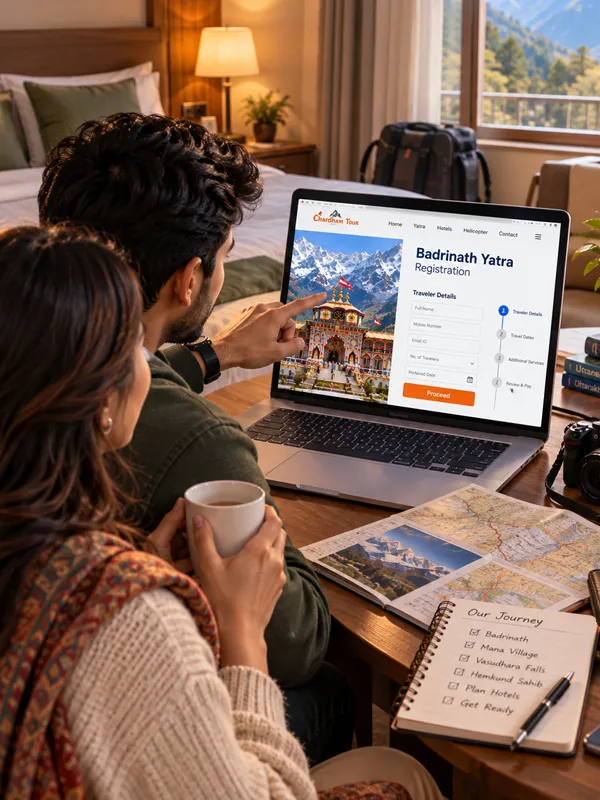
One thing worth clarifying upfront: Badrinath registration is not an Inner Line Permit process (that applies to border-area yatras like Adi Kailash). For Badrinath, and the rest of the Chardham circuit, the Uttarakhand government requires a straightforward e-registration, and it's mandatory — you won't be allowed past certain checkpoints without it.
Online registration: Visit the official Uttarakhand Tourist Care registration portal , (nofollow) where you can register for the Char Dham Yatra and download your e-pass. Registration is free of charge. Follow the portal's current document requirements — typically a valid government photo ID.
Offline registration: If you'd rather not do this online, designated registration counters operate at major transit points along the route. Counter locations and timings can change season to season, so check the current Tourist Care portal or ask your tour operator for the latest details rather than relying on a fixed schedule.
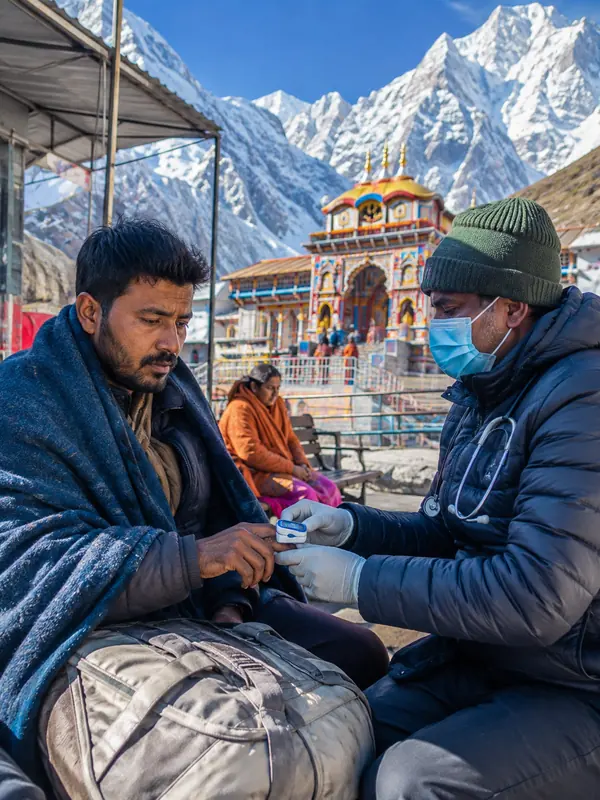
Senior travellers and anyone with existing medical conditions should consult their doctor before travelling, and carry their regular medicines and relevant medical records. Uttarakhand also runs a health advisory/registration system (Swasthya Yatra) worth checking closer to your travel dates.
Full guide: Badrinath Yatra Registration
Weather and Best Time to Visit
| Month | Typical Conditions |
|---|---|
| May | Good, cold mornings and evenings |
| June | Good, busiest month of the season |
| July | Monsoon — road disruption risk |
| August | Monsoon — road disruption risk |
| September | Generally favourable |
| October | Cold but generally favourable, especially early-to-mid month |
| November–April | Closed for winter |
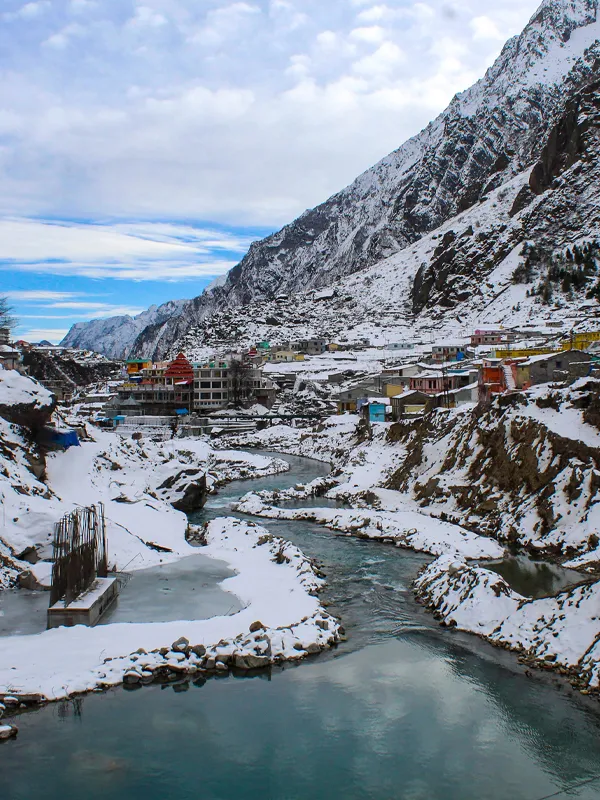
May and June tend to bring the most stable weather and the best road conditions, but they also come with the heaviest pilgrim traffic and higher hotel rates. September and early October offer a quieter post-monsoon window, though temperatures turn colder. July and August bring monsoon rains that increase landslide risk along the route, so it's best avoided unless you have no other window. The temple itself closes for winter — Kapaat typically shuts in mid-November and reopens the following April.
More detail: Badrinath Weather Guide · Best Time to Visit Char Dham
Month-Wise Temperature at Badrinath (Indicative)
| Season | Months | Day Temperature | Night Temperature |
|---|---|---|---|
| Summer | May–June | 10°C–18°C | 2°C–8°C |
| Monsoon | July–August | 8°C–15°C | 5°C–10°C |
| Post-Monsoon | September–October | 5°C–15°C | 0°C–5°C |
| Winter (Closed) | November–April | Sub-zero | Sub-zero, heavy snow |
These ranges are indicative rather than guaranteed — actual conditions vary year to year and can shift quickly at this altitude. Even in the "warm" months, evenings drop close to freezing, which surprises first-time visitors expecting plains-style summer heat. Carry proper warm layers regardless of when you travel.
Panch Badri Circuit
Not everyone knows this, but Badrinath is the principal temple in a group of five Vishnu shrines collectively known as the Panch Badri . If you have extra time, pilgrims sometimes extend their trip to cover all five (locations below are commonly cited in regional tourism sources; confirm exact routing with your operator):
- Badrinath (Vishal Badri) — the main temple
- Yogdhyan Badri — located in Pandukeshwar, associated with the Pandavas
- Bhavishya Badri — near Joshimath, believed to be the future site of worship once Badrinath becomes inaccessible
- Vridha Badri — near Animath, associated with Vishnu's meditation in old age form
- Adi Badri — near Karnaprayag, with a cluster of ancient stone temples
Covering all five adds a few extra days but appeals strongly to pilgrims who want the fuller mythological picture rather than just the main temple visit.
Explore: Panch Badri Yatra Package
Destinations Covered Near Badrinath
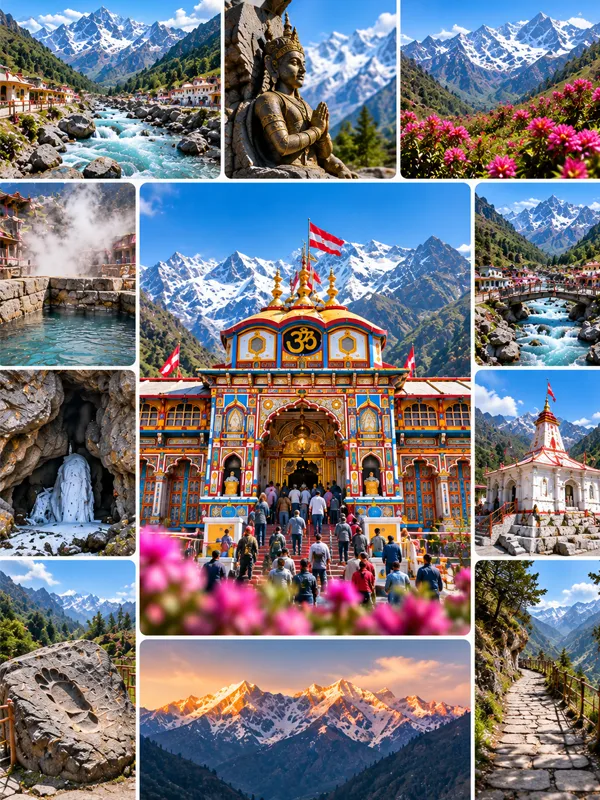
- Mana Village : Officially described by Uttarakhand Tourism as the last Indian village before the Tibet border, Mana is about 4 km from Badrinath and worth a half-day. It has its own set of mythological sites and a distinct Bhotiya cultural identity.
- Tapt Kund : The natural hot-water spring right at the base of the temple steps, believed to have medicinal properties. Most pilgrims bathe here before entering for darshan.
- Vasudhara Falls : About 10 km from Badrinath (roughly 6 km from Mana Village), this waterfall is one of the more scenic detours on a Badrinath trip, though it does require reasonable fitness to reach comfortably.
- Bhim Pul and Vyas Gufa: Two mythological sites near Mana, about 4 km from Badrinath — Bhim Pul is a natural rock bridge said to have been placed by Bhima of the Mahabharata, and Vyas Gufa is the cave associated with the sage Ved Vyas.
- Joshimath : A common overnight halt and staging point on the way to Badrinath, roughly 45 km from the temple. Home to the Narasimha Temple and the Jyotirmath, one of the four cardinal monastic centres traditionally associated with Adi Shankaracharya.
Explore: Auli with Joshimath Tour
Who Can Do the Badrinath Yatra?
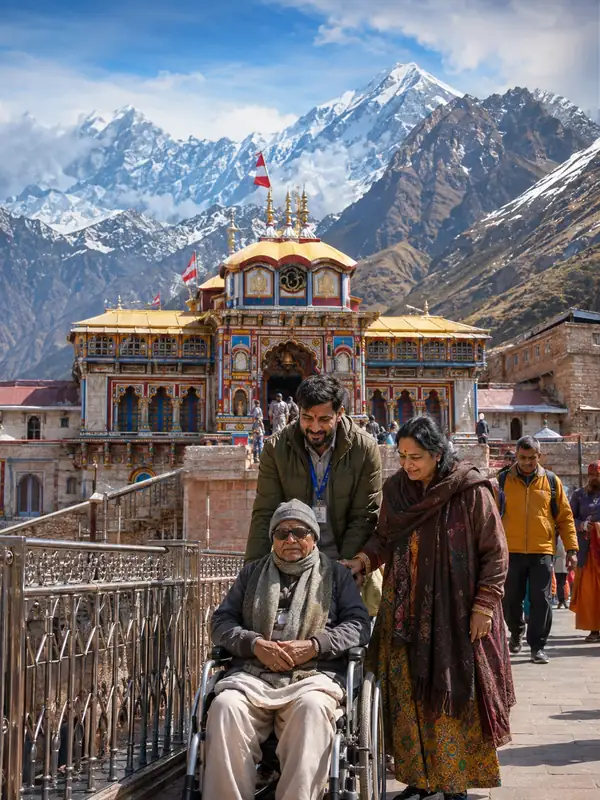
Senior Citizens: Because the road runs directly to Badrinath and no trekking is involved, this is a more manageable Char Dham destination for older pilgrims than Kedarnath or Yamunotri. That said, the altitude (3,133 m) and long travel time can still be tiring — helicopter packages cut travel time and reduce fatigue considerably, and it's worth checking with a doctor beforehand if there are existing health concerns.
Read: Badrinath for Elderly & Disabled Pilgrims
Families: The relatively easy access, availability of mid-range hotels near the temple, and the option to skip Mana village if kids are tired all make Badrinath a good entry point for family trips.
NRIs: International travellers often combine Badrinath with a broader Char Dham or Do Dham circuit and appreciate having flight arrangements, airport pickups, and premium accommodation pre-organised.
See: Chardham Yatra Package for NRI
Geography and Local Life at Badrinath
Badrinath town sits in a narrow valley flanked by the Nar and Narayan mountain ranges, with the Alaknanda river running directly past the temple. The terrain is rocky and steep, and permanent settlement is limited — most residents work seasonally, tied to the Yatra calendar, since the town itself shuts down almost entirely once winter sets in and the temple closes.
Population in the town is small and largely transient, made up of temple staff, hoteliers, shopkeepers, and priests (Rawals) who move to lower-altitude towns like Joshimath or Pandukeshwar during the winter closure, taking the ceremonial duties with them in a symbolic sense.
Read more: Badrinath Geography · Badrinath Demographics
Helicopter vs Road Travel to Badrinath
| Factor | By Road | By Helicopter |
|---|---|---|
| Duration | 4–5 days (round trip from Delhi) | Same day (from Dehradun) |
| Cost | ₹12,600–₹19,600 onwards | ₹1,10,000 onwards |
| Physical Effort | Low to moderate (long drives, no trek) | Minimal |
| Weather Sensitivity | Affected by rain and occasional snow debris | Affected by fog, wind, and low visibility |
| Scenic Value | Gradual, immersive Himalayan drive | Fast aerial views, less time to absorb surroundings |
| Best For | Budget travellers, those who enjoy the road journey | Senior citizens, NRIs, time-constrained pilgrims |
Neither option is objectively "better" — it depends on how much time you have and how you'd rather spend it. Road travel gives you Joshimath, the river valleys, and a proper sense of the journey. Helicopter travel gets you there and back with minimal fuss, which matters more if mobility or time is limited.
Accommodation Guide for Badrinath
You won't find luxury resorts right next to the temple — the high altitude and limited infrastructure mean accommodation is mostly clustered in Badrinath town itself and, to a lesser extent, in Joshimath a little lower down.
| Category | Options | Approx. Price |
|---|---|---|
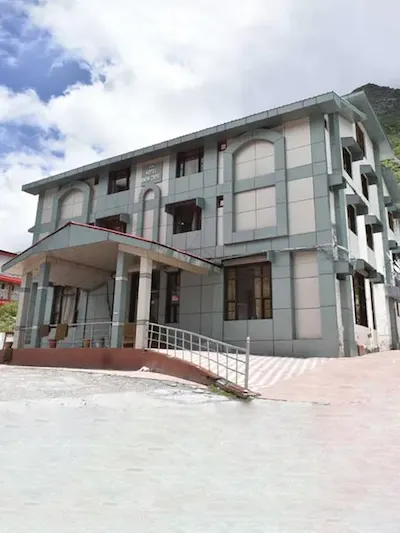
| Budget | Dharamshalas, GMVN Badrinath TRH | ₹800–1,500/night |
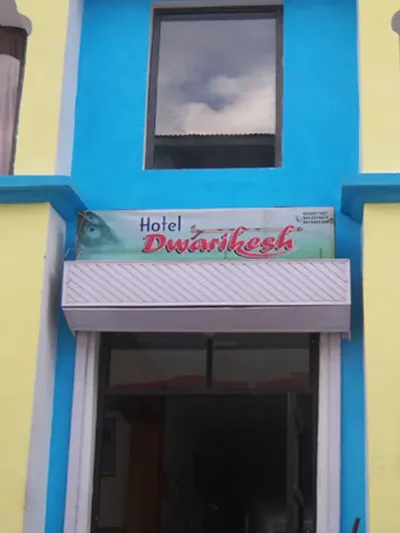
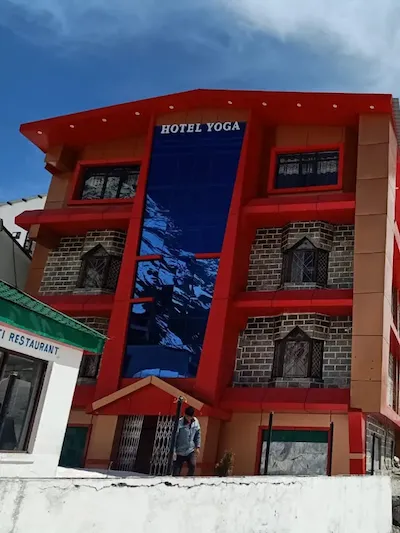
| Mid-Range | Hotel Snow Crest, Hotel Dwarikesh, Hotel Yoga | ₹1,200–2,300/night |
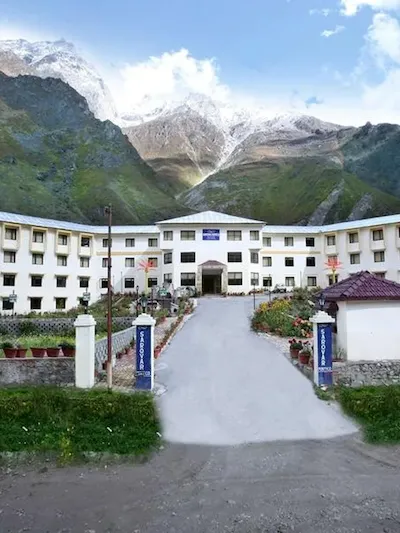
| Premium | Hotel Sarovar Portico | ₹2,300–2,500/night |
A few practical notes: hot water isn't guaranteed everywhere, so it's worth confirming this when booking, especially outside peak season. GMVN guesthouses are a reliable middle-ground option if you want government-run consistency over private hotel variability. If you're travelling in May–June, book at least a month ahead — rooms near the temple fill up fast once the Yatra season is in full swing.
See listings: Hotels in Badrinath
How to Reach Badrinath
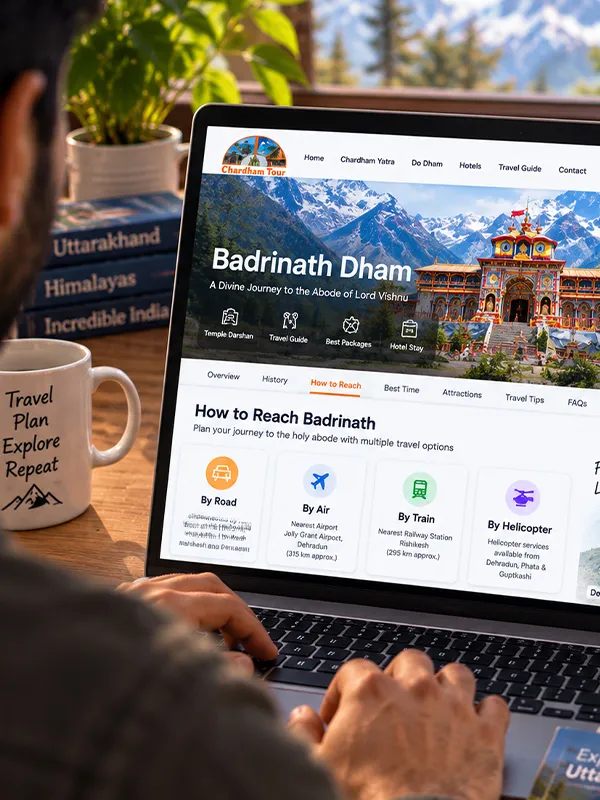
By Air: Jolly Grant Airport in Dehradun is the nearest airport, connected to Delhi, Mumbai, and a few other major cities. From there, it's a road journey of approximately 317–330 km to Badrinath, or a helicopter transfer if you've booked a heli package.
By Train: Rishikesh is the nearest major railhead, with Haridwar as a secondary option. Both have regular taxi and bus connections onward to Badrinath.
By Road: State transport buses run from Haridwar, Rishikesh, and Dehradun to Badrinath during the Yatra season. Private taxis are the more comfortable option, particularly for families or senior citizens, given the winding mountain roads.
By Helicopter: Dehradun-based charter helicopter services fly to Badrinath (and the combined Badrinath-Mana helipad), subject to weather clearance. Separately, a Gauchar–Badrinath shuttle route has also been established for the 2026 season under Uttarakhand's civil aviation authority — check current schedules, since Himalayan helicopter routes can be seasonal or temporarily suspended.
Road Conditions on the Badrinath Route
Uttarakhand's own tourism department describes the Joshimath–Badrinath stretch as scenic but landslide-prone, and recommends checking road conditions before travelling. The wider Haridwar/Rishikesh-to-Joshimath route is part of the broader Char Dham road-widening work carried out by the Border Roads Organisation, but that doesn't mean the route is risk-free — Himalayan roads remain vulnerable to weather-related disruption throughout the season.
Main things to watch for:
- The Joshimath–Badrinath section specifically, which can see landslides, rockfall, or snow debris
- Narrow, winding stretches in the higher reaches
- Traffic congestion during peak May–June dates
- Monsoon-season rockfall and landslide risk (July–August)
Conditions can change quickly, so check current road/weather advisories close to your departure date rather than relying on how the route looked on a previous trip.
More detail: Badrinath Yatra Road Condition
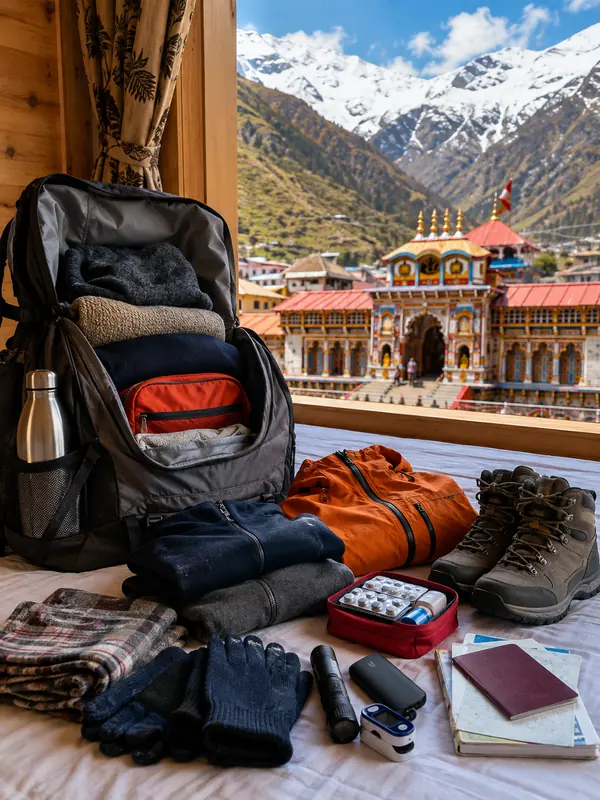
What to Pack for Badrinath
| Category | Items |
|---|---|
| Clothing | Warm jacket, thermals, sweater, woollen cap, gloves |
| Footwear | Comfortable walking shoes, woollen socks |
| Health | Personal medicines, basic first-aid kit, ORS packets |
| Documents | Aadhaar card, Yatra e-registration slip, hotel booking confirmation |
| Utility | Power bank, torch, reusable water bottle, sunglasses |
| Helicopter travellers | Soft luggage preferred; baggage allowances vary by operator, so confirm the permitted weight before departure |
Pack in layers rather than one heavy jacket — mornings and evenings in Badrinath are considerably colder than midday, even in the May–June season.
Full checklist: Badrinath Yatra Packing List
Badrinath Temple Darshan Timings
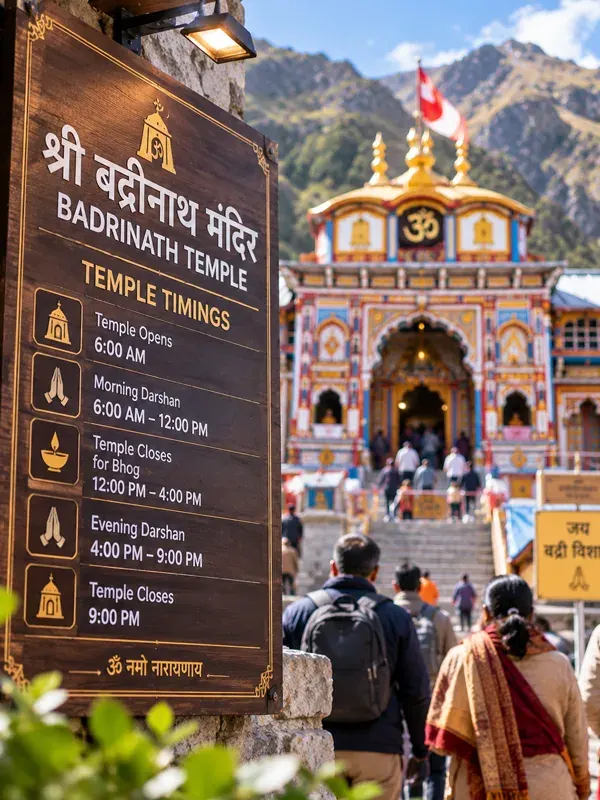
Daily darshan and Aarti timings are set fresh each season and published by the Badrinath-Kedarnath Temple Committee (BKTC) and Uttarakhand Tourism closer to the Kapaat opening — as of this writing, Uttarakhand's official Tourist Care portal lists the exact daily opening/closing and Aarti/Bhog timings as "to be announced." As a general pattern from previous seasons, the temple typically opens early morning (around 4:30–6:00 AM) with a midday break for rituals, followed by an evening Aarti before closing for the night — but treat this as a rough shape rather than a fixed 2026 schedule.
Check the current timings directly with BKTC or the Tourist Care portal before finalising your day's plan, rather than relying on a hardcoded schedule from any single source, including this one.
Official sources: Tourist Care Uttarakhand · BKTC Puja Booking
Things to Do Around Badrinath
- Attend the Temple Aarti: The morning and evening aartis draw large crowds and are worth planning your day around — arriving 30–45 minutes early gets you a decent spot.
- Bathe at Tapt Kund: Most pilgrims take a dip here before entering the temple, even though the air temperature outside can be well below the water's warmth.
- Walk to Mana Village: A short, easy drive from Badrinath, with its own cluster of mythological sites and a distinct local culture worth spending a couple of hours on.
- See Vasudhara Falls: About 10 km from Badrinath, reasonably fit visitors will find this a rewarding half-day detour with strong Himalayan views.
- Visit Vyas Gufa and Bhim Pul: Two easily walkable mythological sites near Mana that most itineraries include as a package.
Food Options in Badrinath
Vegetarian food is the norm in Badrinath's pilgrimage area, in keeping with the sanctity of the site — this applies to hotel kitchens, roadside dhabas, and temple prasad alike. Expect simple North Indian and Pahari vegetarian fare: dal, rice, roti, seasonal vegetables, and occasionally local specialities like Aloo Ke Gutke or Kafuli further down the route in towns like Joshimath. Don't expect much variety once you're above Joshimath — it's functional food meant to keep you fuelled, not a culinary destination.
Common Mistakes to Avoid
- Skipping registration: Some pilgrims assume Badrinath doesn't need the same paperwork as Kedarnath or Yamunotri. It does. Without your e-registration slip, you can be stopped at checkpoints.
- Rushing the Joshimath halt: Trying to drive straight from lower altitudes to Badrinath in one stretch can make altitude discomfort more likely for some travellers. A gradual ascent with an overnight break at Joshimath may help, though individual responses to altitude vary.
- Underpacking for cold: Badrinath's daytime temperature can feel deceptively mild in the sun, but mornings, evenings, and especially the temple courtyard itself are consistently cold. Pack layers, not just one jacket.
- Ignoring weather updates: Mountain weather changes quickly. Checking forecasts each morning during the trip, rather than relying on the plan made weeks earlier, avoids unnecessary surprises.
- Overloading the itinerary: Trying to combine Badrinath with several other stops in too few days leaves no buffer for weather delays, especially if you're flying by helicopter.
Safety and Emergency Information
- Medical Emergency: 108
- General Emergency: 112
- Uttarakhand Tourist Helpline: 1364 (toll-free)
- Medical support is available in the pilgrimage area through basic health posts during the Yatra season; for serious emergencies, call 108 or 112 and follow local emergency guidance.
- If a helicopter flight is delayed or cancelled due to weather, follow the operator's instructions and check current road/weather conditions before deciding on alternative transport — the right call depends on the specific situation, so don't assume one approach always works.
Why Book Early for Badrinath 2026
Booking a few months ahead, rather than closer to your travel dates, makes a real difference for Badrinath specifically:
- Hotel availability — the handful of decent mid-range hotels near the temple fill up fast in May–June.
- Helicopter slots — heli seats are limited and weather-dependent; early booking increases your odds of your preferred date.
- Pricing — road and helicopter costs tend to rise as peak season approaches.
- Planning time — booking early gives you room to sort registration, health preparations, and packing without last-minute stress.
Badrinath FAQs
1. What is the altitude of Badrinath?
Ans: Badrinath sits at approximately 3,133 metres (10,279 ft) above sea level.
2. Is there a trek involved in the Badrinath Yatra?
Ans: No. Unlike Kedarnath or Yamunotri, the road goes directly to Badrinath town, so no trekking is required to reach the temple.
3. Is registration mandatory for Badrinath?
Ans: Yes. Online e-registration through the Uttarakhand Tourism portal is mandatory, and you'll need the e-pass at checkpoints along the route.
4. Is this the same as getting an Inner Line Permit?
Ans: No. Badrinath registration is a standard tourist e-registration, not an Inner Line Permit, which is a separate process required only for border-area yatras like Adi Kailash.
5. When does Badrinath open in 2026?
Ans: The Kapat opened on 23 April 2026 at 6:15 AM, as confirmed by Uttarakhand Tourism. The Yatra is currently on for the 2026 season.
6. When does Badrinath close for winter?
Ans: Closing typically falls in mid-November, but the exact 2026 date is officially announced on Vijayadashami and confirmed by temple authorities closer to the closing ceremony. Check the current official date before planning a late-season trip.
7. What is the best time to visit Badrinath?
Ans: May–June and September–October offer the most stable weather. July–August (monsoon) is best avoided due to landslide risk.
8. How many days does the Badrinath Yatra take?
Ans: By road from Delhi, plan for 4–5 days including travel. By helicopter from Dehradun, it can be done in a single day.
9. What is the cost of a Badrinath Yatra package?
Ans: Chardham Tour's own road packages start around ₹12,600 per person from Haridwar, and helicopter packages start around ₹1,10,000 per person. Prices vary by operator, hotel category, and season, so treat these as starting-price benchmarks rather than fixed market rates.
10. Is Badrinath suitable for senior citizens?
Ans: Yes. Since no trekking is required, it's one of the more accessible Char Dham destinations for elderly pilgrims, especially by helicopter.
11. Can children join the Badrinath Yatra?
Ans: Yes, families with children commonly do this trip, particularly by road, since the journey is less physically demanding than Kedarnath or Yamunotri.
12. What documents do I need for Badrinath?
Ans: A valid government photo ID and your Yatra e-registration slip or QR pass. Senior travellers and those with existing medical conditions should also carry their regular medicines and relevant medical records, and consult their doctor before travel.
13. Is mobile network available in Badrinath?
Ans: Network is patchy in the higher stretches of the route. BSNL tends to have the most reliable coverage in the hills; other carriers can be unreliable.
14. What food is available in Badrinath?
Ans: Vegetarian food is the norm in and around the temple town, in keeping with the sanctity of the site. Simple Pahari and North Indian vegetarian meals are widely available.
15. Are there medical facilities in Badrinath?
Ans: Basic medical support is available in the pilgrimage area during the Yatra season. For serious emergencies, call 108 (medical) or 112 (general emergency); serious cases are typically referred to larger facilities further down the route.
16. What is Tapt Kund?
Ans: A natural hot-water spring at the base of the temple steps, believed to have medicinal properties, where pilgrims traditionally bathe before darshan.
17. Can I visit Mana village on the same day as Badrinath darshan?
Ans: Yes, Mana is a short drive from Badrinath and is commonly combined with the temple visit as a half-day addition.
18. Is Badrinath open in winter?
Ans: No. The temple closes for winter (roughly mid-November to April) and the deity is ceremonially moved to the Narasimha Temple in Joshimath during this period.
19. What should I pack for the Badrinath Yatra?
Ans: Warm layered clothing, a windproof jacket, comfortable walking shoes, basic personal medicines, and a power bank, since electricity can be unreliable in remote stretches.
20. Is altitude sickness a concern at Badrinath?
Ans: At around 3,133 m, some travellers may experience altitude-related symptoms like headache, dizziness, or breathlessness. Allow time for rest, avoid overexertion, stay hydrated, and seek medical help if symptoms are severe or worsening — don't assume Badrinath is risk-free just because it's lower than Kedarnath.
21. Can foreign nationals visit Badrinath?
Ans: Yes, foreign nationals can visit, though they may need to follow separate registration guidelines. It's best to check current rules before travel.
22. What is the nearest airport to Badrinath?
Ans: Jolly Grant Airport in Dehradun is the nearest airport, roughly 317–330 km away by road, followed by a road or helicopter transfer.
23. What is the nearest railway station?
Ans: Rishikesh is the nearest major railway station, with Haridwar as an alternative.
24. Is helicopter service available for Badrinath?
Ans: Yes — Dehradun-based charter services fly to the Badrinath/Mana helipad, and a separate Gauchar–Badrinath shuttle route has also been set up for the 2026 season. Both are weather-dependent, so confirm current schedules before booking.
25. Can helicopter flights get delayed or cancelled?
Ans: Yes, they're weather-dependent and can be delayed or cancelled due to fog, high winds, or sudden weather changes. It's wise to keep a buffer day if flying.
26. Is photography allowed inside the temple?
Ans: Photography and mobile-phone restrictions apply in parts of the temple complex — follow the instructions displayed by temple authorities on arrival.
27. Can I do Badrinath and Kedarnath together?
Ans: Yes, this is one of the most popular combinations, often called the "Do Dham Yatra," and is available by both road and helicopter.
28. What is the cancellation policy for Badrinath packages?
Ans: Cancellation terms vary by package and depend on how close to the travel date you cancel. Check the specific package's terms before booking, or ask an agent directly.
29. Do I need travel insurance for Badrinath?
Ans: It's not mandatory, but it's a sensible precaution given the terrain, altitude, and possibility of weather-related delays.
30. How do I book a Badrinath Yatra package?
Ans: You can book directly through Chardham Tour by phone, WhatsApp, or the website, and our team will confirm hotel, transport, and darshan arrangements in advance.
Real Traveler Experiences
Pilgrims who've travelled with us describe the trip as smooth, well-organised, and free of the logistical stress that comes with planning independently — from hotel arrangements to driver support along tricky mountain stretches. You can read verified reviews and watch traveler videos on our Client Testimonials page.
Why Book With Chardham Tour
Chardham Tour has been organising Uttarakhand pilgrimages since 2010 and is a Uttarakhand Tourism-registered operator (License No. UTTR/DEHRADUN/08-2019/002797). As of our records, over 20,000 pilgrims have travelled with us, and we're rated around 4.8 out of 5 on Google and TripAdvisor — figures worth checking against our live Google/TripAdvisor listings for the most current count.
We run our own vehicle fleet for the mountain stretches, maintain tie-ups with GMVN and partner hotels along the Badrinath route, and provide 24×7 support during the yatra season. We've also been recognised with the India International Travel Mart award, the National Achievers Award 2023, and Uttarakhand Tourism's UTDB Accreditation for 2024–2027.
None of this replaces doing your own research — but if you'd rather have the logistics handled so you can focus on the pilgrimage itself, that's exactly what a package is for.
Badrinath Travel Guide
Badrinath Travel Packages

Important Safety Notice
Beware of Fake Char Dham & Kedarnath Helicopter Booking Websites
Fake websites, WhatsApp accounts and advertisements may impersonate genuine travel companies or helicopter operators. Always verify before paying.
Chardhamtour.in is not the official website of the Uttarakhand Government. We are a registered travel agency with Uttarakhand Tourism and provide travel-related services. For Chardham Yatra registration, visit registrationandtouristcare.uk.gov.in for pooja booking, visit badrinath-kedarnath.gov.in for Kedarnath helicopter tickets, visit heliyatra.irctc.co.in for Uttarakhand tourism info, visit uttarakhandtourism.gov.in for Karnataka government subsidy, visit sevasindhuservices.karnataka.gov.in.
Chardhamtour.in aims to provide helpful information, latest updates about Chardham Yatra, and services related to tourism in Uttarakhand.