Mana – The First Village of India

Mana sits three to four kilometres from Badrinath Temple, in Chamoli district, at an altitude of roughly 3,219 metres. It's the last inhabited village before the road runs out toward the Indo-Tibetan border. For most of independent India's history, that's exactly how it was described — the last village. Since 2022, government messaging has started calling it the first village instead, and both signboards now stand near the village entrance. The Census of 2011 counted 1,214 residents here, most of them from the Bhotia community, specifically the Marchha group. Mana isn't a stop you tick off in ten minutes. It has a cave where tradition says the Mahabharata was composed, a bridge locals attribute to Bhima, and a river that runs hard for a short stretch before disappearing underground.
Mana Village is about 3–4 km from Badrinath Temple in Chamoli district, Uttarakhand, at roughly 3,219 m altitude. Census 2011 recorded 1,214 residents, mostly from the Bhotia/Marchha community. It's popularly known as the Last Village of India and has, since 2022, also been promoted by the government as the First Village of India. No separate permit is needed to see Mana's main sights or trek to Vasudhara Falls — you'll need the standard, free Char Dham Yatra registration if you're travelling the pilgrimage route, since Mana sits just past Badrinath on it.
Why Mana Is Called Both the First and Last Village
The old signboard at the village entrance read "The Last Village of India" for decades — accurate, in a narrow geographic sense, since nothing beyond Mana is permanently inhabited before the Tibet border. In October 2022, during a visit to the region, the Prime Minister reframed that idea publicly: a border village, looked at from the country's side rather than the border's side, is the first village, not the last. The Border Roads Organisation put up new signage reflecting that framing by April 2023. What's worth knowing is that this was a shift in emphasis, not a formal renaming — Uttarakhand Tourism and the Badrinath-Kedarnath Temple Committee's own pages still refer to Mana as the last village in places. You'll see both terms used, and both are defensible.
About Mana Village
Mana's residents take an active part in Badrinath Dham's rituals. Before the temple closes for winter, village girls weave a shawl that's offered to Badrinarayan as part of the closing ceremony. Many families traditionally move down to lower-altitude areas — Chamoli, Pandukeshwar, Joshimath — once the valley closes for the season, and come back up when it reopens. The Bhotia community here, particularly the Marchha group, historically ran a trading route between India and Tibet before the border closed to that kind of movement. Potatoes and rajma (kidney beans) are still grown locally and sold to visitors passing through.
Quick Information
| Detail | Info |
|---|---|
| Location | Chamoli district, Garhwal, Uttarakhand |
| Distance from Badrinath | ~3–4 km (government sources range 2–4 km) |
| Altitude | ~3,219 m (10,560 ft) |
| Population | 1,214 — Census 2011 (731 male, 483 female, 558 households) |
| Community | Bhotia, mainly Marchha |
| Nearest railway station | Rishikesh, ~290–300 km by road |
| Nearest airport | Jolly Grant Airport, Dehradun, ~315–325 km |
| Village visiting hours | 6:00 AM – 6:00 PM (can shift with weather/road conditions) |
| Permit required | None for Mana village itself; Char Dham registration needed on the pilgrimage route; Satopanth and the Mana Pass area have separate rules (see below) |
| Best time to visit | May–June and September–October |
Where Does the Name "Mana" Come From?
Local tradition traces the name to "Manibhadra Ashram," after the village's guardian deity, Manibhadra, said to have resided near Keshav Prayag — the point where the Alaknanda and Saraswati meet, close to the village.
History and Mythology of Mana Village
- Pandavas in Mana: Local belief connects Mana to the Mahabharata — the Pandavas are said to have passed through on their final journey toward Swargarohini, the path to heaven.
- Bheem Pul: A natural rock bridge over the Saraswati River. Local tradition credits Bhima with placing it so Draupadi could cross safely.
- Vyas Gufa: A cave traditionally believed to be around 5,000 years old, where, according to Hindu tradition, Sage Vyas dictated the Mahabharata while Ganesha wrote it down.
- The Saraswati River: Visible near Mana before joining the Alaknanda at Keshav Prayag, then disappearing underground within a short distance. Its identity and disappearance are tied closely to local tradition rather than anything that's been geologically confirmed.
Top Places to See in Mana Village
Saraswati River and Keshav Prayag
One of the few places in India where the river popularly identified as the Saraswati is visible above ground, flowing fast for a short stretch before vanishing. Keshav Prayag, its confluence with the Alaknanda, is right nearby.
Vyas Gufa and Ganesh Gufa
A quiet cave-temple site dedicated to Maharishi Vyas. Most visitors spend ten or fifteen minutes here. There's a small stall near the caves where hot tea and Maggi noodles are the standard order for anyone stopping through.
Bhim Pul
The natural stone bridge over the Saraswati, a short walk from the main lane and one of the more photographed spots in the village.
India's Last Tea Shop
A small shop at the edge of the village, still widely known by that name even though the "first village" framing has taken hold elsewhere. It's a common stop before heading toward Vasudhara Falls.
Handicrafts of the Village
Women in Mana weave woollen shawls, carpets, sweaters, mufflers, scarves, and caps, sold directly by the people who make them. Buying here means the money goes straight to the household that did the work, not through a middleman.
Treks to Try from Mana Village
Vasudhara Falls
Roughly 5–7 km one way from Mana (sources vary between 5 and 7 km depending on the route measured), with a drop of about 145 metres according to Chamoli district's own tourism page — other sources put it closer to 120 m. Plan on 2–4 hours one way depending on your pace and the trail conditions. Chaukhamba's peaks sit in the background for most of the walk.
Satopanth Lake
A longer, multi-day trek starting from Mana, passing Sahastradhara Falls on the way. This one needs real preparation — proper acclimatisation, trekking gear, and in some cases a permit (see below), not a casual afternoon walk.
Charanpaduka
A shorter trek to a rock where Lord Vishnu is believed to have left his footprint, with views of the Neelkanth and Narayan peaks on a clear day.
Permits and the Border Area
Mana village itself and its main sights — Vyas Gufa, Bhim Pul, the Saraswati River — don't require a separate permit. Vasudhara Falls is generally open to trekkers without one too, though it's worth checking current local conditions before you set out. Satopanth is a different case: some trekking operators note that an Inner Line Permit or equivalent clearance from Joshimath may apply, and this can change year to year, so confirm with the local administration before you commit to the trek.
Past Mana, the road continues toward Mana Pass and the India–Tibet frontier — commonly cited as about 26 km away, though that figure refers to the border generally rather than a fixed distance to Mana Pass itself. This stretch is under ITBP control. Civilians can't travel into it without prior clearance, and that's a real security restriction, not a formality.
Where to Stay Near Mana Village
Formal accommodation in Mana itself is very limited — by most accounts, there isn't any. Most visitors stay in Badrinath, 3–4 km away, or in Joshimath, about 45 km away, which has a wider range of hotels. If you're trekking to Satopanth, you'll camp along the way. Asking around in the village sometimes turns up an informal homestay, though nothing is officially listed.
Best Time to Visit and Weather
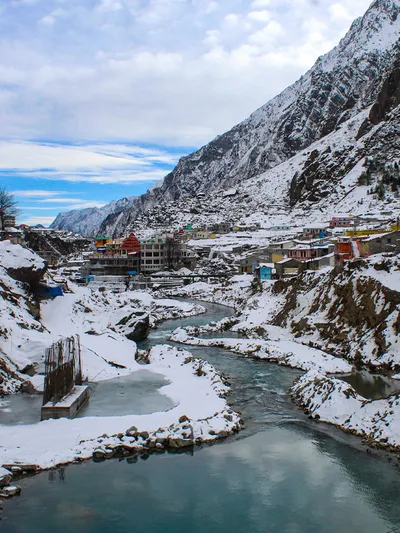
Mana is only reachable when Badrinath Dham itself is open. In 2026 the temple's kapat opened on 23 April; the closing date is fixed each year on Vijayadashami and wasn't officially announced at the time this page was last checked, so confirm it with the temple committee before you plan a late-season trip. Within that window, May–June and September–October are the most comfortable stretches — clearer skies, milder weather. Winters bring heavy snow and cut the route off completely. Even in summer, expect it to be cool given the altitude — pack layers regardless of the month.
How to Reach Mana Village
By Road
Mana connects by road through Badrinath, Joshimath, Rishikesh, and Haridwar. From Badrinath itself it's a short 3–4 km drive or walk.
By Rail
Rishikesh Railway Station is the nearest practical railhead, roughly 290–300 km by road. Haridwar is somewhat farther, around 320–325 km, but has stronger long-distance train connections, so some travellers take the train to Haridwar and continue by road from there.
By Air
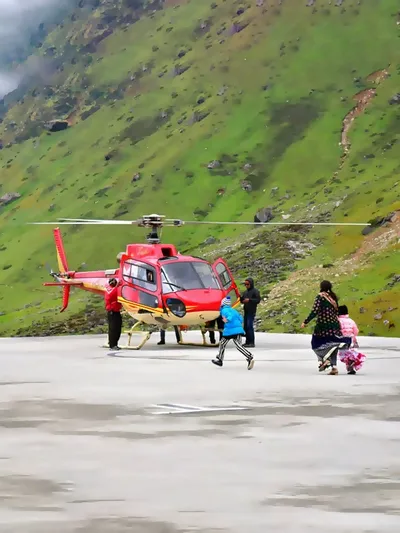
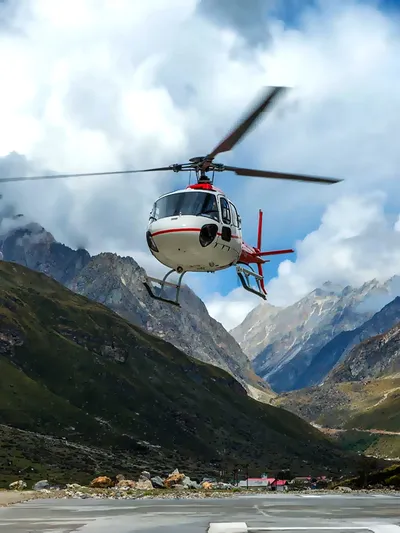
The nearest airport is Jolly Grant, Dehradun, about 315–325 km away. Helicopter services also run from Dehradun's Sahastradhara helipad to Badrinath during the yatra season.
Distance from Major Cities
| From | Approx. road distance |
|---|---|
| Delhi | ~530–545 km |
| Dehradun | ~325–340 km |
| Rishikesh | ~290–305 km |
| Haridwar | ~320–325 km |
| Joshimath | ~45–50 km |
Road distances vary a little depending on the exact starting point and which route you take, and different government pages themselves don't always agree — treat these as workable ranges, not fixed figures.
Travel Tips for Visiting Mana Village
- If you're travelling the Char Dham pilgrimage route, complete your registration in advance — it's free. If you're visiting Mana independently, check the current Tourist Care requirements before you go.
- Give yourself a night to acclimatise before pushing into any of the treks. Mana sits above 3,200 m, and rushing straight from a long drive into a steep trail is a common mistake.
- Mobile network is limited in the higher stretches, and you shouldn't count on ATM or UPI access working reliably. Carry cash.
- Pack warm clothing no matter what month you're travelling in.
- Don't plan on going past Mana toward the border on your own — check with local authorities first if that's part of your itinerary.
Common Mistakes to Avoid
- Treating Mana as a ten-minute photo stop rather than setting aside a few hours for Vyas Gufa, Bhim Pul, and a walk toward Vasudhara Falls.
- Assuming card or UPI will work everywhere — it won't, reliably.
- Heading toward Satopanth or the border area without checking current permit and access rules first.
- Skipping acclimatisation and starting a trek the same day you arrive.
Frequently Asked Questions
Q1. What are the main places to see in Mana village?
Saraswati River, Keshav Prayag, Vyas Gufa, Ganesh Gufa, Bhim Pul, and India's Last Tea Shop. Tapt Kund and Mata Murti Temple are in Badrinath town, not Mana.
Q2. Why is Mana called both the "first" and "last" village of India?
It was known as the last village for decades, geographically accurate given its position before the Tibet border. Since 2022, government messaging has promoted it as the first village instead — a change in framing rather than a formal renaming, and both terms are still in use officially.
Q3. What's the easiest way to get to Mana village?
By road from Badrinath — it's a 3–4 km trip, doable by shared or private taxi, or on foot.
Q4. Do you need a permit to visit Mana village?
No. Mana's village area and main sights don't require a separate permit.
Q5. Do you need a permit for Satopanth or the Mana Pass area?
Satopanth may require an Inner Line Permit or similar clearance from Joshimath, depending on current rules — confirm before your trek. The area beyond Mana toward Mana Pass and the border is restricted and requires official clearance; it isn't open to casual tourists.
Q6. Are there hotels in Mana Village?
Formal accommodation in Mana is very limited to none, by most accounts. Most visitors stay in Badrinath (3–4 km away) or Joshimath (about 45 km away).
Q7. How far is Vasudhara Falls from Mana Village, and how long does the trek take?
Roughly 5–7 km one way, taking about 2–4 hours depending on pace and trail conditions.
Q8. Can Mana Village be visited in winter?
No. It's only accessible when Badrinath Dham is open, roughly late April to mid-November. Winter snowfall cuts the route off entirely.
Q9. What is the nearest railway station to Mana Village?
Rishikesh, about 290–300 km away. Haridwar is a bit farther (~320–325 km) but has better long-distance train connections.
Q10. What is Mana Village famous for?
Its status as India's first/last village, its ties to the Mahabharata (Vyas Gufa, Bhim Pul), the Saraswati River's disappearance underground, and the treks to Vasudhara Falls and Satopanth Lake.
Q11. What is Mana's population?
1,214, per the 2011 Census — 731 male, 483 female, across 558 households. No newer official village-level figure is publicly available.
Q12. Is Char Dham Yatra registration required to visit Mana Village?
It's mandatory if you're travelling the Badrinath/Char Dham pilgrimage route, which Mana sits just beyond. If you're visiting Mana independently, check current Tourist Care rules before travelling.
Conclusion
Mana carries two names now, and both point at something real — a village that was, for decades, defined by being the last inhabited place before the border, and that the country has started describing as a starting point instead. Whichever framing you use, the village itself hasn't changed: Vyas Gufa, Bhim Pul, a river that runs and then disappears, and a walk up toward Vasudhara Falls if you have the time. Visit between May and October, register for the Char Dham route in advance if that's your journey, carry cash, and give the place more than the ten minutes most people spend there.
Chardham Travel Guide
Chardham Travel Packages
Hotels in Chardham
Beware of Fake Char Dham & Kedarnath Helicopter Booking Websites
Fake websites, WhatsApp accounts and advertisements may impersonate genuine travel companies or helicopter operators. Always verify before paying.