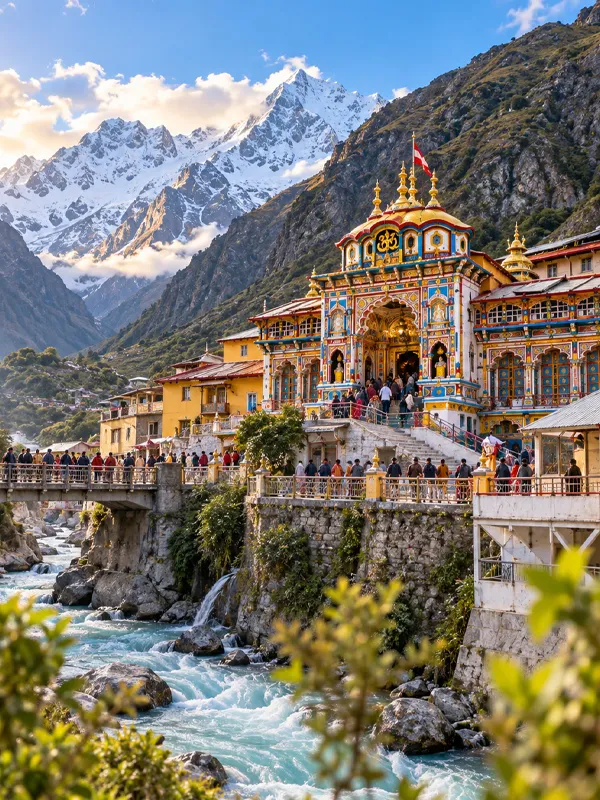
Badrinath Weather Guide 2026
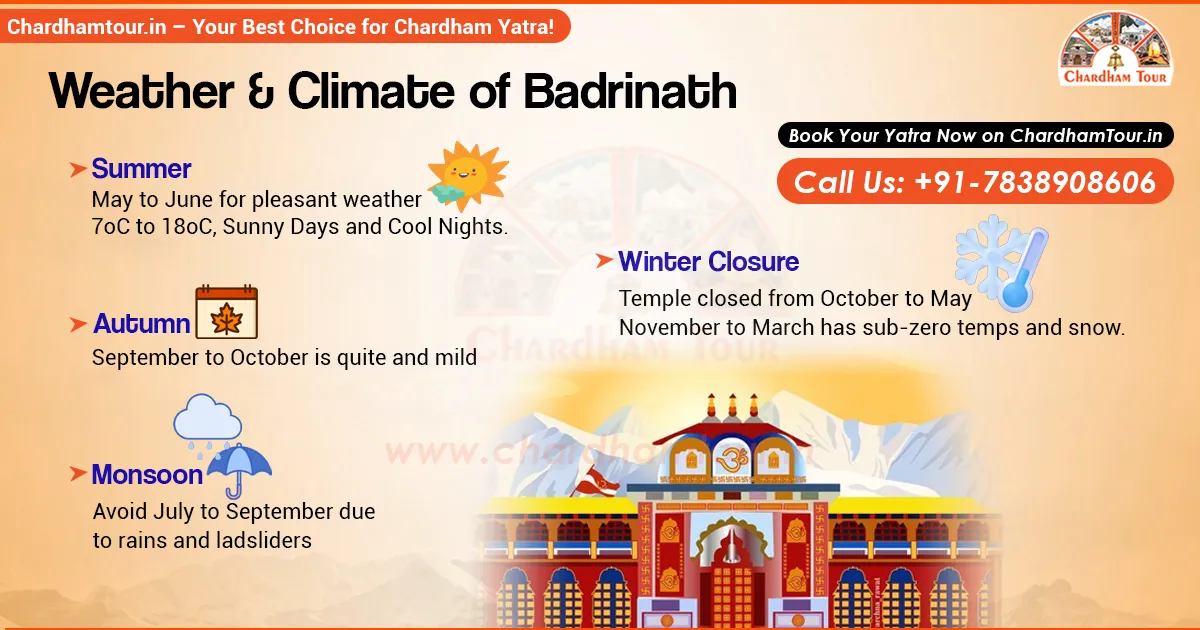
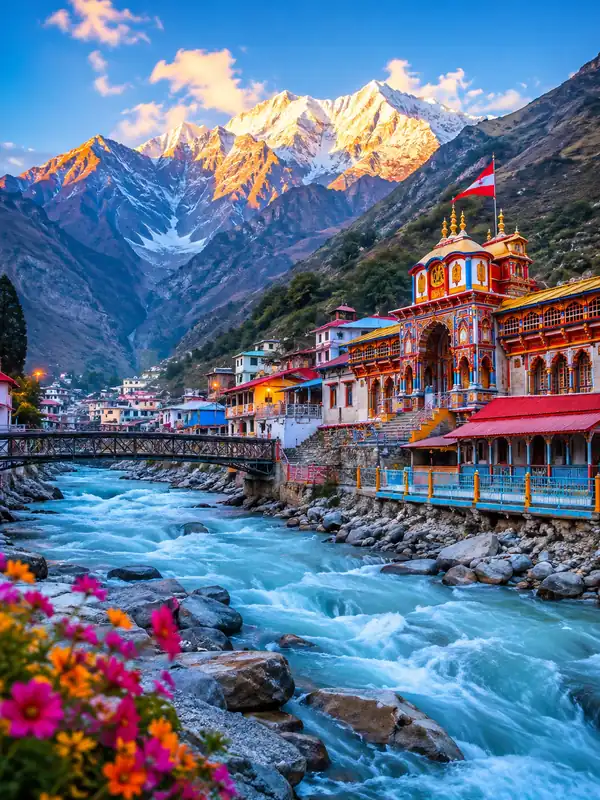
Sitting at 3,133 metres in the Chamoli Himalayas, Badrinath doesn't really have a "weather forecast" so much as it has moods — and they change fast. If you're planning a Yatra, the honest answer to "what's the weather like" depends entirely on which week you're asking about. May feels like a crisp mountain spring. July can shut the highway down for two days straight, as it just did. This guide breaks down every month so you're not caught off guard.
Quick Overview:
Badrinath is open from late April to mid-November. May, June, and late September to October have the most reliable weather — daytime temperatures roughly in the 8–25°C range. July and August bring monsoon rain and frequent closures on NH-7 (the old NH-58), the highway that connects Rishikesh to Badrinath. Winters (mid-November–April) see the temple fully closed under snow.
Badrinath is open from late April to mid-November. May, June, and late September to October have the most reliable weather — daytime temperatures roughly in the 8–25°C range. July and August bring monsoon rain and frequent closures on NH-7 (the old NH-58), the highway that connects Rishikesh to Badrinath. Winters (mid-November–April) see the temple fully closed under snow.
Quick Season Summary
| Season | Months | Day Temp | Night Temp | Verdict |
|---|---|---|---|---|
| Spring opening | Late April – May | 6°C – 20°C | 0°C – 8°C | Good, but book early — heavy crowds |
| Early summer | June | 15°C – 25°C | 5°C – 10°C | Best all-round weather |
| Monsoon | July – mid-Sept | 12°C – 17°C | 5°C – 10°C | Risky — landslides common |
| Post-monsoon | Late Sept – Oct | 8°C – 15°C | 0°C – 5°C | Excellent — clear skies, fewer people |
| Pre-closing | November | 3°C – 8°C | -2°C – 2°C | Cold, temple shuts mid-month |
Temperatures above are seasonal averages compiled from multiple regional weather sources, not a precise forecast — actual daily conditions can vary. Check a live forecast close to your travel date.
Best Time at a Glance
- Best overall weather: June
- Best mountain views / thinner crowds: Late September–October
- Avoid if possible: July–August (monsoon, landslide risk)
- Coldest but clearest: October–early November
- Opening rush (auspicious but crowded): Last week of April
Month-by-Month Badrinath Temperature
| Month | Day Temp | Night Temp | What to Expect | Recommended? |
|---|---|---|---|---|
| January | Well below 0°C | Well below 0°C | Deep snow, temple shut | No — closed |
| February | Well below 0°C | Well below 0°C | Same as January | No — closed |
| March | 3°C – 6°C | Below 0°C | Snowmelt begins, still closed | No — closed |
| April | 6°C – 10°C | 0°C – 3°C | Opens late in the month | Only from opening day |
| May | 11°C – 20°C | 2°C – 8°C | Clear, cold nights, heavy footfall | Yes — book 3–4 weeks ahead |
| June | 15°C – 25°C | 5°C – 10°C | Warmest, roads at their best | Yes — excellent |
| July | 15°C – 17°C | 6°C – 10°C | Monsoon active, landslide risk | Caution |
| August | 12°C – 16°C | 5°C – 9°C | Heaviest rain of the year | Avoid if possible |
| September | 10°C – 13°C | 3°C – 7°C | Rain tapers off after mid-month | Improving from late month |
| October | 8°C – 15°C | 0°C – 5°C | Clearest skies of the season | Yes — highly recommended |
| November | 3°C – 8°C | -2°C – 2°C | Cold, closes mid-month | Last window only |
| December | Well below 0°C | Well below 0°C | Fully snowed in, closed | No — closed |
Spring Opening — Late April to May
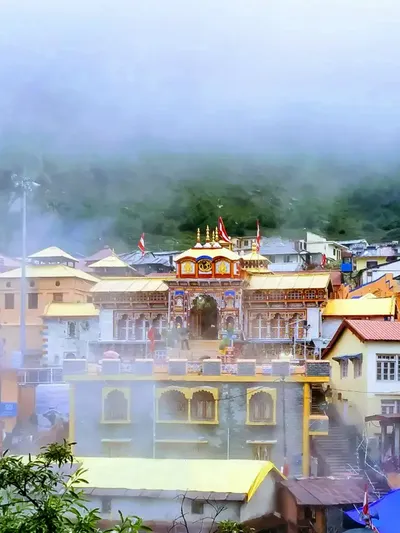
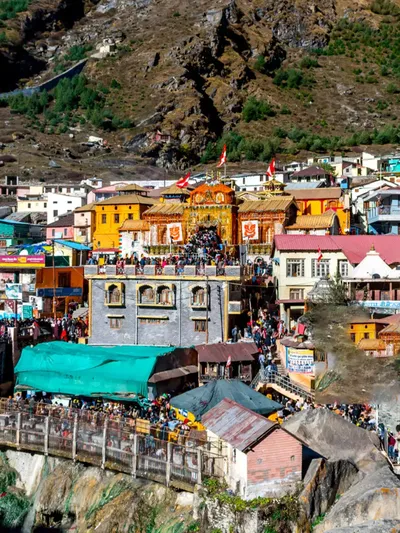
The temple reopens on Akshaya Tritiya, and for 2026 that's April 23 at 6:15 AM. The first week after opening pulls in a heavy religious crowd for the auspicious date, and the weather can still be unsettled — late snow flurries aren't unusual in that opening window.
If you can push your trip to the second or third week of May instead of the opening rush, you'll usually get steadier conditions — daytime highs climbing toward 20°C, cleared roads, and full helicopter service. Nights still drop to 2–8°C, so this isn't a light-jacket trip regardless of what the day temperature suggests.
One thing that catches people off guard: even in bright May sunshine, wind chill near the temple courtyard often makes it feel noticeably colder than the thermometer reading. Layer up rather than relying on a single heavy jacket.
Early Summer — June
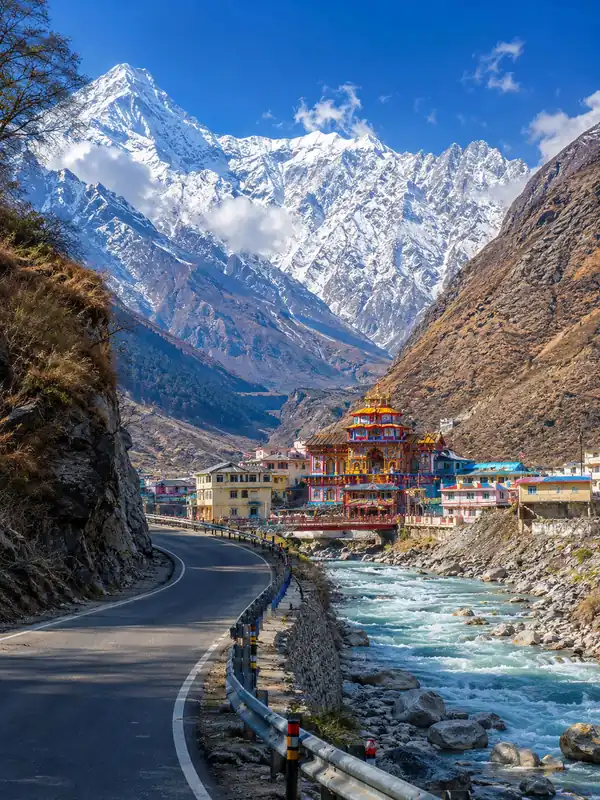
June is widely considered the most comfortable month at Badrinath. Snowmelt is done, daytime temperatures typically sit in the 15–25°C range, and the Joshimath–Badrinath road is generally in its best seasonal condition. If your priority is stable weather over avoiding crowds, June is worth prioritizing over May.
Monsoon — July to Mid-September (Current Conditions)
This is where planning gets serious. The temple stays open through monsoon — it's the roads that become the problem, not the Darshan itself.
Temperature-wise, July and August stay mild on paper — 12°C to 17°C in the day — but persistent cloud cover and rain make it feel colder and far less pleasant than the numbers suggest. September starts easing from mid-month onward as the monsoon withdraws.
If you must travel in July–August:
- Leave before 6 AM — most landslide-triggering rain falls in the afternoon and evening
- Don't book non-refundable hotel nights; keep your itinerary flexible
- Check road status directly through the Uttarakhand Char Dham helpline or BRO updates each morning
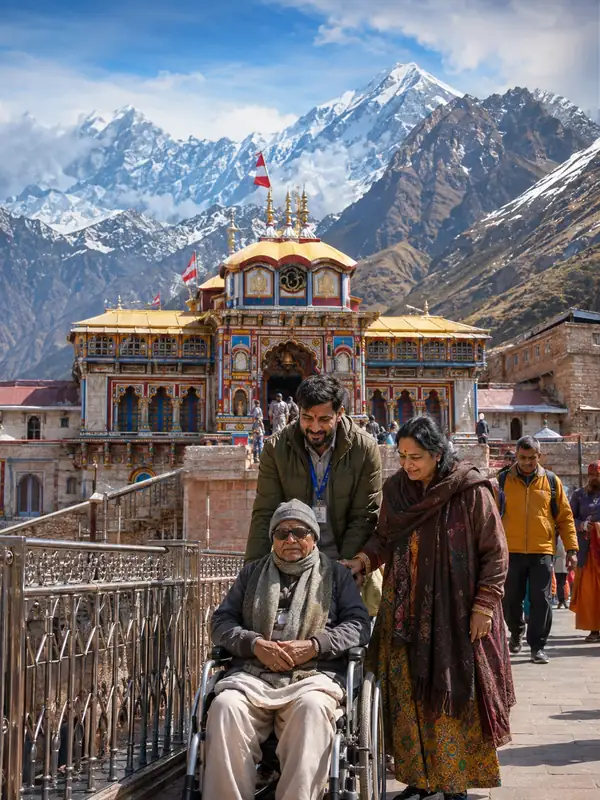
- Avoid this window entirely if traveling with elderly pilgrims or young children
Post-Monsoon — Late September to October
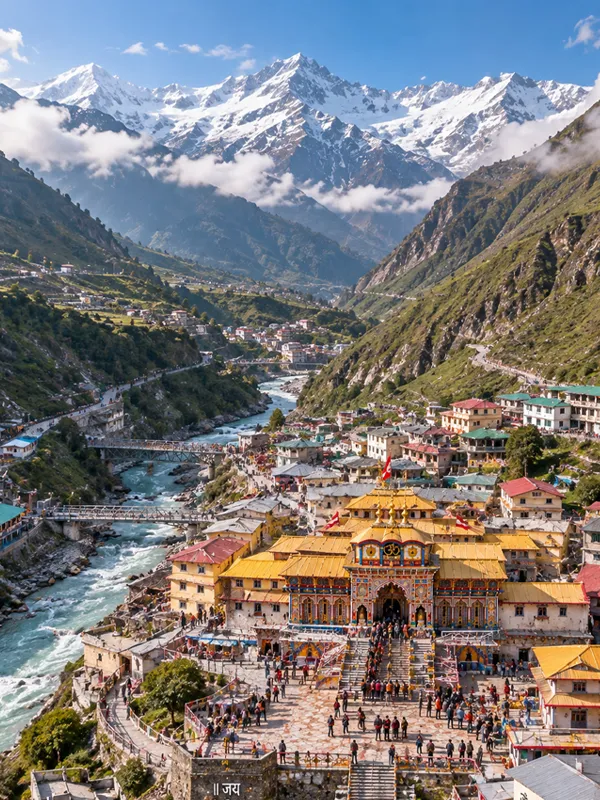
Many experienced Char Dham travelers and local operators rate October above May for one reason: visibility. Crowds are noticeably thinner, monsoon dust and haze clear from the air, and Neelkanth peak — the roughly 6,500–6,600 m summit behind the temple — is typically visible with more clarity than during peak season. Daytime temperatures run 8–15°C, nights fall to 0–5°C.
The trade-off is real — it's colder, and you need proper winter layers, not just a fleece. But for photography, a quieter Darshan, and clearer mountain views, late September through October is the window most repeat pilgrims recommend.
Keep an eye on the 2026 closing date announcement — it typically comes out around Vijayadashami (Dussehra) and isn't the same date as the closing itself. Confirm the exact date with BKTC before locking in an October trip near month-end.
Winter — November (Pre-Closing) Through April
The temple's exact 2026 closing date hadn't been officially confirmed as of this writing; based on the pattern of recent years — the 2025 season closed on November 25 at 2:56 PM — expect the 2026 Kapat closing somewhere in the November 11–25 range, on Bhai Dooj. Once closed, Lord Badrivishal's idol is moved to Pandukeshwar near Joshimath, where worship continues through winter.
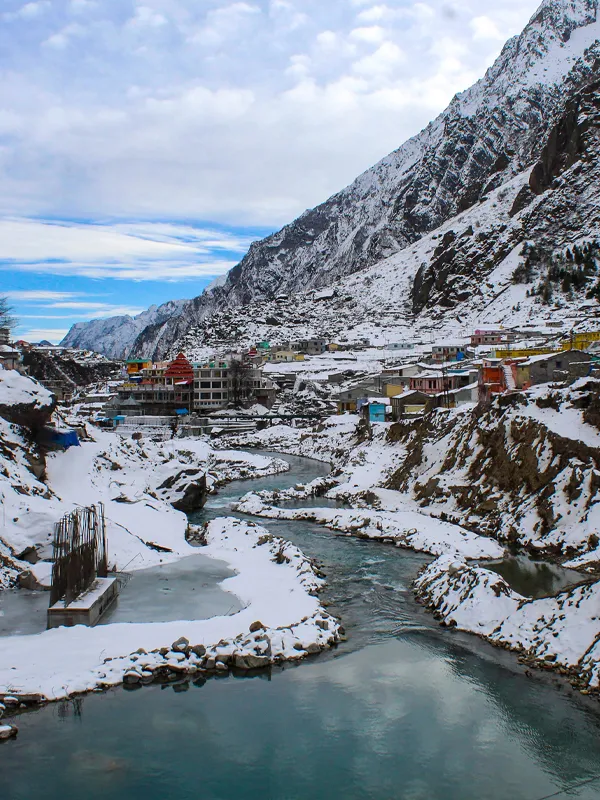
From late November through April, Badrinath itself is not accessible — heavy snow closes the roads completely. There's no partial Darshan available in this window; the temple simply isn't open.
Real Scenario: What a Monsoon-Season Trip Looks Like
A reader recently asked whether to risk a Badrinath trip during a monsoon closure. Here's what the pattern typically looks like on the ground, based on the late-July 2026 disruption: the entire Char Dham Yatra was officially paused for two days after debris blocked the highway near Pipalkoti, with pilgrims held at safe points until roads reopened. Movement resumed the following day, though the affected stretch stayed under clearance for longer, so delays of several hours are common even after a route reopens. This isn't inherently dangerous if you follow official advisories and don't push through barricades — but it is unpredictable, and trips often run 1–2 days longer than planned during active monsoon spells. If your dates are flexible, shifting toward mid-September, once the monsoon fully withdraws, improves your odds of a smooth trip.
Badrinath Opening & Closing Dates
| Year | Opening Date | Closing Date |
|---|---|---|
| 2024 | May 12, 2024 | November 17, 2024 |
| 2025 | May 4, 2025 | November 25, 2025 (2:56 PM) |
| 2026 | April 23, 2026 (6:15 AM) | Expected mid-November — confirm with BKTC |
Always verify final dates through bktc.net or registrationandtouristcare.uk.gov.in before booking non-refundable travel.
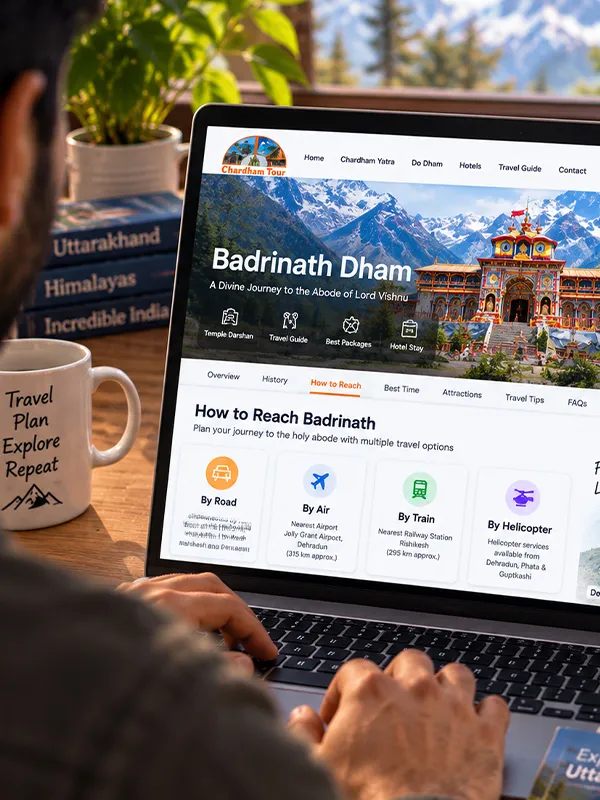
Distances & How to Reach Badrinath
| Route | Approx. Distance | Typical Travel Time |
|---|---|---|
| Haridwar → Badrinath | ~320–322 km | 10–12 hours by road |
| Delhi → Badrinath | ~530–540 km | 12–16 hours by road |
| Joshimath → Badrinath | ~45 km | 1.5–2 hours |
| Badrinath → Mana Village | ~3–4 km | 30 minutes on foot |
| Dehradun (Jolly Grant Airport) → Badrinath | ~310–317 km | Road, or by helicopter in season |
Most pilgrims break the Haridwar–Badrinath drive into two days, with an overnight halt at Joshimath, Rudraprayag, or Karnaprayag rather than attempting it in one stretch.
Altitude & Acclimatization
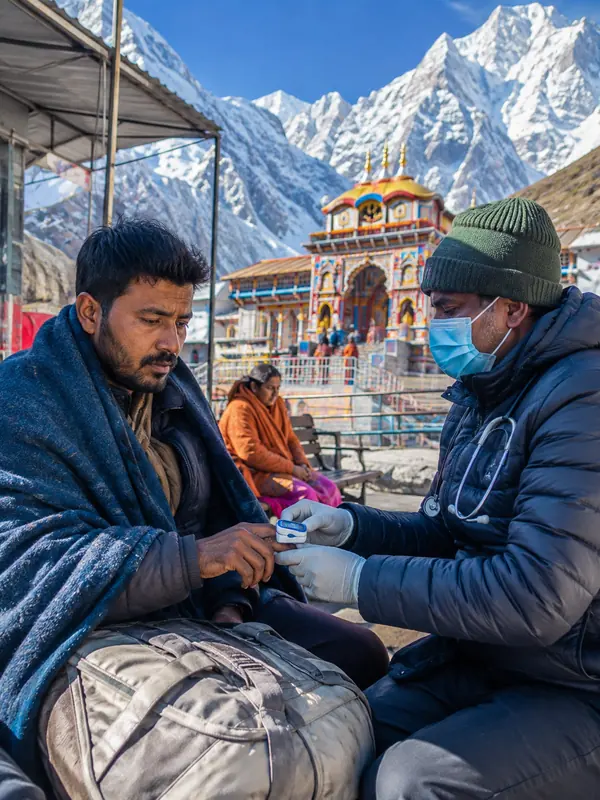
Badrinath sits at 3,133 m, high enough that mild altitude effects are common even though it's well below the elevation where serious Acute Mountain Sickness (AMS) typically becomes a major risk. Some visitors experience breathlessness, fatigue, mild headache, or reduced appetite in the first day.
Practical steps that help:
- Avoid strenuous activity (like the Mana or Neelkanth base camp treks) on your very first day at altitude
- Stay hydrated and limit alcohol the first night
- Carry paracetamol and discuss AMS medication (such as Diamox) with your doctor before the trip — don't self-prescribe
- Elderly pilgrims and those with heart or respiratory conditions should consult a doctor before planning the trip
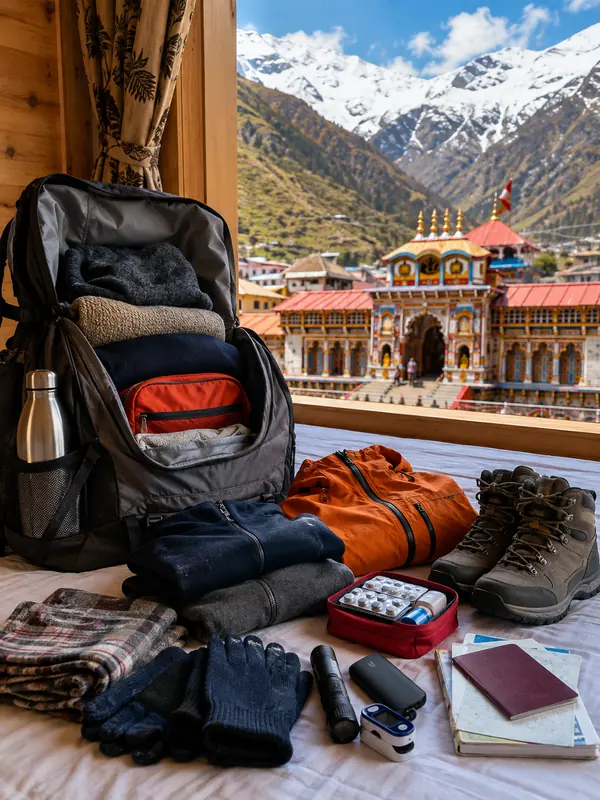
What to Pack — Season by Season
| Item | May–June | July–Sept | Oct–Nov |
|---|---|---|---|
| Thermal base layer | Yes | Yes | Yes, heavier |
| Fleece/woolen jacket | Medium | Light–medium | Heavy |
| Down jacket | Optional | Optional | Recommended |
| Waterproof rain shell | Yes | Essential | Yes |
| Trekking shoes with grip | Yes | Yes | Yes |
| Cap, gloves | Yes | Optional | Essential |
| SPF 50+ sunscreen | Essential | Yes | Yes |
| AMS medicine kit | Yes | Yes | Yes |
| Cash (₹3,000+) | Yes | Yes | Yes |
| Yatra Pass (digital or printed) | Mandatory | Mandatory | Mandatory |
| Power bank & torch | Yes | Yes | Yes |
| Waterproof backpack cover | Optional | Essential | Yes |
Common Mistakes to Avoid
- Trusting the daytime high alone. A 20°C day at Badrinath with wind and cloud cover can feel closer to 10°C. Pack for the night temperature, not the day one.
- Booking non-refundable stays in July–August. Road closures during monsoon are common enough that flexible cancellation terms matter more than a small discount.
- Confusing the closing date with Vijayadashami. The temple closes around Bhai Dooj, weeks after Dussehra — not on it. This mix-up shows up on a surprising number of travel sites.
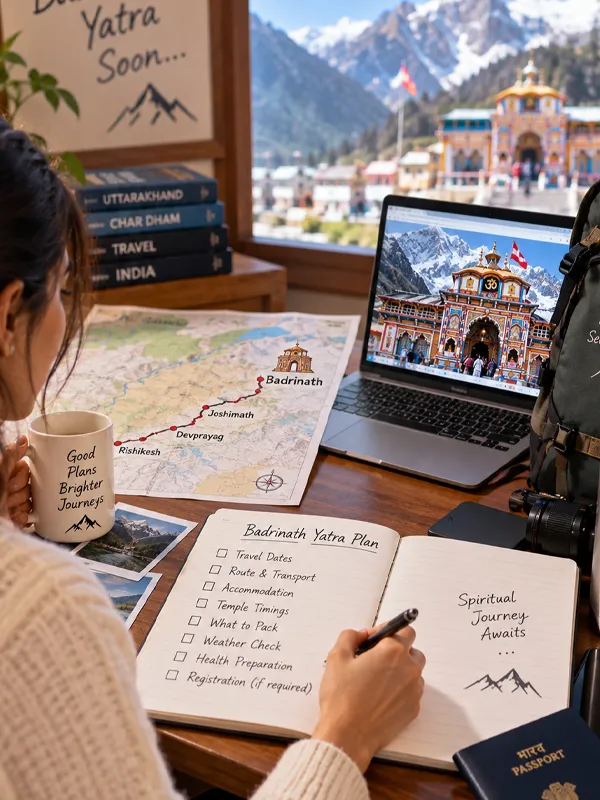
- Skipping registration. Every pilgrim needs a Yatra Pass from registrationandtouristcare.uk.gov.in, checked at highway checkpoints. A digital copy (QR code) is generally accepted, though many pilgrims still carry a printed copy as backup in case of network issues at checkpoints. Walk-in counters at Haridwar get overwhelmed in peak season.
Pro Tips
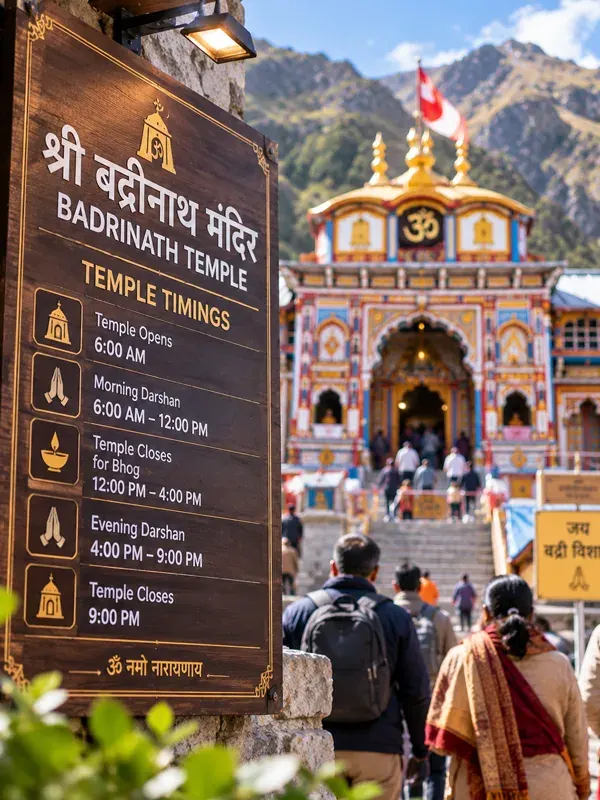
- Stay overnight in Joshimath before your Badrinath day — it's roughly 45 km away, and an early start gets you to the 4:30 AM Abhishek Aarti, the quietest Darshan of the day.
- During monsoon months, call ahead to your hotel or driver the morning of travel — road status can change within hours.
- October pilgrims should carry hand warmers; early Aarti in autumn cold is a different experience than the same Aarti in May.
- Carry cash. UPI and card networks are unreliable along the Joshimath–Badrinath stretch.
FAQs
Q1. What is the best time to visit Badrinath in 2026?
Ans: Mid-May to mid-June, and late September through October, offer the most stable weather. June is the warmest and has the best road conditions; October has the clearest mountain views and thinner crowds.
Q2. What is the Badrinath temperature in May?
Ans: Daytime temperatures range from 11°C to 20°C, dropping to 2°C–8°C at night. Wind can make it feel colder than the number suggests.
Q3. Is Badrinath open right now, in July 2026?
Ans: Yes, the temple is open and the yatra resumed on July 30 after a two-day, weather-related suspension. The Bhanerpani stretch of the highway is still under clearance, so expect delays. Confirm current road status before travelling.
Q4. When does Badrinath temple open in 2026?
Ans: April 23, 2026, at 6:15 AM, on Akshaya Tritiya.
Q5. When does Badrinath close for winter in 2026?
Ans: An exact date hasn't been officially confirmed yet at the time of writing; based on recent years, expect mid-to-late November, likely announced around Vijayadashami.
Q6. Is Badrinath safe to visit during monsoon?
Ans: The temple stays open, but the highway is prone to landslides between July and mid-September. Elderly travelers and families with young children should avoid this window if possible.
Q7. What's the weather like in Badrinath in October?
Ans: Days run 8°C–15°C, nights 0°C–5°C. Skies are typically clear, making it one of the best months for mountain views.
Q8. Does it snow in Badrinath in winter?
Ans: Yes, heavily. From December through March the region is snowbound and the temple is fully closed.
Q9. Is registration mandatory for Badrinath in 2026?
Ans: Yes. Online registration at registrationandtouristcare.uk.gov.in is compulsory, and your Yatra Pass — digital or printed — is checked at highway checkpoints.
Q10. How cold does it get at night in Badrinath?
Ans: Even in peak summer (May–June), nights drop to 2°C–10°C. In October–November, night temperatures can fall below 0°C.
Q11. Does it rain every day in Badrinath during July?
Ans: Not every single day, but rain is frequent and often heavy during July, and even short spells can trigger landslides on the approach road. Expect an unpredictable mix of clear mornings and wet afternoons.
Q12. Can it snow in Badrinath in May?
Ans: Occasional light snow or sleet is possible in the first week after opening, especially right around Akshaya Tritiya. It becomes rare as May progresses.
Q13. Which month has the least rainfall at Badrinath?
Ans: June, just before the monsoon sets in, and October, after it withdraws, typically see the least rain of the open season.
Q14. Is October colder than May at Badrinath?
Ans: Yes. October daytime highs (8–15°C) run cooler than May's (11–20°C), and October nights are more likely to dip below 0°C, especially later in the month.
Q15. What should children wear in Badrinath's cold weather?
Ans: The same layering principle as adults, scaled down: a thermal base layer, a warm fleece or padded jacket, a cap and gloves, and closed-toe shoes. Carry an extra layer, since children get cold faster at altitude than adults do.
Conclusion
Badrinath's weather window is short and it doesn't forgive poor planning. If stable conditions and full services matter most, aim for June. If quiet Darshan and clear mountain views matter more, October is hard to beat. Avoid July–August unless your dates are unavoidable — and if you do travel during monsoon, build slack into your itinerary and check the highway status every single morning. Whatever month you choose, register early, pack for night temperatures rather than day ones, and confirm opening or closing dates directly with BKTC before you book anything non-refundable.
Badrinath Travel Guide

Badrinath Travel Packages


Important Safety Notice
Beware of Fake Char Dham & Kedarnath Helicopter Booking Websites
Fake websites, WhatsApp accounts and advertisements may impersonate genuine travel companies or helicopter operators. Always verify before paying.