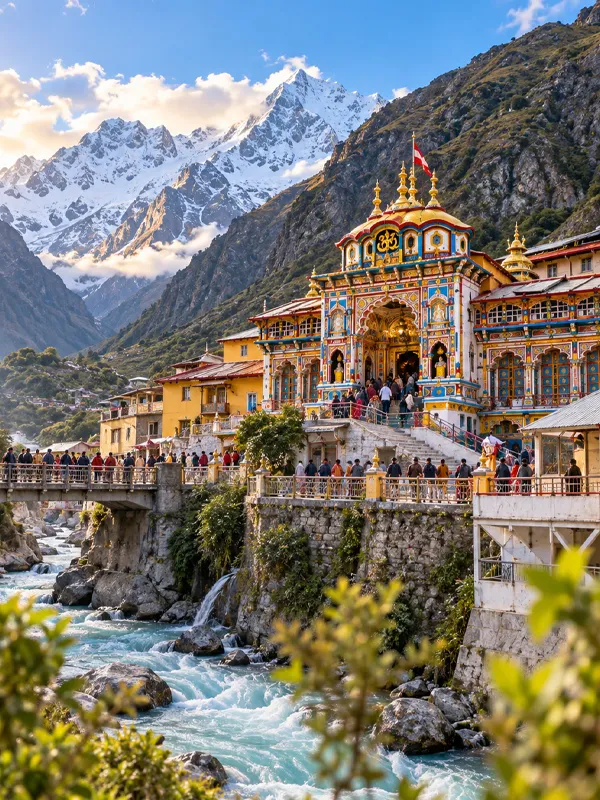
Badrinath Altitude Sickness Precautions: A Complete Safety Guide
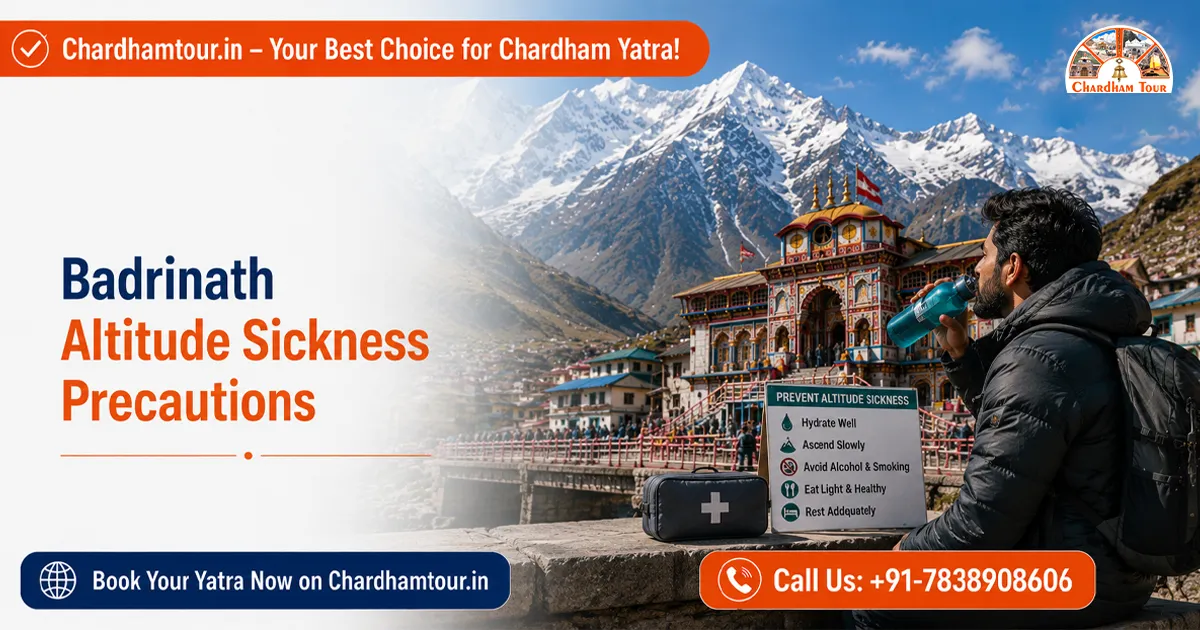
Badrinath sits at roughly 3,100 metres (10,170 feet) above sea level — a Badrinath height above sea level that's exactly why so many pilgrims struggle in the first day or two. The temple opens for the 2026 season on 23 April, and this year the Uttarakhand government has tightened its health rules specifically because of altitude-related emergencies in past seasons. If you're planning the Char Dham Yatra, altitude sickness — not the cold, not the crowd — is the thing most likely to cut your trip short.
Why Badrinath Triggers Altitude Sickness
Most pilgrims travel from near sea-level cities straight to a temple town above 3,000m in a single day. That's the real problem: skipping acclimatization is the single biggest driver of AMS on this route, which is why the 2026 health advisory now explicitly asks pilgrims to break their journey rather than pushing through in one stretch.
The air at this altitude carries noticeably less oxygen. Your body needs time to adjust its breathing rate and red blood cell production. Skip that adjustment window, and you get Acute Mountain Sickness (AMS) — which is exactly why altitude sickness Badrinath cases spike among pilgrims who compress their travel into one day.
AMS Symptoms on the Char Dham Route You Should Never Ignore
- Persistent headache that doesn't go with paracetamol
- Nausea or loss of appetite
- Dizziness or a spinning sensation
- Breathlessness even while resting
- Disturbed sleep, unusual fatigue
- Swelling in hands, face, or ankles
One mistake many people make is treating a mild headache as "just tiredness from the road" and continuing to climb or push forward. That's when mild AMS can slide into something serious like High Altitude Pulmonary Edema (HAPE) or High Altitude Cerebral Edema (HACE) — both medical emergencies that need immediate descent.
Who Is at Higher Risk
| Risk Factor | Why It Matters |
|---|---|
| Age 55 and above | Uttarakhand's 2026 rules make a pre-yatra medical check-up mandatory for this group |
| Heart disease, hypertension, asthma, diabetes | Reduced oxygen reserve; also flagged in the official 2026 screening |
| Rapid ascent (same-day travel) | No acclimatization time |
| Dehydration | Thickens blood, worsens symptoms |
| Alcohol/caffeine before travel | Impairs oxygen absorption and worsens dehydration |
Precautions That Actually Work
1. Break your journey — don't rush. The official 2026 advisory asks pilgrims to spend 24–48 hours in Haridwar or Rishikesh before climbing toward Badrinath, and an overnight halt at Joshimath on the way up adds a further buffer. This single step prevents most AMS cases.
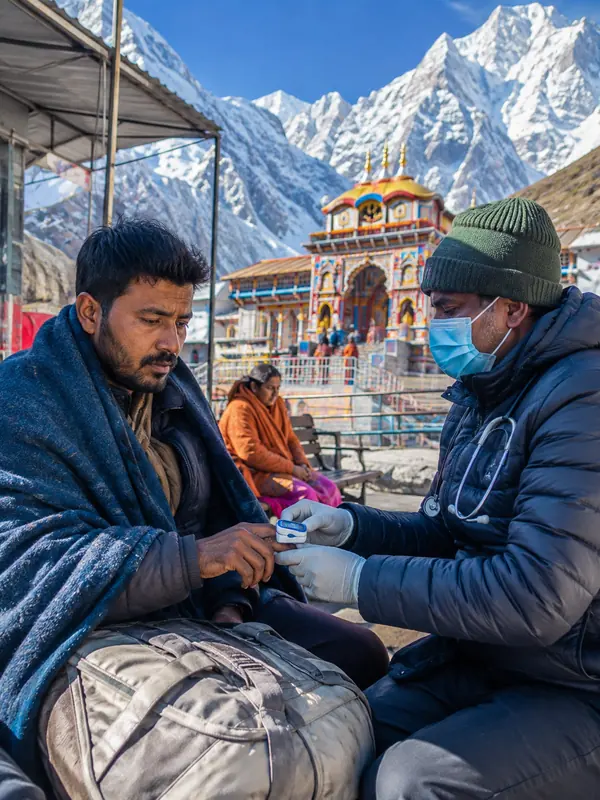
2. Carry a pulse oximeter. This is now part of the government's own advisory: check your oxygen saturation periodically, and head to the nearest Medical Relief Post if the reading drops below 90%.
3. Hydrate more than you think you need. Drink 3–4 litres of water daily. Skip tea, coffee, and alcohol — the official advisory specifically flags caffeine and alcohol as worsening dehydration at altitude.
4. Eat light, eat often. Heavy, oily food slows digestion, which your body can't afford to spend extra energy on at altitude. Small, frequent, carb-rich meals work better.
5. Avoid overexertion on arrival day. No brisk walking, no rushing up temple steps on day one. Rest for at least 6–8 hours before any physical activity.
6. Get the mandatory medical check-up if you're 55+ or have a pre-existing condition. Under the 2026 rules, pilgrims above 55, or with a history of heart disease, hypertension, asthma, or diabetes, must undergo a physical fitness check before the ascent. Carry any prescribed AMS medication (such as Diamox) only after a doctor confirms it's safe for you — it has contraindications for people with sulfa allergies or kidney issues.
7. Follow these Badrinath altitude sickness precautions from day one, not just when symptoms appear. Mountain medicine guidance is consistent on this point: mild AMS caught early and rested through resolves quickly, while AMS that's ignored and pushed through can progress to HAPE or HACE within hours. Report a mild headache or nausea immediately rather than waiting to see if it passes.
Step-by-Step: What To Do If Symptoms Appear
- Stop all activity immediately and rest.
- Check your pulse oximeter reading. Below 90% oxygen saturation is the government's own trigger point for seeking help.
- Hydrate and avoid caffeine or alcohol.
- If headache or nausea persists beyond 2–3 hours, inform your group leader or hotel staff.
- If symptoms worsen — confusion, severe breathlessness, inability to walk straight — descend to a lower altitude without delay.
- Go to the nearest Medical Relief Post (MRP). The state has set up around 20 MRPs and 31 health check-up centres along the Char Dham route for exactly this purpose, backed by 177 ambulances (including advanced life support and cardiac units), a boat ambulance stationed at Tehri, and a helicopter ambulance service run through AIIMS Rishikesh for critical cases.
- If you're enrolled, the government's new e-Swasthya Dham portal monitors pilgrim health data in real time across the route, so medical teams can be alerted and reach you faster in an emergency.
Common Mistakes Pilgrims Make
- Traveling non-stop from Haridwar to Badrinath in one day, skipping the recommended 24–48 hour acclimatization halt
- Ignoring mild symptoms and pushing through Darshan queues
- Drinking alcohol or excess caffeine the night before ascent
- Skipping the mandatory medical check-up if you're 55+ or have a heart, lung, or diabetes-related condition
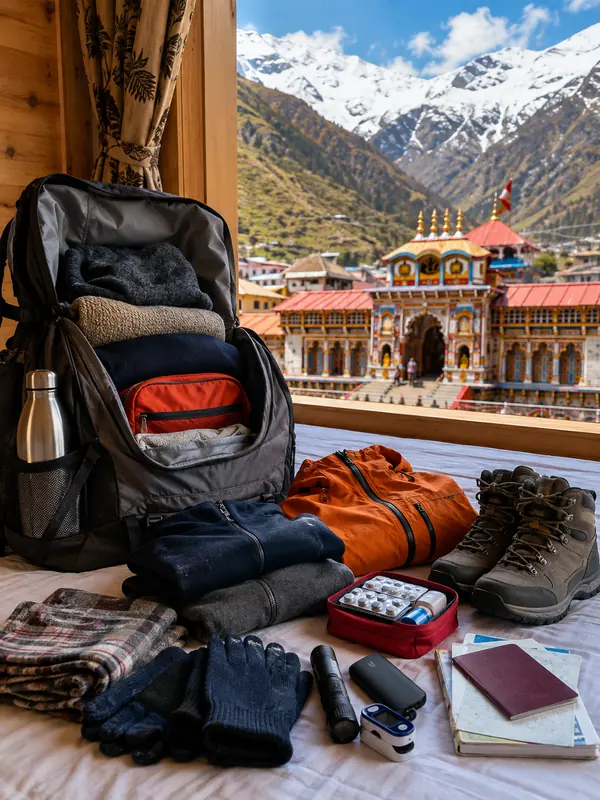
- Not carrying warm layers or a pulse oximeter, both of which the official advisory specifically recommends
Pro Tips From the Ground
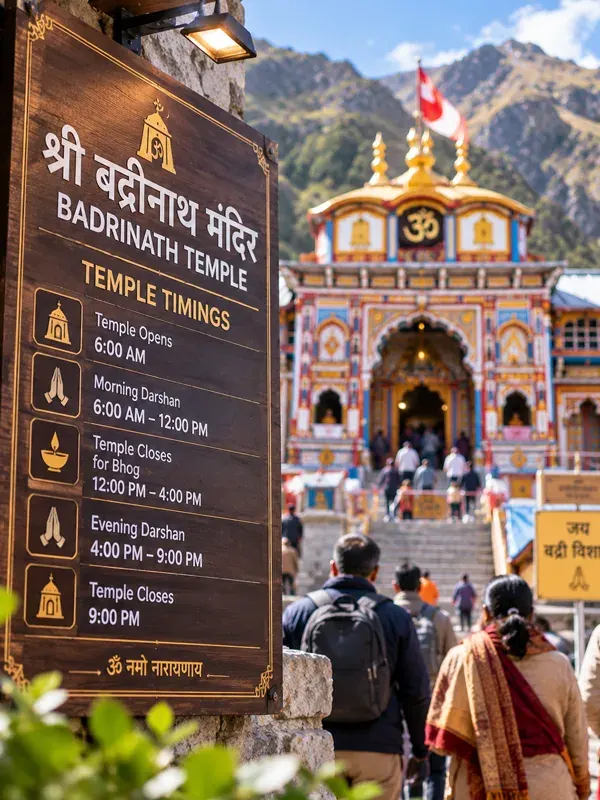
- Morning Darshan is generally calmer and less physically demanding than the afternoon rush.
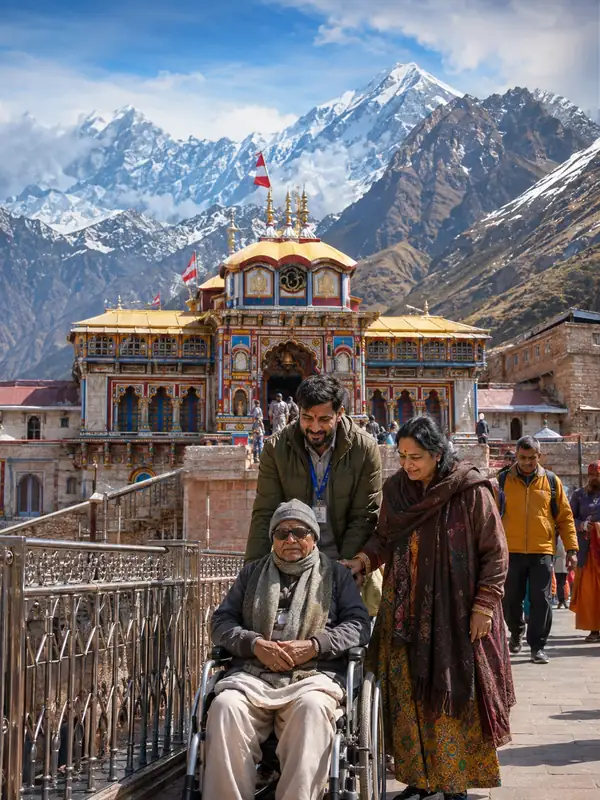
- Senior citizens should plan an extra acclimatization day at Joshimath rather than pushing straight through.
- Carry a basic first-aid kit with paracetamol, ORS sachets, a pulse oximeter, and any prescribed AMS medication.
- Vehicles on the Char Dham route are only permitted between 4 AM and 10 PM under the 2026 rules, so plan travel timings and overnight halts accordingly.
- Check weather and road updates before departure — sudden weather shifts add physical stress on top of altitude strain.
FAQs
Q1. What is the altitude of Badrinath?
Ans: Badrinath sits at approximately 3,100 metres (10,170 feet) above sea level, per the Uttarakhand government's own figures — the most authoritative source for this number.
Q2. How soon can altitude sickness start in Badrinath?
Ans: Symptoms typically appear within 6 to 24 hours of arrival at high altitude.
Q3. Is Diamox necessary for Badrinath Yatra?
Ans: Not for everyone. It's mainly advised for senior citizens, those with a history of AMS, or people ascending rapidly — always after consulting a doctor.
Q4. Can children get altitude sickness in Badrinath?
Ans: Yes, though it's less common. Watch for irritability, poor appetite, or unusual sleepiness in children.
Q5. Is Badrinath safe for heart patients?
Ans: It can be risky. Heart or lung patients should get medical clearance and travel with someone who knows their condition well.
Q6. What should I eat to avoid altitude sickness?
Ans: Light, carbohydrate-rich meals in small portions work best. Avoid heavy, fried, or spicy food on arrival day.
Q7. Does alcohol worsen altitude sickness?
Ans: Yes. Alcohol dehydrates the body and reduces oxygen efficiency, making symptoms worse.
Q8. What is the fastest remedy for altitude sickness?
Ans: Rest, hydration, and descent to lower altitude if symptoms don't improve within a few hours.
Q9. Is there a hospital in Badrinath for emergencies?
Ans: Yes. Badrinath has a Medical Relief Post, and the Uttarakhand government has set up around 20 MRPs and 31 health check-up centres along the Char Dham route, backed by 177 ambulances, a boat ambulance in Tehri, and a helicopter ambulance service run through AIIMS Rishikesh. Pilgrim health is also tracked in real time through the e-Swasthya Dham portal.
Q10. Should I break my journey before reaching Badrinath?
Ans: Yes — the official 2026 advisory recommends spending 24–48 hours in Haridwar or Rishikesh, plus an overnight halt at Joshimath, before the final ascent.
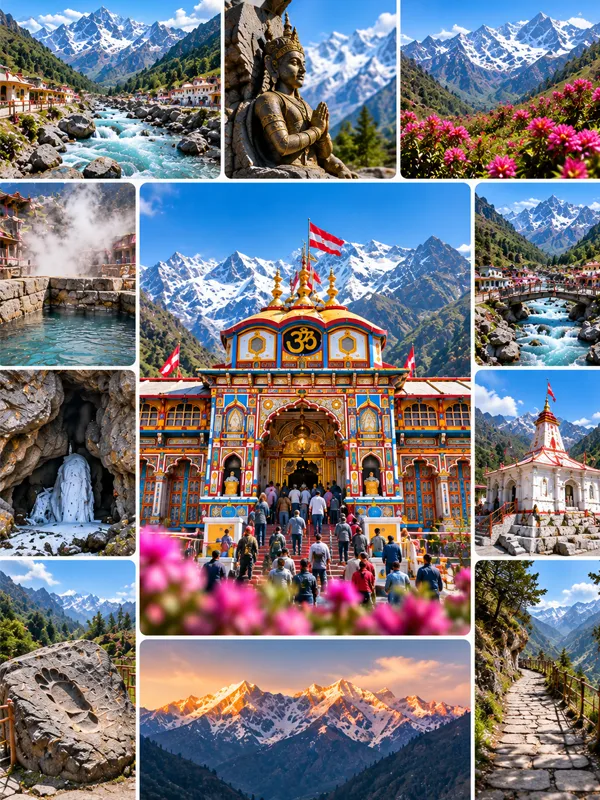
Badrinath Travel Guide

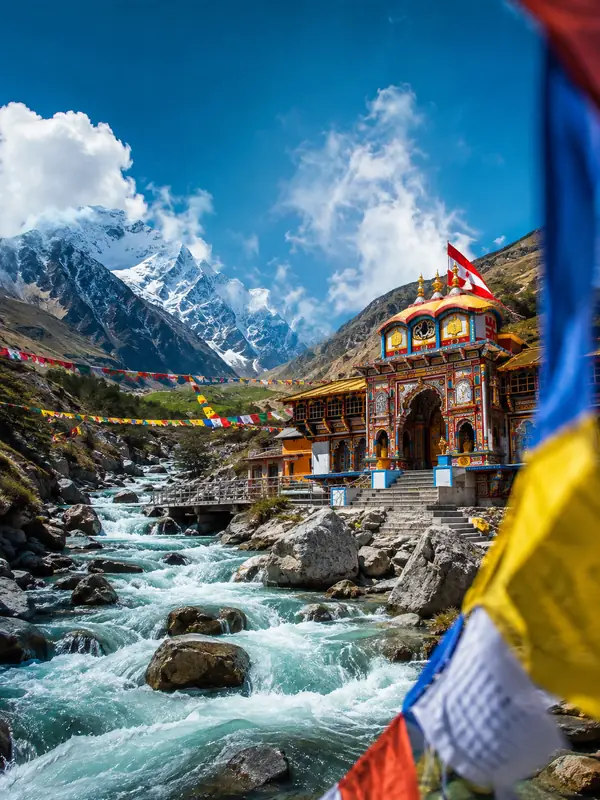

Badrinath Travel Packages

Important Safety Notice
Beware of Fake Char Dham & Kedarnath Helicopter Booking Websites
Fake websites, WhatsApp accounts and advertisements may impersonate genuine travel companies or helicopter operators. Always verify before paying.