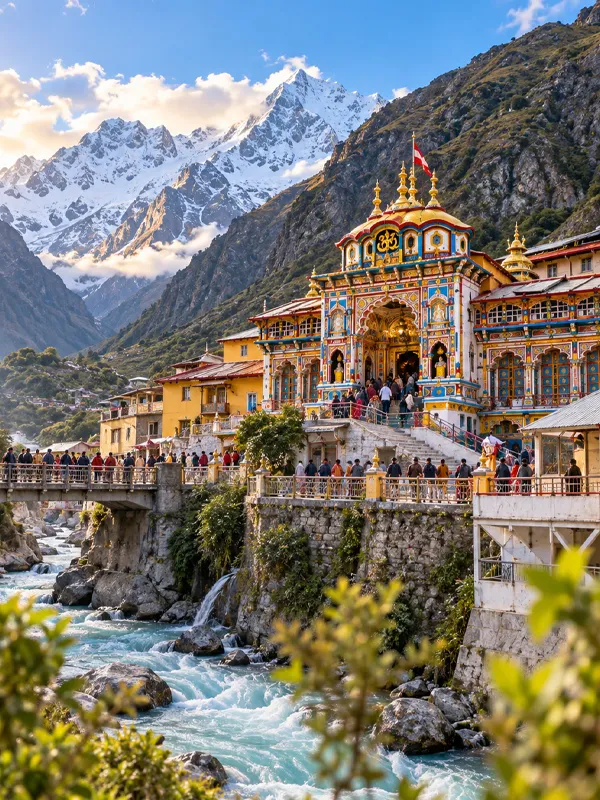
Best Time to Visit Badrinath: A Month-by-Month Guide
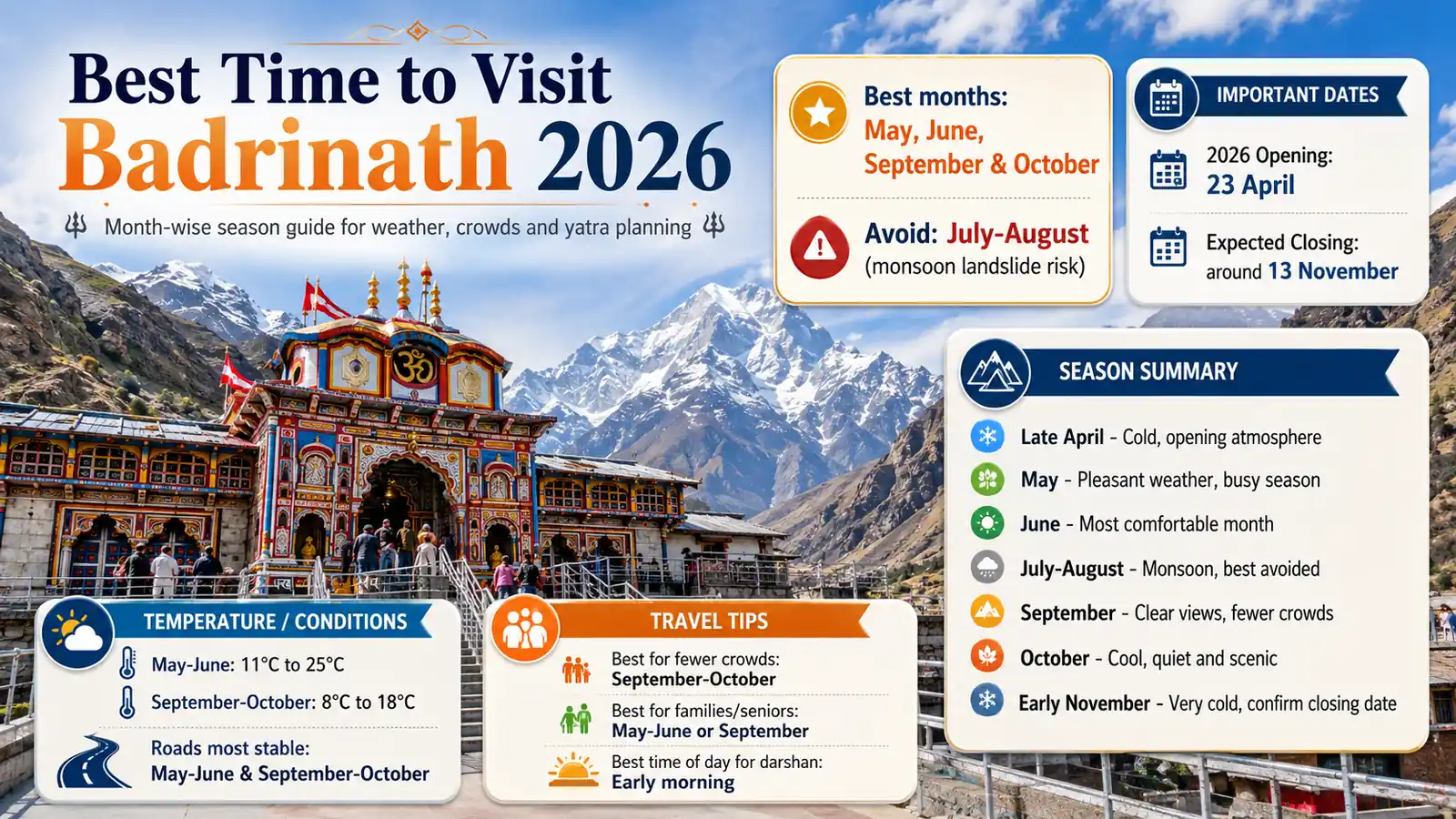
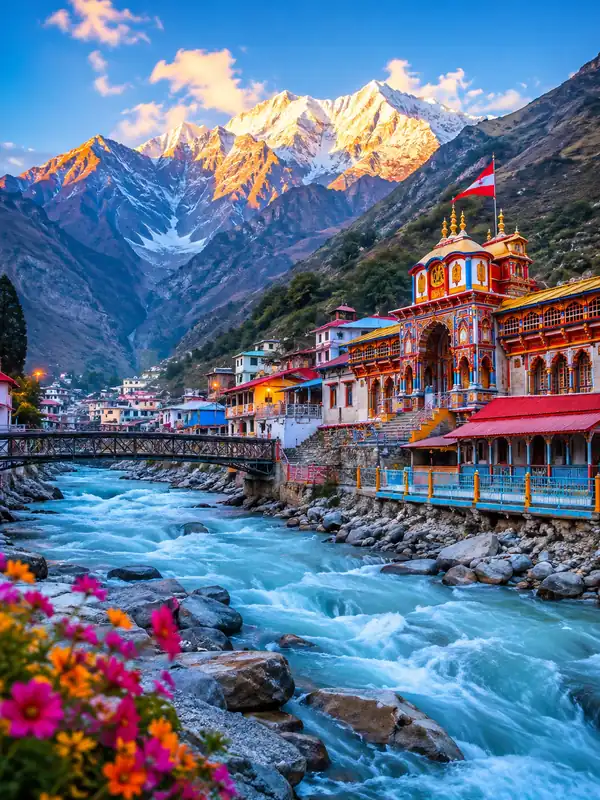
The short answer: May, June, September, and October are your best windows for Badrinath. May and June give you the temple's opening buzz and clearer roads; September and October trade a bit of that energy for thinner crowds and equally good weather. July and August, the monsoon months, are the ones to actively avoid — not because the temple isn't beautiful then, but because landslide risk on the mountain roads genuinely isn't worth it.
Badrinath only opens for about six months a year. In 2026, the temple's kapat (doors) opened on April 23 and are expected to close around November 13, after which the deity is moved to the Narsingh Temple in Joshimath for winter. Outside that window, the site is simply inaccessible — so "best time" here isn't just about comfort, it's about when you can go at all.
Quick Answer
The best time to visit Badrinath is May-June or September-October, when daytime temperatures sit between 10°C and 25°C and mountain roads are at their most stable. May sees the temple's opening rush and the thickest crowds; June offers similar weather with slightly better road conditions. September and October cool down a little more but come with noticeably fewer pilgrims and clearer mountain views once the monsoon clears.
Badrinath Weather, Month by Month
April: Temple Reopens, Still Cold
Badrinath's season starts here — the 2026 opening date was April 23. Expect daytime temperatures around 6°C to 16°C (indicative — actual conditions vary by year and weather), with nights considerably colder. Road conditions right after opening can still be affected by leftover snow and ongoing maintenance work, so late-April travel, close to the opening date, tends to suit more dedicated pilgrims than casual travelers. A week or two later is generally more manageable and still lets you witness some of the opening-period atmosphere without the full summer rush.
May: Peak Season Begins
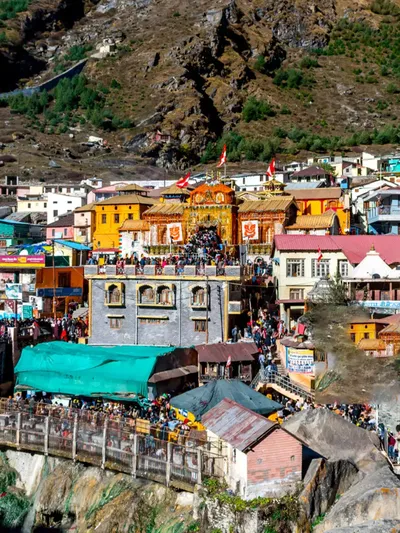
This is when Badrinath gets noticeably busy. Daytime temperatures run roughly 11°C to 22°C (indicative) — pleasant enough for daytime activity, but nights still drop to single digits, so warm layers aren't optional. Roads are generally clear and well-traveled by this point. The trade-off is crowd size: May coincides with the opening period and holiday season, so it's typically one of the busier months, meaning higher accommodation demand and longer darshan queues, especially around weekends and festival dates.
June: The Most Comfortable Month
Several travel sources describe June as a comfortable window weather-wise. Daytime highs climb slightly to around 15°C-25°C (indicative), and road conditions tend to be more favorable than earlier in the season, though Himalayan roads can change quickly with weather regardless of month. Crowds remain high — comparable to May — so this can be a good month for weather but not for solitude.
July-August: Monsoon — Best Avoided
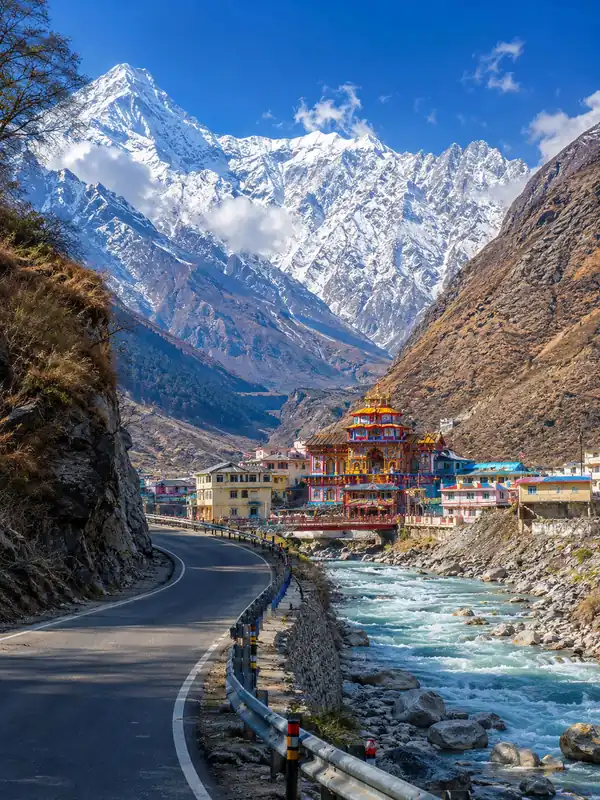
This is the one stretch of the open season worth planning around rather than through. Monsoon rain increases the risk of landslides and debris on the Himalayan roads connecting Rishikesh, Joshimath, and Badrinath, and road closures or delays can occur when conditions worsen. If you must travel in this window, build in extra buffer days and check road advisories daily rather than relying on a fixed itinerary. Many travelers prefer to avoid July and August entirely for this reason.
September: Post-Monsoon Clarity
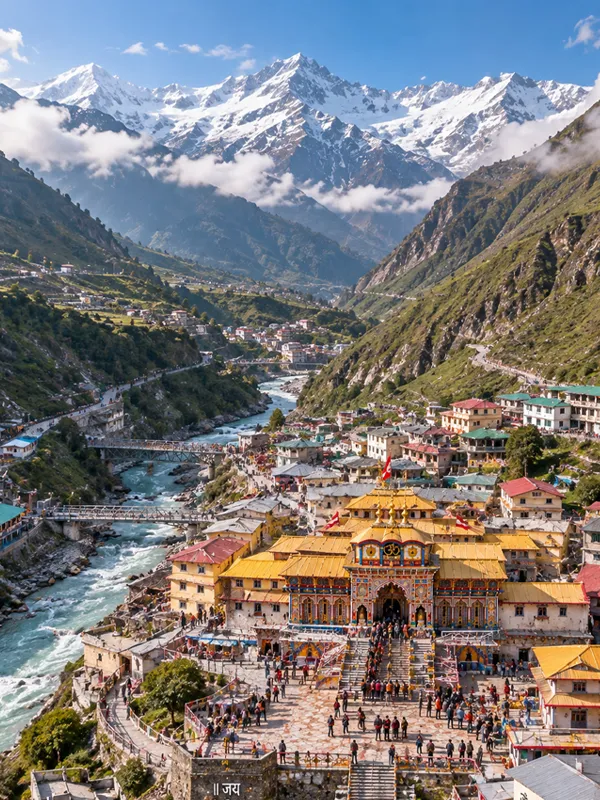
Once the rains clear, September becomes one of the most rewarding months to visit. Daytime temperatures hover around 10°C-18°C (indicative), mountain views often sharpen up as the air clears, and rainfall-related disruption generally decreases compared to peak monsoon, though it can still occur. Crowds are typically lighter than in May-June, making this a strong pick if you'd rather not compete for hotel rooms.
October: Cool, Clear, and Quieter
October keeps favorable travel conditions while cooling down further — expect daytime temperatures in the 8°C-15°C range (indicative) and colder nights. Crowds are typically lighter than the May-June peak, giving the darshan experience a quieter feel as the season winds toward its close. If you're planning for late October or November, confirm the year's exact closing date before booking, since arriving after the kapat has shut is a more common mistake than people expect.
November: Season's End
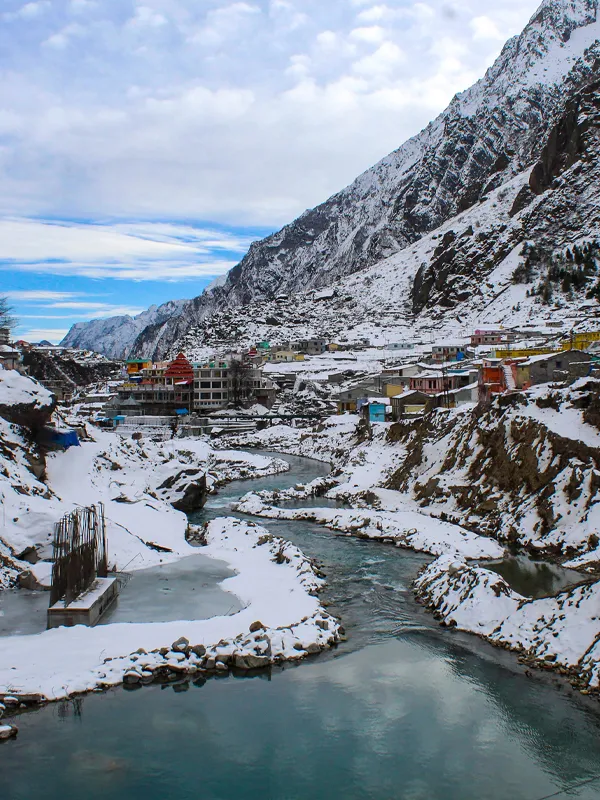
The temple typically closes around mid-November (November 13 in 2026, though this is confirmed closer to the date), and by this point night temperatures can fall well below freezing, with some reports of readings as low as -8°C. It's a genuinely harsh window, and travelers should confirm the official closing date and current weather advisories before planning a visit — it's generally not advisable for infants, elderly pilgrims, or anyone without serious cold-weather gear.
December-April: Closed for Winter
Badrinath is inaccessible during these months. Heavy snowfall blocks the roads entirely, and the temple committee moves the deity's worship to Joshimath. There's no practical way to visit the temple itself during this stretch, though the surrounding region (Joshimath, Auli) remains reachable for winter tourism unrelated to the Yatra.
Season-at-a-Glance
| Period | Weather | Crowds | Verdict |
|---|---|---|---|
| Late April | Cold, 6-16°C | Can be high around opening | Good for opening-period atmosphere, less comfortable |
| May | Pleasant, 11-22°C | High | Good weather, busier period |
| June | Warm for the season, 15-25°C | High | Favorable weather window overall |
| July-August | Wet, higher landslide risk | Variable | Only with a flexible itinerary |
| September | Cool, generally clear, 10-18°C | Typically lighter | Good balance of weather and space |
| October | Cool, crisp, 8-15°C | Typically lighter | Quieter travel window |
| November (early) | Very cold, near freezing | Low | Confirm closing date before booking |
| December-April | Closed | — | Not accessible |
Which Season Fits You Best?
- If you want the temple's opening energy: Go in late April or the first half of May. You'll catch the ceremonial atmosphere of the season's start, though you'll share the experience with sizeable crowds.
- If comfortable weather is your top priority: June edges out May slightly, with warmer days and settled roads, at the cost of similarly heavy crowds.
- If you'd rather skip the crowds without sacrificing much weather: September is probably your best bet — post-monsoon clarity with noticeably fewer pilgrims than peak summer.
- If you want a quieter, more contemplative visit: October delivers cool, clear days with lighter crowds than the peak season, as long as you confirm the closing date before you commit to dates.
- If you're traveling with elderly family or young children: Stick to May-June or September, and avoid both the deep cold of early-season/late-season travel and the landslide risk of monsoon months.
Common Mistakes When Timing a Badrinath Trip
- Booking based on last year's opening date — the kapat opening changes every year based on the Hindu calendar, so always check the current year's confirmed date rather than assuming it repeats.
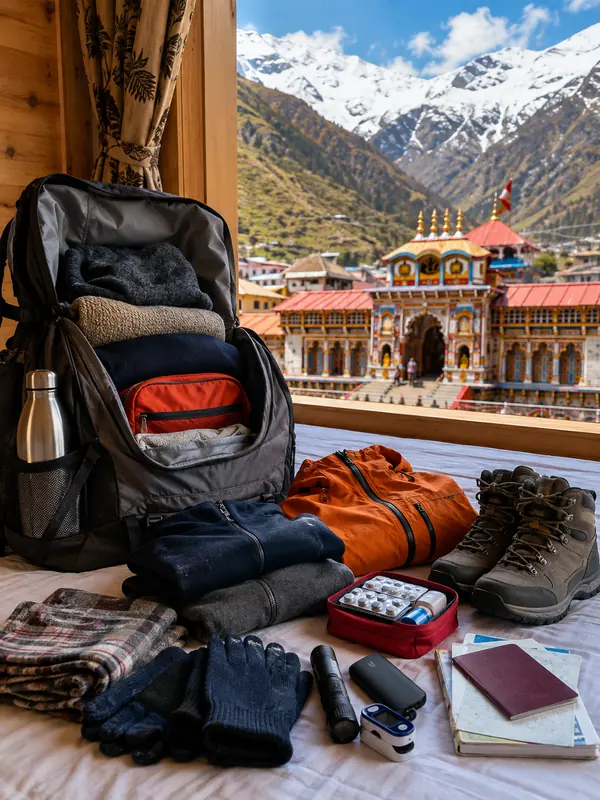
- Underestimating night temperatures — even in "warm" June, nights can drop into single digits; pack layers regardless of which month you choose.
- Traveling in July-August without a flexible itinerary — if monsoon travel is unavoidable, build in buffer days rather than booking a tight, sequential schedule.
- Cutting it close on the closing date — the exact November closing date shifts yearly; travelers who plan for "sometime in November" without checking the confirmed date risk arriving after the doors have shut.
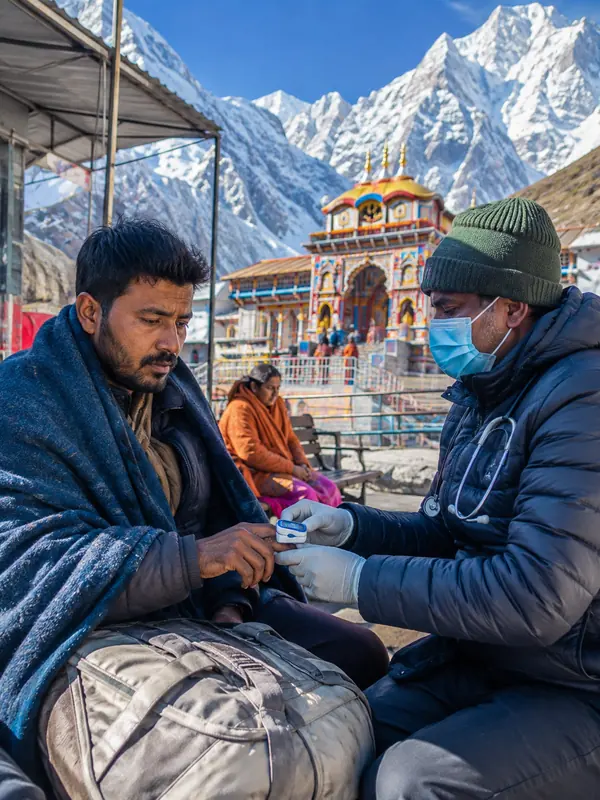
- Ignoring altitude sickness risk regardless of season — Badrinath sits at a high altitude year-round, so pace yourself on arrival even in peak summer.
Best Time of Day for Darshan
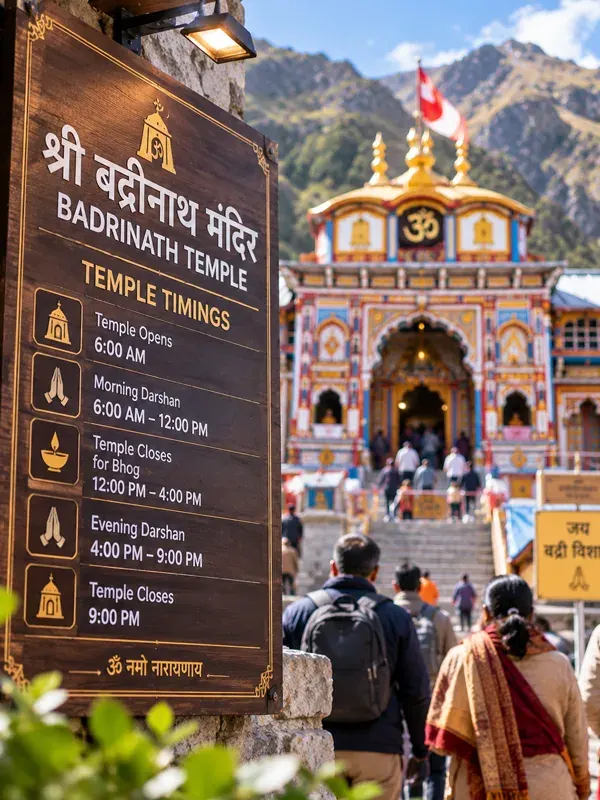
Choosing the right month is only half the picture — time of day matters too. Badrinath Temple's commonly published Darshan hours run from around 4:30 AM to 1:00 PM, with a midday break for rituals, then reopening from about 4:00 PM to 9:00 PM. Many pilgrims prefer the early-morning slot, shortly after the temple opens, since it lets them complete darshan before the day's queues build up — though exact timings and queue lengths can vary by day, season, and special puja schedules, so it's worth confirming locally on arrival.
A Quick Note on 2026 Dates
For the 2026 season, Badrinath's kapat opened on April 23 and is expected to close around November 13, though the exact closing date is confirmed closer to the time based on the lunar calendar. If you're planning travel for the shoulder periods — late April or early-to-mid November — it's worth checking the official Badrinath-Kedarnath Temple Committee announcement before finalizing your dates, since both ends of the season can shift by a week or more year to year.
FAQs
Q1. What is the best month to visit Badrinath?
Ans. June is often considered a strong choice for weather, with warm daytime temperatures and generally favorable roads. September is a good alternative if you'd prefer a quieter trip.
Q2. Is Badrinath open all year?
Ans. No. Badrinath is open only from around late April to mid-November each year. It closes for winter due to heavy snowfall, and the deity is moved to Joshimath during this period.
Q3. When does Badrinath Temple open and close in 2026?
Ans. The temple opened on April 23, 2026, and is expected to close around November 13, 2026, though the exact closing date is confirmed closer to the time.
Q4. Should I visit Badrinath during monsoon (July-August)?
Ans. It's best avoided. Monsoon rains significantly increase the risk of landslides on the mountain roads, which can cause multi-day delays. If travel during this window is unavoidable, keep a flexible itinerary with buffer days.
Q5. Is September or October better for visiting Badrinath?
Ans. Both are good choices. September offers slightly warmer weather right after the monsoon clears, while October is cooler with typically the thinnest crowds of the open season.
Q6. What is the coldest time to visit Badrinath while it's still open?
Ans. Early season (late April) and late season (early November) are the coldest windows, with night temperatures well below what most travelers expect from a "summer" pilgrimage.
Q7. Is May too crowded to enjoy Badrinath?
Ans. May is typically one of the busier months, since it coincides with the temple's opening period and holiday season. If crowds bother you, September or October are better alternatives with similar or only slightly cooler weather.
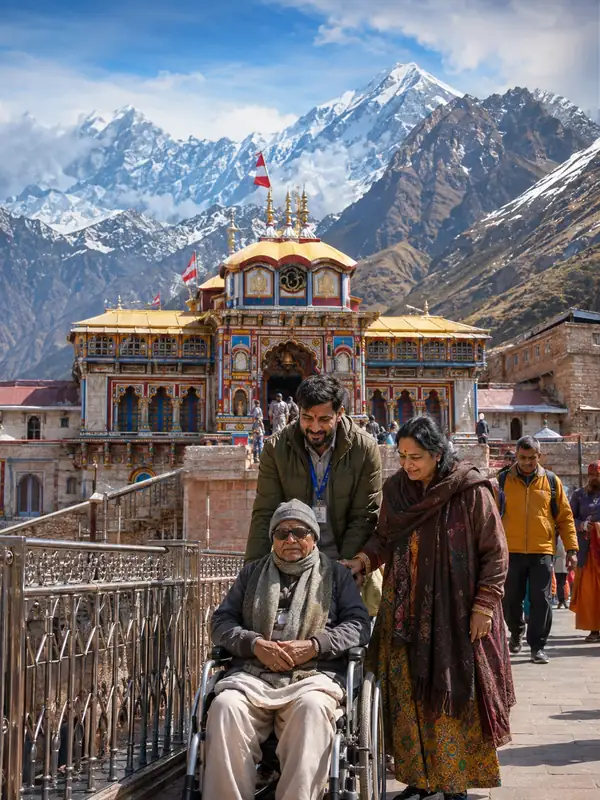
Q8. Can senior citizens visit Badrinath comfortably?
Ans. Yes, but timing matters more for older travelers. May-June or September are generally the most manageable windows, since they avoid both the deep cold of the shoulder months and the landslide risk of monsoon.
Q9. What is the best time of day for Badrinath Darshan?
Ans. Many pilgrims prefer the early-morning slot shortly after the temple opens, aiming to complete Darshan before the day's queues build up, particularly during the busy May-June period. Exact queue lengths vary by day.
Badrinath Travel Guide

Badrinath Travel Packages



Important Safety Notice
Beware of Fake Char Dham & Kedarnath Helicopter Booking Websites
Fake websites, WhatsApp accounts and advertisements may impersonate genuine travel companies or helicopter operators. Always verify before paying.