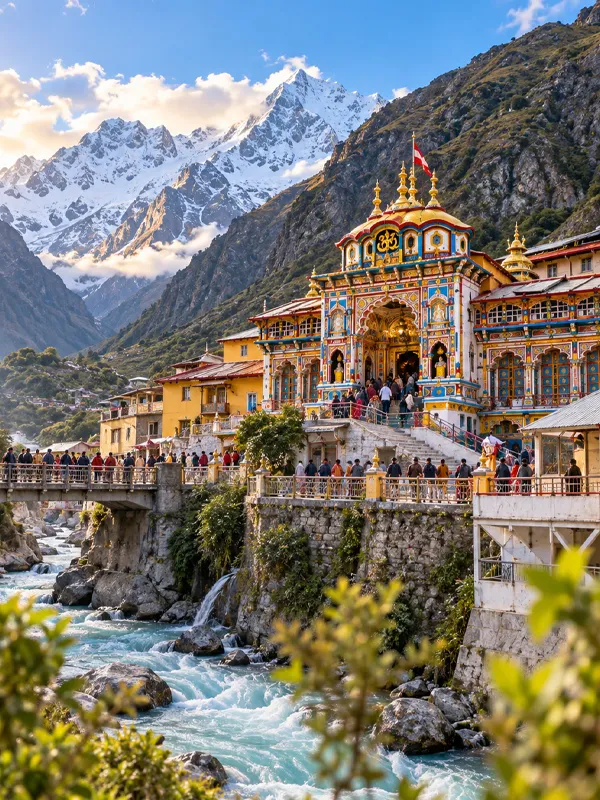
Badrinath Dham Sightseeing & Excursion Places
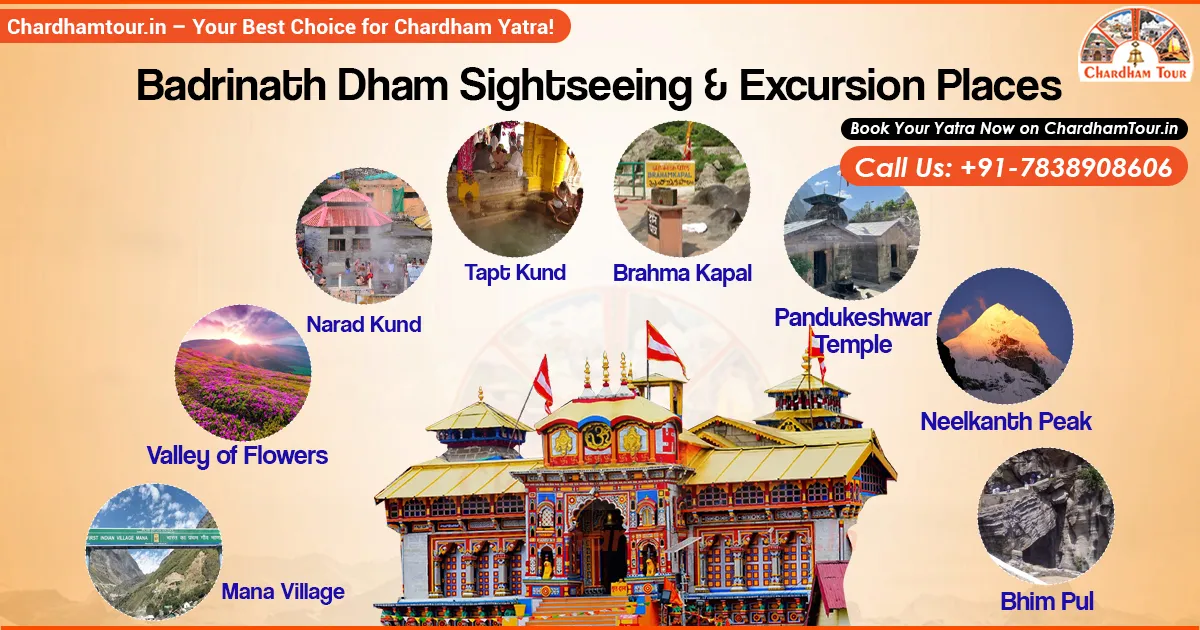
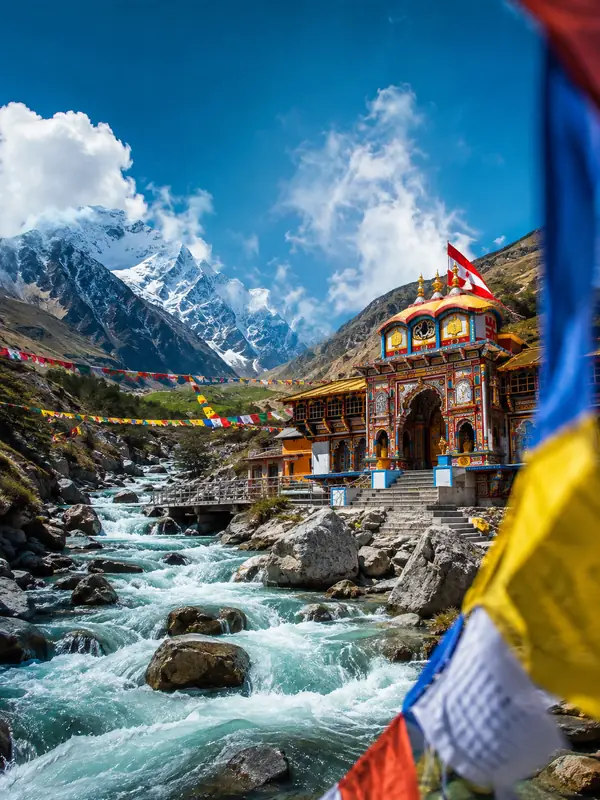
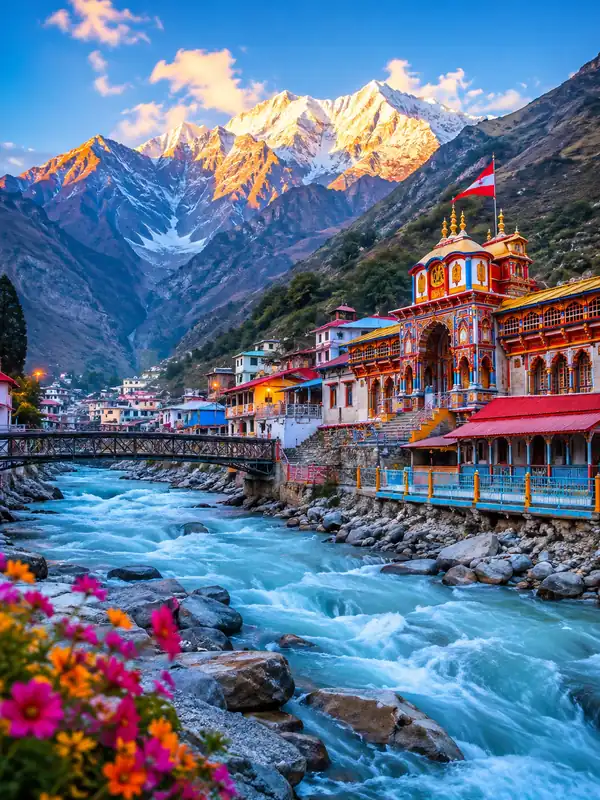
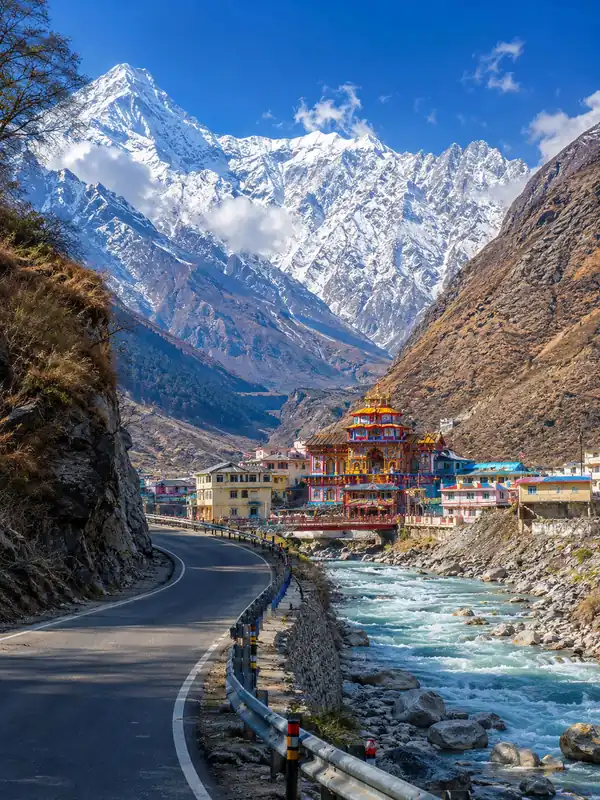
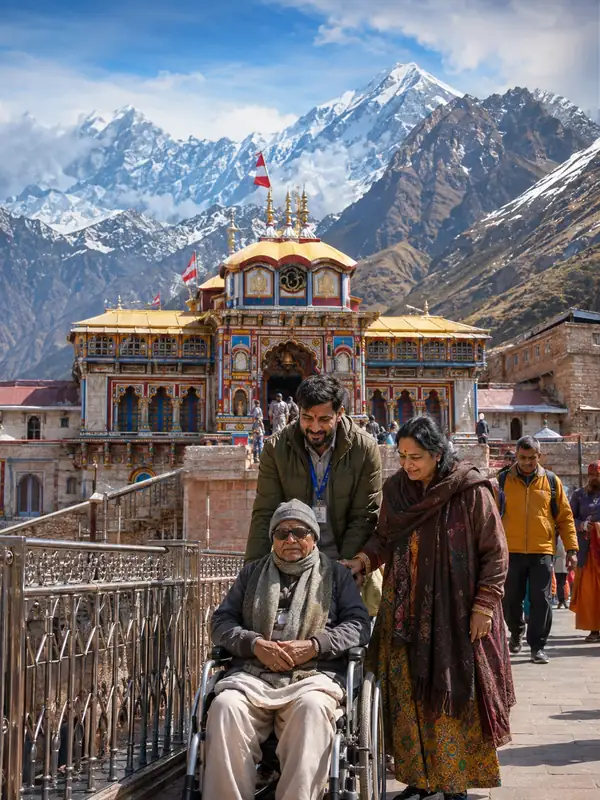
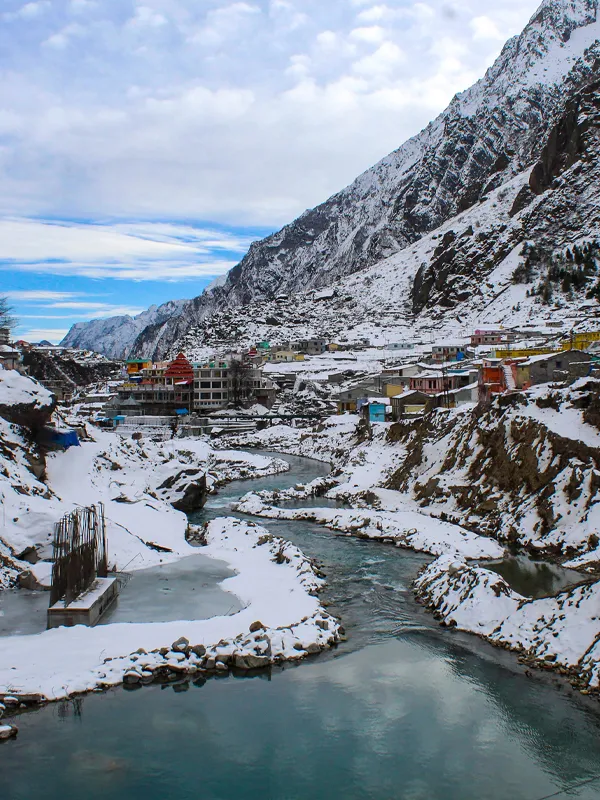
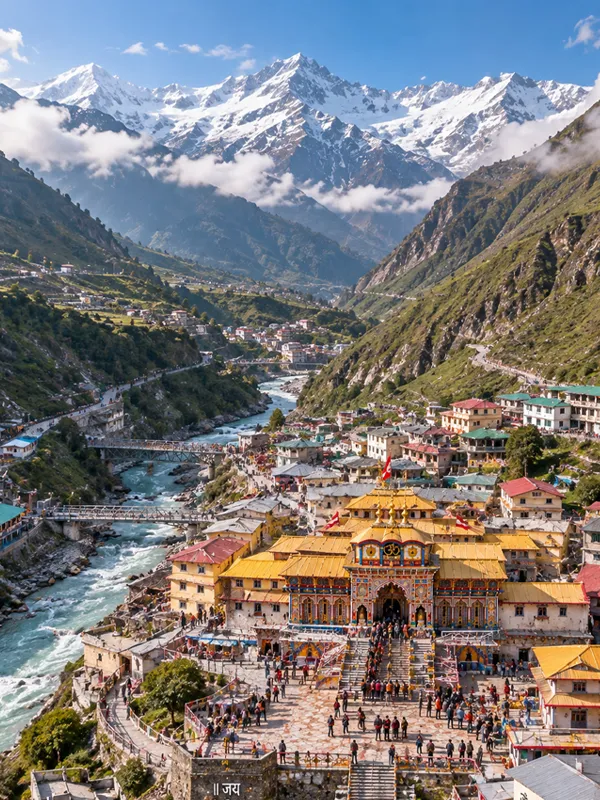
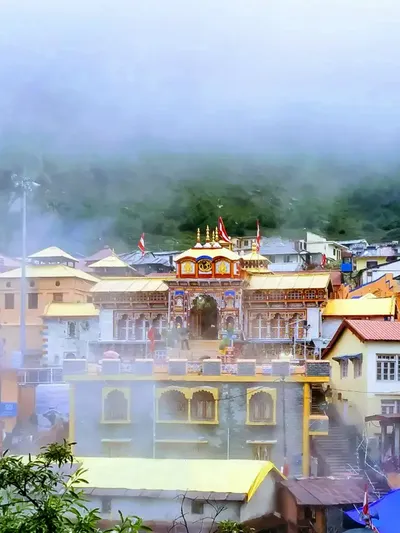
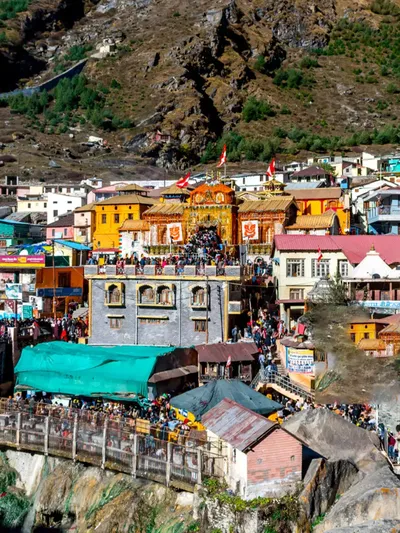
The holy pilgrimage town of Badrinath gets its name from the main temple of attraction here of Badrinath Dham which is not only an important part of the holy Char Dham Yatra of Uttarakhand but this Divya Desam is also a crucial pillar of the all-India Char Dham Yatra. However, it is a lesser-known fact that numerous surrounding spots allow pilgrims and visitors to explore the beauty of Badrinath.
Here are a few mesmerizing excursion destinations in Badrinath that you should not miss out on during your visit to Badrinath Dham:
Quick Overview
| Place | Distance from Badrinath | Best For | Best Time |
|---|---|---|---|
| Narad Kund | At the temple | First holy dip | Temple season |
| Tapt Kund | At the temple | Hot spring ritual | Temple season |
| Brahma Kapal | 5-min walk | Pind Daan rituals | Temple season |
| Sheshnetra | 1.5 km | Quick pilgrim stop | Temple season |
| Mana Village | 3 km | Last village of India | May–June, Sept–Oct |
| Bhim Pul | Mana village | Mythology, short walk | May–June, Sept–Oct |
| Vasudhara Falls | 9 km (6 km from Mana) | Waterfall trek | May–June, Sept–Oct |
| Urvashi Temple | Near Charanpaduka | Mythology | Temple season |
| Leela Dhungi | En route from Banni | Mythology, scenery | Temple season |
| Pandukeshwar Temple | 23 km (18 km from Joshimath) | Ancient temple | Year-round |
| Joshimath | ~45 km | Matha, base town | Year-round |
| Auli | ~14 km from Joshimath | Skiing, ropeway | Dec–Mar (skiing) |
| Gorson Bugyal | Trek from Auli | Alpine meadow | May–June, Sept–Oct |
| Valley of Flowers | Via Govindghat | UNESCO valley | July–Sept |
| Hemkund Sahib | Via Govindghat | Highest gurudwara | June–Oct |
| Neelkanth Peak | Visible from Badrinath | Mountain views | June–Sept |
| Timmersain Mahadev | Niti Village | Shiva cave, permits needed | June–Sept |
| Alkapuri Glacier | Beyond Mana | Glacier source | June–Sept |
Places to Visit Near Badrinath
1. Narad Kund
Key Highlights:
- Right below the temple, first stop before Tapt Kund
- Where Adi Shankaracharya is said to have recovered a Shiva idol
- Warm water despite the cold stream running beside it
Right below the temple, this small tank is where pilgrims take their first dip before Tapt Kund. Tradition holds that Adi Shankaracharya recovered a Shiva idol here, and that Narad Muni meditated at this spot for years. The water stays warm even though the stream running beside it is cold — locals treat this contrast as part of the site's character.
2. Tapt Kund
Key Highlights:
- Natural hot spring, most-visited ritual bath before darshan
- Separate sections for men and women
- Water can run very hot — check before stepping in
One of the more famous natural hot springs in the region, Tapt Kund is where most pilgrims bathe before darshan. Local tradition credits the spring's warmth to a blessing from Vishnu, but treat any claim about curing illness as belief rather than medical fact — no independent source confirms therapeutic properties.
3. Brahma Kapal
Key Highlights:
- 5-minute walk from the temple, on the banks of the Alaknanda
- Considered the primary spot for Pind Daan rituals
- Full ritual can take a couple of hours
A five-minute walk from the temple on the banks of the Alaknanda, this is considered the primary spot for Pind Daan, the ritual for ancestors. Most pilgrims bathe at Tapt Kund first, then come here — the full ritual can take a couple of hours, but it's one of the more meaningful stops on a Badrinath visit for anyone performing it.
4. Sheshnetra
Key Highlights:
- A short walk from the temple — cited anywhere from under 1 km to 1.5 km depending on the source
- Named after Sheshnag, the mythological king of serpents
- Short, easy stop
A short walk from the temple — different sources put it anywhere from under a kilometre to about 1.5 km, so don't plan it as a precisely-timed stop. This site gets its name from Sheshnag, the mythological king of serpents. A marked stone here is said to bear the impression of the serpent's eyes, and local tradition holds it protects the temple during the winter closure.
5. Mana Village
Key Highlights:
- About 3 km from Badrinath, at roughly 3,219 metres — the Temple Committee itself still describes Mana as India's last village before the Tibet border, though newer government messaging has also promoted border villages as "first villages"
- Tied to the Pandavas' final journey in the Mahabharata
- Home to what's commonly called the last tea stall in India
About 3 km from Badrinath, at roughly 3,219 metres. The Temple Committee's own page still calls Mana the last Indian village before the Tibet border, though government messaging elsewhere has also used "first village" for border settlements — both terms show up in searches. Beyond the geography, Mana carries real weight in the Mahabharata tradition — the Pandavas are said to have passed through here on their final journey. It's also home to what's commonly called the last tea stall in India, and sits on the route to Vasudhara Falls.
6. Bhim Pul
Key Highlights:
- At the edge of Mana village
- Natural stone bridge over the Saraswati river
- Tied to a Mahabharata legend involving Bhima and Draupadi
At the edge of Mana village, a natural stone bridge spans the Saraswati river as it rushes underneath. Tradition holds that Bhima placed this rock here so Draupadi could cross on their journey to heaven. It's a short walk from the village centre and easy to combine with the rest of a Mana visit.
7. Vasudhara Falls
Key Highlights:
- Reached via Mana; the trekking distance from Mana is commonly cited around 6 km, though total figures from Badrinath vary by source
- Roughly a 400-foot drop; requires a trek to reach
- Wide view over the Badrinath valley from the approach
Reached via Govindghat — the trek from Mana to Vasudhara is commonly cited at around 6 km, though total-distance figures from Badrinath itself vary by source, so treat any single number as approximate. The falls drop roughly 400 feet, rewarding the climb with a wide view over the Badrinath valley. Some sources describe the water as having medicinal properties — we haven't found a credible study confirming this, so treat it as local belief rather than fact.
8. Urvashi Temple
Key Highlights:
- Near Charanpaduka
- Tied to the legend of Nar and Narayan's penance
- Minor stop, mainly for the mythology
Tied to the legend of Nar and Narayan's penance at Badrinath — when Indra sent celestial maidens to break their meditation, Narayan is said to have created Urvashi, the most striking of them, who confronted Indra near Charanpaduka. The temple marks that spot. It's a minor stop, mostly of interest if you want the mythology behind Badrinath's setting.
9. Leela Dhungi
Key Highlights:
- On the route from Banni village
- Tied to the legend of Vishnu convincing Shiva to leave Badrinath
- Best combined with other nearby sites
On the route from Banni village, this spot ties into the story of how Vishnu is said to have taken the form of a crying infant to convince Shiva to give up Badrinath as his meditation seat. A modest stop, worth combining with other nearby sites rather than visiting on its own.
10. Pandukeshwar Temple
Key Highlights:
- About 23 km from Badrinath, 18 km from Joshimath — per the Shri Badarinath Kedarnath Temple Committee
- Dedicated to King Pandu, father of the Pandavas
- Believed to be the Pandavas' birthplace
The Temple Committee's route information puts Pandukeshwar at 23 km from Badrinath and 18 km from Joshimath — worth knowing, since some listicles quote only the Joshimath figure. The temple is dedicated to King Pandu, said to have done penance here after killing two sages who had taken the form of mating deer. Local tradition also holds this as the Pandavas' birthplace — treat the origin story as tradition rather than documented history.
11. Joshimath
Key Highlights:
- Roughly 45 km from Badrinath, also called Jyotirmath
- One of Adi Shankaracharya's four cardinal monastic seats
- Home to the Kalpavriksh tree, said to be over a thousand years old
Also called Jyotirmath, this hill town roughly 45 km from Badrinath is traditionally credited to Adi Shankaracharya as one of his four cardinal monastic seats — and unlike a common mix-up on other Char Dham content, Joshimath genuinely is the northern seat, not Badrinath itself. It also overlooks the confluence of the Alaknanda and Dhauliganga rivers.
12. Auli
Key Highlights:
- About 14 km from Joshimath, reachable by road or ropeway
- One of India's better-known skiing destinations
- Ropeway and skiing conditions depend on weather and maintenance schedules
Around 14 km from Joshimath by road, or reachable by ropeway, Auli is one of India's better-known skiing destinations, known for its slopes and the ropeway ride itself. Skiing conditions depend on seasonal snowfall, so check current conditions if snow sports are the main reason for your visit. Even outside ski season, the ropeway ride and mountain views are worth the trip.
13. Gorson Bugyal
Key Highlights:
- Reached by trek from Auli, roughly 3 km
- Alpine meadow at about 3,056 metres
- Views of Nanda Devi, Kamet, Mana Parvat, and Dunagiri
A roughly 3-km trek from Auli brings you to this alpine meadow at about 3,056 metres — green pastures backed by views of Nanda Devi, Kamet, Mana Parvat, and Dunagiri. Popular for trekking; overnight camping, where available, should follow local regulations rather than being assumed as freely allowed.
14. Valley of Flowers
Key Highlights:
- UNESCO World Heritage site in Chamoli district, reached via Govindghat and Ghangaria
- Peak flowering season runs July to September
- Linked in legend to Hanuman's search for the Sanjeevani herb
A UNESCO World Heritage site in Chamoli district, reached via Govindghat with Ghangaria as the trekking base. Peak flowering runs July to September — that's monsoon season here, not "after" it, so plan around wet-weather gear rather than waiting for clear skies. Overnight camping isn't allowed inside the valley itself; visitors return to Ghangaria each evening. Local legend places this as the spot where Hanuman gathered the Sanjeevani herb to save Lakshman.
15. Hemkund Sahib
Key Highlights:
- Reached via Govindghat and Ghangaria, the shared base for both this and Valley of Flowers
- One of the world's highest Sikh pilgrimage sites, at about 4,329 metres
- Accessible roughly June to early October, with exact dates set annually
Reached via Govindghat and Ghangaria — the same base town used for Valley of Flowers — Hemkund Sahib is one of the world's highest Sikh pilgrimage sites, at about 4,329 metres, dedicated to Guru Gobind Singh Ji. A glacial lake sits beside the gurudwara. It's generally accessible through the summer into early autumn, but exact opening and closing dates are set annually, so confirm before you travel rather than assuming a fixed window.
16. Neelkanth Peak
Key Highlights:
- Visible from Badrinath itself, called the "Garhwal Queen" by travel and mountaineering sources
- Summit height about 6,597 metres, commonly rounded to 6,600 m
- Reaching the summit is technical mountaineering, not a casual trek
Visible from Badrinath itself, Neelkanth is one of the more striking peaks in the Garhwal Himalayas — often referred to by travel and mountaineering sources as the "Garhwal Queen" for its pyramidal shape, at a summit height of about 6,597 metres. It's worth being clear about what this actually involves: reaching the summit is technical mountaineering, attempted by relatively few climbers, not something covered by a casual multi-day trek. For nearly everyone visiting Badrinath, this is a mountain viewpoint you take in from town, not a peak you climb.
17. Timmersain Mahadev
Key Highlights:
- Cave shrine to Shiva in Niti Village, near the Indo-China border
- Idol compared locally to the ice lingam at Amarnath
- Access may require prior permission given the border-area location
A cave shrine to Shiva in Niti Village, near the Indo-China border, with an idol locals compare to the natural ice lingam at Amarnath — though it's a local comparison, not an equivalence to make in an official sense. Parvati and Ganesha are also worshipped inside. Because the location sits in a sensitive border area, visiting may require prior permission — confirm the current process with the local administration rather than assuming you can simply turn up.
18. Alkapuri Glacier
Key Highlights:
- Source of the Alaknanda River, beyond Mana village
- Gateway between the Satopanth and Gaumukh valleys
- Serious trekking destination, not a casual add-on
Source of the Alaknanda River, at the base of Balakun Peak. The glacier forms a gateway between the Satopanth and Gaumukh valleys, with Neelkanth visible on one side and Chaukhamba on the other. This is a serious trekking destination rather than a casual excursion — plan it as its own trip, not an add-on to a standard Badrinath visit.
Getting Around: Practical Tips
- Group your visits by direction. Mana, Bhim Pul, and Vasudhara Falls sit on one side of town; Brahma Kapal and Sheshnetra are close to the temple itself. Plan routes rather than backtracking.
- Book Auli and Valley of Flowers as separate legs. Both need a night away from Badrinath if you want to do them properly rather than rushing.
- Carry permit paperwork for Timmersain Mahadev in advance if you can. Access may require prior permission from the local administration given the border-area location; confirm the current process rather than assuming you can arrange it on the day.
- Check road status before Joshimath-side excursions. This stretch sees periodic closures for landslides and construction; confirm current conditions before setting out.
- Start early for Vasudhara Falls and Gorson Bugyal. Both involve some trekking, and mountain weather shifts quickly in the afternoon.
Frequently Asked Questions
Q1. How many of these places can I cover in one day from Badrinath?
Narad Kund, Tapt Kund, Brahma Kapal, and Sheshnetra are all close to the temple and can be covered in a few hours. Mana Village and Bhim Pul add a comfortable half-day.
Q2. Can I visit the Valley of Flowers and Hemkund Sahib together?
Yes — both use Ghangaria as the trekking base after the Govindghat approach, and pilgrims commonly combine them, though each requires a separate trek and typically an overnight stop in between.
Q3. Do I need a permit for Timmersain Mahadev?
Possibly. Because Niti Village sits near the Indo-China border, access may require prior permission — confirm the current process with the local administration well before your trip rather than assuming.
Q4. Is Neelkanth Peak something I can trek to?
No, not the summit. Reaching the top of Neelkanth is technical mountaineering attempted by experienced climbers. Most visitors see it as a backdrop from Badrinath or nearby viewpoints, not as a trekking destination.
Q5. What's the best time to visit Auli along with Badrinath?
For skiing, December to March. Outside that window, Auli's ropeway and views are still worth a visit, but you won't get the snow sports.
Q6. Is Mana Village worth visiting if I only have a couple of hours?
Yes — it's close (about 3 km from Badrinath) and combines easily with Bhim Pul, which sits right at the edge of the village.
Q7. How far is Joshimath from Badrinath, and is it worth stopping there?
Roughly 45 km. It's worth a stop for the Kalpavriksh tree and the temples, and it's also the base town for reaching Auli.
Q8. Are Vasudhara Falls' waters actually medicinal?
That claim shows up often in local retellings, but we couldn't find a credible study backing it. Treat it as belief rather than a proven fact — the trek and the view are worth it either way.
Conclusion
Badrinath's excursions cover a wide range — quick pilgrim stops like Brahma Kapal and Sheshnetra, half-day trips to Mana and Vasudhara Falls, and full separate legs like Auli, Valley of Flowers, and Hemkund Sahib. These places to visit near Badrinath aren't all meant for one trip. Pick based on how much time you actually have: temple-adjacent sites if you're short on time, Mana and Bhim Pul for a half-day, and Joshimath's cluster (Auli, Gorson Bugyal) or the Govindghat side (Valley of Flowers, Hemkund Sahib) if you can spare an extra day or two. Plan the permit-dependent stops like Timmersain Mahadev well in advance, since those can't be arranged on short notice.
Badrinath Travel Guide
Badrinath Travel Packages

Important Safety Notice
Beware of Fake Char Dham & Kedarnath Helicopter Booking Websites
Fake websites, WhatsApp accounts and advertisements may impersonate genuine travel companies or helicopter operators. Always verify before paying.