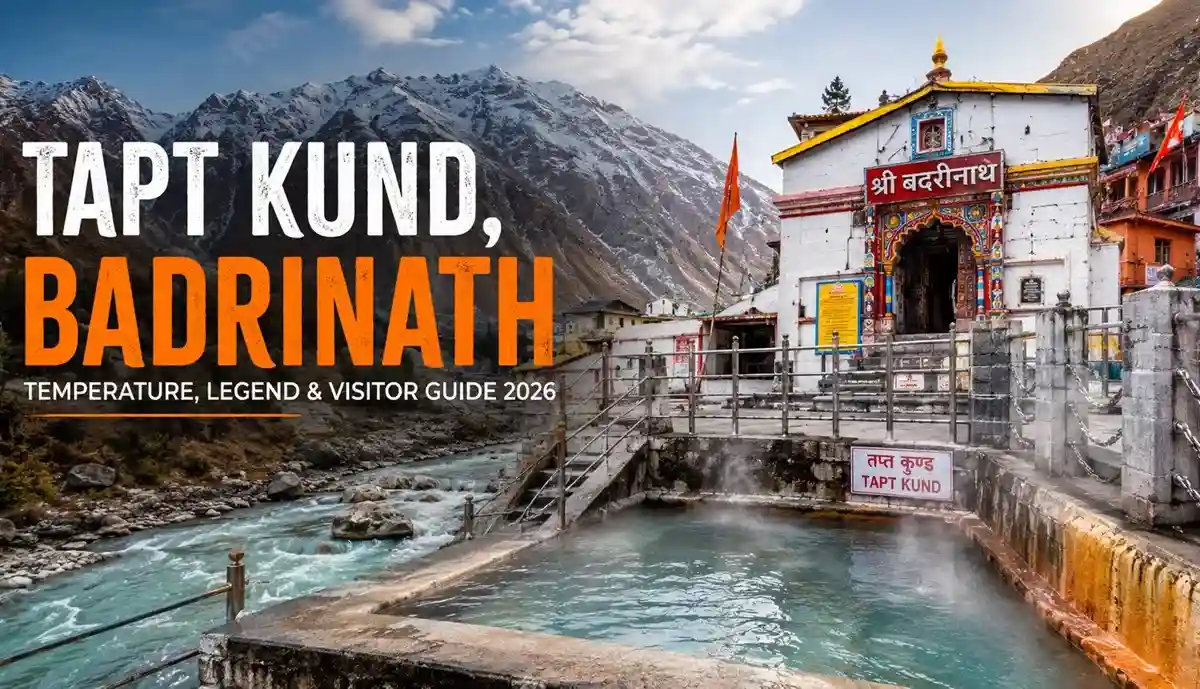
A natural hot spring sits right at the entrance of Badrinath Temple, between the shrine and the Alaknanda River. It stays warm through the coldest Himalayan nights. Pilgrims have taken a dip here before darshan for generations, and BKTC lists the spring’s distance from the temple as effectively zero — it’s that close.
- Sacred Spring: A hot water spring near Badrinath Temple, believed to have medicinal properties.
- Temperature: Water remains at 45°C, regardless of the weather.
- Spiritual Importance: Considered the home of Lord Agni, bathing here is believed to cleanse sins.
- Narad Kund: An adjacent sacred Kund, where bathing is not allowed.
- Best Time: Visit between March and June for favorable weather.
Why Tapt Kund Is Revered
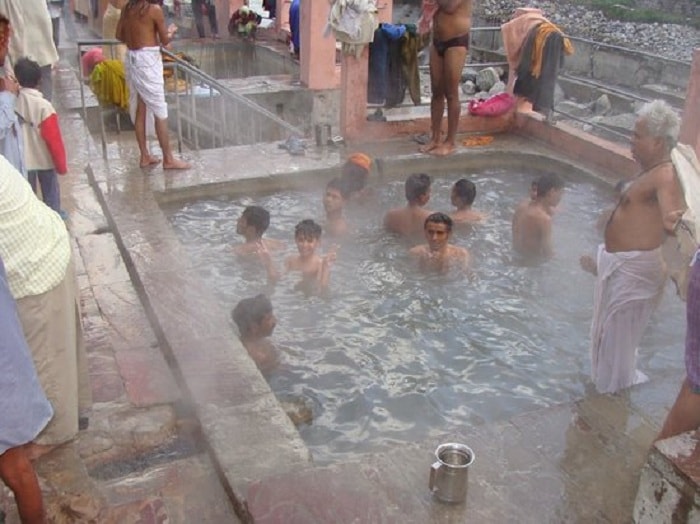
According to Hindu tradition, Lord Agni performed deep penance here and was granted a permanent place in this spring beside Badrinath Temple. That’s the belief behind the name pilgrims use for the ritual bath, and it’s part of why the dip is taken before entering the sanctum rather than after. Ancestral rites for departed souls are a separate tradition at Badrinath, performed at Brahma Kapal nearby — not at Tapt Kund itself, so don’t expect that ritual here.
Tapt Kund Temperature: Two Official Numbers, One Explanation
Here’s something most Tapt Kund articles skip: the two main official sources genuinely disagree on the number. BKTC’s own site says around 45°C. Uttarakhand Tourism and Incredible India both put it near 55°C. Neither is fabricated — they’re likely measuring at different points or times, since a geothermal spring’s surface temperature isn’t perfectly uniform. The practical takeaway is the same regardless: the water is consistently hot, sulphur-rich, and warm even when the air around it is below freezing. That part isn’t in dispute.
Narad Kund and the Panch Shila
Right beside Tapt Kund is a second pool, Narad Kund. A common myth online says bathing here is banned — it isn’t. BKTC’s own description notes that many pilgrims prefer bathing in Narad Kund before heading to the shrine, so treat it as a second bathing option rather than an off-limits site. What you should still check is whatever local instruction is posted on the day you visit, since access details can shift with maintenance or crowd management.
Legend ties Narad Kund to the sage Narad Muni, and it’s the pool from which Adi Shankaracharya is said to have recovered the original Badri Narayan idol now enshrined in the temple. Five stones surround the area, known collectively as the Panch Shila — per BKTC’s own naming, these are Garud Shila, Nar Shila, Narsingh Shila, Varah Shila, and Markandeya Shila.
Places to Visit Around Tapt Kund
Badrinath Temple: One of Hinduism’s holiest shrines and a core stop on the Char Dham Yatra. It draws large crowds through the pilgrimage season, but the town itself shuts down and empties out once winter closes the roads.
Charan Paduka: A rock bearing Lord Vishnu’s footprints, about 3 km from Badrinath at roughly 3,380 metres elevation. That’s the metric figure — treat any “3,380 feet” claim you see elsewhere as a conversion error, since Badrinath itself already sits above 3,100 metres.
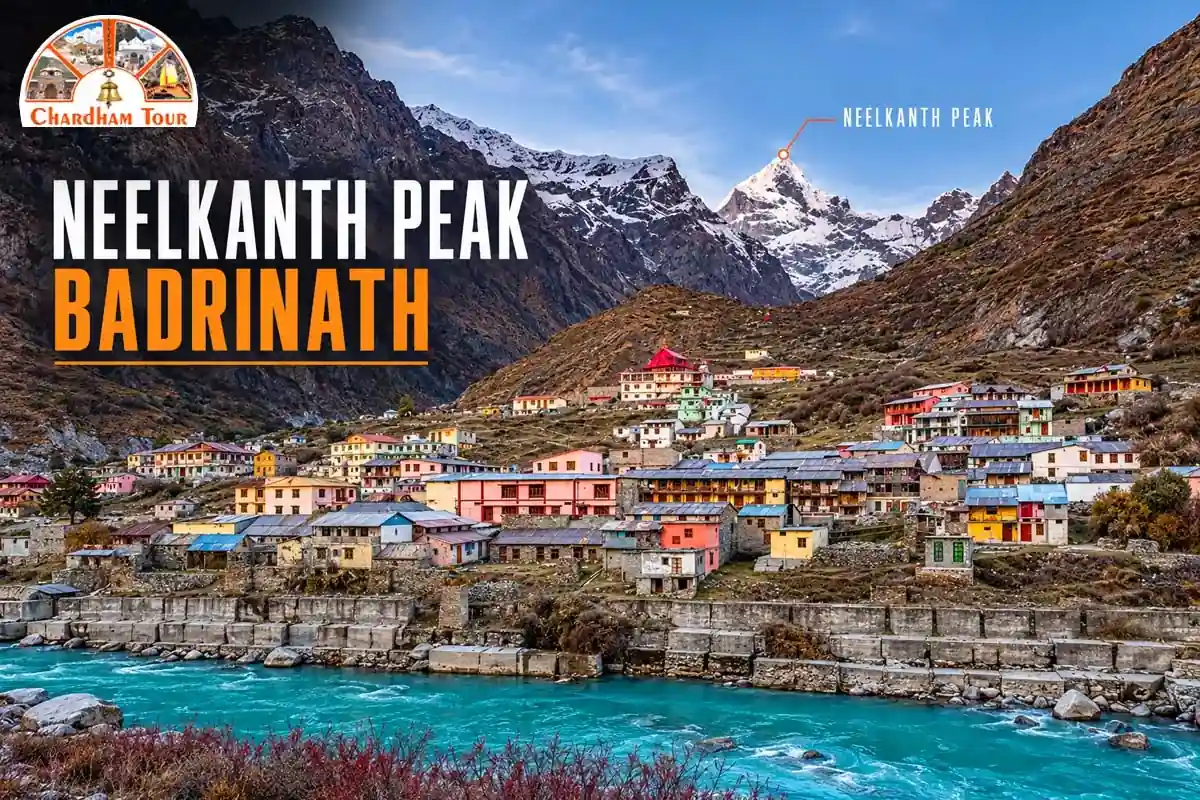
Neelkanth Peak: Known as the “Garhwal Queen,” this peak rises to approximately 6,597 metres above the Alaknanda valley and is visible from Badrinath on a clear morning.
Bheem Pul: A natural stone bridge over the Saraswati River near Mana village, said in legend to have been placed by Bheem so Draupadi could cross.
Best Time to Visit Tapt Kund
The spring runs hot all year. Getting to it doesn’t work that way — Badrinath itself is only open roughly late April to mid-November, and the kund follows the same window.
- 2026 season: Confirmed open from 23 April 2026. Closing is expected around Bhai Dooj (mid-November) but wasn’t officially locked in as of this update — check BKTC directly closer to your travel date.
- Best months: May–June and September–October. BKTC itself points to these months as the better windows, with more stable weather and fewer road disruptions.
- Avoid if you can: July–August, when monsoon rain raises landslide risk on the route. Winter (mid-November to April) isn’t a maybe — the town is snowbound and simply inaccessible.
- Timing on the day: There’s no fixed published bathing schedule for Tapt Kund. Access follows the temple’s general operating hours and whatever local arrangement is in place that day.
How to Reach Tapt Kund
- By Air: Jolly Grant Airport, Dehradun, is the nearest airport. Official figures put it anywhere from 310 to 320 km depending on the source, so treat that as a range rather than an exact number.
- By Road: Badrinath is connected by motorable roads to Rishikesh, Haridwar, and other major Uttarakhand towns. Buses run from ISBT Kashmiri Gate, Delhi, to Haridwar and Rishikesh; from there, catch a connecting bus or hire a taxi. Book ahead in May–June — vehicles fill up fast.
- By Rail: Rishikesh is the nearest railhead, roughly 295–300 km away depending on the source you check.
Safety Tips Before You Bathe
The water is hot enough that a few precautions matter: ease in gradually rather than jumping straight in, keep the dip short, and watch your footing since wet stone surfaces get slippery. Anyone with cardiovascular issues or blood pressure concerns should get medical advice first and exit immediately if they feel dizzy. Carry a towel and a change of clothes — on-site facilities are basic.
Common Mistakes Pilgrims Make
Skipping proper footwear for the walk over is one — the path is uneven, and it’s cold before sunrise. A bigger one is assuming Tapt Kund runs on a fixed daily schedule the way a monument might; it doesn’t, and access can shift with local arrangements on any given day. People also plan a winter visit without checking whether Badrinath is even open that month, which it usually isn’t.
Pro Tips for a Smoother Visit
Pair your Tapt Kund dip with early darshan — queues build fast by mid-morning. Carry cash, since digital payment coverage isn’t guaranteed at this altitude, and pack warm layers even in summer as temperatures drop hard after sunset. Book Badrinath hotels or Char Dham packages ahead of the May–June rush.
FAQs
What is Tapt Kund known for?
It’s the hot spring at Badrinath Temple’s entrance, tied to Lord Agni in local tradition and used for a ritual bath before darshan.
What is the temperature of Tapt Kund water?
BKTC states around 45°C; Uttarakhand Tourism and Incredible India report closer to 55°C. Both figures come from official sources, and the discrepancy likely reflects different measurement points.
Can women bathe at Tapt Kund?
Bathing facilities are available for pilgrims. Follow the designated arrangements and any instructions posted on site.
Is bathing allowed at Narad Kund too?
Yes — BKTC notes that many pilgrims prefer bathing there as well. It isn’t off-limits, though local instructions on the day can affect access.
When does Tapt Kund open and close each year?
It follows Badrinath’s kapat schedule. The 2026 opening was confirmed for 23 April; the closing date is expected around mid-November but wasn’t officially finalized as of this update.
Is Tapt Kund safe for senior citizens?
Generally, yes, but anyone with heart or blood pressure conditions should keep the dip short and get medical advice beforehand.
How far is Tapt Kund from Badrinath Temple?
It’s immediately next to the temple entrance — BKTC lists the distance as effectively zero.
Do I need an entry ticket for Tapt Kund?
No separate ticket is generally associated with visiting the kund, but confirm current arrangements on arrival since this can change.
What should I carry for a Tapt Kund visit?
A towel, a change of clothes, sturdy footwear for the walk, and warm layers for afterward.
Is Tapt Kund part of the Char Dham Yatra route?
Yes — it’s a customary stop for pilgrims visiting Badrinath, one of the four dhams in the circuit.
Is Tapt Kund suitable for children?
Only under close supervision, and only if bathing is permitted that day. The water is genuinely hot, so this isn’t a spot for kids to enter on their own.
Why does Tapt Kund’s water stay warm in freezing weather?
It’s a natural sulphur hot spring, fed by geothermal activity beneath the Badrinath area, which keeps the water hot regardless of the outside temperature.