If you’re searching for Badrinath Temple timings before your darshan, here’s the short version: the temple generally opens around 4:30 AM and closes around 9:00 PM, with a midday break for bhog and cleaning. That one line, though, doesn’t tell you when to actually show up, which aarti is worth the early alarm, or how the schedule shifts once the kapat opens each spring. That’s what this guide sorts out.
Quick Facts
| Detail | Information |
|---|---|
| Deity | Lord Badrinath (a form of Vishnu), with Badridevi (Lakshmi) |
| Location | Badrinath town, Chamoli district, Uttarakhand, on the banks of the Alaknanda River |
| Altitude | Roughly 3,100–3,133 m (sources vary slightly; treat as ~3,100 m+) |
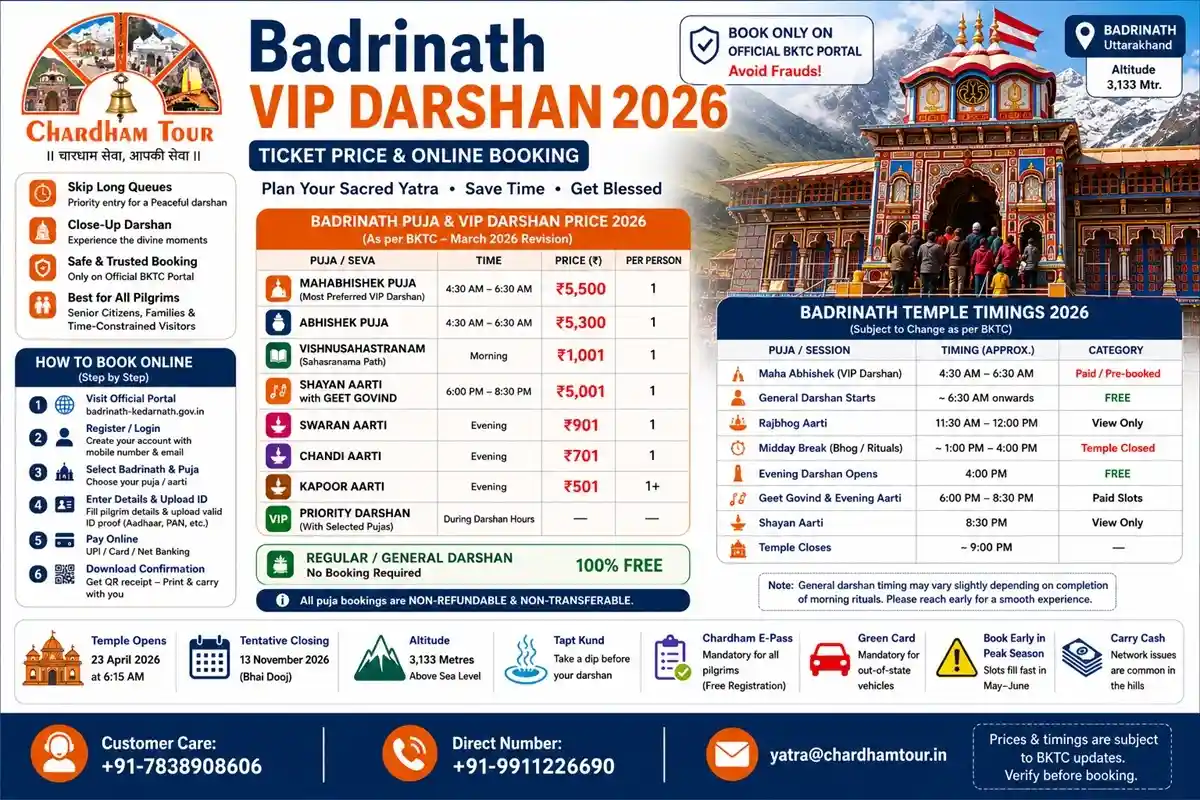
| Season 2026 | 23 April – approx. 13 November |
| Daily Darshan | ~4:30 AM–1:00 PM and ~4:00 PM–9:00 PM (indicative) |
| Best Time to Visit | Mid-May to mid-June, or mid-September to late October |
| Distance from Rishikesh | ~300 km by road |
| Distance from Haridwar | ~315–320 km by road |
| Distance from Joshimath | ~45 km |
| Nearest Village | Mana (~3 km) |
| Nighttime Temp (May) | Can drop to 4–7°C before dawn |
Badrinath isn’t just another stop on the Char Dham circuit — it’s the only Dham that’s also one of the 108 Divya Desams sacred to Vaishnavites, and its priesthood (the Rawal) follows a puja tradition that’s said to trace back to Adi Shankaracharya. The temple committee (BKTC) runs a fairly disciplined daily routine, so getting your timing right does matter here more than at most temples — but treat every clock time below as an informed estimate, not a government-stamped guarantee.
A Brief Note on the Temple’s History
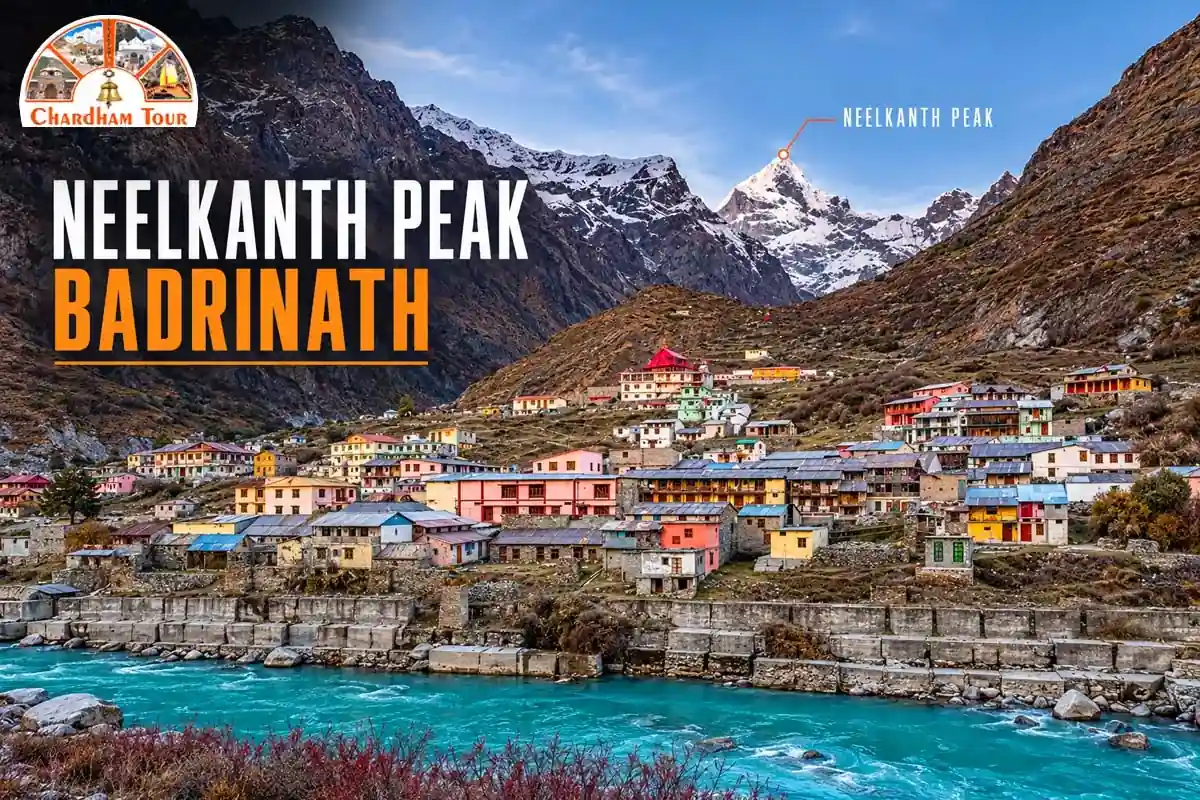
The temple houses a black stone image of Lord Badrinarayan, believed to have been enshrined by Adi Shankaracharya in the 8th century near the Tapt Kund hot springs before later being moved to its present site. It sits between the Nar and Narayan mountain ranges, with the snow-capped Neelkanth Peak (roughly 6,596 m) forming a dramatic backdrop. This context matters practically too — the same geography that makes Badrinath beautiful is also why it’s snowbound for nearly half the year.
Badrinath Temple Kapat Opening and Closing Dates 2026
Unlike most temples, Badrinath doesn’t run year-round. Heavy Himalayan snowfall makes the route unsafe from roughly November through April, so the temple physically shuts its doors (kapat) for winter, and the deity’s daily worship shifts to the Narsimha Temple in Joshimath.
| Event | 2026 Date (as announced) | How It’s Decided |
|---|---|---|
| Kapat Opening | 23 April 2026, around 6:15 AM, per BKTC’s Basant Panchami announcement | Announced on Basant Panchami by the Rawal and BKTC at the royal court in Narendra Nagar |
| Kapat Closing | Expected around 13 November 2026 (Bhai Dooj) — not yet finalised as of this writing | Officially confirmed on Vijayadashami (Dussehra), closer to the date |
| Season Length | Roughly 6 months | Based on the Hindu Panchang, not a fixed calendar date |
One mistake many people make: assuming the dates are the same every year. They’re not — the opening date moves with the Hindu calendar. Always confirm the current year’s date on the BKTC official site before booking travel, especially flights and hotel stays that are hard to refund.
Daily Darshan Timings at Badrinath Temple
Once the kapat is open, the daily schedule stays broadly consistent through the season, though BKTC does adjust it around festivals, weather, or heavy crowds. Here’s the general pattern pilgrims can expect.
| Time Slot | What Usually Happens |
|---|---|
| ~4:30 AM | Temple doors open, Mangala Aarti begins |
| ~4:30 AM – 6:30 AM | Maha Abhishek (booked puja, closed-door ritual) |
| ~7:00 AM – 7:30 AM | General darshan opens to the public |
| ~7:30 AM – 12:00 PM | General darshan continues |
| ~11:30 AM | Rajbhog Aarti (midday food offering) |
| ~12:00 PM – 4:00 PM | Temple closed for bhog, cleaning, and rest (some sources say this window starts as early as 1:00 PM) |
| ~4:00 PM | Temple reopens for evening darshan |
| ~4:00 PM – 6:00 PM | Geet Govind Path (recitation) |
| ~6:00 PM – 7:30 PM | Evening Aarti / Sandhya Aarti |
| ~7:30 PM – 8:30 PM | Shayan Aarti (final aarti before the deity “retires”) |
| ~9:00 PM | Temple gates close for the night |
A word of caution on exact minutes: different sources round these times slightly differently, and the afternoon closure especially is reported anywhere from 12 PM–3 PM to 1 PM–4 PM depending on the year and the season’s crowd levels. BKTC doesn’t publish a rigid public timetable down to the minute, so treat this table as a reliable planning window, not a train timetable, and confirm locally once you arrive.
Badrinath Aarti Timings Explained
Mangala Aarti (~4:30 AM): The temple’s first ritual of the day, performed just before sunrise. Many pilgrims who attend this one say it’s worth the cold and the early alarm — the sanctum is lit only by lamps, and the crowd is thin compared to later in the morning.
Maha Abhishek (~4:30 AM – 6:30 AM): A closed-door ritual bath of the deity with panchamrit. This needs advance booking through BKTC and is a paid ritual — current charges are announced and updated by BKTC each season, so check the official portal rather than relying on a fixed number.
Rajbhog Aarti (around 11:30 AM): The midday bhog offering, right before the temple shuts for its afternoon break.
Geet Govind Path & Evening Aarti (~4:00 PM – 7:30 PM): Verses from Jayadeva’s Geet Govind are recited as the evening aarti unfolds — widely considered the most visually striking ritual of the day.
Shayan Aarti (~7:30 PM – 8:30 PM): The last ritual of the day, where the deity is prepared for rest. Many pilgrims prefer this one for its quieter, more intimate atmosphere compared to the morning rush — lamps, conch shells, and chanting fill the temple courtyard.
Badrinath Temple Closing Time and Midday Break
A lot of first-time visitors get caught off guard by the afternoon closure. The temple shuts somewhere in the 12:00 PM–1:00 PM range and doesn’t reopen until 3:00 PM or 4:00 PM, depending on the season. This isn’t a casual lunch break — it’s when the priests perform bhog rituals and prepare the sanctum for the evening. If you arrive expecting to walk straight in during this window, plan to wait.
Key takeaway: Aim for either the 7:00 AM–11:00 AM window or the 4:30 PM–7:00 PM window. Both give you a real shot at an aarti without the mid-afternoon dead zone.
Distances and How to Reach Badrinath
| Route | Approx. Distance |
|---|---|
| Rishikesh → Badrinath | ~300 km |
| Haridwar → Badrinath | ~315–320 km |
| Joshimath → Badrinath | ~45 km |
| Badrinath → Mana Village | ~3 km |
| Kedarnath → Badrinath (by road) | ~220–245 km, depending on route |
| Badrinath Helipad → Temple | ~1 km |
| Main parking area → Temple | A short walk in normal conditions; can stretch to 1–2 km if overflow parking is used in peak season |
Most pilgrims travel by road via Rishikesh–Devprayag–Rudraprayag–Joshimath, or fly into Dehradun’s Jolly Grant Airport and drive from there. Seasonal helicopter shuttle services (typically via Gauchar or Dehradun’s Sahastradhara helipad) also connect to the Badrinath helipad, about 1 km from the temple — schedules and fares are announced fresh each season, so check current operator listings rather than assuming last year’s timetable still applies.
Around the Temple: What’s Nearby
- Tapt Kund: A natural hot-water spring right below the temple, with water reported around 45°C. Pilgrims traditionally bathe here before darshan.
- Mana Village: About 3 km away, often called India’s last village before the Tibet border — home to Vyas Gufa and Bheem Pul.
- Brahma Kapal: A riverside platform on the Alaknanda used for ancestral rites.
- Neelkanth Peak: The snow-capped peak (roughly 6,596 m by most measurements) visible from the temple, considered sacred to Shiva.
- Charan Paduka: A short trek from town, marking a rock said to bear Lord Vishnu’s footprint.
- Narad Kund and Surya Kund: Smaller sacred kunds near Tapt Kund, associated with the temple’s founding legend — the Badrinarayan idol is traditionally said to have been recovered from Narad Kund.
Temple Rules and Etiquette
- Photography and videography are not permitted inside the sanctum.
- Footwear must be removed before entering; use the cloakroom counters near the entrance.
- Mobile phones are generally allowed outside the sanctum but should be silenced.
- Maintain the queue system — priests and volunteers manage crowd flow, especially during Mangala and Shayan Aarti.
- Avoid touching the idol directly during general darshan; only priests handle it during Abhishek rituals.
- Modest, traditional clothing is customary, though there’s no strict enforced dress code for general darshan.
Weather and Crowd Patterns by Season
- May–June (post-opening rush): Warm, stable weather but the heaviest crowds of the season, especially around Akshaya Tritiya.
- July–August (monsoon): Frequent rain, landslide risk, and possible road closures in Chamoli district — many operators advise avoiding this window unless necessary.
- September–October: Generally the best balance of good weather and thinner crowds.
- Late October–mid-November (closing season): Cold, with a final rush of pilgrims before the kapat closes; be prepared for freezing early mornings.
Exact crowd sizes and waiting times vary year to year and aren’t officially published in advance — treat the above as seasonal tendencies, not guarantees, and check current road and weather advisories before travelling.
Facilities, Access & Practical Details
- Mobile network: Coverage is patchy and inconsistent across carriers in the Badrinath–Joshimath stretch; don’t rely on always having signal. Carry printed copies of your e-pass and bookings.
- Parking: Available near the town, but fills up fast in peak season (May–June); arriving early in the day helps.
- Cloakroom/shoe counters: Available near the temple entrance for footwear and bags; photography is not allowed inside the sanctum.
- Dress code: No strict enforced dress code, but modest, traditional attire is customary and appreciated.
- Senior citizens and mobility concerns: The temple approach involves walking and some steps; palki (palanquin) and pony services are available in the town for those who need assistance covering the distance from parking to the temple. If travelling with elderly family or anyone with mobility limitations, build in extra time and consider the calmer 4:00 PM–6:00 PM evening slot over the pre-dawn rush.
Helpline and Emergency Contacts
- Char Dham registration/support helpline (WhatsApp): +91-8394833833 — for e-pass registration help, send “Yatra” to begin.
- Uttarakhand Tourist Care toll-free: 0135-1364 — for registration and general yatra support queries.
- National medical/police emergency: 112 (India’s unified emergency number); ambulance services can also be reached at 108.
These are general support numbers, not the temple’s direct line — for anything temple-specific (puja bookings, on-the-day queries), the BKTC portal and counters at the temple are the more reliable route. Save these numbers offline before you lose signal in the hills.
Step-by-Step: Planning Your Darshan Visit
- Confirm the season’s exact opening date on badrinath-kedarnath.gov.in — don’t rely on last year’s dates.
- Register for the mandatory Char Dham e-pass in advance through registrationandtouristcare.uk.gov.in. This is free and separate from any puja booking.
- Book VIP darshan or Maha Abhishek early if you want it — slots fill fast in peak season (May–June), and current pricing is set by BKTC each year.
- Arrive in Badrinath the evening before your darshan day; doing the drive and darshan on the same day is exhausting at this altitude.
- Wake up by 3:30–4:00 AM if you want the Mangala Aarti — queues form well before sunrise in peak season.
- Carry a valid photo ID (Aadhaar, passport, or voter ID) — checkpoints along the route and at the temple ask for it.
- Layer up. Even in May, pre-dawn temperatures can drop to 4–7°C.
Common Mistakes to Avoid
- Assuming the temple is open year-round. It’s closed roughly November to April — check the current year’s dates before booking flights.
- Showing up in the early afternoon expecting darshan. You’ll likely hit the midday closure and lose a couple of hours.
- Skipping e-registration. It’s mandatory, and checkpoints do turn back unregistered pilgrims.
- Not booking VIP darshan in advance. Walk-in Maha Abhishek slots are rare during peak season.
- Underestimating the cold. People from warmer states routinely regret leaving warm layers behind.
- Trusting last year’s exact opening date or price list. Both the Panchang-based date and BKTC’s charges are revisited annually — always reconfirm.
Pro Tips for a Smoother Visit
- If you’re travelling with elderly family members, the 4:00 PM–6:00 PM evening slot is generally gentler than the pre-dawn morning rush.
- September and early October tend to see thinner crowds than the May–June opening rush, with comparable weather.
- Keep a printed copy of your e-pass and any puja booking — mobile network near Badrinath is inconsistent at best.
- Check the weather and road-status advisories for Chamoli district before you leave; the route can close temporarily after heavy rain or landslides, especially in July–August.
Why Plan Your Badrinath Yatra with Chardham Tour
Getting the timings right is only half the job — reaching Badrinath on schedule and handling e-pass registration, VIP darshan bookings, and accommodation is the other half. Chardham Tour offers Badrinath yatra, Do Dham, and full Char Dham packages by car or helicopter, with transparent pricing and support through the yatra season. If you’d like help planning dates around the current season’s kapat schedule, our team can walk you through the current registration and booking process.
Conclusion
Once you know the Badrinath Temple timings, the daily rhythm is simple: early morning darshan from around 4:30 AM, a firm midday break, and an evening window running to about 9 PM with the Shayan Aarti as its quiet finale. The temple itself is only accessible for about six months a year, so the bigger planning question is really the kapat opening date, not the daily clock. Confirm that date and the current charges with BKTC, register early, and build your day around the 7–11 AM or 4:30–7 PM windows — that’s the difference between a rushed visit and one that actually feels like what you came for.
FAQs
Q1. What time does Badrinath Temple open?
The temple generally opens around 4:30 AM with the Mangala Aarti once the kapat is open for the season (late April to mid-November). Confirm on the BKTC site for the current day’s schedule.
Q2. What time does Badrinath Temple close at night?
The temple typically closes around 9:00 PM, after the Shayan Aarti, which usually runs from about 7:30 PM to 8:30 PM.
Q3. Is Badrinath Temple closed in the afternoon?
Yes. It closes for bhog and cleaning for a few hours around midday — reported anywhere from 12 PM–3 PM to 1 PM–4 PM depending on the source and season.
Q4. When does Badrinath Temple open in 2026?
Per BKTC’s Basant Panchami announcement, the kapat opened on 23 April 2026 at around 6:15 AM.
Q5. When does Badrinath Temple close for winter in 2026?
The closing date is expected around 13 November 2026 (Bhai Dooj), but the official date is confirmed only after Vijayadashami (Dussehra).
Q6. What is the best time for Mangala Aarti darshan?
Arrive by around 4:00 AM to get a good spot for the ~4:30 AM Mangala Aarti, especially during the May–June peak season.
Q7. How much does VIP darshan (Maha Abhishek) cost at Badrinath?
Charges are set and revised by BKTC each season — check the official BKTC portal for the current year’s puja pricing rather than relying on a fixed figure.
Q8. Do Badrinath Temple timings change during the season?
The broad structure stays similar from opening to closing, but exact aarti timings and the midday closure window can shift depending on the day, festivals, and priest’s schedule.
Q9. Is registration required to visit Badrinath Temple?
Yes, the Char Dham e-pass registration is mandatory and free for all pilgrims, and it’s separate from any puja or darshan booking. Registration rules are set by the Uttarakhand government and can be revised season to season, so check the current advisory.
Q10. Which aarti is best to attend if I can only see one?
Many pilgrims prefer the Shayan Aarti (around 7:30–8:30 PM) for its calmer atmosphere compared to the morning rush, though the Mangala Aarti at dawn has its own dedicated following.
Q11. Can I do Badrinath darshan without prior booking?
General darshan is free and doesn’t need booking, but special pujas like Maha Abhishek require advance reservation, especially in peak season.
Q12. What should I wear or carry for early morning darshan?
Warm layers are essential — pre-dawn temperatures can drop to 4–7°C, even in May. Carry a valid photo ID and your printed e-pass.