
Badri Vishal, better known as Badrinath Dham, sits amid the Nar and Narayan mountain ranges — and for most pilgrims, the journey there starts in Haridwar, the traditional gateway to the Char Dham. Haridwar isn’t just a convenient starting point either; it’s where most pilgrims take a dip in the Ganga and attend the evening Ganga Aarti at Har Ki Pauri before heading into the hills, making it a meaningful first stop rather than just a transit hub. This guide covers the route, your transport options, what to expect once you arrive, and the practical details that tend to catch first-time pilgrims off guard.
Essential Things to Know
| Badrinath Dham | Details |
|---|---|
| Distance from Haridwar | ~315–324 km by road (varies slightly by exact route) |
| Elevation | ~3,100–3,133 m (10,170–10,280 ft); sources vary slightly |
| Best Months to Visit | May–June, September–October |
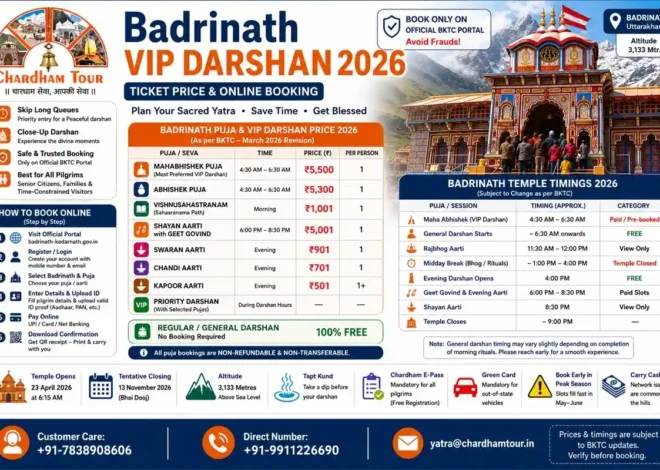
| Opening Date 2026 | 23 April 2026, ~6:15 AM (confirmed by BKTC on Basant Panchami) |
| Closing Date 2026 | Tentatively ~13 November 2026, confirmed on Vijayadashami |
| Road Travel Time | Roughly 10–12 hours in normal conditions, stretching to 14+ hours during peak season, adverse weather, or Joshimath gate delays |
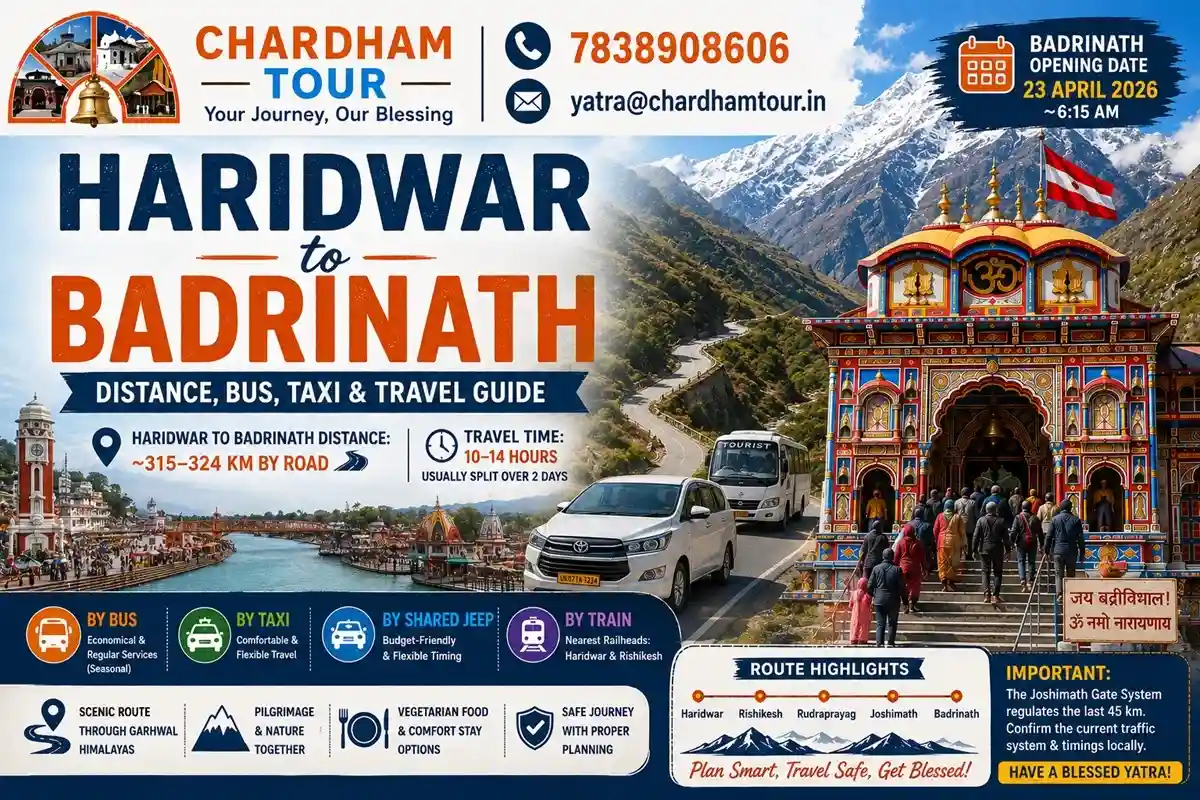
The most popular route from Haridwar runs:
Haridwar → Rishikesh → Devprayag → Srinagar → Rudraprayag → Karnaprayag → Nandprayag → Chamoli → Pipalkoti → Joshimath → Vishnuprayag → Govindghat (~25 km from Badrinath) → Pandukeshwar → Badrinath
This is the full waypoint list — some shorter guides skip the smaller towns between Rudraprayag and Joshimath, but they’re all genuinely on the route, and each one marks a small milestone in the journey. The journey primarily follows National Highway 7 (the corridor formerly numbered NH 58), and as you approach Badrinath, the snow-capped Neelkanth Peak becomes visible in the background — a striking landmark that tells you you’re close.
Why This Route Matters
The road isn’t just a means of getting from point A to point B — it passes through the Panch Prayag, five sacred confluences where the Alaknanda meets its tributary rivers: Devprayag (with the Bhagirathi), Rudraprayag (with the Mandakini), Karnaprayag (with the Pindar), Nandprayag (with the Nandakini), and Vishnuprayag (with the Dhauliganga). Many pilgrims treat these as informal stops along the way, even briefly, since each carries its own mythological significance.
How to Reach Haridwar to Badrinath
By Train
Haridwar and Rishikesh are the two nearest railheads, and both are well connected to major Indian cities including Delhi, Mumbai, and Kolkata. Haridwar generally has denser long-distance train connectivity, while Rishikesh sits slightly closer to the mountains. From either station, you’ll continue the journey by taxi, bus, or shared cab — there’s no rail line running further into the hills.
By Air
Badrinath has no airport of its own. The nearest is Jolly Grant Airport in Dehradun, roughly 315–320 km away, connected by regular flights from Delhi, Mumbai, and a handful of other major cities. From the airport, you can get a taxi, cab, or shared jeep onward — though most pilgrims flying in still route through Haridwar or Rishikesh to pick up onward transport, since that’s where the bulk of buses and taxis are based.
By Road
Road travel is the most common and economical way to make this journey, and it doubles as sightseeing — the route passes some of the most scenic stretches in Garhwal, hugging the Alaknanda River for long stretches and climbing steadily as you approach the high Himalaya. It’s also the most flexible option if you want to stop, take photos, or extend a break at any of the prayags along the way.
Haridwar to Badrinath by Bus
Buses are the cheapest option for this journey. Direct services may run during the peak Char Dham season (roughly May through June), but at other times you may need to change at Rudraprayag or Joshimath. Both government-operated (Uttarakhand Transport Corporation) and private buses run this route — check current schedules locally rather than assuming a fixed timetable year-round, since frequency drops noticeably outside peak season. Buses are also the slowest option and the least comfortable for long stretches, so factor that into your planning if you’re travelling with elderly family members.
Haridwar to Badrinath by Taxi Service
Taxis offer considerably more comfort and flexibility — you can hire one from Haridwar’s railway station or bus stands and travel at your own pace, stopping wherever you like along the route. This is generally the preferred option for families, senior citizens, or anyone who wants control over rest breaks on a long mountain drive. Private taxis can be booked directly or through a registered tour operator; the latter is generally more reliable during peak season when demand for vehicles spikes.
Haridwar to Badrinath by Sharable Jeeps
Shared jeeps split the cost across passengers, making this a budget-friendly middle ground between buses and private taxis. They tend to have more flexible timing than a fixed bus schedule since they often depart once full rather than on a strict clock, and you get a more personalised experience than a large bus while still keeping costs down. The trade-off is less control over your own schedule compared to a private taxi.
The Joshimath Gate System
This is the part of the journey most short guides skip entirely, and it’s the one that actually catches pilgrims out. The final ~45 km stretch from Joshimath to Badrinath is narrow, single-lane in places, and runs regulated one-way traffic rather than free movement. Traffic movement depends on the daily administrative schedule and road conditions set by local administration and the Border Roads Organisation (BRO) — this has taken different forms in different years (sometimes fixed release batches through the day, sometimes an alternating one-way system), so there’s no fixed timetable that can be reliably quoted here.
There is typically a practical cutoff for onward movement later in the day; miss it, and you’ll likely need to overnight in Joshimath rather than push on to Badrinath after dark. Night driving on this stretch is also generally discouraged given the terrain. The practical takeaway: build in a buffer and aim to reach Joshimath in good time rather than cutting it close, especially in peak season when checkpoint queues can run long. Confirm the current system locally — with your driver, hotel, or the Joshimath checkpost — before setting off from Rudraprayag, rather than relying on a fixed schedule from any blog, including this one.
Attractions in Badrinath for Sightseeing
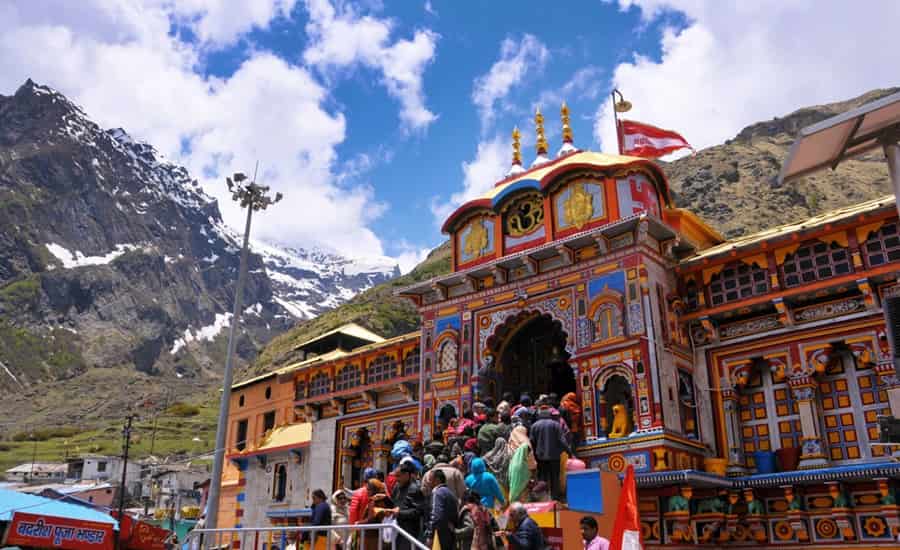
- Badrinath Temple: The main shrine, dedicated to Lord Vishnu, set amid the Nar and Narayan mountain ranges on the banks of the Alaknanda River. It’s one of the four Char Dhams and one of the 108 Divya Desams sacred to Vaishnavites.
- Tapt Kund: A hot-water spring near the temple and the Alaknanda River — many pilgrims bathe here before darshan, a tradition that goes back generations.
- Mana Village: About 3–4 km from Badrinath Temple. Long known as the last village before the India–Tibet border, it’s now officially promoted by the government as India’s “First Village” instead — part of a broader rebranding, with Uttarakhand having also declared it a Tourism Village. It’s home to sites like Vyas Gufa and Bheem Pul.
- Vasudhara Falls: A scenic waterfall near Mana Village, reached via a roughly 5–6 km trek — a popular spot for nature lovers and trekkers, though it involves a genuine walk rather than a quick stroll.
- Yogdhyan Badri Temple: One of the Sapt Badri shrines dedicated to Lord Vishnu, where the idol is depicted in a meditative posture, located near Pandukeshwar en route to Badrinath.
- Brahma Kapal: A riverside platform on the Alaknanda where Hindus traditionally perform rites for deceased ancestors — a spiritually significant stop for many pilgrim families.
Food Options in Badrinath
Badrinath’s food scene is simple and entirely vegetarian, in line with its character as a pilgrimage town rather than a commercial hill station.
- Hotel restaurants: Several hotels in town, including Hotel Sarovar Portico, have their own dining areas serving North and South Indian vegetarian food — convenient if you’re already staying there and don’t want to venture out after a long day of travel.
- Local dhabas and food stalls: Scattered through Badrinath’s streets, these serve North Indian staples alongside traditional Garhwali dishes like Phanu (a slow-cooked lentil soup), Kafuli (a spiced spinach or fenugreek gravy), and Aloo Ke Gutke (a Himalayan-style spiced potato dish). Options and quality vary stall to stall and season to season, so ask locally for current recommendations rather than relying on a fixed list of names.
- Temple prasad: Typically khichdi (rice and lentils), distributed after darshan — more a part of the spiritual experience than a meal to seek out separately.
Practical Travel Tips
- Break the journey into two days with an overnight halt at Rudraprayag, Karnaprayag, or Joshimath rather than attempting the full drive in one exhausting stretch.
- Register for your Char Dham e-pass in advance via registrationandtouristcare.uk.gov.in — this is mandatory for every pilgrim and separate from any hotel or transport booking.
- Carry warm clothing regardless of season. Even in peak summer, nights at this altitude drop significantly, and it’s easy to underestimate this if you’re travelling from the plains.
- Hire a driver experienced with hill roads if you’re taking a private taxi — the sharp curves and narrow single-lane sections on this route genuinely reward local driving experience.
- Check current weather and road-status advisories before departure, particularly during the monsoon months (July–September), when the Chamoli district stretch sees periodic landslide-related closures.
- Carry your own water and snacks for the road — eating options thin out along certain stretches, especially between the smaller towns.
Common Mistakes to Avoid
- Assuming last year’s opening or closing dates still apply. These shift annually based on the Hindu Panchang, so always reconfirm for the current year.
- Cutting it too close on the Joshimath gate timing. Arriving right at the practical cutoff leaves no room for traffic delays or vehicle issues.
- Attempting the entire Haridwar–Badrinath drive in a single day. It’s technically possible but genuinely exhausting, and fatigue on mountain roads is a real safety concern.
- Skipping e-pass registration until you’ve already reached Haridwar. Registration slots can tighten during peak season, so it’s better handled well in advance.
- Underestimating the cold. Many pilgrims from warmer states pack for what they expect will be a “summer trip” and regret it once they’re at altitude.
Final Words
The Haridwar–Badrinath route is one of the most scenic stretches of the entire Char Dham Yatra, passing through five sacred river confluences and some of Garhwal’s most dramatic mountain scenery. It’s entirely manageable with a bit of planning: confirm the current year’s opening and closing dates before booking travel, budget extra time for the Joshimath gate system, and pick the transport mode — bus, taxi, or shared jeep — that matches your comfort, timeline, and budget. Get those basics right, and the rest of the journey really is just enjoying the drive.
FAQs
Q1. What is the distance from Haridwar to Badrinath?
Approximately 315–324 km by road, depending on the exact route taken.
Q2. When does Badrinath Temple open in 2026?
23 April 2026, at approximately 6:15 AM, as confirmed by BKTC on Basant Panchami.
Q3. When does Badrinath Temple close in 2026?
Tentatively around 13 November 2026 — the official date is confirmed on Vijayadashami.
Q4. Is there a direct bus from Haridwar to Badrinath?
Not a single direct service in the strictest sense, but buses run to Rudraprayag and Joshimath from Haridwar, connecting onward to Badrinath.
Q5. How long does the road journey from Haridwar to Badrinath take?
Roughly 10–12 hours in normal conditions, stretching to 14+ hours during peak season, adverse weather, or Joshimath gate delays. Most pilgrims split it across two days.
Q6. What is the Joshimath gate system?
A regulated one-way traffic system on the narrow Joshimath–Badrinath stretch, run according to daily administrative schedules and road conditions rather than a fixed timetable. There’s typically a practical cutoff for onward movement later in the day — confirm the current system locally before setting off.
Suggested Tour:
One thought on “Haridwar to Badrinath Travel Guide”
Leave a Reply

Ek Dham Badrinath yatra ex Haridwar BY Taxi
Need VIP Dharsan Pass