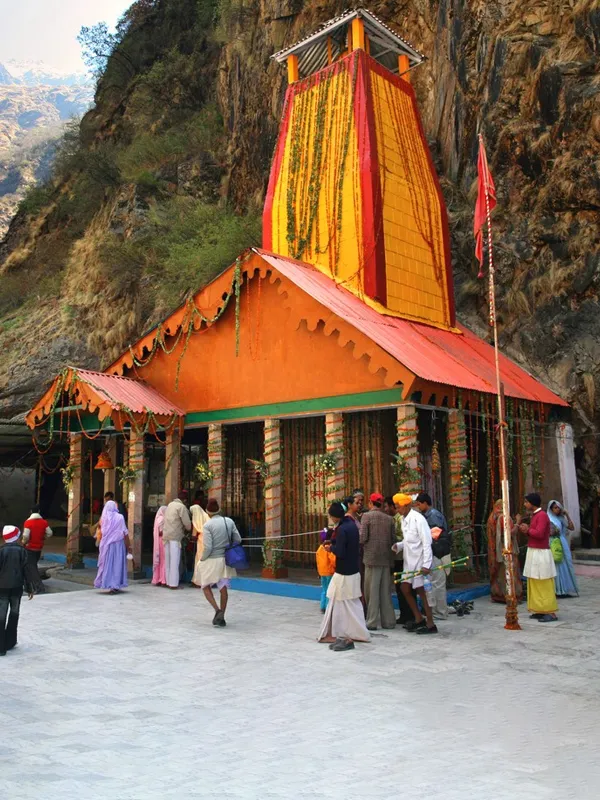
Yamunotri Weather Guide
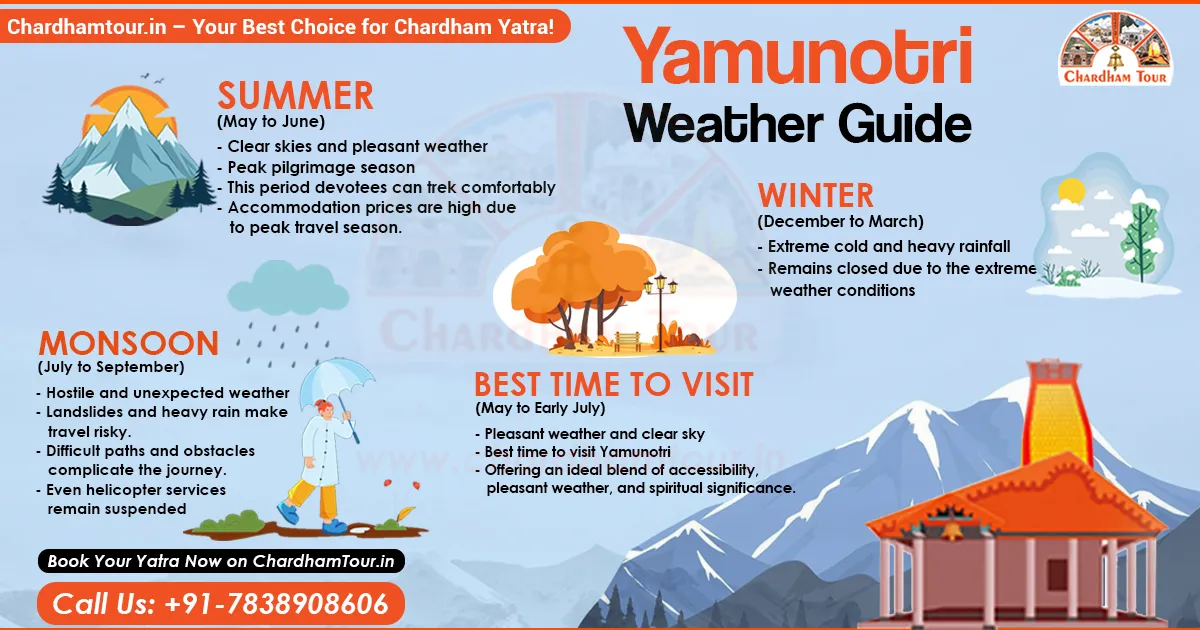
Yamunotri's weather shifts sharply across the year — from pleasant summer daytimes to sub-zero winter nights that shut the temple entirely. Since the shrine sits at 3,293 m in the Garhwal Himalayas, checking the season before you travel matters: it affects road and trek conditions, whether the temple is even open, and what you need to pack. This guide breaks down Yamunotri's weather season by season and month by month, so you know exactly what to expect.
Weather at a Glance
| Season | Months | Typical Conditions | Travel Suitability |
|---|---|---|---|
| Summer | May–June | Cool days, cold nights; daytime highs can approach 20°C in settled weather | Best travel window |
| Monsoon | July–September | Wet, cloudy, frequent landslide risk — most intense in July–August | Avoid if possible |
| Autumn | September–October | Cooler, generally clearer as monsoon retreats; colder at night | Second-best travel window |
| Winter | November–April | Sub-zero conditions, heavy snowfall — temple closed | Not accessible for regular pilgrimage |
Weather data note: Yamunotri is a high-altitude Himalayan destination, so temperatures can vary considerably by date, elevation, and weather system. The seasonal information here describes typical conditions rather than a live forecast — check the India Meteorological Department's Char Dham weather services for current temperatures and warnings before you travel.
Rainfall and humidity: Most of Yamunotri's rainfall falls during the monsoon, with July and August typically the wettest and highest-risk months for landslides; wet conditions can extend into early September. Outside monsoon, visibility generally improves, particularly later in September and October, though mountain weather can change quickly at any time of year.
Summers in Yamunotri (May–June)
Summers in Yamunotri are pleasant and cool rather than hot. The temple's doors open around the start of this season, drawing the year's biggest crowd of pilgrims. The Shri Badrinath-Kedarnath Temple Committee notes daytime maximums can reach around 20°C in settled weather, while nights turn noticeably cold — often dropping into single digits after sunset even when the day felt warm. This is widely considered the most comfortable and reliable window for the yatra, with generally manageable trekking conditions on the Janki Chatti route.
Winters in Yamunotri (November–April)
Winter in Yamunotri runs roughly from November to April. Temperatures drop well below freezing, accompanied by heavy snowfall that can make the trek route and the road to Janki Chatti impassable. The temple closes for the entire season, and the deity is moved to Kharsali village for winter worship. Winter access to the region is very limited, and regular pilgrimage isn't possible while the temple remains closed. If you specifically want to see Yamunotri under snow, late November to mid-March is when snowfall is heaviest — a window the temple committee itself flags as the peak snow period — though the temple itself won't be open and access is limited to Kharsali.
Monsoons in Yamunotri (July–September)
The monsoon-affected period in Yamunotri broadly runs from July into September, with July and August generally the most problematic months for travel. Frequent landslides and heavy downpours make the journey slow, difficult, and genuinely risky — both the road from Barkot to Janki Chatti and the trek itself become prone to slips and blockages. This is the one stretch we'd actively recommend avoiding rather than just deprioritizing, particularly if you're traveling with elderly family members or young children.
Monthly Weather Overview
| Month | Conditions |
|---|---|
| January | Deep winter; heavy snow and sub-zero conditions |
| February | Deep winter; persistent snow cover, with frequent snowfall possible |
| March | Still cold, with snow remaining at higher elevations; gradual seasonal transition begins |
| April | Cold, especially early in the month; sub-zero nights remain possible even as the season opens |
| May | Cool days and cold mornings/nights; conditions improve as the month progresses, with daytime highs able to approach 20°C in settled weather |
| June | Generally the most comfortable month for daytime travel, but mornings and nights stay cold; rain can cause sudden temperature drops |
| July | Increasing monsoon influence; wet and increasingly unstable conditions |
| August | Peak monsoon; heavy rain and the highest landslide risk of the year |
| September | Post-monsoon transition; early-month rain is still possible, with conditions generally clearing later in the month |
| October | Cool to cold, with increasingly cold nights; freezing conditions become more likely later in the month |
| November | Winter arrives; snowfall and sub-zero temperatures increasingly likely; temple closes around Bhai Dooj |
| December | Deep winter, with persistent snow and sub-zero temperatures; severe cold spells can be considerably colder |
Best Time to Visit Yamunotri
For most pilgrims, May–June and September–October offer the best balance of accessibility and weather — the temple is open, roads are generally passable, and temperatures stay manageable for both Darshan and the trek from Janki Chatti. April and early May can still be quite cold, and November becomes increasingly wintry and depends on the temple's annual closing date, so treat these as shoulder periods rather than prime travel windows. July–August (peak monsoon) is best avoided altogether.
May–June vs September–October: Which Should You Choose?
Both windows offer comparatively stable weather, but they suit slightly different travelers. May–June coincides with the temple's fresh reopening and typically sees higher pilgrimage demand, so accommodation in Barkot and Janki Chatti can fill up faster. September–October tends to see fewer pilgrims and cooler, crisper air once the monsoon clears — a better fit if you prefer a quieter visit and don't mind packing warmer layers for the cooler evenings.
How Weather Affects the Trek to Yamunotri
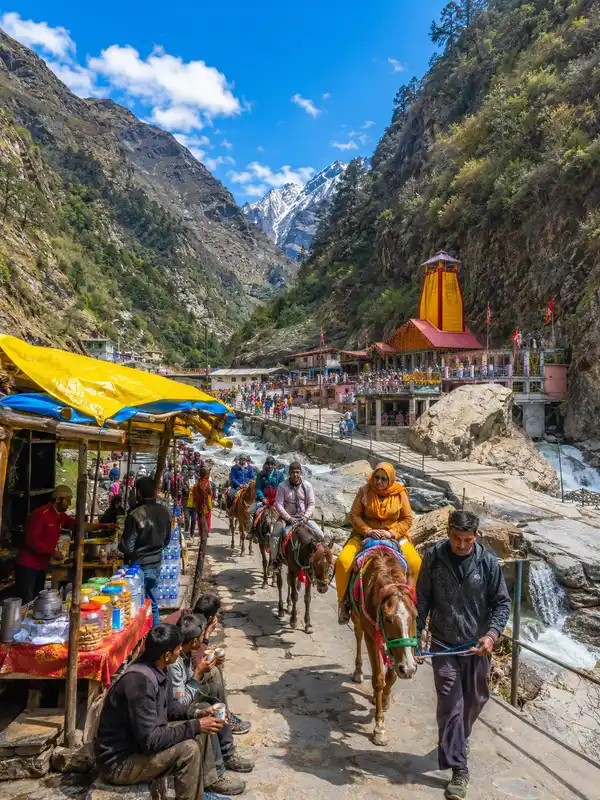
The roughly 5–6 km trek from Janki Chatti responds directly to the season. Outside the main monsoon period, the trail is generally more manageable, though rain, snowmelt, or local trail damage can still affect conditions even in the recommended travel months. During the monsoon, the trail can turn muddy and slippery, with a real risk of landslides along the route. In winter, snow accumulation typically makes the trek impassable for regular pilgrims, which is part of why the temple closes rather than staying open with reduced footfall. Pony and palanquin services generally operate through the pilgrimage season, but availability is subject to weather, trail conditions, and local administrative decisions rather than guaranteed year-round.
What to Pack for Yamunotri's Weather
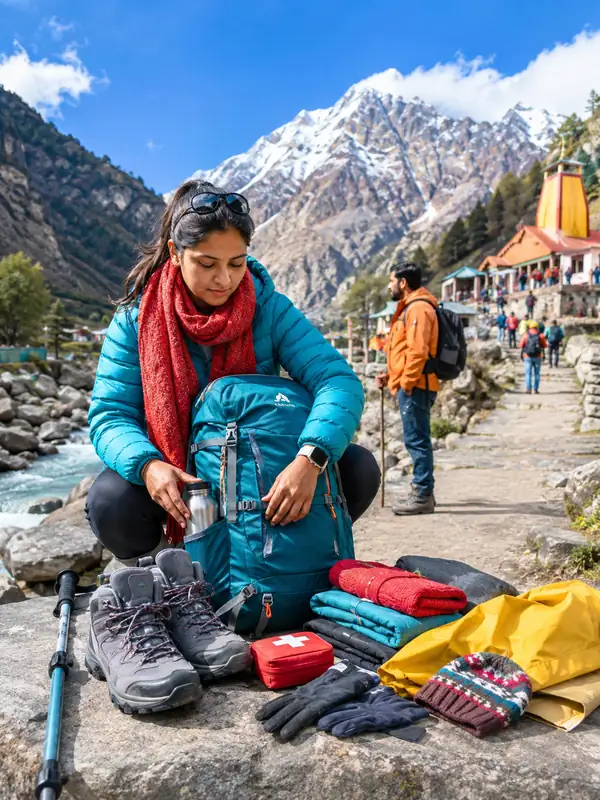
- Summer (May–June): Light woolens or a fleece for mornings and evenings; the daytime sun can still feel strong at altitude despite cooler air, so don't assume "cool weather" means no sun protection.
- Monsoon (July–August): Waterproof jacket, a rain cover for your bag, and covered footwear with good grip — trek paths get slippery and stream crossings can swell quickly after rain.
- Autumn (September–October): Layered clothing, since daytime warmth can drop sharply once the sun sets behind the ridgelines.
- General essentials year-round: Warm gloves, a cap or hat, sunscreen (UV is stronger at this altitude even on cloudy days), lip balm, and a basic first-aid kit.
A Note on Altitude and Weather
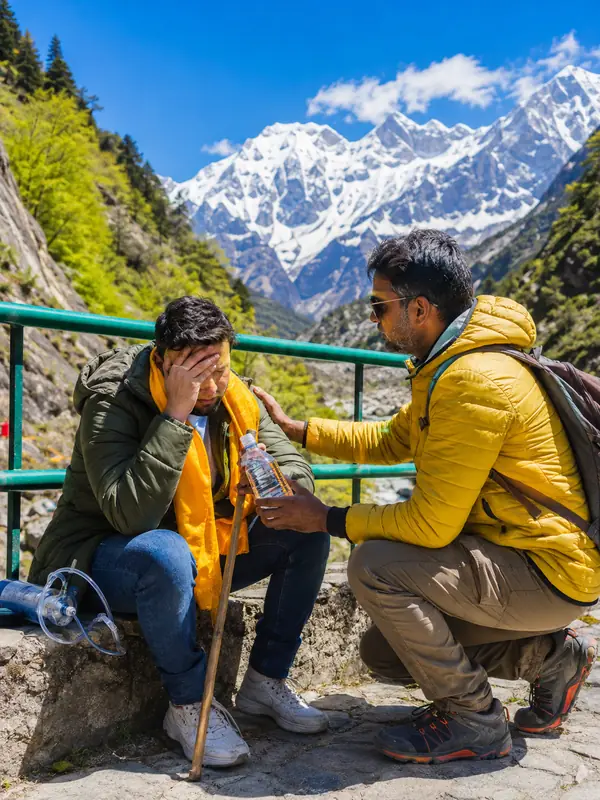
At 3,293 m, Yamunotri's weather changes faster than what most plains-based travelers are used to — a clear morning can turn overcast and cold within a couple of hours, and strong winds can make conditions feel substantially colder than the measured air temperature. Some visitors may experience headache, breathlessness, or fatigue at this altitude, particularly during exertion; pacing yourself, staying hydrated, and taking short breaks matters as much as what you pack. If symptoms worsen or don't improve with rest, it's best to slow down, turn back, or seek medical assistance rather than pushing through. If you're traveling with elderly family members or young children, building in extra time for the trek makes the cold and altitude far more manageable.
Weather-Related Safety Tips
- Check conditions before you leave, not just before you book. Weather in the Garhwal Himalayas can shift within a day or two, so re-confirm road and trek conditions the morning of your travel — the India Meteorological Department's Char Dham forecast is a useful live source, since this page describes typical seasonal patterns rather than current conditions.
- Start early during unstable weather. Landslide risk and afternoon cloud cover both tend to increase later in the day, especially in the monsoon and winter shoulder months — starting your trek earlier gives you more flexibility if conditions change.
- Don't rely on continuous mobile connectivity. Coverage can be unreliable on remote sections of the route past Barkot — carry what you need and inform someone of your itinerary before starting the trek.
- Know the signs of mild altitude discomfort. Headache, breathlessness, or unusual fatigue on the climb can occur and often ease with rest and hydration — but worsening symptoms mean it's time to slow down, turn back, or seek help rather than push through.
Conclusion
Yamunotri's weather swings from pleasant summer daytimes to genuinely dangerous winter conditions across the year, and the season you choose shapes almost everything else about the trip — road access, trek difficulty, crowd levels, and what you need to pack. May–June and September–October remain the two reliable windows; treat July–August and the November–April closure as periods to plan around, not push through. The seasonal patterns here are a planning guide, not a live forecast — check the India Meteorological Department's Char Dham weather services close to your travel date, since Himalayan weather can shift faster than seasonal averages anticipate.
FAQs
Q1. What is the best time to visit Yamunotri?
May–June and September–October are the best months, offering an open temple, generally passable roads, and manageable temperatures. July–August (peak monsoon) and the November–April winter closure should be avoided.
Q2. How cold does it get in Yamunotri in winter?
Winter (roughly November–April) brings freezing conditions and heavy snowfall, with temperatures regularly falling below 0°C. Exact readings vary considerably by date and weather system, and the temple is closed throughout this period.
Q3. Is it safe to visit Yamunotri during monsoon?
Not recommended. July and August especially bring heavy rainfall and frequent landslides, making the journey slow and risky; wet conditions can continue into early September.
Q4. What is the temperature in Yamunotri in summer?
Yamunotri stays cool even in summer. The Shri Badrinath-Kedarnath Temple Committee notes daytime maximums can reach around 20°C in settled May–June weather, while nights remain cold.
Q5. When does the Yamunotri temple close for winter?
The temple typically closes around Bhai Dooj in November and reopens the following spring around Akshaya Tritiya.
Q6. Does it snow in Yamunotri?
Yes — the temple committee notes heavy snowfall is especially common from late November to mid-March, though this period coincides with the temple's winter closure, so it isn't accessible for regular pilgrimage.
Q7. Is September a good month to visit Yamunotri?
It can be, especially later in the month. The monsoon generally weakens through September, though early-month rain is still possible — check conditions close to your travel date rather than assuming clear weather throughout.
Q8. What should I pack for Yamunotri's weather?
Light woolens for summer mornings and evenings, a waterproof layer if traveling near monsoon, and warm gloves, a cap, and sunscreen year-round, since UV exposure is stronger at this altitude.
Q9. Why does Yamunotri feel colder than the reported temperature?
Strong winds at 3,293 m altitude can make conditions feel substantially colder than the measured air temperature, especially on exposed sections of the Janki Chatti trek — layering up matters more than relying on a single forecast number.
Yamunotri Travel Guide


Yamunotri Travel Packages

Important Safety Notice
Beware of Fake Char Dham & Kedarnath Helicopter Booking Websites
Fake websites, WhatsApp accounts and advertisements may impersonate genuine travel companies or helicopter operators. Always verify before paying.