
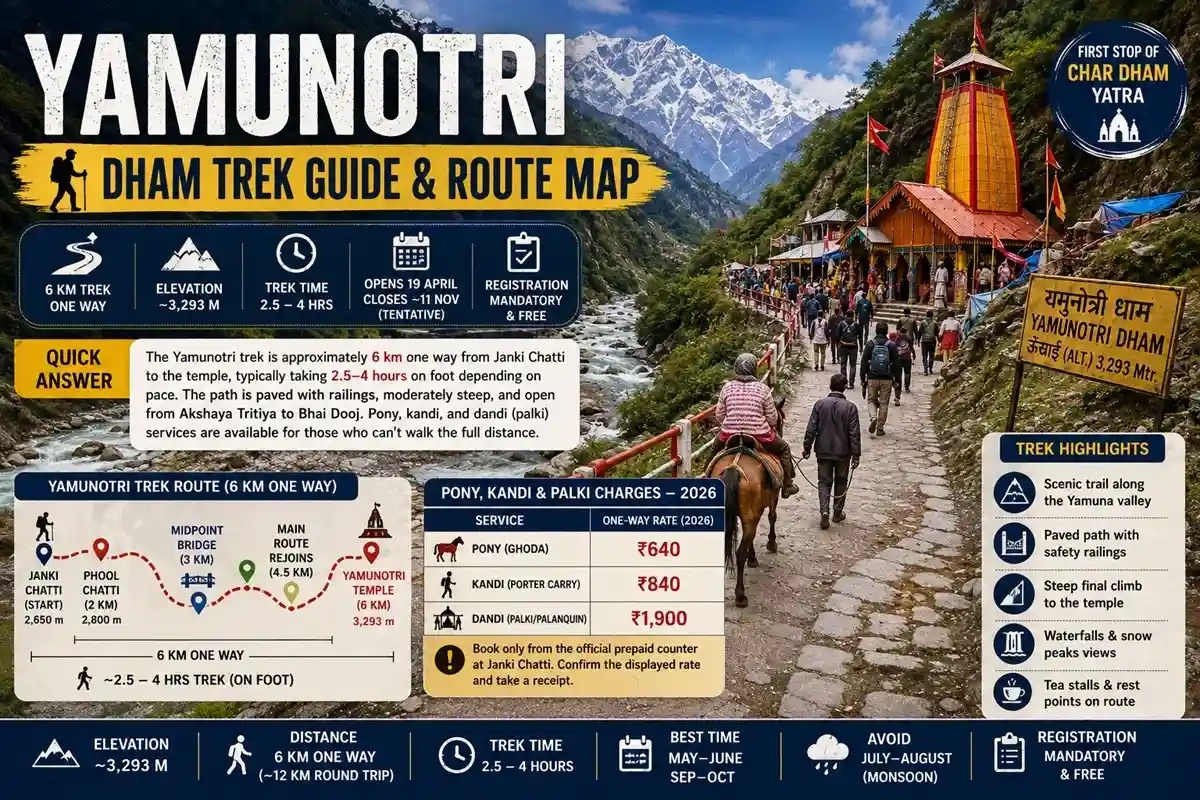
2026 Fact Check: Elevation ~3,293 m · Trek ~6 km one way (~12 km round trip) · Time ~2.5–4 hrs · Opens 19 April 2026 · Closes ~11 Nov 2026 (tentative) · Registration mandatory & free · Pony/Kandi/Dandi rates below (confirm at counter)
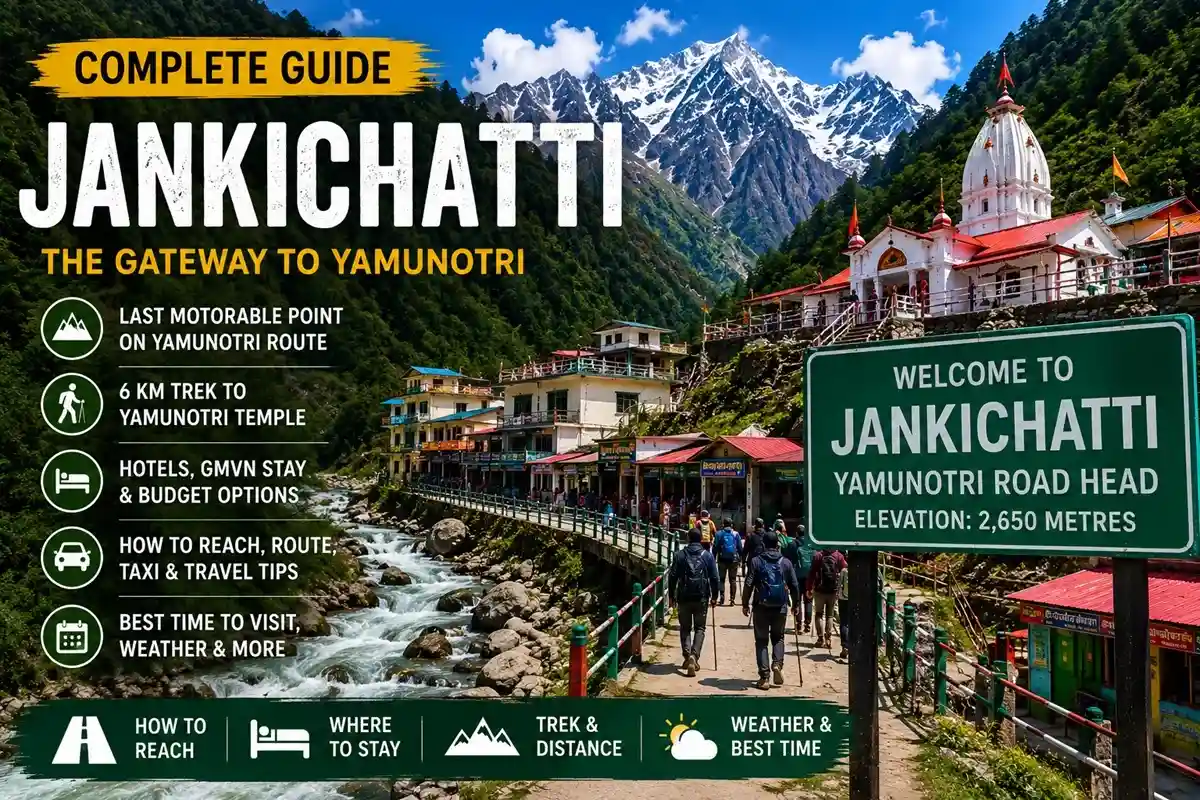
Yamunotri is the first stop of the Char Dham Yatra, and it starts with a real trek — not a stroll. From Janki Chatti, the last road head, you climb 6 km one way to reach the temple at 3,293 metres, dedicated to Goddess Yamuna. It’s steep in parts, cemented for most of the way, and doable by pony, palki, or on foot.
This guide covers the actual route, current pony/palki rates, difficulty level, and the trekking tips that matter — not the generic filler you find on most blogs.
Quick Answer: The Yamunotri trek is approximately 6 km one way from Janki Chatti to the temple, typically taking 2.5–4 hours on foot depending on pace. The path is paved with railings, moderately steep, and open from Akshaya Tritiya to Bhai Dooj. Pony, kandi, and dandi (palki) services are available for those who can’t walk the full distance.
How to Reach Janki Chatti (Trek Starting Point)
Janki Chatti is where the road ends and the trek begins. Here’s how pilgrims get there:
By Road
GMOU buses or private taxis run from Rishikesh, Haridwar, or Dehradun — approximately 210 km from Rishikesh via Mussoorie and Barkot.
By Rail
Dehradun, Haridwar, and Rishikesh are the nearest practical railway stations, all with regular connections from major cities. Hire a cab from any of these to Janki Chatti.
By Air
Jolly Grant Airport, Dehradun, is the nearest airport, followed by a road journey to Janki Chatti via Barkot.
By Helicopter
Chartered helicopter services to the Yamunotri sector operate from Dehradun during the season, subject to weather. Even after landing, pilgrims still cover the final stretch by pony, doli, or palki.
Route from Rishikesh (approx. 210 km to Janki Chatti): Rishikesh – Dehradun – Mussoorie – Barkot – Syanachatti – Hanuman Chatti – Phool Chatti – Janki Chatti (trek begins) – Yamunotri.
Yamunotri Trek Route: Step by Step
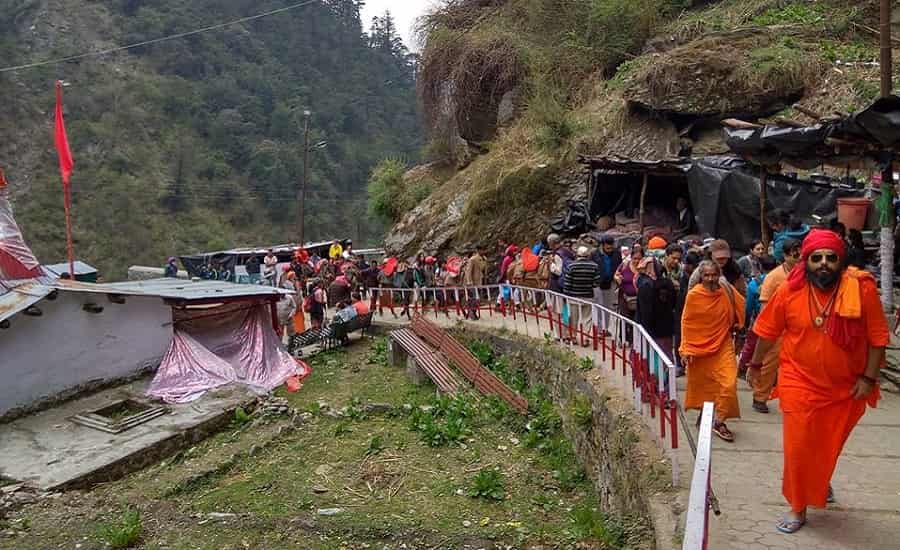
The trail follows the Yamuna valley, mostly cemented with a railing on the outer edge for safety.
- Janki Chatti to Phool Chatti (approx. 2 km): A gentle start on a paved trail, with tea stalls along the way.
- Midpoint: A steel bridge crosses a Yamuna tributary, roughly around the halfway mark.
- Alternative sections: In a couple of places the path splits into a main route and a slightly longer alternative that rejoins before the final approach — mostly used by locals and porters.
- Final stretch: The trail gets noticeably steeper, with rocky patches and a genuine climb on the approach to the temple, opening up to views of snow-covered peaks and, seasonally, waterfalls.
Along the way, the Yamuna river stays visible below, and forested Himalayan slopes flank much of the trail.
Trek Difficulty Level
| Period | Typical Condition |
| May–June | Busy season; generally favourable trekking conditions |
| July–August (monsoon) | Increased risk of slippery trails and landslides |
| September–October | Generally favourable, post-monsoon clarity |
| Late October–November | Colder, approaching winter closure |
The first stretch is easy. Difficulty builds gradually — rocky patches, bridge crossings, and a steep final climb near the temple. Most healthy adults with basic fitness cover it in roughly 2.5–4 hours; slower walkers, senior citizens, or first-timers should allow more time and take breaks at the tea stalls along the way.
Pony, Kandi & Palki (Dandi) Charges — 2026
For pilgrims who can’t or don’t want to walk the full 6 km, regulated transport is available at the prepaid counter in Janki Chatti.
| Service | One-Way Rate (2026) |
| Pony (Ghoda) | ₹640 |
| Kandi (porter carry) | ₹840 |
| Dandi (Palki/Palanquin) | ₹1,900 |
Book only from the official prepaid counter at Janki Chatti — not from individuals who approach you on the road. These are the 2026 rates as listed by multiple current sources; confirm the exact displayed rate at the counter before paying, and always ask for a receipt.
Best Time & Temple Opening Dates 2026
The Yamunotri temple opens on Akshaya Tritiya and closes around Bhai Dooj, remaining shut through winter due to heavy snowfall. For 2026, the temple opened on 19 April 2026; closing is expected around 11 November 2026, though this should be confirmed closer to the date. After closing, the deity is traditionally moved to Kharsali village for the winter.
- May–June: Warmest, busiest window; most facilities operational.
- September–October: Post-monsoon, clearer skies, thinner crowds.
- July–August (monsoon): Best avoided — higher risk of landslides and slippery trails.
Amenities Along the Trek
- Food: Tea stalls, dhabas, and maggi points operate at intervals during peak season, especially between Janki Chatti and Phool Chatti.
- Rest points: Benches and seating are available at several places for breaks.
- Water: Carry sufficient drinking water — don’t rely on refill points being available.
- Facilities thin out in the off-season, when snow can make sections of the trail unusable.
Char Dham Registration (Mandatory for 2026)
Registration is mandatory and free for every pilgrim before the Yamunotri Yatra in 2026. Register online at registrationandtouristcare.uk.gov.in, via the Tourist Care Uttarakhand app, or at offline counters in Haridwar, Rishikesh, and Barkot. Keep your e-pass saved digitally and carry a printed copy as backup, since mobile signal near the trek can be unreliable.
Trekking Tips
- Phone connectivity: Mobile signal is patchy through much of the trek and can drop out completely in stretches. Inform family before you start if you expect to be out of reach for a few hours.
- Gear: Comfortable trekking shoes, a walking stick, and a cap or hat for sun protection. Carry a light backpack with water, glucose/electrolyte mix, and some quick snacks.
- Fitness prep: Start walking regularly a few weeks before your trip, or add breathing exercises to your routine — it makes a noticeable difference on the steeper stretches.
- Timing: Start early morning to avoid the midday sun and finish the descent before dark, especially in September–October when daylight hours shorten.
- For senior citizens: Palki or pony is strongly recommended over walking the full distance, particularly on the final steep stretch.
Common Mistakes to Avoid
- Booking pony/palki from touts instead of the official prepaid counter.
- Skipping registration, assuming it can be done on the spot.
- Attempting the trek during monsoon months without checking trail conditions.
- Not carrying warm layers — temperatures drop fast near the temple even in May–June.
FAQs
How long is the Yamunotri trek?
Approximately 6 km one way from Janki Chatti to the temple, about 12 km round trip.
How difficult is the Yamunotri trek?
Moderate. The start is easier, but the trail gets steeper near the end, with rocky patches and a genuine climb on the final approach.
What are the pony charges for Yamunotri in 2026?
Around ₹640 one way from the official prepaid counter at Janki Chatti — confirm the displayed rate before paying.
What is the Yamunotri temple opening date in 2026?
19 April 2026, on Akshaya Tritiya. Closing is expected around 11 November 2026 (Bhai Dooj), though this should be confirmed closer to the date.
Is Char Dham registration mandatory for Yamunotri?
Yes, registration is compulsory and free in 2026, and can be done online or at offline counters.
Can senior citizens do the Yamunotri trek?
Yes, using pony, kandi, or palki services available at Janki Chatti.
What is the best time to trek to Yamunotri?
May–June and September–October are generally the most favourable windows; the monsoon months of July–August carry a higher risk of landslides and slippery trails.
Is there a helicopter option to Yamunotri?
Yes, chartered helicopter services operate from Dehradun during the season, subject to weather and availability. Even after landing, a short final stretch to the temple by pony or palki is still needed.
What are the nearest railway stations to Yamunotri?
Dehradun, Haridwar, and Rishikesh all serve as practical rail access points, followed by a road journey to Janki Chatti.
Are food and water available on the trek route?
Tea stalls and dhabas operate at intervals during peak season, but carry your own water — don’t rely on refill points being available.
Conclusion
The Yamunotri trek isn’t long, but it’s steep enough that preparation matters more than most pilgrims expect. Walk it if you’re reasonably fit, book a pony or palki from the official counter if you’re not, and time your trip for May–June or September–October for the best conditions. Register in advance, carry warm layers, and start early — the rest of the trail takes care of itself.
One thought on “Yamunotri Yatra Trekking Tips and Guide”

Related Posts
Planning a Gangotri Yamunotri Yatra Package
Yamunotri Temple Opening Date 2026
Hi,
This is nice article you shared great information i have read it thanks for giving such a wonderful Blog for reader.