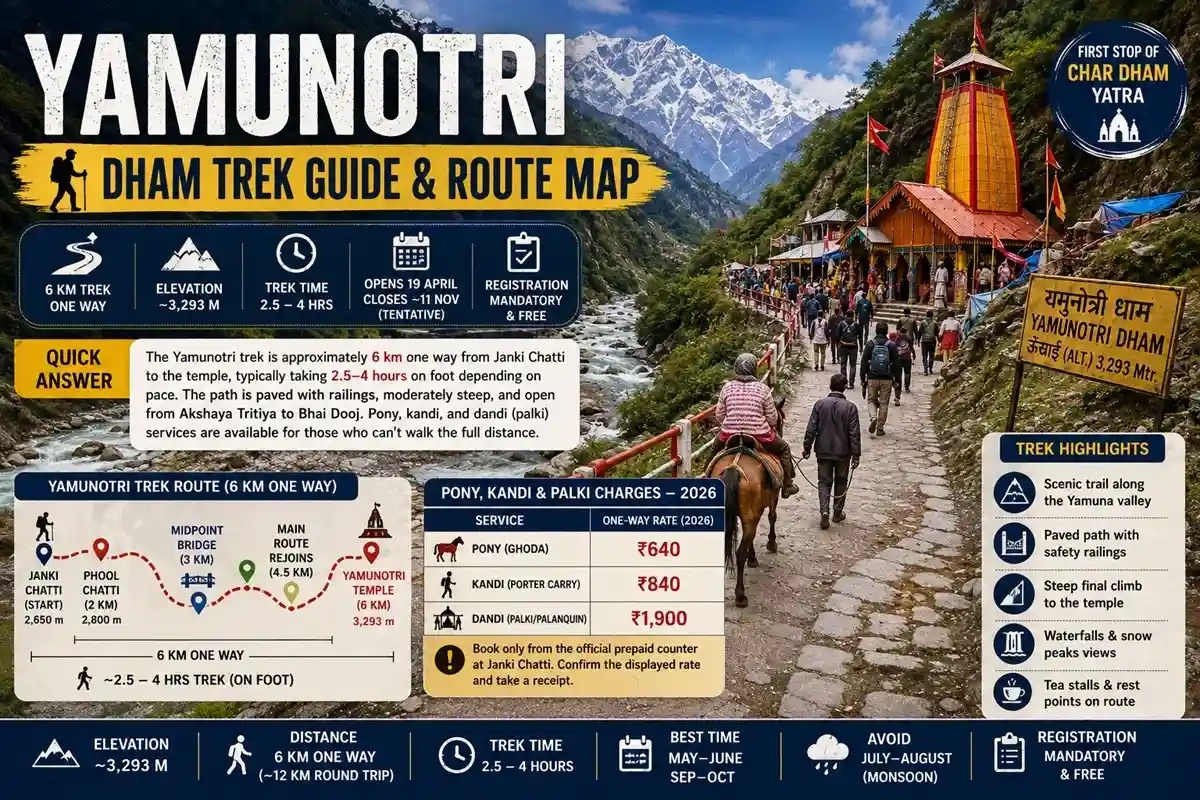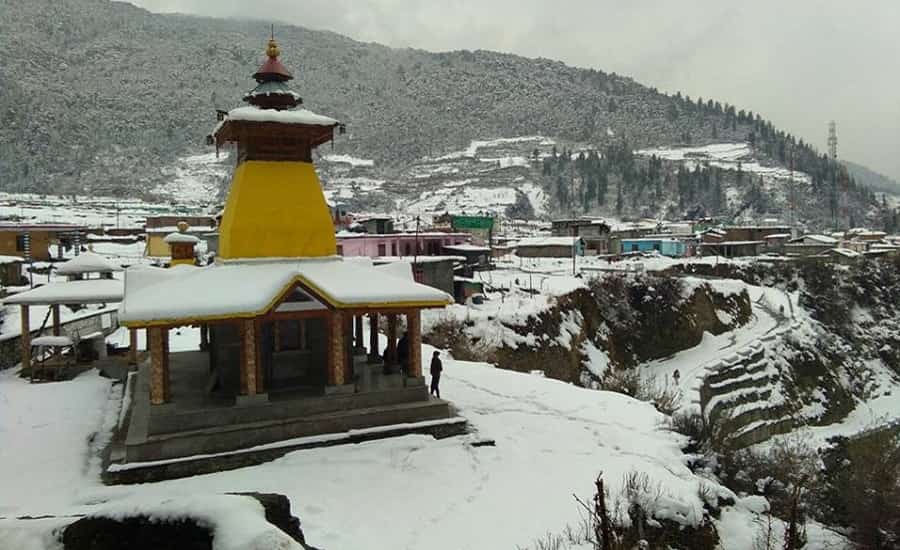
Tucked away in the Garhwal Himalayas, Kharsali village is far more than a quiet stopover on the Yamunotri Yatra route. This Himalayan settlement is the winter seat of Goddess Yamuna, and home to a temple widely believed to be among the oldest Shani Dev shrines in India. This 2026 guide covers temple timings, mythology, places to visit, distances, and practical travel tips.
Quick Facts
Where Is Kharsali Village Located?
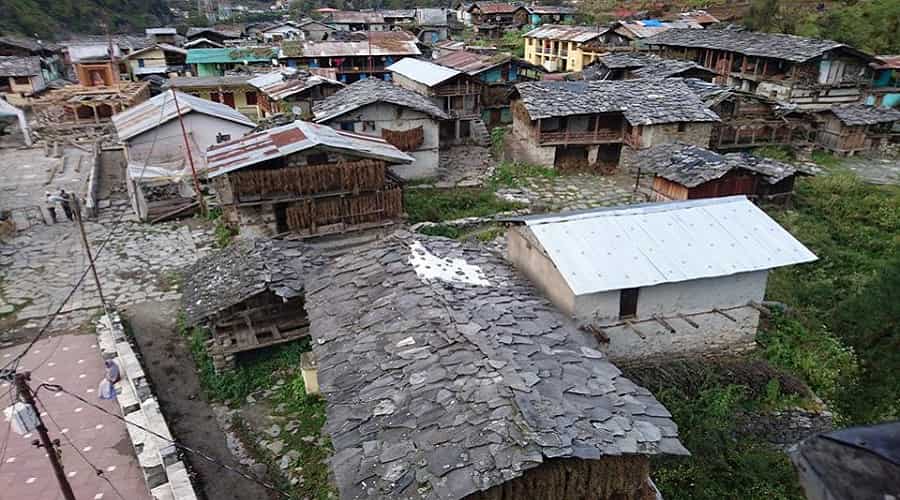
Also popularly named ‘Khushimath,’ this quaint hamlet sits in the picturesque district of Uttarkashi in Devbhoomi Uttarakhand. At an elevation of 2,675 metres (8,776 feet), this peaceful mountain village serves as a key stopover for pilgrims heading toward the Yamunotri temple shrine.
The village lies just 1 km from Janki Chatti and attracts not just pilgrims but trekkers and nature lovers too. Kharsali sits on the banks of the Yamuna River, with Yamunotri Dham itself just 6 km away, reachable only on foot.
How to Reach Kharsali Village from Dehradun and Haridwar
- By Air: Jolly Grant Airport, Dehradun is the nearest airport, approximately 192-195 km away via the Hanuman Chatti/Janki Chatti route.
- By Train: Nearest railway stations are Rishikesh (~200 km) and Dehradun (~175-192 km). From either, hire a cab or bus toward Barkot and onward to Janki Chatti.
- By Road: Motor vehicles reach as far as Janki Chatti; from there, Kharsali is a short 1 km walk. Taxis and buses run from Rishikesh, Dehradun, Tehri, and Uttarkashi.
Why Does Goddess Yamuna Stay in Kharsali Every Winter?
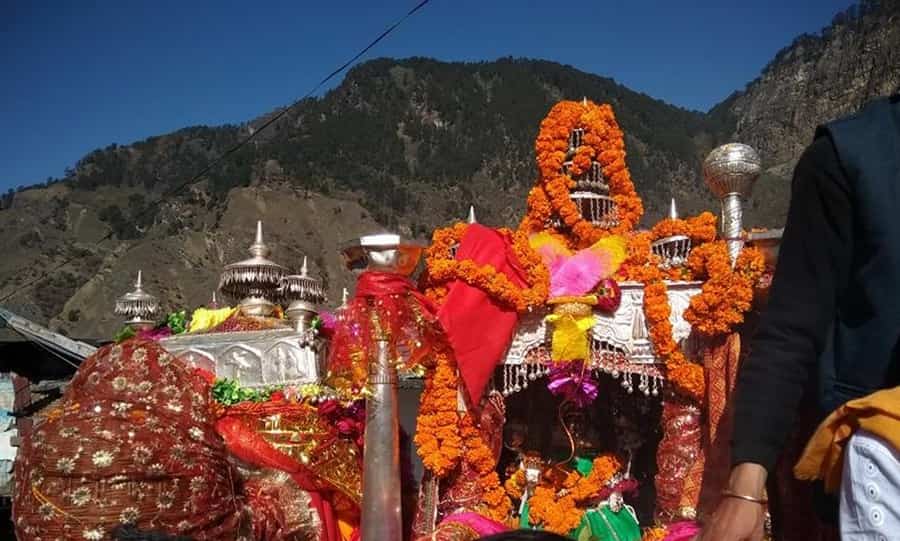
This is the part of Kharsali’s story most travel guides miss. According to local tradition, Lord Shani Dev is considered the brother of Goddess Yamuna. When Yamunotri Dham, perched at 3,293 metres, becomes inaccessible due to snowfall, the temple’s Kapat (doors) close — and the idol of Goddess Yamuna is carried down to Kharsali.
This journey, the Utsav Doli (ceremonial palanquin procession), is led by temple priests and villagers with traditional Garhwali music, typically on Bhai Dooj (Yama Dwitiya) — two days after Diwali, in late October or early November.
| ★ According to local belief, this tradition reflects a brother (Shani Dev) bringing his sister (Yamuna) home for protection during the harsh winter — a story of sibling devotion central to the Char Dham tradition. |
For six months, daily rituals continue inside the Shani Dev Temple. The cycle completes each spring on Akshaya Tritiya (typically late April/early May), when the idol returns to Yamunotri, marking the start of the summer Char Dham Yatra.
Shani Dev Temple, Kharsali — History & Timings
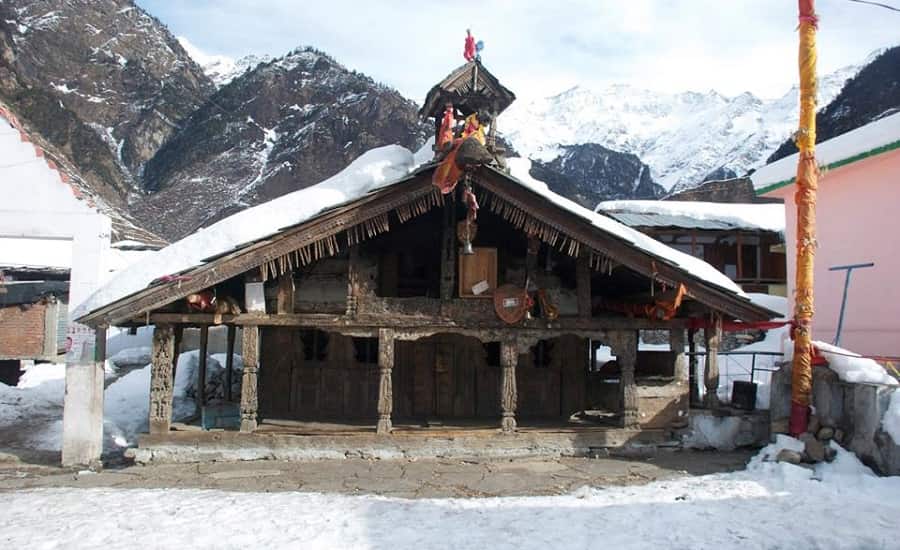
At an elevation of approximately 2,675 metres (8,776 feet), this temple is renowned across northern India as the winter home of Yamunotri’s presiding deity, located within Kharsali village itself.
Inside, the temple houses the bronze idol of Lord Shani Dev alongside local deities Chaaya, Sangya, and Nag Devta. Two sacred urns are kept inside that, according to local belief, shift position on their own during Purnima and Amavasya — devotees traditionally avoid touching them.
| Elevation | ~2,675 metres (8,776 feet) |
| Temple Age | Widely believed to be among the oldest Shani temples in India (local tradition) |
| Deity Residency | Goddess Yamuna resides here from Bhai Dooj to Akshaya Tritiya |
| Darshan Timings | Daily aarti continues through winter; exact timings vary by season — confirm locally |
| Entry Fee | Free |
Things to Do in Kharsali Village
- Pilgrimage: Pay respects to Goddess Yamuna during her winter residency at the Shani Dev Temple.
- Trekking: Kharsali is an ideal base camp — nearby sites like Dodi Tal and Darwa Top are within trekking distance.
- Getaway: A peaceful escape from city life with clean air and undisturbed surroundings.
- Camping: Lush green meadows make for memorable group camping experiences under open skies.
- Thermal Springs: Locals believe natural hot springs near Kharsali and Janki Chatti have therapeutic benefits — a popular pre-pilgrimage ritual.
- Photography: Snow-capped peaks, wooden Garhwali architecture, and the temple’s carved facade make Kharsali rewarding for photographers, especially at sunrise.
Places to Visit Around Kharsali
Someshwar Mahadev Temple
Kharsali is also home to an ancient Lord Shiva temple, where Shiva is worshipped in his Someshwar avatar. Many pilgrims visiting the Shani Dev Temple also stop here for darshan.
Janki Chatti
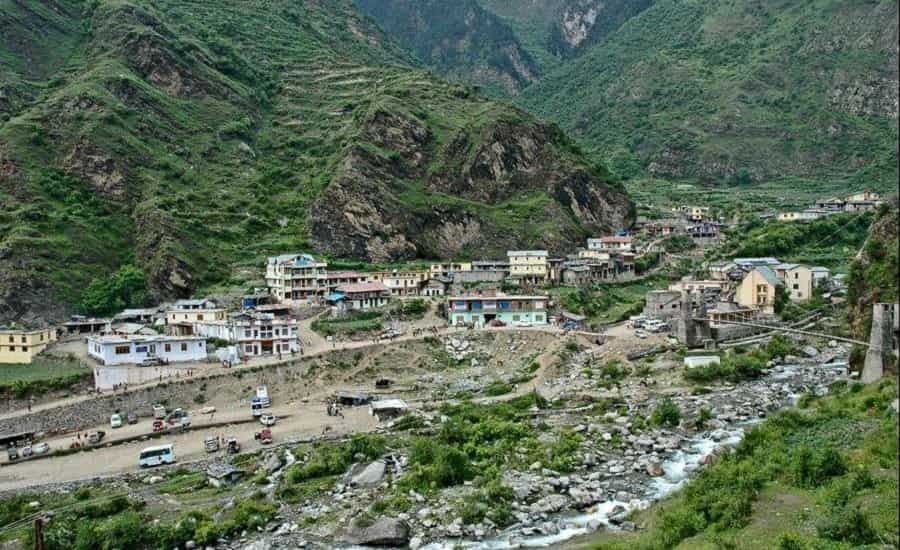
At 2,650 metres, this village comes alive during pilgrimage season — a stopover for Yamunotri pilgrims, known for its own hot water springs.
Hanuman Chatti
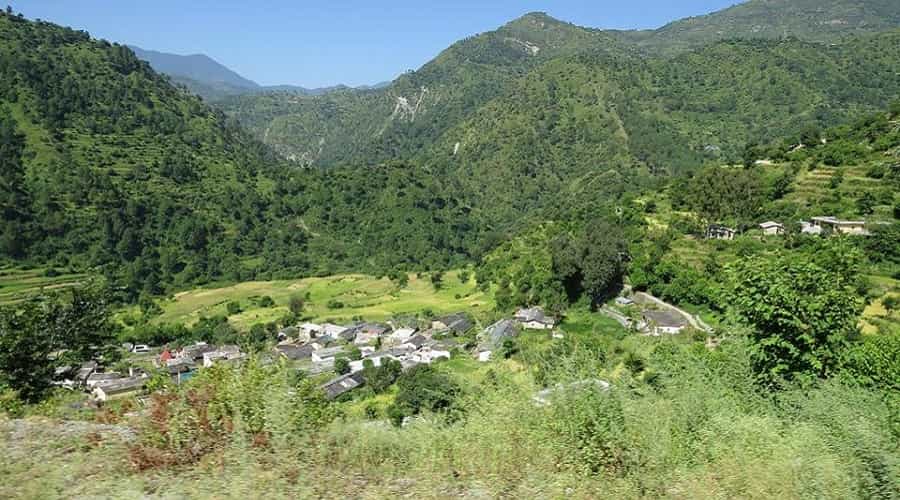
At 2,400 metres, this scenic riverside spot serves as a base camp for several Himalayan trekking routes.
Saptarishi Kund — Source of the Yamuna
At approximately 4,421 metres, roughly 7-10 km beyond Yamunotri, this glacial lake fed by the Champasar Glacier is considered the true source of the Yamuna River. The trek is arduous — recommended for experienced, acclimatised trekkers only.
Dodi Tal
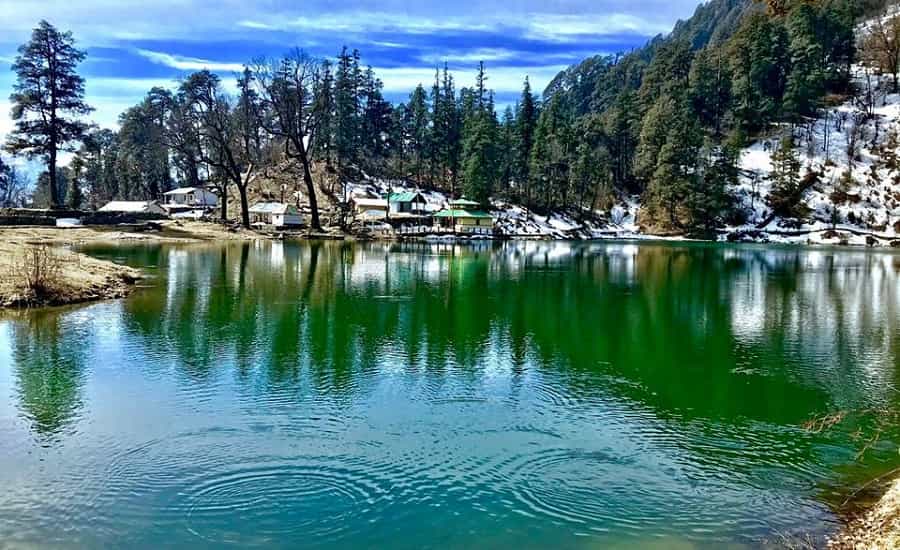
An emerald lake at 3,310 metres, home to a rare Himalayan trout species locally called Dodi — one of northern India’s most pristine high-altitude lakes.
Darwa Top
A rewarding trek to Darwa Pass offers views of Swargarohini, Bandarpoonch, and Srikantha peaks.
Barkot
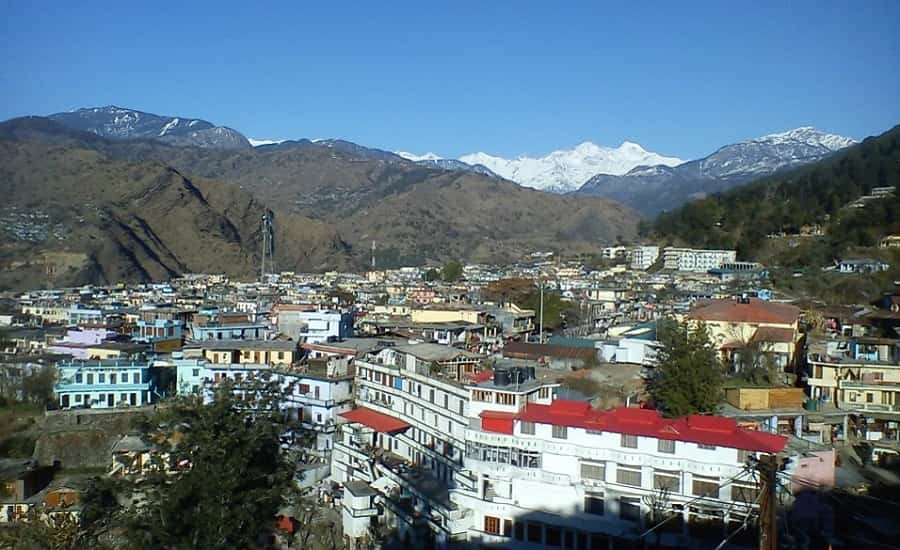
At 1,220 metres, this town has the region’s largest concentration of hotels and serves as a key base for the Yamunotri Yatra.
Winter Char Dham Yatra at Kharsali
Uttarakhand Tourism has been actively promoting the Winter Char Dham Yatra, and Kharsali sits at the heart of this initiative for the Yamunotri circuit. As of the latest available Uttarakhand Tourism guidelines, the Winter Char Dham Yatra does not require the advance biometric registration mandatory for the summer season — though policies can be revised year to year, so always verify current rules before travelling.
| 💡 Visiting Kharsali in winter offers an intimate spiritual experience impossible to replicate during the crowded summer pilgrimage at Yamunotri. |
Practical Travel Information for Kharsali (2026)
| Aspect | Details |
| Mobile Network | BSNL and Jio have partial coverage at Kharsali/Janki Chatti; weaker beyond this point. |
| ATM / Cash | No ATM in Kharsali itself. Nearest ATMs are in Barkot — carry sufficient cash. |
| UPI / Digital Payment | Limited acceptance at small dhabas due to patchy network; cash is more reliable. |
| Parking | Vehicle parking available at Janki Chatti; Kharsali itself is walk-in only. |
| Local Taxi/Pony | Shared taxis and ponies available at Janki Chatti for onward travel. |
| Medical Facility | Basic medical aid available at Janki Chatti and Barkot; carry personal medication. |
| Electricity | Available in most homestays, though minor outages are common in winter. |
| ⚠ Facilities like network coverage, ATM access, and medical support can change seasonally. Confirm current status with your homestay or tour operator before travelling, especially in winter. | |
What to Pack for Kharsali in Winter
- Heavy woollens, thermal layers, and a windproof jacket — winter temperatures can drop well below freezing
- Sturdy trekking shoes with good grip for snow and icy patches
- A power bank, since electricity can be intermittent
- Basic first-aid and personal medication
Suggested 2-Day Kharsali Itinerary
- Day 1: Travel from Dehradun/Rishikesh to Barkot, overnight stay, acclimatise to the altitude.
- Day 2: Drive to Janki Chatti, walk 1 km to Kharsali, visit Shani Dev Temple and Someshwar Mahadev Temple, explore the village, stay overnight at a Kharsali homestay or return to Barkot.
- Optional Day 3: Trek onward toward Dodi Tal or Darwa Top for experienced trekkers.
Accommodation and Food in Kharsali
Being a small village, Kharsali doesn’t have luxury resorts, but camping facilities, affordable lodging, and homestays are available — including Shiv Shakti Eco Hotel and several family-run Kharsali homestays near the helipad parking area. A wider range of hotels is available in Barkot, around 2 hours away.
Kharsali has no high-end restaurants, but dhabas and local food stalls serve warm Pahadi cuisine. Some also offer Chinese dishes, though trying authentic Garhwali food is recommended for the full experience.
Best Time to Visit Kharsali
| Season | Months | Why Visit |
| Winter (Pilgrims) | Nov – Feb | Goddess Yamuna resides here; Winter Char Dham experience |
| Summer (Trekkers) | Apr – Jun | Pleasant weather for trekking and the open Yamunotri Dham season |
| Monsoon (Avoid) | Jul – Sep | Heavy rainfall and landslide risk make travel difficult |
| Fall (Alternative) | Oct – Nov | Local fairs and festivals; the deity’s winter migration ceremony |
For the spiritual experience that makes this sacred village unique, visit between November and February. For trekking, April to June remains ideal.
Frequently Asked Questions
Q-1: Why is Kharsali called the winter seat of Goddess Yamuna?
Local tradition holds that Lord Shani Dev is Goddess Yamuna’s brother, so her idol moves to his temple in Kharsali each winter when Yamunotri shrine closes due to snow.
Q-2: What is the altitude of Kharsali village?
Kharsali sits at approximately 2,675 metres (8,776 feet), the same elevation as the Shani Dev Temple located within the village.
Q-3: How far is Kharsali from Yamunotri Temple?
Kharsali is about 6 km from Yamunotri Dham, and just 1 km from Janki Chatti, the main trekking base.
Q-4: Is the Shani Dev Temple in Kharsali really the oldest in India?
It’s widely believed to be among the oldest Shani temples in India, per local tradition — though no official archaeological dating has confirmed this.
Q-5: When does Goddess Yamuna’s idol move to Kharsali?
The idol is carried to Kharsali on Bhai Dooj (Yama Dwitiya), two days after Diwali, typically late October or early November.
Q-6: When does the deity return to Yamunotri?
The idol returns to Yamunotri on Akshaya Tritiya, usually late April or early May, marking the start of the summer Char Dham season.
Q-7: Do I need to register for the Winter Char Dham Yatra?
As of the latest Uttarakhand Tourism guidelines, the Winter Char Dham Yatra does not require advance registration, unlike the summer season — but always confirm current rules before travel.
Q-8: What is the best time to visit Kharsali village?
November to February for the winter pilgrimage experience; April to June for trekking to Dodi Tal and Darwa Top.
Q-9: How do I reach Kharsali village from Dehradun?
Drive from Dehradun via Rishikesh, Tehri, and Barkot to Janki Chatti (approx 175-195 km), then walk 1 km to reach Kharsali.
Q-10: What other temple is in Kharsali besides Shani Dev Temple?
Kharsali also has an ancient Someshwar Mahadev Temple, dedicated to Lord Shiva — a popular secondary pilgrimage stop.
Q-11: Is accommodation available in Kharsali village?
Yes, though limited — homestays, basic lodging, and camping are available. Barkot, about 2 hours away, has more hotel options.
Q-12: Is there mobile network in Kharsali?
BSNL and Jio offer partial coverage at Kharsali and Janki Chatti, but connectivity weakens beyond this point — plan accordingly.
Q-13: Is there an ATM in Kharsali?
No, the nearest ATMs are in Barkot. Carry sufficient cash, as UPI acceptance is limited due to patchy network in the village.
Q-14: Can I visit Kharsali without visiting Yamunotri temple?
Yes — Kharsali can be visited independently, especially in winter when Yamunotri itself is closed and the deity resides in Kharsali.
Q-15: What should I pack for a winter trip to Kharsali?
Heavy woollens, thermal layers, sturdy trekking shoes, a power bank, and personal medication, as winter temperatures drop well below freezing.
Conclusion
Kharsali village is one of the most spiritually rich and underrated stops on the Yamunotri Yatra circuit — home to a temple widely regarded as among India’s oldest Shani shrines, a moving sibling mythology, and a peaceful Himalayan setting unlike anywhere else on the Char Dham route. Whether you visit for the winter Char Dham experience, the trek to Dodi Tal, or simply a quiet mountain getaway, this small Himalayan hamlet rewards visitors who take time to understand its deeper story.
Plan your trip around the season that matches your interest, confirm current travel and registration rules with official sources, and Kharsali will leave a lasting impression.

Related Posts
Planning a Gangotri Yamunotri Yatra Package
Yamunotri Temple Opening Date 2026