Nandaprayag – A Sacred Panch Prayag of Uttarakhand
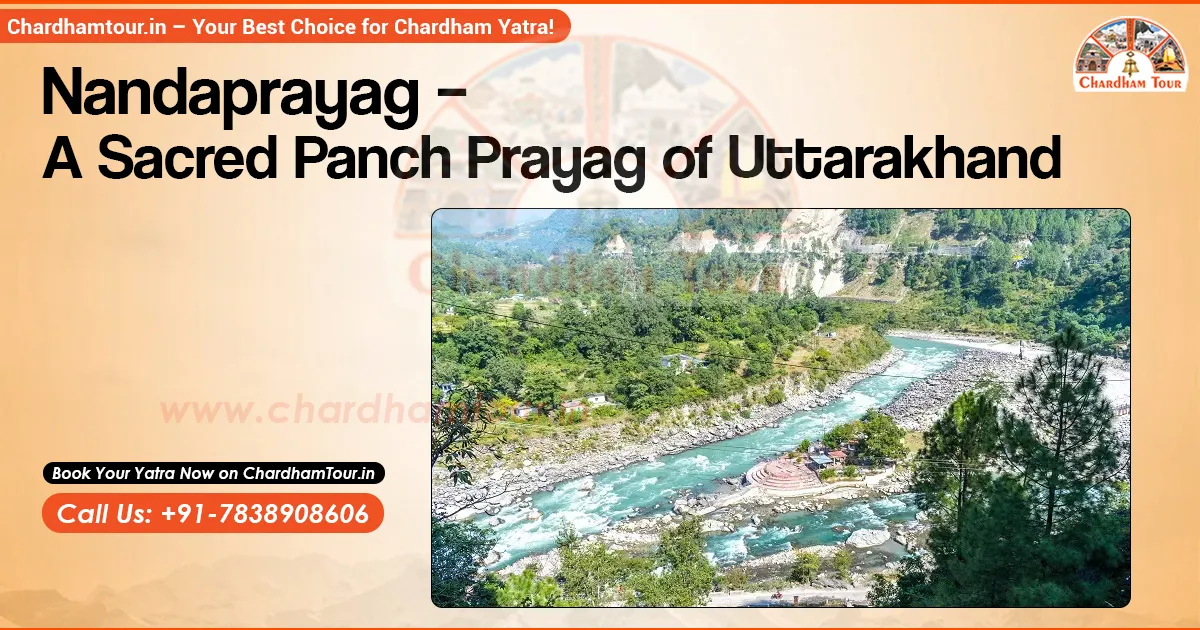
Nandprayag was once called Kanvasu, after the sage Maharshi Kanva. Local tradition also ties it to the old Yadu kingdom, though there's no hard historical record to confirm that beyond the stories themselves. What's certain is simpler: this is the town where the Alaknanda and Nandakini rivers meet, one of Uttarakhand's five sacred Panch Prayags. Elevation figures for the town vary by source — current map data puts it closer to 900–925 metres, while a few sources, including some government listings, still quote 1,358 metres. Nobody has fully reconciled the two. Chamoli district surrounds it with green hills, and the place has a slower, quieter feel than you'd expect from a town sitting right on the Badrinath highway. Many Hindus believe a dip at this confluence helps wash away sins and move closer to moksha. Beyond the religious side, Nandprayag also works as a nature stop — the kind of river view that's easy to miss if you're rushing toward Badrinath.
Nandprayag is the confluence of the Alaknanda and Nandakini rivers in Chamoli district, Uttarakhand. Elevation is disputed across sources, ranging from roughly 900 m to 1,358 m. It's one of the five Panch Prayags, roughly 190–195 km from Rishikesh by road, and it sits on the main road route pilgrims take toward Badrinath. Many travellers pass through it rather than staying overnight, though it works fine as a tea-break or short-halt point.
Why Nandprayag Is a Special Place for Pilgrims
Uttarakhand has five sacred Panch Prayags, and Nandprayag is one of them. Moving downstream along the Alaknanda, the correct sequence is Vishnuprayag, Nandprayag, Karnaprayag, Rudraprayag, and finally Devprayag, where the river takes the name Ganga.
- Many pilgrims try to visit all five Prayags on one Yatra to wash away their sins and work toward moksha.
- Nandprayag also gets its name from Raja Nanda, who performed a major religious ritual called a Maha Yajna here, according to local tradition.
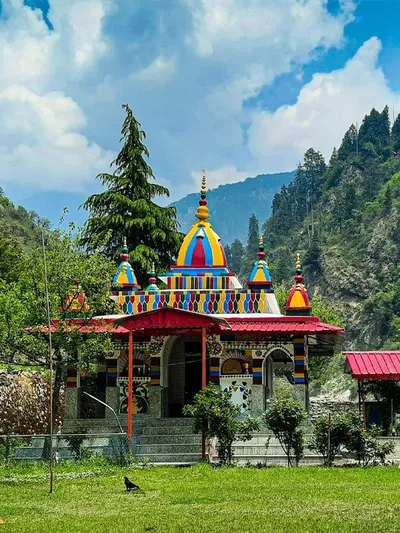
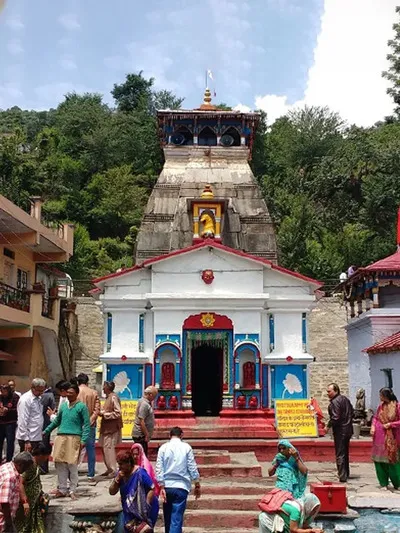
- A temple linked to this legend stands near the confluence — you'll see it called the Nanda temple or Nanda Devi temple depending on which source you check. The naming isn't fully consistent, so treat it as a landmark rather than a formally verified name.
- Many travellers on the Badrinath route stop, even briefly, to pray here before continuing north.
- The confluence itself has a stillness to it — it's a quieter Prayag than Devprayag, which gets far more crowds.
Special Stories Behind Nandprayag
Nandprayag's spiritual weight comes largely from mythology. King Nanda is said to have performed a great Yajna here to ask Lord Vishnu for a son. According to the story, Vishnu agreed — and at the same time, Devki, imprisoned by her brother Kansa, was given the same blessing. The gods arranged for Vishnu to be born as Krishna to Devki, while Yashoda, Nanda's wife, would raise him. Nanda and Yashoda loved and raised Krishna as their own. A small Krishna temple in Nandprayag still marks this connection.
The town is also tied to the sage Kanva, who is believed to have meditated here — which is where the old name Kanvasu comes from. Local tradition also holds that King Dushyant married Shakuntala at this spot. None of this needs to be taken literally to make the place interesting; even travellers with no religious interest usually find the layered mythology worth a stop.
Alaknanda and Nandakini — Where the Rivers Come From
Alaknanda River
The Alaknanda forms at the confluence of the Satopanth and Bhagirathi Kharak glaciers and runs about 195 km through Chamoli, Rudraprayag and Pauri Garhwal districts before it becomes the Ganga. It's one of the two headstreams that form the river Ganga. It flows past Badrinath Temple, picks up the Nandakini at Nandprayag, and eventually merges with the Bhagirathi at Devprayag — the point where the combined river is officially called Ganga.
Nandakini River
The Nandakini is a shorter river, roughly 105 km long, rising in the Nanda Ghunti glacier region of the Garhwal Himalayas. It flows through Chamoli district and joins the Alaknanda right here at Nandprayag. Its valley is quieter than the main Alaknanda corridor, and the green hills along it are worth a slow look if you're not in a hurry.
Latest Update: Rishikesh–Karnaprayag Rail Line
This is genuinely changing how people will reach Nandprayag, so it's worth knowing before you plan a trip. The Rishikesh–Karnaprayag rail line is a 125 km broad-gauge project with over a dozen tunnels. A February 2026 report put overall physical progress at around 72.5%, with tunnelling work itself reported near 95.3% complete. The July 2026 update from the Ministry of Railways gave more specific numbers: of roughly 104 km of main tunnels and 98 km of escape tunnels planned, about 101 km of main tunnel and over 95 km of escape tunnel work was done, with 11 of the project's 19 major bridges finished. The original 2026 completion target has slipped — the project is now generally described as heading toward a 2028 completion, and actual passenger service will start only after testing and safety clearances, which typically follow completion by some months.
Once it's running, Karnaprayag gets its own station — and Karnaprayag sits only about 20–21 km from Nandprayag. That will shorten the road leg considerably for anyone travelling this stretch toward Badrinath. Until then, Rishikesh is the practical railhead for this route; Haridwar is the other option if you're coming from further south. Plan your road leg on that basis, not on the future station.
How to Reach Nandprayag
Nandprayag sits on the Rishikesh–Badrinath highway, so getting here isn't complicated — it's really about choosing which leg you want to do by road.
By Road
Nandprayag is well connected by road to almost every major town in Uttarakhand, sitting on NH-7 (still commonly called NH-58 on older maps and signage). From Delhi, buses run from ISBT Kashmiri Gate to Rishikesh or Srinagar (Garhwal); from either point, taxis and local buses continue on to Nandprayag. The drive from Rishikesh takes roughly 7–8 hours depending on traffic and road conditions near Rudraprayag.
By Rail
The nearest working railhead today is Rishikesh, roughly 190–195 km away — sources put the exact figure anywhere between 186 and 195 km, so treat it as an approximate range rather than a fixed number. Rishikesh has good long-distance train connections from major Indian cities. From there, you'll need a taxi or bus for the rest of the journey. That won't change until the Karnaprayag line opens (see the update above).
By Air
The nearest airport is Jolly Grant Airport in Dehradun, about 210–215 km from Nandprayag, with daily flights to and from Delhi. Taxis are readily available at the airport for the onward drive.
Distance at a Glance
Distances below are approximate road distances. They vary by source and by the exact route/starting point used, so treat them as ranges, not fixed numbers.
| From | Approx. Distance |
|---|---|
| Rishikesh | 190–195 km |
| Jolly Grant Airport, Dehradun | 210–215 km |
| Karnaprayag | 20–21 km |
| Chamoli town | 10–11 km |
| Joshimath | ~60 km |
| Badrinath Temple | 103–115 km |
A Quick Note on Char Dham Yatra Registration
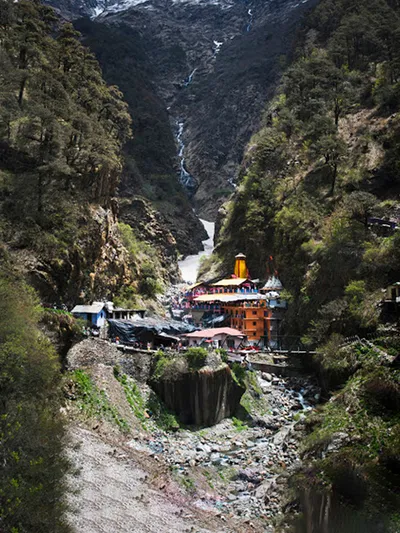
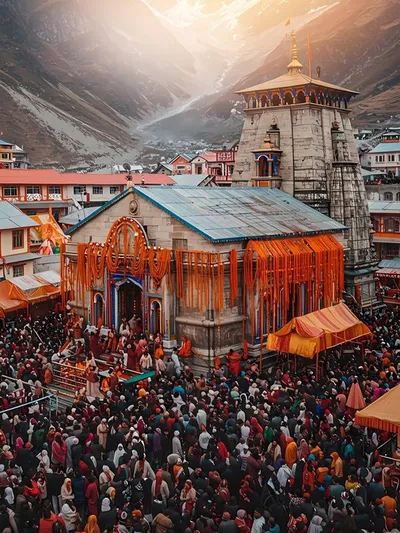
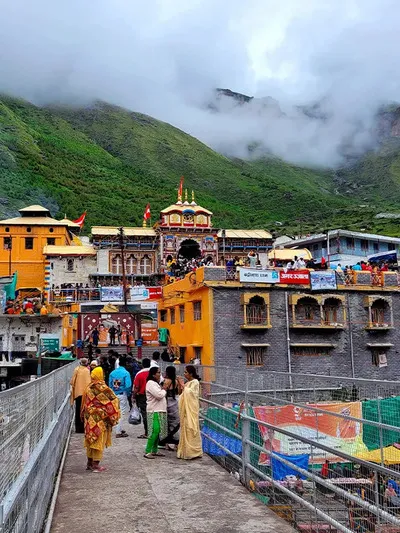
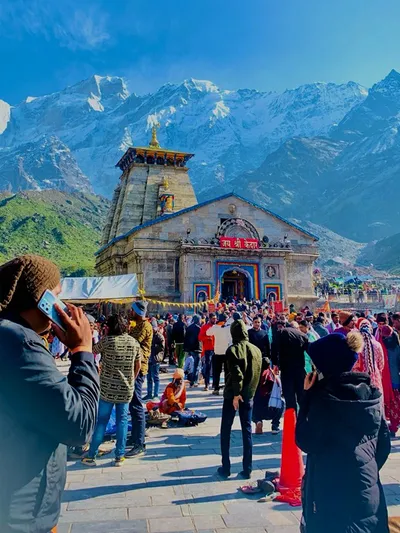
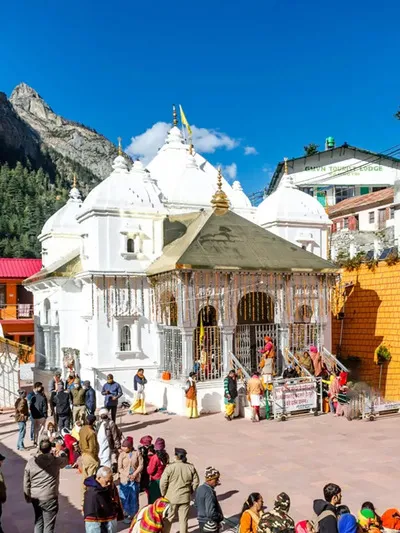
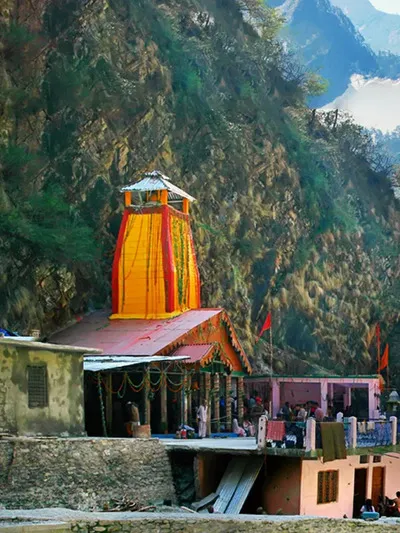
If you're passing through Nandprayag as part of a Badrinath or full Char Dham Yatra, online registration is mandatory for pilgrims — it isn't something you sort out later at the temple gate. Registration usually opens a few weeks before the season starts. For the 2026 season, Yamunotri and Gangotri opened on 19 April, with Kedarnath following on 22 April and Badrinath on 23 April. Opening and closing dates change every year, based on the traditional calendar, so check the official portal for the current year rather than relying on this article's dates once a new season begins. Register in advance at registrationandtouristcare.uk.gov.in and carry a printed or digital copy of your confirmation.
Places to Visit Near Nandprayag
Chopta
Chopta is a small hill town about 2–3 hours away, popular with people who want quiet trails over crowded temples. It's best known for the Tungnath temple, widely regarded as the world's highest Shiva temple, reached by a moderate trek. Good option if you want both spiritual time and a bit of a walk.
Auli
Auli is about 70–72 km away by road via Joshimath, roughly 2.5–3 hours depending on road conditions, with some genuinely scenic stretches on the way. It's known for winter skiing, but it's equally pleasant in summer for the views alone. From Auli, you can continue on to Valley of Flowers, Badrinath Dham, or Hemkund Sahib if your itinerary allows.
Joshimath
Joshimath is about 60 km from Nandprayag and home to a math (monastic seat) established by Adi Shankaracharya in the 8th century. The Badrinath idol is moved here during the six winter months the temple stays closed, carried down in a Doli procession with considerable local celebration.
Karnaprayag
About 20–21 km away, Karnaprayag is worth a stop in its own right — it's another Panch Prayag, where the Alaknanda meets the Pindar River, and it will also be the site of the new railway station once the Rishikesh–Karnaprayag line opens.
Badrinath
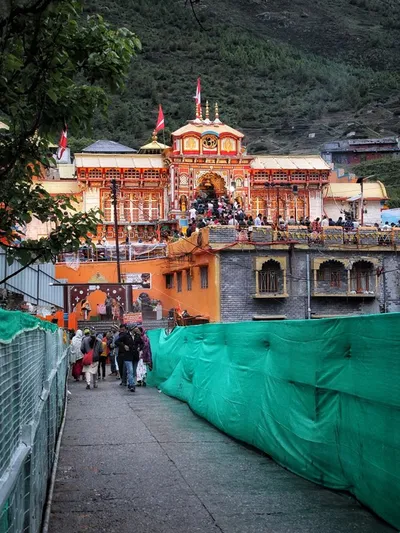
The Badrinath Yatra from Nandprayag is the main reason most people pass through here at all — it's roughly 103–115 km further by road, depending on the route. Badrinath is one of the most important Hindu pilgrimage sites, dedicated to Lord Vishnu, and part of the Char Dham Yatra.
Things to Do in Nandprayag
- Nature walk — mornings and evenings are the calmest time to walk along the green hillsides here; even a short stroll gives you a proper view of the valley.
- Meditation — the confluence has a naturally still atmosphere; many travellers sit by the ghat for a few quiet minutes even without a religious purpose.
- Watch the rivers meet — the exact point where Alaknanda and Nandakini join is the best spot in town for photos and for simply sitting with the sound of moving water.
Best Time to Visit Nandprayag
| Season | Months | What to Expect |
|---|---|---|
| Summer | April – mid-June | Best window for most pilgrims; comfortable daytime temperatures, clear mountain views, good for combining with nearby sightseeing |
| Monsoon | July – September | Rain and landslide risk on the Chamoli–Joshimath stretch make travel unpredictable; fewer crowds if you time a clear-weather window |
| Winter | October – March | Cold nights, fewer visitors, but the same calm confluence atmosphere — pack proper warm layers |
What It's Actually Like — A Practical Look
Many travellers use Nandprayag as a short halt, not a destination. A quick look at the confluence and the temple nearby is usually enough if you're not staying over. During peak Yatra season, roughly May and June, the small dhabas near the ghat fill up fast around lunchtime. If you're travelling with a large group, eat a little earlier or later than the rush — it's a small adjustment that saves real time.
Road conditions near Nandprayag are generally fine outside monsoon. But the wider Chamoli–Joshimath stretch does see landslide-related closures in July and August most years, and this has been documented in news reporting during past monsoon seasons. Check current road-status advisories before travelling in that window. Don't rely on last year's information.
Accommodation
Hotels
Nandprayag has a small but functional range of hotels, from basic budget rooms to a handful of deluxe options. Facilities vary property to property — hot water, parking and meal service aren't guaranteed everywhere, so confirm what's included before you book rather than assuming.
GMVN Guesthouse
The Garhwal Mandal Vikas Nigam runs a property here called the Nandprayag Nanda Tourist Complex, listed directly on GMVN's own booking site. It's one of the more affordable stays on this route. Room types and meal service can change, so check the current listing before you rely on specifics like dorm availability.
Food Facilities
Local dhabas and small restaurants serve standard North Indian food alongside Garhwali dishes, and prices are generally reasonable. Popular Garhwali dishes to look for include Gahat Ki Daal, Chainsoo, Aloo Ke Gutke, and Bhang Ki Chutney — a better introduction to the region's food than the usual highway-dhaba menu.
Common Mistakes to Avoid
- Treating it as a long stopover. Nandprayag doesn't have much beyond the confluence and the temple nearby — a couple of hours is usually enough unless you specifically want a quiet overnight break.
- Skipping Yatra registration because "it's just a stop." Even if you're not staying here, your Char Dham registration still needs to be sorted before you continue toward Badrinath.
- Driving through in monsoon without checking road status. The Chamoli–Joshimath stretch can close with little warning in July–August.
- Assuming the new rail line is already running. It isn't yet — plan your journey on the current Rishikesh railhead, not the future Karnaprayag one.
Pro Tips
- Refuel before Nandprayag if you're continuing to Joshimath — reliable fuel stations get fewer and further apart on some stretches ahead.
- Carry some cash. Digital payment acceptance can vary at smaller dhabas and shops here.
- Early morning is generally the quietest time for photos at the confluence, before the day's road traffic picks up.
- Layer up even on summer evenings — the temperature drops faster here than the daytime warmth suggests.
Why Choose Chardham Tour for Your Yatra
Chardham Tour has been running pilgrimages on this exact route — Rishikesh to Badrinath via Devprayag, Rudraprayag, Karnaprayag and Nandprayag — since 2010. The operator is registered with Uttarakhand Tourism under license number UTTR/DEHRADUN/08-2019/002797. That's not a marketing line; it's the actual registration on file, and it's worth checking against the state tourism registry if you want to verify any operator before booking, not just this one.
Conclusion
Nandprayag is a small, unhurried town where the Alaknanda and Nandakini rivers meet — one of the five sacred Panch Prayags, layered with mythology and genuinely green surroundings. Most travellers pass through it on the way to Badrinath, Joshimath, or Auli. That's a fine way to see it. A short halt, a few minutes at the confluence, maybe a Garhwali meal at a local dhaba covers it for most people. April to mid-June is the most comfortable travel window, though winter has its own quiet pull if the cold doesn't put you off. Watch the Rishikesh–Karnaprayag rail project too — it's moving faster than it was a year ago, and once it's running, this whole stretch of the route changes. For now, plan around Rishikesh as your railhead, verify your Char Dham registration before you leave, and treat the exact distances and elevation figures on this page as the honest ranges they are, not fixed numbers.
Frequently Asked Questions
Q1. What is Nandprayag famous for?
Nandprayag is famous as one of Uttarakhand's five Panch Prayags — the sacred confluence of the Alaknanda and Nandakini rivers. It's also linked to the mythology of Krishna, Raja Nanda, and sage Kanva.
Q2. Where is Nandprayag located?
Nandprayag is in Chamoli district, Uttarakhand, on the Rishikesh–Badrinath road. Its elevation is disputed across sources — current map data suggests roughly 900–925 metres, while some listings, including a couple of government sources, put it at 1,358 metres.
Q3. How far is Nandprayag from Rishikesh?
Around 190–195 km by road, roughly a 7–8 hour drive. Different official sources give slightly different figures, so treat this as an approximate range.
Q4. How far is Nandprayag from Badrinath?
Somewhere between 103 and 115 km by road, depending on the exact route taken — figures vary across route-distance sources. Budget roughly 3–3.5 hours of driving.
Q5. What are the five Panch Prayags in order?
Moving downstream along the Alaknanda: Vishnuprayag, Nandprayag, Karnaprayag, Rudraprayag, and Devprayag, where the river becomes the Ganga.
Q6. Is there a railway station in Nandprayag?
Not yet, and not planned directly. The nearest working railhead is Rishikesh, roughly 190–195 km away. The Rishikesh–Karnaprayag rail line is under construction and progressing toward a 2028 completion target. Once it opens, Karnaprayag — about 20–21 km from Nandprayag — will have the nearest station.
Q7. What is the best time to visit Nandprayag?
April to mid-June is the most comfortable window. Winter (October–March) is cold but peaceful; monsoon (July–September) brings landslide risk on nearby stretches.
Q8. Do I need Char Dham Yatra registration to pass through Nandprayag?
Yes, if you're continuing to Badrinath or Kedarnath as part of the Char Dham Yatra, registration is mandatory and should be completed in advance at registrationandtouristcare.uk.gov.in.
Q9. What food is Nandprayag known for?
Local dhabas serve Garhwali dishes like Gahat Ki Daal, Chainsoo, Aloo Ke Gutke, and Bhang Ki Chutney, alongside standard North Indian food.
Q10. Where can I stay in Nandprayag?
Options range from budget to a few deluxe hotels, plus GMVN's Nandprayag Nanda Tourist Complex, which offers more affordable rates. Check current room types and amenities directly before booking, since these can change.
Q11. What places can I visit near Nandprayag?
Chopta (2–3 hrs), Auli (about 70–72 km, roughly 2.5–3 hrs via Joshimath), Joshimath (~60 km), Karnaprayag (20–21 km), and Badrinath (103–115 km) are all reachable from here.
Q12. Is Nandprayag worth an overnight stay?
For most travellers, a couple of hours covers it — the confluence, the temple, a short walk. An overnight stay makes sense mainly if you want a genuine break from a longer drive, not because there's a long list of sights to fill a day.
Chardham Travel Guide
Chardham Travel Packages
Hotels in Chardham
Beware of Fake Char Dham & Kedarnath Helicopter Booking Websites
Fake websites, WhatsApp accounts and advertisements may impersonate genuine travel companies or helicopter operators. Always verify before paying.