Char Dham Yatra Guide India 2026
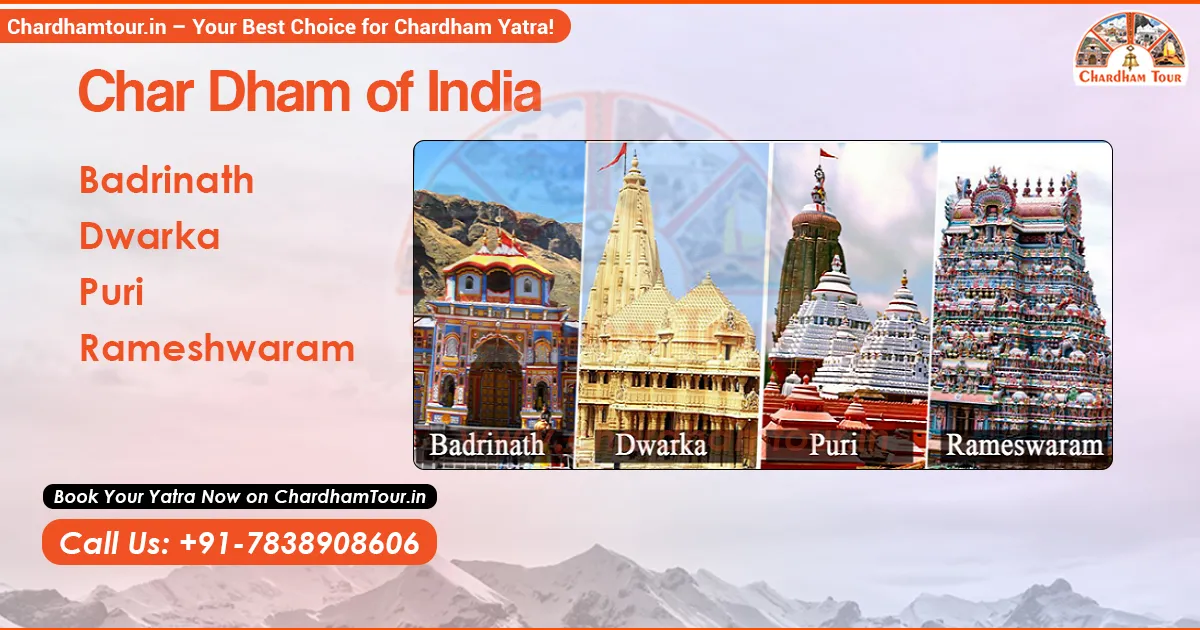
Two different pilgrimages share the name "Char Dham." One spans the whole country — Badrinath, Dwarka, Puri, Rameshwaram. The other is Uttarakhand's Himalayan Yatra — Yamunotri, Gangotri, Kedarnath, Badrinath. Badrinath belongs to both. If you've landed here planning the Himalayan trip, there's a shorter section further down with dates and a link to the full guides; everything else on this page covers the all-India circuit.
What Char Dham of India Means
Char Dham of India — often called Bada Char Dham to separate it from the Himalayan version — refers to four pilgrimage sites positioned roughly in the four directions of the country: Badrinath in the north, Puri in the east, Rameshwaram in the south, Dwarka in the west. Hindu tradition credits Adi Shankaracharya with organising and popularising this framework, alongside a separate system of four monastic seats, the Amnaya Mathas, at Sringeri, Puri, Dwarka, and Jyotirmath.
Those two systems get mixed up constantly. The Char Dham are pilgrimage destinations. The Mathas are monastic institutions, and the northern seat sits at Jyotirmath near Joshimath — not at Badrinath, even though the two are geographically close. Historians still debate the exact chronology of both systems, so treat the Shankaracharya connection as a strong, widely followed tradition rather than a documented historical record.
Bada Char Dham vs Chota Char Dham
| Feature | Bada Char Dham (Char Dham of India) | Chota Char Dham (Uttarakhand Yatra) |
|---|---|---|
| Sites | Badrinath, Dwarka, Puri, Rameshwaram | Yamunotri, Gangotri, Kedarnath, Badrinath |
| Spread | Four different states | Entirely within Uttarakhand's Garhwal Himalayas |
| Season | Open through the year | Open roughly six months (April/May to Oct/Nov) |
| Terrain | Plains and coasts, plus one Himalayan town | High-altitude Himalayan terrain |
| Overlap | Badrinath belongs to both circuits | Badrinath belongs to both circuits |
| Registration | No single mandatory system | Mandatory Uttarakhand Char Dham Yatra registration |
If a relative mentions "doing Char Dham this year" and starts talking about registration slips or Kedarnath trekking gear, they mean the Himalayan yatra. If they're talking about a Gujarat-Odisha-Tamil Nadu trip, it's this one. They don't overlap in planning at all, except for the Badrinath leg.
Badrinath
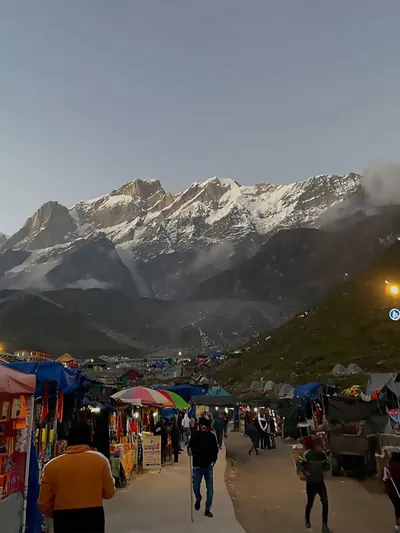
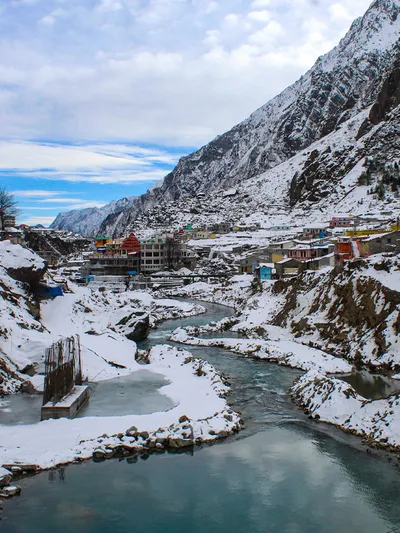
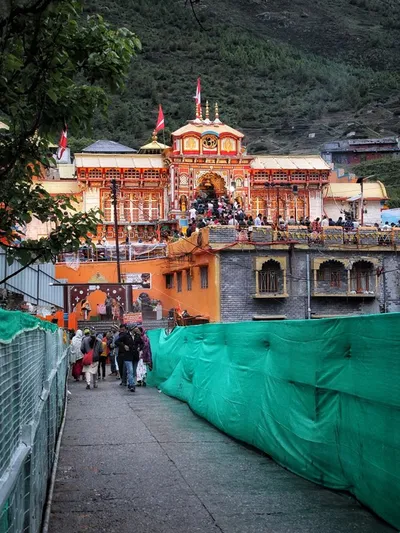
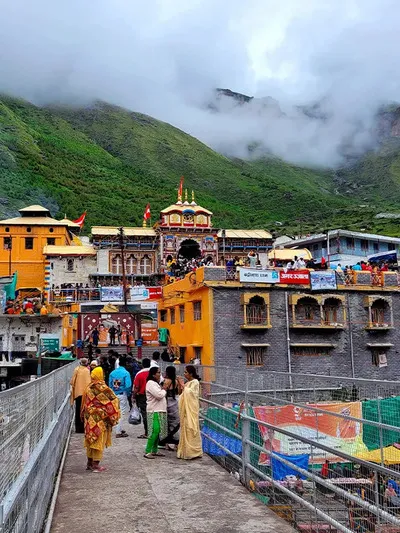
Badrinath stands at 3,133 metres by the Alaknanda River, between the Nar and Narayana ranges in Uttarakhand's Garhwal Himalayas — the figure used by both Incredible India and Uttarakhand Tourism, though some Uttarakhand planning documents round it up to about 3,300 m. It's the only Bada Dham in the mountains, and it also closes the loop on the separate Himalayan Yatra.
History
Hindu tradition traces Badrinath's sanctity back through centuries of scriptural reference. Popular accounts credit Adi Shankaracharya with recovering a black-stone idol of Vishnu from the Alaknanda and installing it at the current site around the 8th–9th century. Some historical accounts also describe the site as carrying Buddhist associations at an earlier period; historians genuinely disagree on this, so it's worth treating as one account among several rather than settled fact. The name itself comes from badri (berry) — the valley was once thick with wild berry trees.
What You'll See
The sanctum houses a black stone idol of Badrinarayan seated in meditation, an unusual pose since Vishnu is more often shown reclining. Several other deities share the temple premises, including Garuda and Ganesh. More on the architecture in the Badrinath Temple guide.
2026 Opening
Badrinath opened for the season on 23 April 2026, per the Uttarakhand Tourism registration portal. It typically stays open around six months and closes for winter sometime in October or November; the exact date follows the temple's traditional calendar and hadn't been officially announced as of this write-up. Check the Badrinath opening-closing dates page closer to the date.
Getting There
Nearest airport: Jolly Grant, Dehradun, about 317 km. Nearest railhead: Rishikesh — the Shri Badrinath Kedarnath Temple Committee lists this route at 298 km, though some tourism material rounds it to around 300 km.
Dwarka
Dwarka sits on the Okhamandal peninsula, Gujarat's west coast, and unlike Badrinath it runs year-round.
History
Krishna's childhood is placed in Mathura, where tradition says he killed his tyrannical uncle Kansa, then moved his kingdom west to avoid further conflict with Kansa's father-in-law Jarasandh. Popular belief holds that the original city sank into the sea after Krishna's death. Underwater surveys off the Gujarat coast have documented submerged structures, but their age and their connection to the mythological Dwarka are still debated among archaeologists — worth knowing before you repeat this as settled proof of the legend to someone else.
What You'll See
The five-storey Dwarkadhish Temple, also called Jagat Mandir, is traditionally said to have been built by Krishna's great-grandson Vajranabha. Dwarka also belongs to the separate list of Sapta Puri, Hinduism's seven holiest cities. Beyt Dwarka island and the town's beaches round out most visits.
Temple Timings
6:30 AM to 1:00 PM, then 5:00 PM to 9:30 PM, per the temple's own timings page and matched by Incredible India's listing. There's a midday closure in between — it doesn't run only in the evening, which is a mistake we've seen repeated on other sites.
Best time to visit. October to March.
Puri
Puri sits on Odisha's east coast, home to Jagannath, worshipped in Vaishnavite tradition as a form of Krishna.
History
The area was known as Charitra before the temple complex gave it the name Purushottam Kshetra, later shortened to Puri. Tradition associates the present temple with the Eastern Ganga king Anantavarman Chodaganga Deva, with later rulers completing and expanding it over subsequent centuries — it wasn't the work of one ruler alone. Puri also hosts Rath Yatra, the chariot festival, every year.
What You'll See
The temple's shikhara dominates the skyline. Puri Beach and Swargadwar sit right beside it.
Timings
Odisha Tourism's own listing gives 5:00 AM to 11:00 PM, though individual rituals and bhog offerings pause darshan at points through the day. Entry is free. If anyone offers a guaranteed "VIP" or fast-track pass, verify it directly with the temple administration rather than taking their word for it.
Rameshwaram
Rameshwaram sits on Pamban Island, Tamil Nadu's southeastern tip.
History
In the Ramayana tradition tied to this temple, Rama sought to atone for killing Ravana — regarded in the story as both a powerful ruler and a Brahmin by birth. He sent Hanuman to Kashi for a Shiva lingam; when Hanuman was delayed, Sita made one from sand herself. That sand lingam, Ramalingam, remains the primary deity. The one Hanuman eventually brought, Vishwalingam, is worshipped beside it.
What You'll See
The Ramanathaswamy Temple corridor runs about 1,200 metres — Incredible India itself calls it the longest temple corridor in the world, so there's no need to inflate that claim further. Nearby: the Panch-Mukhi Hanuman Temple, A.P.J. Abdul Kalam's childhood home, and Dhanushkodi, where the Ram Setu is traditionally believed to begin.
Timings
Mornings 5:00 AM–1:00 PM, evenings 3:00 PM–9:00 PM. Ritual schedules shift, so confirm before you travel rather than building a tight itinerary around this.
Getting to Each Dham
| Dham | Nearest Airport | Distance | Nearest Railway |
|---|---|---|---|
| Badrinath | Jolly Grant, Dehradun | ~317 km | Rishikesh, ~298 km |
| Dwarka | Jamnagar / Porbandar | Jamnagar ~110 km, Porbandar ~95 km per Devbhumi Dwarka district figures — Gujarat Tourism material lists Jamnagar higher, around 137 km | Dwarka Railway Station, 2–3 km from the temple |
| Puri | Bhubaneswar | ~62 km | Puri Railway Station, ~3 km |
| Rameshwaram | Madurai | ~150 km by direct reference; road itineraries run closer to 170–180 km | Rameshwaram Railway Station, in town |
The gaps in the table aren't errors. Road distance depends on which point in a city you're measuring from, and different government sources round differently — that's why Jamnagar shows up as both 110 km and 137 km depending on which department published the figure.
Unlike the Uttarakhand circuit, there's no single pilgrim route linking all four Bada Dham sites. Each leg means a separate flight or train booking. If Badrinath is part of a bigger Uttarakhand trip, the Char Dham route maps cover that leg in detail.
The Chota Char Dham — Quick 2026 Update
Since Badrinath connects both circuits, plenty of readers on this page are actually planning the Himalayan yatra. Here's the short version; the linked pages carry the full detail.
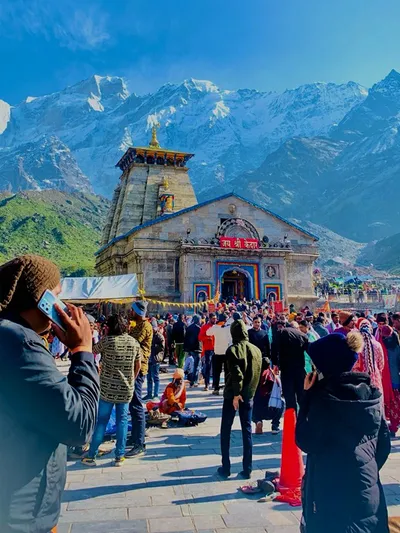
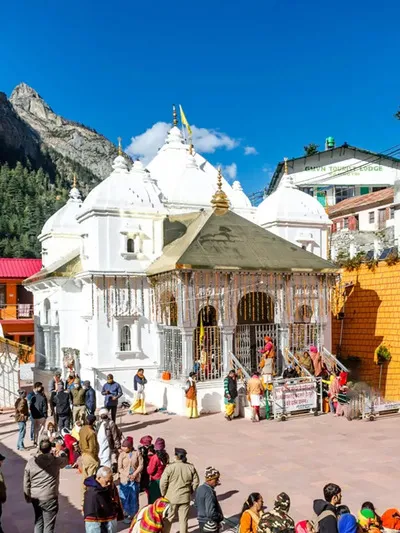
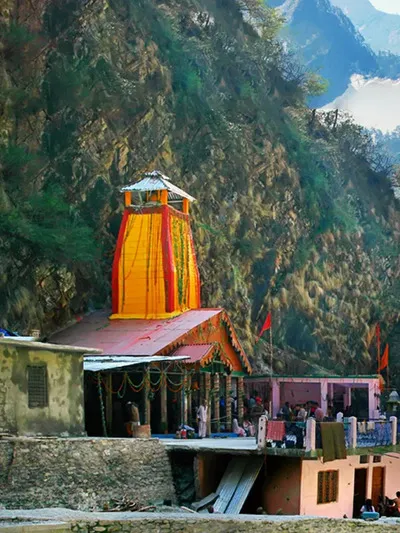
- Yamunotri — opened 19 April 2026 (Akshaya Tritiya).
- Gangotri — opened 19 April 2026.
- Kedarnath — opened 22 April 2026.
- Badrinath — opened 23 April 2026.
Closing follows tradition rather than a fixed date. Yamunotri and Kedarnath close on Bhai Dooj, Gangotri on Diwali, Badrinath around its own winter calendar — usually mid-October to mid-November. At the time of writing, none of the 2026 closing dates had been officially declared; that's normal, since temple committees announce them only a few weeks ahead. Check the opening-closing dates guide closer to the season.
Registration is mandatory for the Himalayan yatra. There's no equivalent system for the all-India Bada Char Dham.
- Register through registrationandtouristcare.uk.gov.in, the Tourist Care Uttarakhand app, or by sending "Yatra" via WhatsApp.
- Submit ID — Aadhaar, passport, voter ID, or driving licence all work.
- Download the registration certificate or QR code.
- Carry both a digital and printed copy. Checkpoints in Uttarakhand verify pilgrims against this record, so don't rely on a screenshot buried three folders deep in your phone.
The registration guide covers offline counters for anyone without steady internet access on the way.
Best Time to Visit
Dwarka, Puri, and Rameshwaram stay open year-round. October to March is the most comfortable window; the coastal summer from April to June gets genuinely uncomfortable if you're not used to it. Badrinath is different — it's only accessible for around six months, and May–June or September–October are the better windows, since the monsoon brings landslide risk on the mountain roads in July and August. Anyone combining all four in one extended trip usually schedules Badrinath first and builds the rest of the itinerary around its narrower window.
What to Expect, Realistically
- No single connected route. Each leg needs its own flight or train booking; there's nothing resembling the compact Uttarakhand circuit here.
- Badrinath's season is the constraint. Everything else is flexible around it.
- Walking adds up more than the terrain suggests. Dwarka, Puri, and Rameshwaram don't involve trekking, but temple queues and the size of the complexes mean real walking and standing, especially during festivals.
- Festival periods change everything. Rath Yatra in Puri or Janmashtami in Dwarka bring extended or restricted darshan hours — avoid these windows if a quiet visit matters more to you than the festival itself.
Planning Notes From Handling This Circuit
The biggest surprise for most first-time planners is the scale. The Himalayan yatra moves you between towns a few hours apart. Badrinath and Rameshwaram sit at opposite ends of the country, and that distance genuinely changes how you plan — it isn't a trip you tack extra days onto. Many pilgrims split the four Dhams across separate visits instead of one continuous journey, often pairing each stop with other regional travel already on the calendar.
One mistake we see often: assuming temple timings hold steady all year. They don't. Aarti schedules shift for festivals, and darshan pauses for hours during specific rituals. Check the temple's current schedule a day or two before travelling rather than trusting a generic chart — including this one.
Common Mistakes to Avoid
- Mixing up the two circuits when booking a package. Confirm with the operator whether "Char Dham" means the Himalayan yatra or the all-India one before you pay anything.
- Ignoring midday temple closures. Most of these temples shut for a few hours around noon for rituals; arriving then wastes a chunk of the day.
- Assuming one dress code fits all four temples. It doesn't. Puri and Rameshwaram both expect modest, traditional attire, but check each temple's current guidelines rather than guessing.
- Underestimating the distances. Flying between all four Dhams inside a week is exhausting. Spread it out if you can.
- Registering through third-party sites for the Himalayan leg. Use the official Uttarakhand Tourism channels only — "guaranteed slot" offers elsewhere are a red flag.
What We'd Tell a Friend Planning This
- Lock in Badrinath's leg around its known opening window first; it's the only weather-restricted stop, and everything else can flex around it.
- Pair Puri with Konark, and Rameshwaram with Madurai's Meenakshi Temple — both are close enough to add real value to the trip.
- Carry photocopies and phone scans of your ID for both circuits. Dwarka and Puri occasionally check ID at security during festival crowds.
- If elderly family members are travelling, Dwarka, Puri, and Rameshwaram are logistically easier than the Himalayan leg — but temple queues and walking inside the complexes still add up, so build in rest time regardless.
- Keep smaller cash denominations on hand for offerings and local transport. Card acceptance is patchy in most temple towns.
Planning the Himalayan Leg? That's Our Main Business
Chardham Tour has organised the Uttarakhand Yamunotri–Gangotri–Kedarnath–Badrinath circuit since 2010, registered with Uttarakhand Tourism under license UTTR/DEHRADUN/08-2019/002797. That's our core business, not the all-India circuit. This page exists because so many people search "Char Dham of India" while actually planning the Himalayan trip, and end up confused about which one they're booking. If Badrinath is the leg you're working on, message us on WhatsApp and we'll help you plan that portion directly.
Frequently Asked Questions
Q1. What's the difference between Char Dham and Chota Char Dham?
Char Dham (Bada Char Dham) means Badrinath, Dwarka, Puri, and Rameshwaram, spread across India. Chota Char Dham means only the Himalayan circuit — Yamunotri, Gangotri, Kedarnath, and Badrinath — entirely within Uttarakhand.
Q2. Which Dham comes first in the Char Dham Yatra?
For the Himalayan yatra, the journey traditionally starts at Yamunotri. The all-India Char Dham has no fixed starting point, since the four sites don't sit on a single route.
Q3. Is Badrinath part of both circuits?
Yes. It's the one site shared by both the Bada Char Dham and the Chota Char Dham.
Q4. Do I need to register for the Char Dham of India — Badrinath, Dwarka, Puri, Rameshwaram?
No. The Himalayan yatra requires mandatory registration through Uttarakhand Tourism; there's no equivalent system for Dwarka, Puri, or Rameshwaram.
Q5. What's the best time to visit all four Dhams of India?
Dwarka, Puri, and Rameshwaram work year-round, with October to March the most comfortable. Badrinath is open only from around April/May to October/November, weather permitting.
Q6. How many days does the Char Dham of India take?
There's no fixed duration — it depends on your starting city, flight and train connections, and how long you spend at each site. A single continuous trip commonly runs two weeks or more; plenty of pilgrims split it across separate visits instead.
Q7. Is entry restricted to Hindus?
Entry policies are set by each temple individually and can change, so this isn't a single rule across all four. Sanctum darshan at most of these temples is generally for Hindu devotees, but check current guidance for the specific temple before travelling.
Q8. What's the spiritual significance of visiting all four Dhams?
Hindu tradition holds that completing all four pilgrimages carries deep spiritual merit and supports the pursuit of moksha, with each site linked to the divine in a different direction of the country. This is a matter of religious belief rather than a claim we're asserting as historical fact.
Q9. When did Badrinath open in 2026?
23 April 2026. Yamunotri and Gangotri opened 19 April, and Kedarnath opened 22 April.
Q10. Are helicopters used for the Char Dham of India?
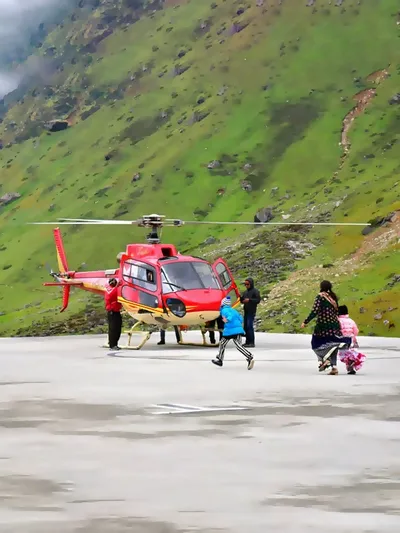
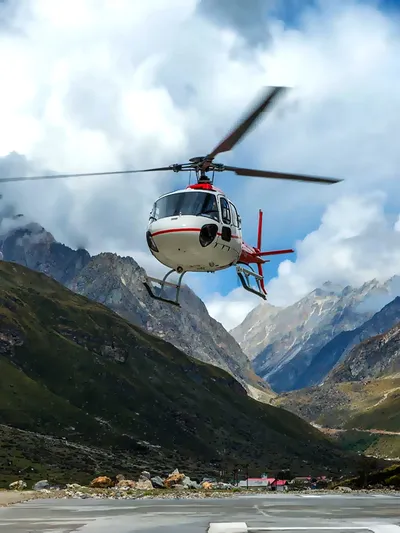
Mainly for the Himalayan leg — Kedarnath and Badrinath — given the terrain. Dwarka, Puri, and Rameshwaram are reachable by regular flights, trains, and road, so helicopter transfers aren't part of the usual plan there.
Q11. What's the dress code across the four temples?
There's no single rule. Puri and Rameshwaram both expect modest, traditional clothing inside the sanctum, but check each temple's current guidelines rather than assuming one blanket rule covers all four.
Q12. Can senior citizens manage the Char Dham of India?
Dwarka, Puri, and Rameshwaram are logistically easier than the Himalayan leg. Badrinath needs extra planning for altitude, long mountain-road travel, and unpredictable weather — that's the piece that requires real preparation, not the other three.
Conclusion
Char Dham of India and Uttarakhand's Chota Char Dham share a name and almost nothing else in terms of planning. Treat them as two separate trips from the start. If Badrinath is the piece you're working on, message us on WhatsApp or look through our Char Dham Yatra packages, and we'll help you plan that leg properly.
Chardham Travel Guide
Chardham Travel Packages

Hotels in Chardham
Beware of Fake Char Dham & Kedarnath Helicopter Booking Websites
Fake websites, WhatsApp accounts and advertisements may impersonate genuine travel companies or helicopter operators. Always verify before paying.