Uttarkashi – Kashi of the North

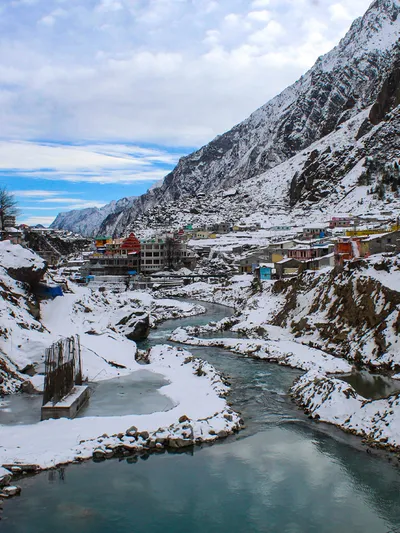
Uttarkashi sits on the banks of the Bhagirathi River, at roughly 1,158 metres. It's the last town of any real size before Gangotri, and most people pass through fast — one night, sometimes less. That's a mistake. Uttarkashi has its own temples, its own treks, and one of the country's oldest mountaineering institutes. This page covers what's actually there, checked against district and government sources.
At a glance
- Altitude: approximately 1,158 m
- River: Bhagirathi
- District: Uttarkashi, Garhwal Himalaya
- Distance to Gangotri: 100 km
- Distance to Rishikesh: 143–154 km, depending on the source
- Nearest airport: Jolly Grant, Dehradun
- Nearest railhead: Rishikesh or Dehradun
- Best months to visit: March–June and September–November
Why It's Called the Kashi of the North
Uttarkashi is a Shiva town, and the comparison to Varanasi isn't just marketing. The town sits between two smaller streams — the Syalam Gad, also known locally as the Varuna, and the Kaligad, known as the Asi — the same names as the two rivers that bracket Varanasi. That's the actual basis for "Kashi of the North," not a loose resemblance.
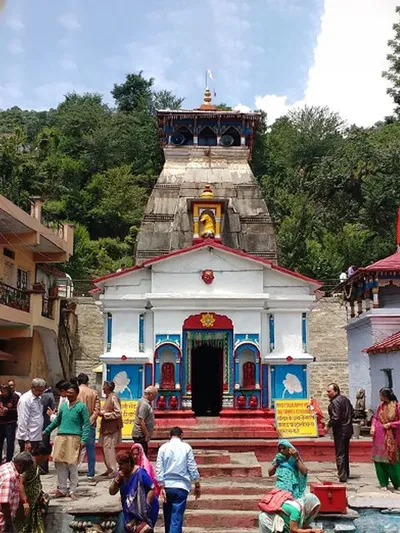
The Vishwanath Temple is the town's central shrine, and Shiva is worshipped here through the day, with bells and chanting picking up each evening. Next to it, inside the Shakti Temple courtyard, stands a brass trident 26 feet high — its base measures nearly 9 feet around, tapering to about 18 inches at the top. An inscription at the base credits it to Guh, son of King Ganeshwar, the same king said to have built the Vishwanath Temple. It's a genuinely old object, not a modern installation, and it's the thing most visitors photograph first.
Around the main temple are smaller shrines — Ekadash Rudra, Kali Mata, Parshuram — close enough to cover on foot in a morning before the town gets busy.
Places to Visit Around Uttarkashi
Dayara Bugyal
This is a meadow system, not a single point, and elevation depends on where you're standing — anywhere from about 2,600 m to 3,500 m, with the main meadow commonly put around 3,400 m. The access road branches off near Bhatwari, roughly 28–30 km from Uttarkashi. After that it's on foot: about 6 km if you start from Raithal, closer to 8 km from Barsu. Green in summer, skiable in winter — this is one of the few places in the region where both seasons draw completely different crowds.
Harsil Valley
An army-cantonment village at around 2,660 m, about 75 km from Uttarkashi. Apple orchards, deodar forest, a slower pace than the pilgrim traffic on the main road. Several trekking routes branch off from here, which makes it a sensible overnight stop rather than a quick photo halt.
Sattal, near Harsil
Seven small lakes, roughly 3 km from Harsil. Worth clarifying because earlier versions of this guide — and a fair number of others online — mix up Sattal's distance with the road to Dharali, a separate village that's also about 3 km from Harsil but not the same walk. The two get conflated constantly. Sattal itself is a short uphill approach through pine and deodar; some of the lakes hold water year-round, others fill only after snowmelt.
Gangnani
Roadside sulphur hot springs on the way to Gangotri. Pilgrims stop here to bathe before the temple. Not much more to say about it — it's a functional stop, not a destination in itself.
Maneri
A dam on the Bhagirathi, about 15 km from Uttarkashi. Fine for a quick look if you're driving past. Skip it if you're short on time.
Nachiketa Tal
A small lake about 28 km out, with a modest temple on its bank. Quiet, easy half-day trip, no trekking gear required.
Dodital
Sangamchatti is the roadhead, about 19 km from Uttarkashi by jeep. From there the trek to the lake runs about 24 km, usually split over two days with a night at Agoda or Bebra camp. The lake sits inside deodar and oak forest and holds mahseer and trout. Local tradition connects it to Ganesha's birthplace, which gives the walk a bit of pilgrimage weight alongside the scenery.
Kedartal
A glacial lake below Thalay Sagar peak, somewhere in the range of 4,700–4,900 m depending on which reference point a given source is using — the figures genuinely vary, and I'd rather say that than pretend there's one clean number. It's a serious trek from Gangotri: steep, exposed above the treeline, and not something to attempt without a guide who knows current trail conditions. May–June and September–October are the usual windows.
Gangotri and Gaumukh
The Gangotri temple sits at roughly 3,100–3,200 m, about 100 km from Uttarkashi — one of the four Char Dham sites, and the most important shrine to the Ganga. The river's actual source is further up, at Gaumukh, the snout of the Gangotri Glacier, a 19 km trek from Gangotri town. District records put Gaumukh's elevation at around 4,023 m. The glacier itself runs close to 30 km, among the largest in the Himalaya. Past Gaumukh, the route toward Tapovan needs additional permits — these requirements change, so confirm with the Forest Department before you go rather than relying on what a blog said last season.
Nelong Valley
An inner-line border area roughly 100 km from Uttarkashi HQ, open to visitors during daylight hours. It sits close to the India–China border, and access depends on current permissions. Call ahead. Don't assume last year's rules still apply.
Nehru Institute of Mountaineering
Established at Uttarkashi in 1965, on a hill above the confluence of the Bhagirathi and Indravati. NIM runs basic and advanced mountaineering courses along with search-and-rescue training, and describes itself as one of the country's leading institutions of its kind. Whether it's the best in Asia is a claim I can't independently verify, so I won't repeat it as fact — but its role in training Indian mountaineers over sixty years isn't in dispute.
Things to Do
- Trekking is the main draw beyond the temples. Dayara Bugyal works for a first high-altitude trip. Dodital sits a step up in effort. Kedartal and the Gaumukh–Tapovan route are for people who've done high-altitude treks before and know what altitude sickness feels like.
- Fishing on the Assi Ganga. This tributary holds brown trout. Angling needs advance permission from the Uttarakhand Forest Department, and the rules are seasonal — April to June is generally the recommended window. Get the permit for the specific stretch you're fishing; forest staff do check, and a permit for one section doesn't cover another.
- The Shakti Temple trident. Already covered above, but worth a second mention: it's the most photographed object in town, and most visitors spend more time here than anywhere else in the old bazaar.
- Short courses at NIM. If a week is available, NIM and a few private operators run introductory mountaineering and rock-climbing courses that don't assume prior experience.
- Harsil–Dharali riverside. Quieter camping than most spots closer to Uttarkashi, mainly because it's slightly off the main pilgrim route.
The Silkyara Tunnel — Current Status
This needs a proper update, because a lot of what's online about this tunnel is stale. The Silkyara Bend–Barkot tunnel, on the Uttarkashi–Yamunotri road, is the same site where 41 workers were trapped for 17 days in November 2023, eventually freed through a mix of drilling and manual rat-hole mining. That part of the story is well known.
What's less well tracked is where the project actually stands now. As of September 2026, NHIDCL's own project-status page lists the tunnel at 74% physical progress and 72% financial progress, with a likely completion date of 31 March 2027. The tunnel — 4.531 km, plus a 0.328 km approach road — is not open to traffic. Anyone telling you it's close to finished, or citing a 2026 opening, is working off outdated information.
Until it opens, the existing Dharasu–Jankichatti stretch of the Yamunotri road remains the one you'll actually drive, including sections still being widened. If you're on that road, build in extra time and don't plan on covering it after dark.
The Uttarkashi–Gangotri road is a separate project and is in noticeably better shape than it was a decade ago, though the stretch past Harsil through Bhatwari still narrows into gorge sections that slow things down, especially during monsoon.
How to Reach Uttarkashi
By Road
Uttarkashi lies on NH-108, which continues to Gangotri. Buses and taxis run regularly from Rishikesh, Dehradun, Tehri, and Barkot. From Delhi, buses to Rishikesh leave from ISBT Kashmiri Gate; from Rishikesh, pick up a taxi or bus onward. Sources disagree on the exact distance from Rishikesh — Uttarakhand Tourism cites 143 km, while the district administration's own page gives 154 km. Either way, budget around five hours.
By Air
Jolly Grant Airport in Dehradun is the nearest airport. Distance figures vary by source — some put it around 160–165 km, the district's Gangotri-route page cites closer to 200 km. The range likely comes from different route calculations, so check current travel time with your taxi operator rather than treating any single figure as fixed.
By Rail
Rishikesh and Dehradun both serve as railheads, depending on which source you check. Uttarakhand Tourism lists Rishikesh at 143 km; other government sources point to Dehradun instead. Either station connects to major Indian cities, and either way you're looking at a taxi or bus ride of several hours to reach Uttarkashi.
Distances From Uttarkashi
| Destination | Approx. Distance | Note |
|---|---|---|
| Gangotri Dham | 100 km | Official district figure |
| Harsil | ~75 km | Official district figure |
| Dayara Bugyal access road (near Bhatwari) | 28–30 km | Then trek 6–8 km |
| Dodital roadhead (Sangamchatti) | ~19 km | Then trek ~24 km |
| Gaumukh (on foot, from Gangotri) | 19 km | — |
| Nelong Valley | ~100 km | Inner-line permissions apply |
| Rishikesh | 143–154 km | Sources vary |
| Dehradun | Commonly cited 155–200 km | Sources vary significantly by route |
| Haridwar | Commonly cited 165–250 km | Sources vary significantly by route |
| Jolly Grant Airport | 160–200 km | Sources vary |
The wide ranges on Dehradun, Haridwar, and the airport aren't a typo — different official sources genuinely disagree, likely due to different route calculations. Confirm current distance and time with your driver or transport operator before planning a same-day return.
Best Time to Visit
- March to June brings mild days, cooler mornings and evenings, and meadows turning green — a solid window for both temple visits and trekking.
- July to September is monsoon. Landslide risk rises on the Gangotri road, and several higher routes get harder to manage. Avoid this stretch if your plans depend on a specific date.
- September to November generally brings the clearest post-monsoon conditions of the year, and this is the window Incredible India itself recommends for the region.
- December to February is cold, with snowfall likely at higher elevations. Some trekking routes become difficult or inaccessible depending on conditions that season — this varies year to year, so check current status rather than assuming a route is closed just because it's winter.
Weather
| Season | Typical Conditions |
|---|---|
| March–June | Mild to warm days, cooler mornings and evenings |
| July–September | Monsoon rain, higher landslide risk on hill roads |
| September–November | Generally the clearest weather of the year |
| December–February | Cold, snowfall more likely at higher elevations |
Exact temperature ranges vary by month, elevation, and weather system — Uttarkashi town, Harsil, and the higher trekking routes can differ by several degrees on the same day. Check a current forecast before departure rather than relying on seasonal averages.
Food Worth Trying
Most Dhabas along the main road serve standard North Indian and Chinese menus, which tells you little about the region. The real food here is Garhwali, and most places will make it if you ask directly instead of ordering off the default menu.
- Gahat ke Parathe — flatbread stuffed with horse gram, dense enough to carry you through a morning trek.
- Kafuli — a spinach-and-fenugreek curry, thick, slightly bitter, a genuine local staple rather than a tourist add-on.
- Phaanu — slow-cooked lentils, textured differently from a standard dal.
- Aloo ka Jhol — a thin, soupy potato preparation, common at breakfast.
- Bhang ki Chutney — made from hemp seeds, nutty, worth trying once even if it's not your usual thing.
Where to Stay
Uttarkashi has grown into a proper base town — Dharamshalas and budget lodges near the bazaar, mid-range hotels along the riverbank with hot water and parking. Rates shift by season and property, so check current listings rather than trusting a number printed months ago. Book ahead during May–June and September–October; rooms go fast on weekends and around major Yatra dates. Accommodation past Uttarkashi — in Harsil, Dharali, closer to Gangotri — is thinner and more basic, so it's often smarter to base yourself in Uttarkashi and do the higher stretches as day trips.
Common Mistakes
- Skipping acclimatisation. Uttarkashi town sits at only 1,158 m, but Dayara, Dodital, and especially Kedartal climb fast from there. Spend at least one night in town before pushing higher.
- Treating permits as optional. Gaumukh and the routes beyond it need Forest Department clearance, and checkpoints do turn back groups without paperwork.
- Underestimating the monsoon. The Gangotri road genuinely gets harder between July and September. Check conditions the morning you travel — not the night before, and not from a source that hasn't been updated recently.
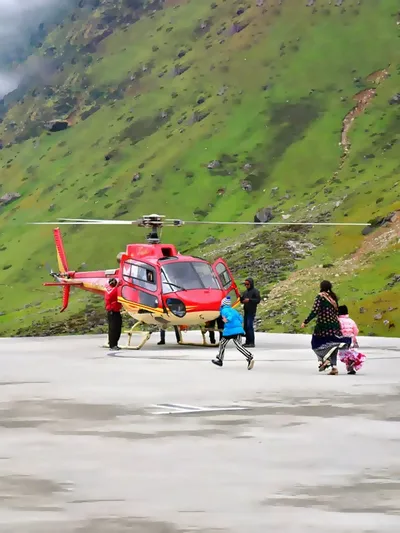
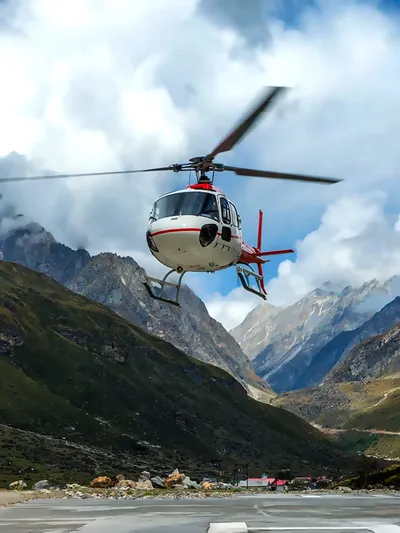
- Booking through unverified numbers. Verify hotel, helicopter, and yatra bookings through an operator's official website or confirmed contact details, particularly during peak season when demand outpaces genuine availability.
- Assuming Gangnani's springs run at full strength year-round. Flow and temperature shift with the season.
A Real Trip Through Uttarkashi
Most people treat this town as a place to sleep before Gangotri. Give it a full day instead: an early visit to the Vishwanath and Shakti temples before the crowds arrive, a walk along the Bhagirathi, an afternoon drive up toward Dayara if the weather's holding. Families often find Nachiketa Tal or the Sattal approach more manageable than the longer routes. Trekkers heading for Kedartal or Gaumukh tend to use Uttarkashi purely as a staging point — stock up here, sleep here, and move early the next morning.
Frequently Asked Questions
Q1. How far is Uttarkashi from Rishikesh and Dehradun?
Rishikesh is cited at 143–154 km depending on the source. Dehradun's distance varies more widely across official sources, commonly somewhere between 155 and 200 km — confirm current road distance with your transport operator.
Q2. What is Uttarkashi famous for?
The Vishwanath and Shakti temples, its role as the base town for the Gangotri route, and the Nehru Institute of Mountaineering.
Q3. Is Uttarkashi part of the Char Dham Yatra?
Uttarkashi town itself isn't one of the four dhams. Gangotri, which is, lies within Uttarkashi district, about 100 km from the town.
Q4. What's the best time to visit?
March to June, or September to November. Avoid the July–September monsoon if your plans depend on the Gangotri road staying open or a trek staying accessible.
Q5. Which treks start from Uttarkashi?
Dayara Bugyal, Dodital, and Kedartal, in roughly that order of difficulty.
Q6. Do I need a permit for Gaumukh or Kedartal?
Gaumukh requires Forest Department clearance, and routes beyond it toward Tapovan need additional permits. Requirements can change — confirm with the relevant authority before you go rather than relying on last season's information.
Q7. Is fishing allowed?
Yes, on the Assi Ganga, with an advance permit from the Forest Department. April to June is the usual season.
Q8. What's the current status of the Silkyara tunnel?
As of September 2026, it's at 74% physical progress and 72% financial progress per NHIDCL, with a likely completion date of 31 March 2027. It is not yet open to traffic.
Q9. What is the nearest airport and railway station?
Jolly Grant Airport, Dehradun, is the nearest airport, though distance figures vary by source. Rishikesh and Dehradun both serve as railheads depending on which government source you check.
Q10. What local food should I try?
Gahat ke Parathe, Kafuli, Phaanu, Aloo ka Jhol, and Bhang ki Chutney.
Q11. Can I visit in winter?
Yes, though some higher routes become difficult or close depending on snowfall that particular year, and nights get cold. Good if you specifically want snow.
Conclusion
Uttarkashi holds up on its own, not just as a stop before Gangotri. The temples are old and specific — a 26-foot brass trident with an inscription, not a generic shrine. The treks range from a half-day walk to a genuinely demanding high-altitude route. The tunnel project that made international news in 2023 is still under construction, not finished, and anyone planning a Yamunotri trip through Uttarkashi should build the current road into their timeline rather than the tunnel that isn't open yet. Plan for at least one extra day here. March–June and September–November are the reliable windows. The rest depends on which trek, which season, and how much altitude you're prepared to take on.
Chardham Travel Guide
Chardham Travel Packages
Hotels in Chardham
Beware of Fake Char Dham & Kedarnath Helicopter Booking Websites
Fake websites, WhatsApp accounts and advertisements may impersonate genuine travel companies or helicopter operators. Always verify before paying.