How Safe is Char Dham Yatra

Char Dham Yatra is not dangerous in the way people sometimes imagine. There's no unusual accident rate, no epidemic of landslides swallowing buses. The risk here is quieter and more specific: four temples sit at altitudes most Indian travellers have never breathed at, and a large share of the pilgrims attempting them are over 55 with a heart or blood pressure condition they haven't had properly checked.
That's the honest shape of the risk. Not "the mountains are dangerous." More like: altitude finds whatever is already weak in your body, and this season's numbers back that up.
The Four Dhams, By Altitude
This gets skipped in most guides, and it matters, because the risk profile changes shrine to shrine.
| Dham | Altitude | Approach |
|---|---|---|
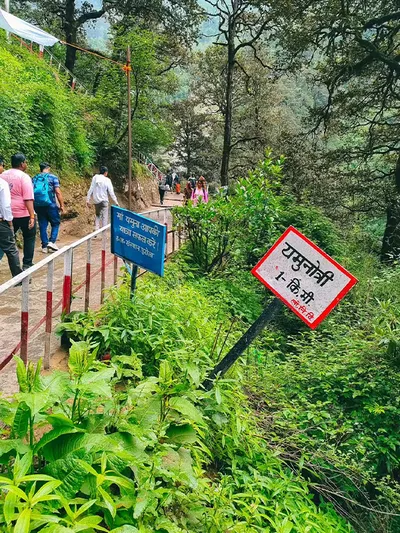
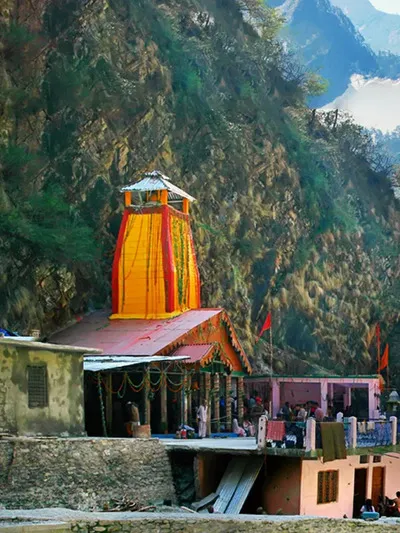
| Yamunotri | 3,293 m | ~5.5 km trek from Janki Chatti |
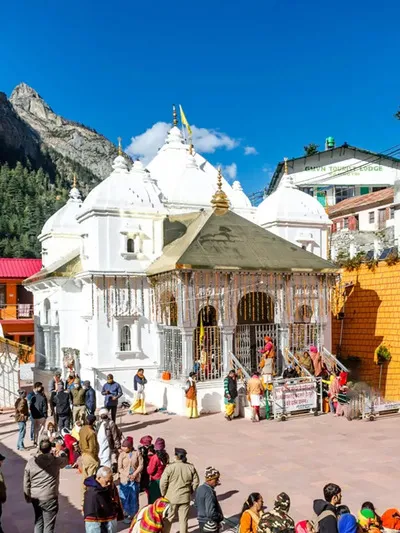
| Gangotri | ~3,100 m | Motorable, no trek required |
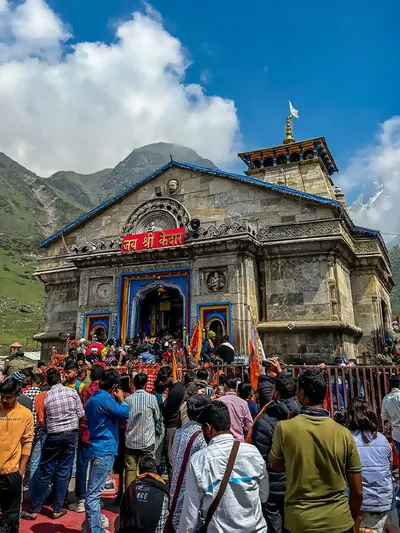
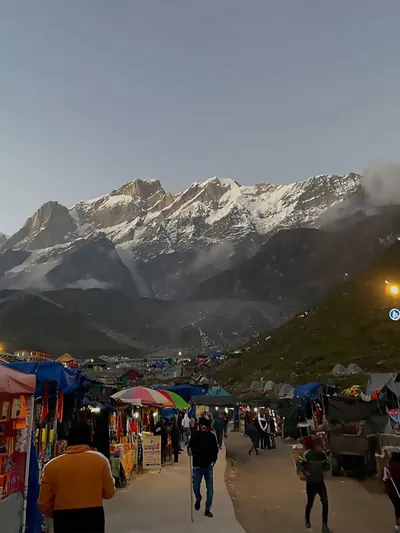
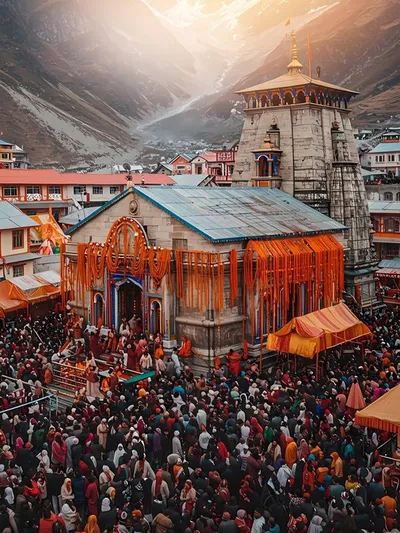
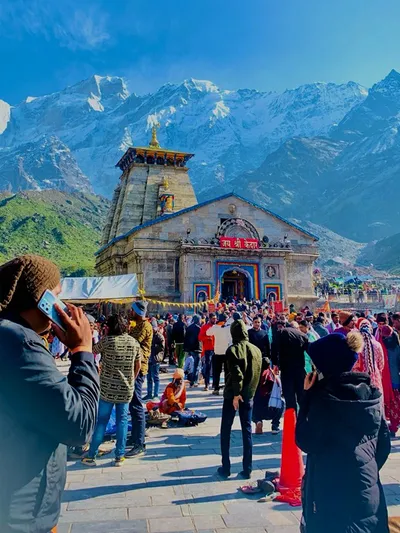
| Kedarnath | 3,583–3,584 m | ~16 km trek from Gaurikund |
| Badrinath | 3,133 m | Motorable, no trek required |
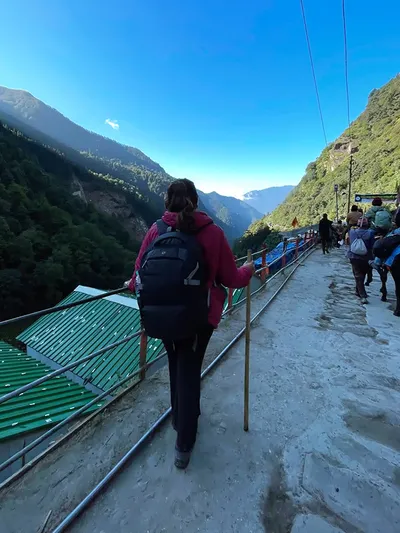
Kedarnath carries the sharpest combination of altitude and physical exertion — a 16 km climb to over 3,500 metres, usually done in one push. Yamunotri's trek is much shorter, but you're still sleeping and walking above 3,000 metres. Gangotri and Badrinath don't require a trek at all, which changes the calculus for older travellers or anyone managing a cardiac condition.
What the 2026 Health Data Says
By 6 June 2026, State Emergency Operation Centre data showed 165 health-related pilgrim deaths since the season opened on 19 April — 80 on the Kedarnath route, 48 on Badrinath, 21 on Yamunotri, and 16 on Gangotri. By 23 June, the running total had climbed to roughly 200, out of close to 37 lakh pilgrims who had made the journey by that point. Health officials reported that most of the deceased were in the 55–75 age bracket, and cardiac arrest was the most commonly cited cause.
None of this means the Yatra is unusually lethal for a healthy person prepared for altitude. It means the people most at risk are identifiable in advance — older, with an existing heart or metabolic condition, arriving without acclimatisation. That's a solvable problem, not a reason to cancel a trip.
Landslides and road hazards haven't disappeared either. A 2025 landslide on the Kedarnath trek route killed two palanquin bearers. The route is safer than it was in 2013, but "safer" isn't the same as "risk-free," and a safety page that only talks about cardiac risk is leaving something out.
What Uttarakhand Tourism Actually Requires — vs. What's Just Good Advice
A lot of "Char Dham Yatra rules" articles blur government requirements together with sensible medical advice, and it makes the whole page less trustworthy. Here's the split, kept separate on purpose.
Confirmed Government Requirement:
- Online registration through the official Uttarakhand Tourism portal is compulsory. Without it, you don't get past checkpoints or into the shrines. The portal issues a QR-coded registration letter, and pilgrims are verified against it at points along the route and at each Dham — this helps authorities manage pilgrim flow and keep records, though it isn't the same as continuous real-time GPS tracking of every individual.
- The portal also carries a separate Health Registration facility, and Uttarakhand's Department of Medical Health and Family Welfare publishes a dedicated Char Dham Yatra Health Advisory each season.
- The official pilgrim checklist advises against alcohol and tobacco, and prohibits drinking and driving.
Medical Guidance, not a legal rule — but worth following anyway:
- Standard high-altitude medicine advises against a direct one-day ascent to a sleeping altitude above 2,750 m from low elevation, and recommends increasing sleeping altitude by no more than roughly 500 m per night once you're above 3,000 m. Translated for Kedarnath: build in a night at a mid-altitude stop before you go up, rather than treating the trek as something to knock out in a single day from sea level.
- Uttarakhand health officials have publicly urged pre-travel health check-ups and gradual ascent at seminars ahead of this season, and a cardiologist speaking at one such seminar specifically recommended pilgrims monitor blood pressure and pulse oxygen.
What we can't confirm as a blanket 2026 rule — and won't state as one:
A fixed age cutoff (50, 55, or 60) at which a medical fitness certificate becomes legally mandatory, or a universal night-time vehicle ban on hill routes. Both show up across travel blogs this season, but neither is something we could trace to a specific, current official order. If you've seen an exact notification for either, it's worth checking the date and the district it applies to — these things sometimes get set locally, then reported as if they cover the whole Yatra.
Altitude Sickness: What's Actually Happening in Your Body
Above roughly 2,500 metres, unacclimatised travellers are at risk of altitude illness — that threshold isn't specific to Kedarnath, it's just where the body starts to struggle with reduced oxygen availability. Kedarnath, at 3,583 m, sits well past it.
The mechanism isn't that the air has less oxygen in it — the percentage of oxygen in the atmosphere is the same at altitude as at sea level. What drops is atmospheric pressure, which means every breath delivers less oxygen to your blood even though the composition of the air hasn't changed. That's why breathlessness and fatigue show up even in people who are otherwise fit.
Acute Mountain Sickness usually starts with headache — that's the symptom doctors treat as the first sign — often along with nausea, dizziness or unusual fatigue. It can begin within 2 to 12 hours of reaching altitude. Left unmanaged, it can progress toward High Altitude Cerebral Edema or High Altitude Pulmonary Edema, both serious and both reasons to descend rather than push through.
A pulse oximeter can help you track your oxygen saturation and see whether you're acclimatising. It shouldn't replace paying attention to how you actually feel — a normal reading doesn't rule out altitude illness, and symptoms matter more than the number on the device.
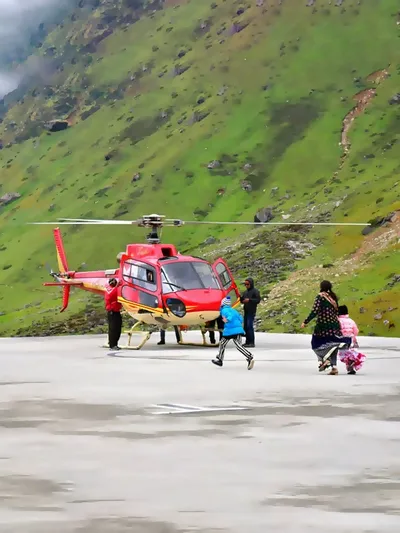
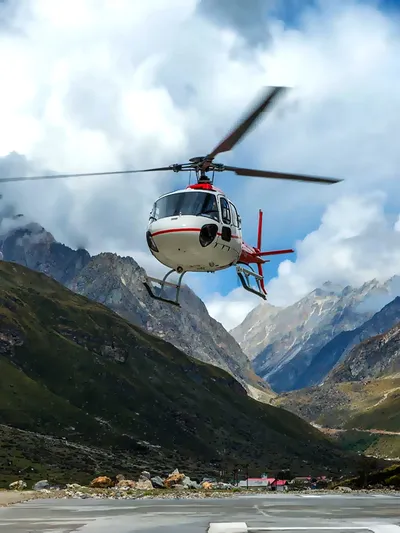
Helicopter travel to Kedarnath compresses days of gradual ascent into an hour. If you're taking that route with no acclimatisation beforehand, treat any headache or breathlessness after landing seriously rather than assuming it will pass — and if you have an existing heart or lung condition, talk to your doctor before you book the flight.
Medical Infrastructure on the Route
Ahead of the 2026 season, Uttarakhand's health preparations reportedly included around 400 medical graduates and 229 specialist doctors deployed along the circuit, 177 ambulances, 25 medical relief posts, and 33 screening points. A 17-bed hospital was being readied at Kedarnath specifically.
That's a meaningfully larger medical footprint than the route had a decade ago. It doesn't remove the risk — the death figures above happened despite this infrastructure — but it does mean help is closer than it used to be if something goes wrong.
Who Should Get Checked Before They Go
Age alone isn't the deciding factor, even though older pilgrims are overrepresented in this season's reported deaths. The relevant question is whether you're managing a heart condition, high blood pressure, diabetes, or a respiratory condition like asthma or COPD.
If any of that applies to you, get evaluated by a doctor before you travel — not the week before, early enough that you can act on what they tell you. Bring your usual medication, not just enough for the trip but extra in case you're delayed. If you have a cardiovascular condition, ask your doctor specifically about sudden cold-water exposure (the Tapt Kund dip at Kedarnath, for instance) before assuming it's fine.
Common Mistakes That Show Up in the Data
- Skipping acclimatisation because the itinerary is tight — this is the single factor doctors keep flagging.
- Taking the Kedarnath helicopter with no rest beforehand and no plan for what to do if you feel unwell on arrival.
- Traveling with a known heart or BP condition and no medical clearance, on the assumption that feeling fine at home means you'll be fine at 3,500 metres.
- Ignoring early symptoms — headache, breathlessness, nausea — because descending feels like giving up on the trip.
Practical Preparation
- Carry your medication list and a basic first-aid kit; ORS, any prescribed drugs, a torch, a power bank.
- Download your registration confirmation before you leave signal range — connectivity drops on the hill sections.
- Wear trekking shoes you've already broken in, not new ones bought for the trip.
- If you're travelling alone, share your route and timings with someone who can raise an alarm if you go quiet.
- Check the current weather and road advisory the morning you travel, not the week before.
Best Time to Go
May–June and September–October are the periods most pilgrims and operators favour, largely because the monsoon (roughly July to early September) brings a real jump in landslide and slippery-road risk on the hill sections. That said, mountain weather changes fast regardless of season — a clear forecast the night before doesn't guarantee clear roads the next morning. Check the current advisory before you set out, every day of the trip, not just once before departure.
Travelling Independently vs. With an Operator
Both work. Independent travel gives you control over pace and cost, and plenty of pilgrims do it well. What it demands is that you personally handle registration, permits, transport bookings, and route/weather monitoring — none of which is difficult individually, but all of which needs to happen correctly and on time.
A registered operator takes that coordination off your plate and typically has current, ground-level information on route conditions. It costs more and gives you less flexibility. If your trip includes older travellers or anyone with a health condition that needs monitoring, that coordination layer is worth more than it costs.
A Note Before You Rely on This Page
This is a safety overview, not medical advice. Anyone with a heart, lung, blood pressure or metabolic condition should get evaluated by their own doctor before this trip, specifically for high-altitude travel — a generic check-up isn't the same thing. Rules, screening points and advisories can change during the season, so treat the official Uttarakhand Tourism and Tourist Care portals as the final word, not this article.
Conclusion
Char Dham Yatra is safe for most people who prepare for what it actually is: a high-altitude pilgrimage, not a road trip with temples at the end. The risk isn't evenly spread — it concentrates in older travellers with unmanaged health conditions who skip acclimatisation, and this season's numbers say that plainly. Landslides and road hazards are lower than they were in 2013 but haven't gone to zero.
Register properly, get checked out if you have a condition that warrants it, build in a rest day before you climb, and pay attention to how you actually feel once you're up there. That's most of what separates a hard-but-fine pilgrimage from an emergency.
Frequently Asked Questions
Q1. Is Char Dham Yatra safe in 2026?
For a healthy, prepared traveller — yes. The documented risk concentrates in older pilgrims with unmanaged heart, BP or respiratory conditions who skip acclimatisation. Register properly and get checked out if any of that applies to you.
Q2. Is a medical certificate mandatory for Char Dham Yatra?
There's a Health Registration facility on the official portal and a state health advisory each season, but we couldn't confirm a fixed age threshold making a certificate legally mandatory. If you have a heart, BP, diabetes or respiratory condition, get evaluated regardless of whether it's required.
Q3. What's the biggest safety risk on the Yatra?
Health-related emergencies, particularly cardiac events linked to altitude, in pilgrims over 55 with pre-existing conditions. Landslides and road hazards are lower than pre-2013 but still real — a 2025 landslide on the Kedarnath route killed two palanquin bearers.
Q4. What are the early symptoms of altitude sickness?
Headache is the cardinal symptom, often with nausea, dizziness or unusual fatigue, starting within 2 to 12 hours of reaching altitude. Don't push through it — descend or seek medical help if it worsens.
Q5. How high is Kedarnath, and how far is the trek?
Kedarnath sits at roughly 3,583–3,584 metres. The trek from Gaurikund, the last motorable point, is about 16 km one way.
Q6. Is Char Dham Yatra safe for senior citizens?
It can be, with real preparation: a pre-travel medical evaluation, acclimatisation before ascending, and travelling with someone who can help if symptoms appear. Age alone isn't disqualifying — an unmanaged health condition is the bigger factor.
Q7. Should I fly straight to Kedarnath by helicopter?
You can, but it compresses days of natural acclimatisation into about an hour. Take any headache or breathlessness after landing seriously, and talk to your doctor beforehand if you have a heart or lung condition.
Q8. Is alcohol allowed during the Yatra?
The official pilgrim checklist advises against alcohol and tobacco and prohibits drinking and driving. We couldn't confirm a blanket legal ban on possession across the entire circuit.
Q9. What medical facilities are available on the route?
2026 preparations reportedly included roughly 400 medical graduates, 229 specialist doctors, 177 ambulances, 25 medical relief posts, 33 screening points, and a 17-bed hospital at Kedarnath.
Q10. When's the safest time to travel?
May–June and September–October, avoiding the July–early September monsoon window when landslide risk rises. Even then, check the daily weather and road advisory — conditions shift fast.
Q11. Is registration really compulsory?
Yes. Online registration through the official Uttarakhand Tourism portal is required, and you're verified against your QR-coded registration letter at checkpoints and at each Dham.
Q12. How long should I plan for the full Yatra?
It depends on your starting point, transport mix, and how many rest days you build in for acclimatisation. Don't compress the itinerary to save a day or two — that's exactly the shortcut linked to the worst outcomes this season.
Chardham Travel Guide
Chardham Travel Packages
Hotels in Chardham
Beware of Fake Char Dham & Kedarnath Helicopter Booking Websites
Fake websites, WhatsApp accounts and advertisements may impersonate genuine travel companies or helicopter operators. Always verify before paying.