Things to Do During Chardham Yatra

Most people plan Char Dham Yatra around four temples and stop there. That's a missed opportunity. The same Garhwal Himalayas that hold Yamunotri, Gangotri, Kedarnath and Badrinath also hold some of India's best high-altitude trekking, a UNESCO-listed valley of wildflowers, and a strictly protected national park with snow leopards in it.
Not all of it fits neatly into a Yatra itinerary, though, and pretending otherwise is how people end up disappointed. Valley of Flowers–Hemkund and the short Chopta–Tungnath climb sit close enough to combine with a few extra days. Gaumukh–Tapovan and the full Panch Kedar circuit need a real extension — think in terms of additional days, not hours. Har Ki Dun, Kedarkantha and the Gangotri–Kedarnath high route are genuinely separate treks that deserve their own trip, not a Yatra add-on.
The catch is timing and fitness. A lot of these activities are physically demanding in their own right, on top of a pilgrimage that already involves altitude and long travel days. Worth planning around, not squeezing in as an afterthought.
Wildlife: Nanda Devi National Park
Nanda Devi National Park sits in Chamoli district, inside the Nanda Devi Biosphere Reserve, and it's genuinely remote — this isn't a drive-through safari park. Species reported here include the Himalayan black bear, musk deer, snow leopard and pheasant varieties like the monal. Bird-watchers come for the Himalayan monal, snow partridge, Himalayan golden eagle and griffon vulture.
Here's what most pages don't tell you clearly: the park's core sanctuary, where the peak itself sits, has been closed to trekkers and mountaineers since 1983, after unregulated tourism damaged the ecosystem. What's open instead is a strictly regulated trekking route from the Lata side toward the Dharansi area. Conservation documentation has cited a cap of around 500 visitors a year for this limited section, but treat that as the historical management figure rather than a confirmed 2026 quota — check the current permit and visitor limits with the Forest Department before counting on a specific number. If you're picturing free-roaming access to spot a snow leopard, adjust that expectation regardless: this is a tightly rationed, guide-required trek into a fraction of the reserve, and sightings of species like snow leopard are rare even for those who do get in.
Valley of Flowers
The Valley of Flowers, also in Chamoli district, is one of the most photographed alpine meadows in the Himalayas — and one of the most factually mangled online. Here's the accurate timeline: the Government of India declared it a National Park in 1982. UNESCO added it to the World Heritage list in 2005, alongside neighbouring Nanda Devi National Park, as part of the same biosphere reserve. Two separate recognitions, two separate bodies — not UNESCO handing out a "national park" title, which isn't something UNESCO does.
The valley blooms with species like Brahmakamal, Blue Poppy and Cobra Lily, alongside marigolds, orchids, anemones, daisies and primulas — usually at their peak from July through September, which overlaps with the Yatra's monsoon lull, so it's worth checking bloom reports before you commit to a date. Entry requires a permit, bookable online or at the park gate, and the park itself is only accessible on foot from Ghangaria.
Trekking Routes Along the Yatra Circuit
This is where the region earns its adventure reputation. Some routes worth knowing:
- Valley of Flowers and Hemkund Sahib trek — pairs naturally with Badrinath, since Govindghat (the trailhead) sits on the same route. Easy to combine.
- Gangotri–Gaumukh–Tapovan trek — follows the Bhagirathi upstream to the glacier source. This one enters Gangotri National Park, so it needs its own forest permit, and Tapovan specifically requires a guide — not a casual add-on, and worth a real extension of your itinerary rather than a day trip.
- Panch Kedar trek — links five Shiva temples across the region, including Kedarnath, for a much longer, more demanding circuit than the standard Yatra. Treat this as its own extension.
- Gangotri–Kedarnath trek — a high-altitude connector between two Dhams for serious trekkers. This is a separate trekking trip, not a Yatra activity.
- Har Ki Dun trek — sits in the Govind National Park area further west. It's a genuine multi-day trek in its own right, not something you fold into a Yamunotri leg — plan it as its own trip.
- Chopta–Tungnath–Chandrashila trek — this one's missing from most Char Dham activity lists, which is a genuine gap. Tungnath is the highest of the Panch Kedar temples at roughly 3,680m, and the walk up from Chopta is short — around 4 km — making it realistic to fit alongside a Yatra itinerary if your dates allow. The further push to Chandrashila peak adds more time; check current trail and snow conditions before committing to it.
- Kedarkantha trek — further afield near Sankri, mainly a winter trek, and squarely a separate trip rather than a Yatra add-on given the distance involved.
Each of these has its own season, difficulty level and permit situation. None of them should be attempted without checking current trail and weather conditions locally — the region's terrain doesn't forgive casual planning.
Paragliding
Paragliding in Uttarakhand happens at several sites, and Bedini Bugyal (also spelled Bedni Bugyal) in Chamoli district — on the trail toward Roopkund, near Wan village, not on the Uttarkashi–Gangotri road — comes up often in lists of the state's paragliding spots. It's associated with the activity rather than a guaranteed booking, though; whether a commercial tandem operator is running flights there on any given date is worth confirming locally before you plan around it.
There's a bigger update worth knowing if you're eyeing this area at all: Bedni Bugyal sits on the Roopkund trek route, and that route was effectively shut for eight years after a 2018 Uttarakhand High Court order banned overnight camping across the state's high-altitude bugyals and capped daily visitors at 200. On 20 July 2026, the Supreme Court set aside the camping ban and the visitor cap. Trek operators started rebooking Roopkund batches within weeks. What's still in force: no permanent structures on the meadows, no commercial grazing, and waste-management rules. If camping at Bedni Bugyal is part of your plan, confirm with your operator that permits and camping arrangements are actually sorted — this changed a matter of weeks before this page was last reviewed, and not every guide online has caught up.
River Rafting
Barkot, the usual staging town before Yamunotri, is also a rafting base. Official Uttarakhand tourism material lists Barkot–Lakhamandal as a beginner-friendly stretch on the Yamuna, alongside the shorter Damta–Yamuna Bridge run near Mussoorie, with the state's rafting season generally running September through June. Exact distance and rapid grading vary by operator and current water levels, so check those specifics with whoever you book through rather than treating any fixed number as settled.
Skiing at Auli
Auli, near Joshimath and on the approach to Badrinath, is Uttarakhand's most established skiing destination — often called the country's skiing capital, and it has the infrastructure (a cable car, ski slopes roughly in the 2,700–3,000m range, equipment rental) to back that up. The main skiing window falls in winter, typically January to March depending on snowfall, while the Char Dham temples are generally closed for winter — so treat Auli skiing as a separate trip rather than something to slot into the same visit. Auli's Gorson Bugyal meadow is also a straightforward, well-marked trek in its own right when there's no snow.
Photography and Slower Travel
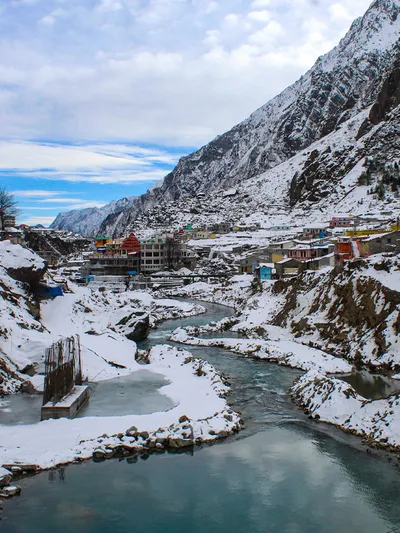
Not everything here needs to be an adrenaline activity. The drive between Dhams passes through some of the most photographed Himalayan landscapes in India — snow-capped peaks, the Bhagirathi and Alaknanda rivers, terraced hillsides, and small hill towns that don't make it into most itineraries. If your schedule allows an extra day anywhere along the route, a slower pace through Uttarkashi, Guptkashi or Joshimath often gives a better sense of the region than rushing between temple stops.
Planning Char Dham Yatra Activities Around the Pilgrimage
A few practical points worth factoring in before you build these into your trip:
- Altitude comes first. If you're already managing altitude adjustment for the temples themselves, adding a strenuous trek on the same trip multiplies the physical load. Sequence matters — don't stack a demanding trek onto the day you've just come down from Kedarnath.
- Permits are separate from Yatra registration. Char Dham Yatra registration through the Uttarakhand Tourism portal doesn't cover entry to Nanda Devi National Park or Valley of Flowers — those need their own permits, arranged separately.
- Season windows don't always align. Valley of Flowers peaks in the monsoon, when the main Yatra advises caution due to landslide risk. Auli's skiing season is winter, when the temples are closed. Plan activity timing against Yatra timing deliberately, not as an afterthought.
- A local operator saves real time. Trek permits, rafting bookings and paragliding slots are all easier to arrange through someone who already has relationships with local guides and current conditions, rather than trying to coordinate each independently while also managing the pilgrimage itself.
Conclusion
Char Dham Yatra doesn't have to be temples and travel days back to back. The same region offers a strictly protected high-altitude national park, one of India's most recognised UNESCO sites, several serious trekking routes, and enough adventure activity to justify extending the trip rather than rushing through it. The trade-off is that most of these need their own planning — separate permits, their own best seasons, and a realistic look at how much your body can take on top of the pilgrimage itself. Build that in early, and the extra days are worth it.
Frequently Asked Questions
Q1. What adventure activities can I do during Char Dham Yatra?
Trekking (Valley of Flowers, Chopta-Tungnath, Gaumukh-Tapovan, and others), wildlife viewing at Nanda Devi National Park, paragliding at Bedini Bugyal, river rafting near Barkot, and skiing at Auli in winter.
Q2. Is Valley of Flowers a UNESCO World Heritage Site?
Yes, since 2005, as part of the Nanda Devi and Valley of Flowers UNESCO site. It was separately declared a National Park by the Government of India in 1982 — two different recognitions.
Q3. Do I need a separate permit for Valley of Flowers or Nanda Devi National Park?
Yes. Char Dham Yatra registration doesn't cover national park entry — those permits are arranged separately, and Nanda Devi's access is more restricted given its ecological sensitivity.
Q4. Where is Bedini Bugyal, and can I paraglide there?
Bedini Bugyal is in Chamoli district, on the trail toward Roopkund near Wan village — not near Uttarkashi. It comes up often in paragliding lists, but confirm current tandem-operator availability locally. Overnight camping there was banned from 2018 until the Supreme Court set that ban aside on 20 July 2026 — other rules (no permanent structures, no grazing) still apply.
Q5. Can I combine trekking with Char Dham Yatra in the same trip?
Yes, particularly shorter treks like Chopta-Tungnath or Valley of Flowers-Hemkund, which sit near the main route. Longer treks like Panch Kedar or Har Ki Dun need more time and are better planned as their own leg of the trip.
Q6. When is the best time for Valley of Flowers trekking?
July to September, when the flowers peak — which overlaps with the Yatra's monsoon season, so check landslide advisories for your road route separately from the trek itself.
Q7. Can I go skiing at Auli during Char Dham Yatra?
Not really — Auli's ski season runs roughly January to March, while the Char Dham temples are closed through winter. The two don't line up, so plan Auli skiing as its own trip.
Q8. Is river rafting available near the Char Dham route?
Yes, around Barkot on the Yamuna, toward Lakhamandal, generally within the September–June rafting season. Distance and rapid grade vary by operator and water level, so confirm those details when you book.
Q9. Can I freely visit Nanda Devi National Park to see wildlife?
No. The core sanctuary has been closed to trekking since 1983. What's open is a permitted, guide-required trek from Lata village toward Dharansi — conservation records cite a historical cap of around 500 visitors a year for this section, but confirm the current quota and permit process with the Forest Department rather than assuming that figure still holds.
Q10. Is trekking safe to combine with high-altitude Yatra destinations like Kedarnath?
It can be, but sequencing matters — don't add a strenuous trek immediately after descending from a high-altitude shrine. Give your body recovery time between demanding activities.
Chardham Travel Guide
Chardham Travel Packages
Hotels in Chardham
Beware of Fake Char Dham & Kedarnath Helicopter Booking Websites
Fake websites, WhatsApp accounts and advertisements may impersonate genuine travel companies or helicopter operators. Always verify before paying.