Chardham Temples Committee
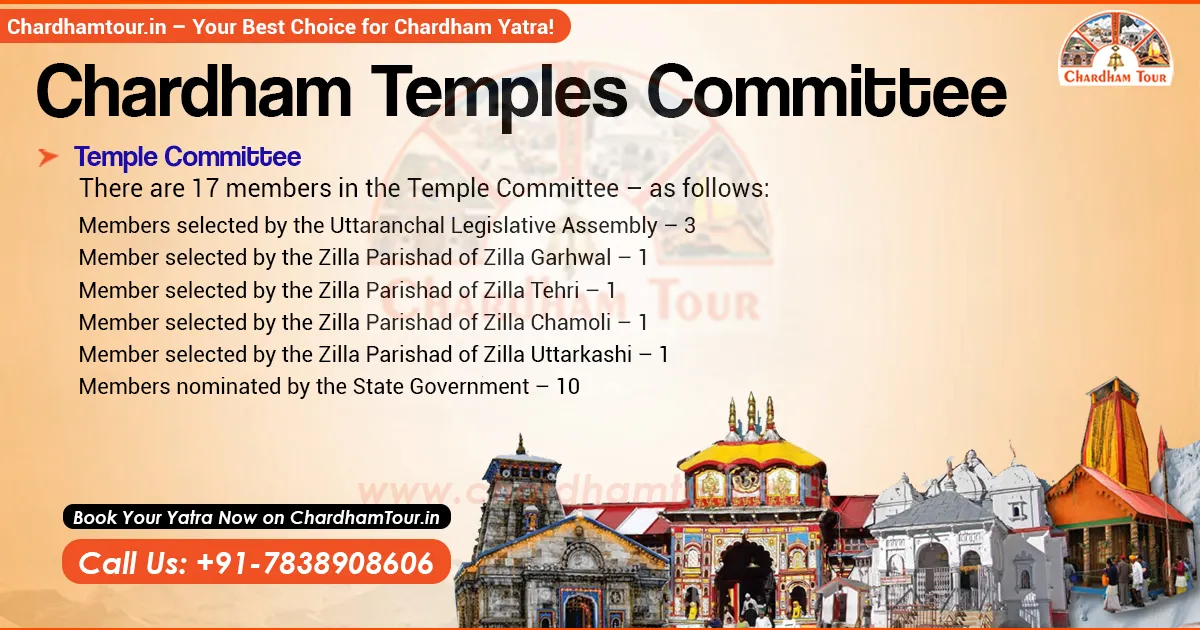
Most guides to the Char Dham Yatra skip this entirely, or they mash all four shrines' management into one paragraph as if it's a single body. It isn't. Badrinath and Kedarnath are run by one statutory committee. Gangotri and Yamunotri each have their own, separate temple committees — three different institutions, not one.
Knowing this matters if you're trying to reach the right office for a booking dispute, a donation query, or a pooja request — sending it to the wrong body just wastes your time.
It's also worth knowing this split wasn't always the arrangement. In 2019, the Uttarakhand government passed the Char Dham Devasthanam Management Act, creating a single statewide board with authority over all four shrines plus dozens of other temples — merging BKTC, nofollow Gangotri and Yamunotri's management under one roof for the first time. Priests and pandas organised sustained protests against it, arguing it stripped them of traditional control. The government scrapped the board and reconstituted BKTC on its own in 2021–22, restoring the separate structure described below.
Badrinath and Kedarnath's Temple Committee: One Body, One Legal Basis
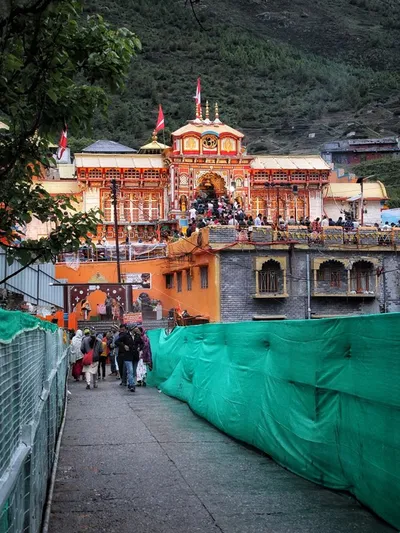
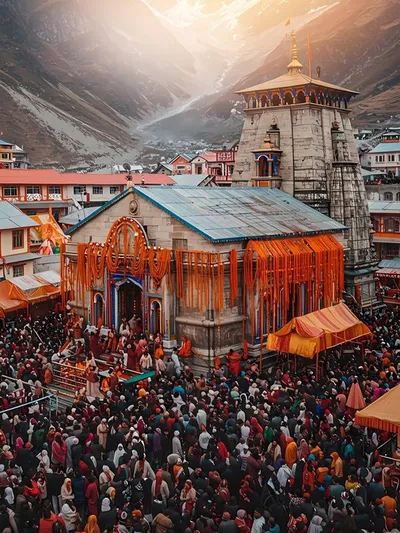
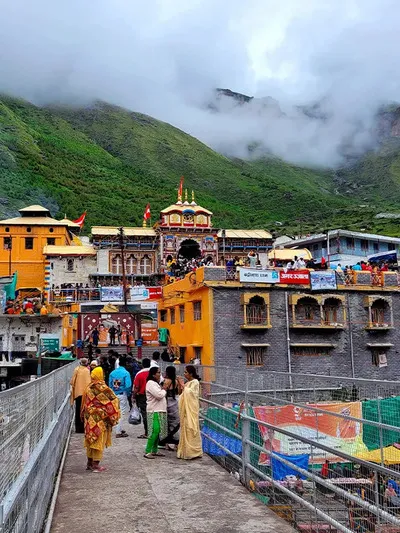
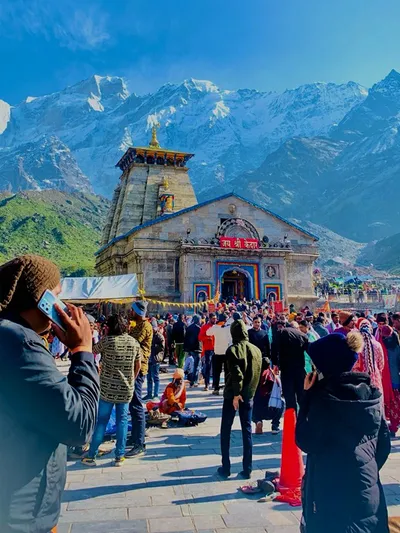
Both temples fall under the Shri Badarinath-Kedarnath Temple Committee, usually called BKTC. This isn't a private trust — it's a statutory body. The founding law is the U.P. Shri Badrinath and Shri Kedarnath Temples Act, 1939, written originally for Badrinath alone; a 1948 amendment brought Kedarnath under the same Act. That combined law — not the brief 2019 Devasthanam Act mentioned above — is what BKTC has operated under since the 2021 repeal, and still operates under today.
BKTC currently manages 45–47 temples across Uttarakhand, not just Badrinath and Kedarnath. That number has come up in recent BKTC announcements, though it does shift slightly as temples are added to or removed from its list.
Committee Structure
The committee's makeup is set by law, not left to discretion:
| Seat | Selected by |
|---|---|
| 3 members | Uttarakhand Legislative Assembly |
| 1 member | Zilla Parishad, Garhwal |
| 1 member | Zilla Parishad, Tehri |
| 1 member | Zilla Parishad, Chamoli |
| 1 member | Zilla Parishad, Uttarkashi |
| 10 members | Nominated by the State Government |
That's 17 members total. The President and Vice President are then chosen by the State Government from within this group — so the top of the committee isn't directly elected, it's a government appointment layered on top of a partly-elected body.
Who's Currently Running It
As of 2026, Hemant Dwivedi is Chairman of BKTC — he was named in that role in official announcements around the temple's Kedarnath opening-date declaration in February 2026, and was still referred to as Chairman in reporting through mid-2026.
The Chief Executive Officer — the senior administrative post that actually runs day-to-day operations — is Sohan Singh Rangar (also spelled Rangad in some reports), a PCS officer who was serving as Sub-Divisional Magistrate of Chamoli before the Uttarakhand government appointed him CEO in April 2026, ahead of that year's Yatra season. He was still in the post as of mid-2026, handling matters including a donation-irregularity investigation at Badrinath that surfaced that season.
Both roles are government appointments, not fixed terms, so they can change with transfers and political shifts. The CEO seat, for instance, moved from B.D. Singh to Sohan Singh between the version of this page you might have seen a few years ago and April 2026 — treat any name here as a snapshot, not a permanent record. If you need a current name for anything official, BKTC's own site or a recent news search is more reliable than any static webpage, including this one.
The Priests: Rawal, Not Just "Head Priest"
The chief priest at each temple is called the Rawal, and the role carries more religious weight than the job title "head priest" suggests. Rawals are traditionally required to be celibate for the duration of their service, and by long-standing custom, they're drawn from specific communities: the Kedarnath Rawal comes from the Veerashaiva Lingayat community, while the Badrinath Rawal has traditionally come from Kerala, from the Namboodiri Brahmin community.
The Rawal's presence is considered essential for the temple's opening and closing ceremonies each season — the doors aren't opened to the public until he has performed the initial prayers. In February 2026, the outgoing Kedarnath Rawal, Bhimashankar Ling, expressed his intention to retire and named a successor, Shivacharya Kedar Ling. That succession wasn't a clean handover — reporting into March 2026 described it as disputed, with BKTC maintaining that a Rawal cannot simply appoint his own replacement and that any change had to go through the committee's own procedure. Given that, and how often these postings shift, don't treat any name here as the confirmed current Rawal without checking recent news first.
Gangotri: A Separate, Older System
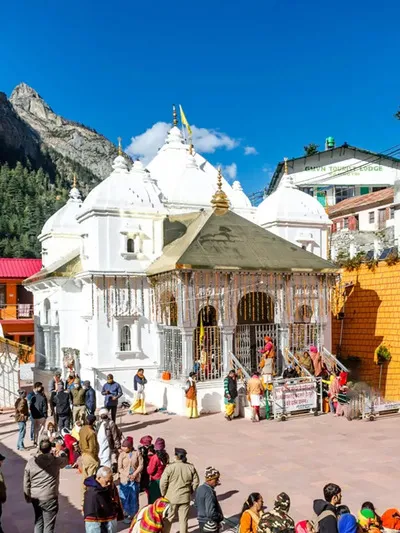
Gangotri isn't under BKTC at all. It's managed by the Shri Panch Mandir Samiti, a much larger and older body with roughly 200 members, drawn from priestly families and government officials. It has its own President, Vice President, Chief Secretary and Secretary structure, separate from anything at Badrinath or Kedarnath. As of April 2026, Dharmendra Semwal was reported as the Samiti's chairperson, commenting publicly on entry rules for that season's Yatra.
This distinction rarely gets explained clearly, and it matters: if you're trying to reach someone about a Gangotri-specific matter, BKTC's office isn't the place to start.
Darshan and aarti timings at Gangotri:
| Season | Temple hours |
|---|---|
| Summer (April–August) | 6:15 AM–2:00 PM, 3:00 PM–9:30 PM |
| Winter (September–November) | 6:45 AM–2:00 PM, 3:00 PM–7:00 PM |
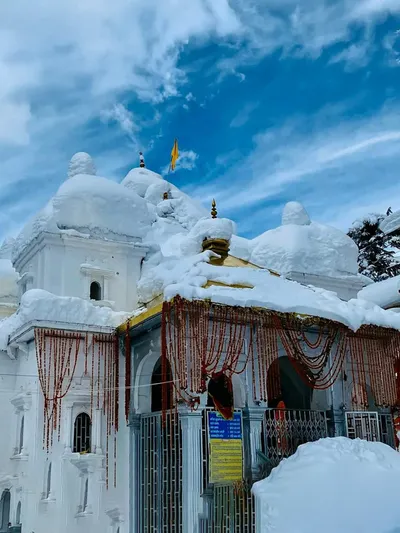
The temple closes for winter the day after Diwali and reopens on Akshaya Tritiya the following year, when the deity is ceremonially moved from its winter seat back to Gangotri.
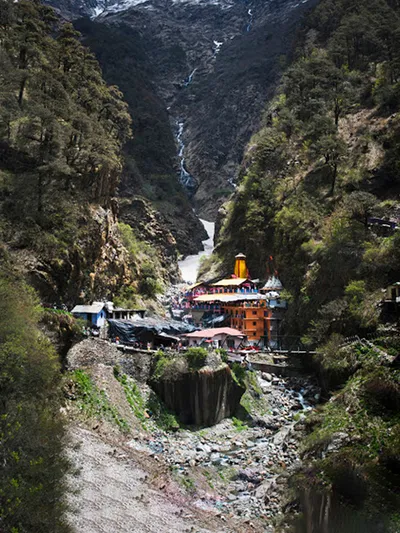
Yamunotri: Its Own Temple Committee, Separate From Everyone Else
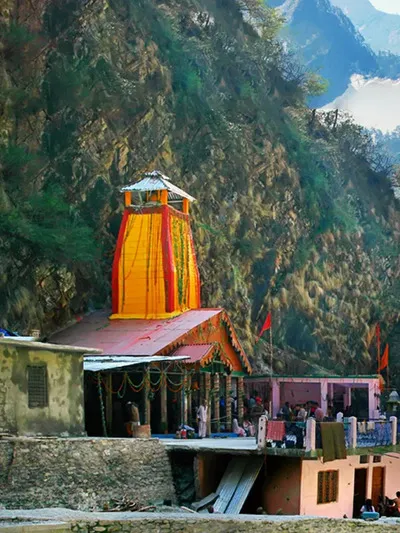
Yamunotri has a formal temple committee too — just not BKTC's, and not Gangotri's samiti. Reporting from the 2025 opening ceremony names Sanjeev Uniyal as Vice President of the Yamunotri Temple Committee and Sunil Uniyal as Secretary; Sunil Uniyal was still named as the committee's secretary in reporting from early 2026, responding on the committee's behalf to a proposed entry-restriction debate that was circulating across the other three shrines at the time.
That last point is worth noting on its own: when Badrinath, Kedarnath and Gangotri's committees moved toward restricting entry for non-Hindu visitors in early 2026, Yamunotri's committee held off, saying no formal decision had been taken and the matter would go to committee discussion rather than a unilateral call.
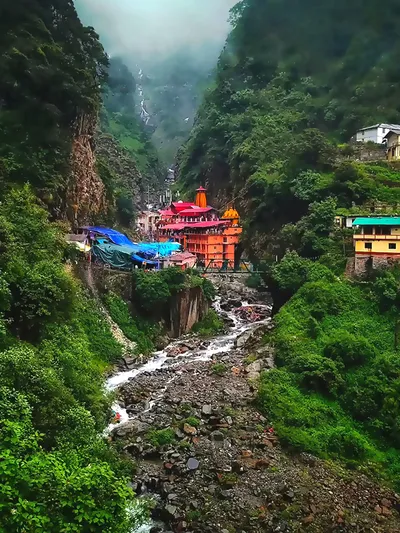
During winter closure, the deity is moved to Kharsali village, about 2 km from Janki Chatti, where worship continues until the temple reopens.
Temple hours during the pilgrimage season (April/May–October/November): 6:00 AM to 8:00 PM daily.
The temple opens on Akshaya Tritiya and closes on Yama Dwitiya (Bhai Dooj), two days after Diwali — the same calendar rhythm as the other three shrines.
What These Committees Actually Do for a Pilgrim
None of the four bodies above handle Yatra registration — that's done through the Uttarakhand Tourism portal, a separate government system entirely. What the temple committees and samitis do handle:
- Daily worship schedules, aarti timings and special-occasion pujas
- VIP darshan and special pooja bookings at their respective shrine
- Priest appointments and religious protocol
- Guest houses and dharamshalas run under their management
- Legal and administrative matters concerning "their" temple — BKTC, for instance, has taken legal action against groups building unauthorised replicas of Kedarnath or Badrinath elsewhere in India
If your query is about registration, permits, or helicopter tickets, none of these bodies are the right contact — go through the official Uttarakhand Tourism and Tourist Care channels instead.
A Quick Structural Comparison
| Badrinath & Kedarnath | Gangotri | Yamunotri | |
|---|---|---|---|
| Managing body | BKTC (statutory, 1939/1948 Act) | Shri Panch Mandir Samiti | Yamunotri Temple Committee |
| Approx. size | 17-member committee | ~200 members | Not publicly disclosed in reporting we could verify |
| Legal status | Government statutory body | Traditional samiti | Temple committee, structure not independently confirmed |
| Handles Yatra registration | No | No | No |
Conclusion
Treat "the Char Dham temple committee" as shorthand, not a literal single entity — there isn't one. BKTC runs Badrinath and Kedarnath under a specific pre-Independence law, with a government-nominated leadership layer on top of a partly-elected committee. Gangotri has its own, older samiti. Yamunotri has its own separate committee too — smaller and less publicly documented than the other two, but a formal body all the same, not the informal priest collective it's sometimes described as.
Names at the top change often enough that any list is a snapshot, not a permanent record. If you need current, verifiable leadership details for something official, go to BKTC's own channels rather than relying on any third-party page, including this one.
Frequently Asked Questions
Q1. Is there one committee for all four Char Dham temples?
No. Badrinath and Kedarnath share BKTC. Gangotri and Yamunotri each have their own, separate committees — three institutions in total.
Q2. What does BKTC stand for?
Shri Badarinath-Kedarnath Temple Committee — the statutory body governing Badrinath and Kedarnath under the 1939 U.P. temples Act, amended in 1948 to include Kedarnath.
Q3. Who is the current chairman of BKTC?
Hemant Dwivedi was serving as BKTC Chairman through 2026, per official announcements and news reporting. Confirm current leadership via BKTC's own channels, since the post can change.
Q4. How many members does the BKTC committee have?
17 — three assembly-nominated, four from the Garhwal, Tehri, Chamoli and Uttarkashi Zilla Parishads, and ten nominated directly by the State Government.
Q5. Who appoints the Rawal (chief priest) of Kedarnath and Badrinath?
The committee formally appoints them, following long-standing community traditions — the Kedarnath Rawal from the Veerashaiva Lingayat community, the Badrinath Rawal traditionally from Kerala's Namboodiri Brahmin community.
Q6. Does BKTC manage Gangotri and Yamunotri too?
No. Gangotri is managed by the Shri Panch Mandir Samiti, and Yamunotri by its own Yamunotri Temple Committee — both entirely separate from BKTC.
Q7. Can I contact the temple committee for Yatra registration?
No. Registration goes through the Uttarakhand Tourism portal. Temple committees handle worship, priest appointments and their own guest houses, not Yatra registration.
Q8. How many temples does BKTC actually oversee?
Recent BKTC statements put the number at 45–47 temples across Uttarakhand, not just Badrinath and Kedarnath.
Q9. Who runs the Yamunotri Temple Committee?
Reporting names Sunil Uniyal as Secretary and Sanjeev Uniyal as Vice President in recent years. As with the other shrines, treat these as recent, not permanent, and verify before citing formally.
Q10. What are Gangotri's darshan timings?
Roughly 6:15 AM–2 PM and 3 PM–9:30 PM in summer, shifting to 6:45 AM–2 PM and 3 PM–7 PM in winter (September–November).
Q11. Weren't all four Char Dham temples once under a single board?
Briefly, yes. The 2019 Char Dham Devasthanam Management Act merged all four shrines under one statewide board. Priest-led protests led the government to scrap it and restore separate management by 2021–22.
Q12. Did all four temple committees agree on the 2026 non-Hindu entry restrictions?
No. Badrinath, Kedarnath and Gangotri's committees moved to restrict entry; Yamunotri's committee held off, saying the matter needed formal discussion rather than a unilateral decision.
Chardham Travel Guide
Chardham Travel Packages
Hotels in Chardham
Beware of Fake Char Dham & Kedarnath Helicopter Booking Websites
Fake websites, WhatsApp accounts and advertisements may impersonate genuine travel companies or helicopter operators. Always verify before paying.