Kartik Swami Temple – The Hilltop Abode of Shiva’s Son
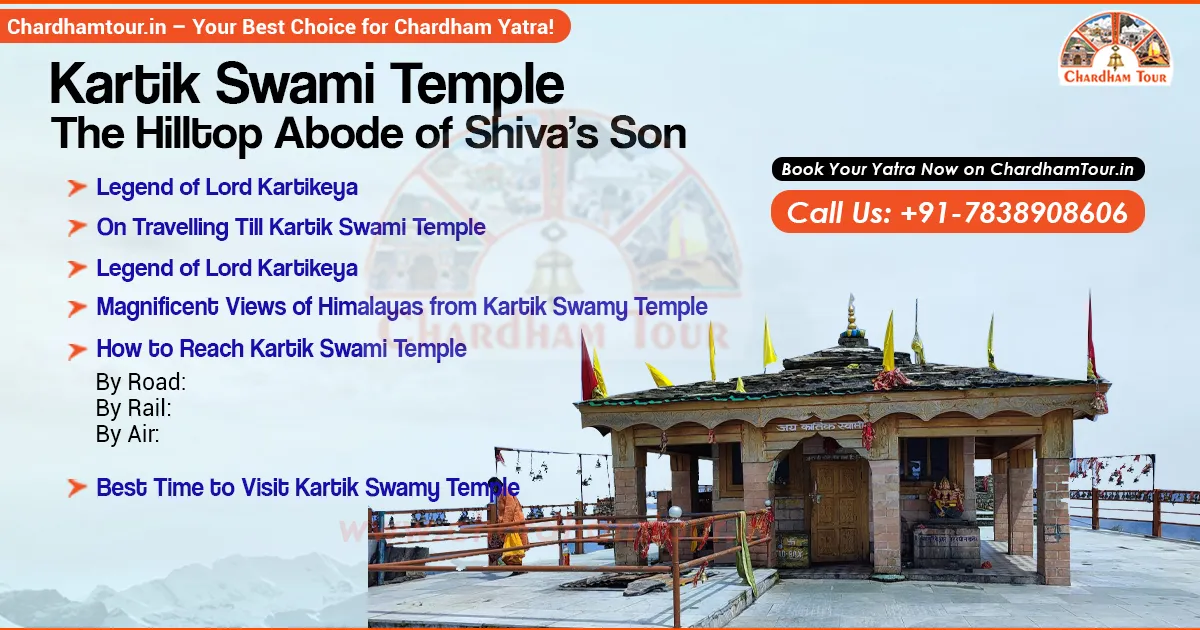
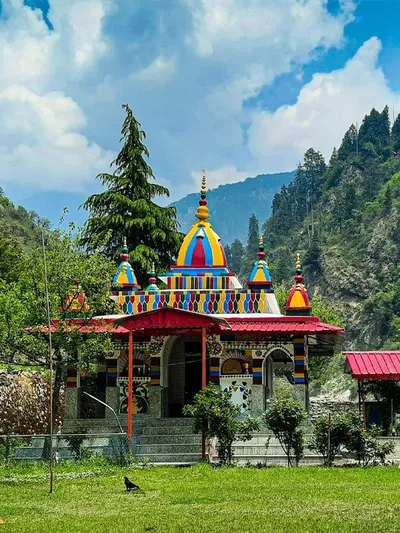
The Himalayas stand as a silent, breathtaking witness to the glory of Lord Kartikeya's hilltop shrine in the Rudraprayag district of Devbhoomi Uttarakhand. Few pilgrimages in the Himalayas are as beautiful as the path leading to them — and the trek to Kartik Swami Temple is exactly one of those rare journeys where the road there is as rewarding as the destination itself.
Kartik Swami Temple sits at an altitude of roughly 3,048–3,050 metres (about 10,000 ft) on a narrow ridge of Kronch Parvat, near Kanakchauri village in Rudraprayag district. It is reached by a 40 km drive from Rudraprayag town followed by a 3 km trek. Multiple regional sources describe it as the only temple in Uttarakhand dedicated to Lord Kartikeya, though Uttarakhand Tourism's own listing takes the more careful route and calls it one of the state's most prominent Kartikeya shrines. Either way, there's nothing else quite like it in the state.
- Deity: Lord Kartikeya (Skanda/Murugan), elder son of Shiva and Parvati
- Location: Kanakchauri village, Rudraprayag district, Uttarakhand
- Altitude: ~3,048 m (10,000 ft), atop Kronch Parvat
- Trek distance: 3 km one way from Kanakchauri (approx. 380 stone steps on the final stretch)
- Trek difficulty: Easy to moderate — suitable for beginners and families
- Best time to visit: October to June (avoid the July–September monsoon)
- Major festivals: Kalash Yatra (11 days, June) and Kartik Purnima (October/November)
- Temple timings: No single official schedule is published; darshan hours shift with season and festival days, so confirm locally in Kanakchauri before you start climbing
Inside the temple, the sanctum holds a rock-cut idol of Lord Kartikeya, which local tradition connects to the legend of his self-sacrifice (more on that below). Devotees have carried bells up the trek for years and left them at the shrine, in every size, tied wherever there's room. Wind moves across the ridge often enough that they're rarely silent for long.
Legend of Lord Kartikeya
Lord Kartikeya is the elder son of Lord Shiva and Goddess Parvati, and several Puranic legends surround his birth and life. Both of Shiva's sons — Ganesha and Kartikeya — are associated with unusual birth stories in Hindu tradition. According to legend, Kartikeya's fiery essence was carried by Agni and nurtured in the waters of the River Ganga, where six celestial nymphs known as the Krittikas (identified with the star cluster Pleiades) each longed to raise him. To let every one of them experience motherhood, the divine child is said to have grown six heads so each Krittika could nurse him — which is why he's also known as Skanda and Shanmukha (six-faced).
The legend goes that the child let everyone claim their bond with him: Ganga cradled him, the Krittikas mothered him, Parvati called him Skanda, Shiva called him Kartikeya, and Agni called him Guha.
The more famous legend — the one that explains why Kartikeya's principal shrines sit so far from Kailash — is the story of the celestial race. Shiva and Parvati asked their two sons to circle the universe seven times; whoever finished first would win a sacred fruit. Kartikeya set off at once on his vehicle, the peacock, to fly the full seven circuits around the cosmos. Ganesha did something simpler: he walked around his parents, seven times, and said that was his universe. Shiva agreed, and Ganesha won.
Kartikeya came back to find he'd lost. Angered, he left Kailash. Some tellings have him settling permanently at Kronch Parvat and sacrificing his physical form there in protest — which is why the idol at this temple is sometimes described as representing his bones rather than a conventional carved likeness. Other versions send him further south, to the Palani hills in Tamil Nadu, where he's still worshipped as Murugan. Local tradition at Kartik Swami leans toward the first version: that this hilltop is where the story actually ends, not just a stop along the way.
Trek to Kartik Swami Temple: Route & Trail Details
Reaching Kartik Swami Temple involves two distinct legs — a scenic road journey and a short forest trek.
The road leg: From Rudraprayag, it's about a 40 km drive on the Rudraprayag–Pokhari route to Kanakchauri village, taking roughly 1.5–2 hours depending on road conditions. Shared jeeps and taxis do run this route, but frequency drops off as the day goes on — confirm your return option in Kanakchauri rather than assuming one will be waiting.
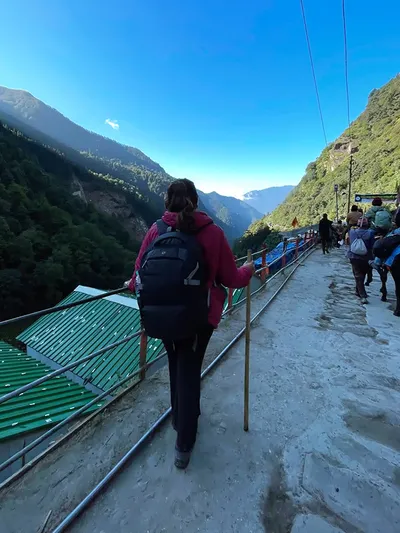
The trek leg: From the Kanakchauri bus stand, it's a 3 km trek to the temple, climbing through rhododendron and oak forest for most of the way. The middle stretch is where the trail feels steepest; the rest is gentler. The final approach is a flight of roughly 380 stone steps that lead straight up to the temple's raised plateau.
| Trek Detail | Information |
|---|---|
| Starting point | Kanakchauri village bus stand |
| Distance (one way) | 3 km |
| Approx. duration | 1–2.5 hours (one way), pace-dependent |
| Final stretch | ~380 stone steps |
| Difficulty | Easy to moderate |
| Terrain | Forest trail + stone-paved steps near the summit |
Cloud cover tends to thicken later in the day at this altitude. Start by mid-morning if you want a clear view at the top. During Kalash Yatra and Kartik Purnima, footfall on the trail rises sharply, and the final flight of steps gets crowded — worth knowing if you're going specifically for a quiet darshan.
The Ritual of the Bells
There's a well-known custom associated with the temple: pilgrims carry a bell up the trek and offer it at the shrine, especially around Kartik Purnima, believing it helps a wish come true. Combs and vermillion (sindoor) are also commonly offered before the deity. A large fair is held in Kanakchauri village around Kartik Purnima each year, drawing devotees from across the region.
Magnificent Himalayan Views from Kartik Swami Temple
This is the biggest reason most people make the climb. On a clear day, the ridge gives an open panorama of some of Garhwal's most recognisable peaks:
- Chaukhamba
- Kedarnath Dome
- Bandarpunch
- Nanda Devi
- Trishul
- Neelkanth
- Dronagiri
- Nanda Ghunti
- Meru and Sumeru
Sunrise and sunset from the ridge are worth timing your visit around. The surrounding forest is also decent birdwatching territory — the Himalayan monal, Uttarakhand's state bird, is among the species reported here.
Rudraprayag, the base town for this trip, sits at the confluence of the Alaknanda and Mandakini rivers — one of the five sacred Panch Prayag along the Ganga's headwaters. It's a quiet stopover today, mostly used by pilgrims heading on to Kedarnath, Badrinath, or Kartik Swami.
How to Reach Kartik Swami Temple
| From | Approx. Road Distance to Kanakchauri |
|---|---|
| Rudraprayag | ~40 km |
| Rishikesh | ~175–180 km |
| Haridwar | ~200–210 km |
| Dehradun | ~215–225 km |
| Delhi | ~405 km |
Uttarakhand Tourism's own listing quotes Rishikesh at around 140 km — but that figure is measured to Rudraprayag, not all the way to Kanakchauri, which is why it reads lower than the operator figures above. Both numbers are correct; they're just answering slightly different questions.
By Road: Rudraprayag connects to Haridwar, Rishikesh, and Dehradun via NH-7 (the route was formerly numbered NH-58). From Rudraprayag, it's about 40 km on the Rudraprayag–Pokhari road to Kanakchauri, where the 3 km trek to the temple starts.
By Rail: Rishikesh is the nearest usable railhead. The Rishikesh–Karnaprayag line, which will eventually bring rail much closer to this region, is still under construction — tunnelling and bridge work were reported well advanced as of mid-2026, though a firm opening date hasn't been confirmed.
By Air: Jolly Grant Airport in Dehradun is the nearest airport, roughly 195–200 km from Kanakchauri, with regular flights to Delhi and other major cities.
Best Time to Visit Kartik Swami Temple
Uttarakhand Tourism recommends October to June. The route is generally passable outside the monsoon, but winter snowfall on the ridge can affect the final stretch, so this isn't a strict year-round guarantee.
| Season | Months | What to Expect |
|---|---|---|
| Spring–Summer | March – June | Clear skies, rhododendrons in bloom, best visibility for the peaks |
| Monsoon | July – September | Lush but slippery — landslide risk on the Rudraprayag–Pokhari road, best avoided |
| Autumn–Winter | October – February | Sharp, clear air and good peak visibility; expect cold mornings and possible snow near the top |
Two festivals bring the biggest crowds. The Kalash Yatra, an 11-day Mahayagya, runs every June and closes with a Jal Kalash Yatra and Purnahuti — in 2026, local reporting placed the programme at 5–15 June, with the Jal Kalash Yatra on the 14th and Purnahuti on the 15th (confirm dates locally each year, since the schedule shifts). Kartik Purnima, believed to mark Lord Kartikeya's birth, falls on the full moon of the Kartik month — 24 November in 2026 — and brings a fair to Kanakchauri along with the custom of offering bells at the shrine.
If you'd rather skip the crowds, avoid both windows and go on an ordinary weekday between March–June or October–December instead.
Trek Difficulty, Fitness & What to Pack
Compared to most Himalayan treks, this one is short. It's still a climb to 3,000+ metres, so don't treat it as a casual stroll.
Fitness level: Reasonably active adults manage this trek without much trouble, including first-timers and families with older kids. The 380-step final ascent is the part that catches people out — anyone with mobility limitations or a heart or knee condition should weigh that stretch specifically before committing.
What to pack:
- Comfortable, broken-in trekking or walking shoes with good grip
- Warm woollen layers — temperatures drop quickly once the sun dips, even in summer
- A raincoat or poncho if travelling close to monsoon season
- Water bottles and light snacks — there are limited shops beyond Kanakchauri
- A walking stick or trekking pole for the steeper stretches
- A basic first-aid kit
- A torch/flashlight if you plan to start before sunrise for the view
Safety Tips & Local Warnings
- Start early and descend before dusk — there's no overnight stay facility at the temple itself, and the forest trail is best avoided after dark.
- Ask around in Kanakchauri before setting out — the forest is leopard habitat, and it's worth checking whether there's been any recent activity on the trail.
- Keep food and bags secured — monkeys and langurs are commonly seen along the lower stretches of the trail.
- Avoid the trek during heavy monsoon rain — the stone steps and forest trail become slippery, and landslide risk increases on the Rudraprayag–Pokhari road.
- Carry warm clothing even in summer — the ridge is exposed and considerably colder than the valley below.
Entry Fee & Mobile Network
Darshan at Kartik Swami is free. If any local or forest-department charge applies at the trailhead, it's minor — confirm at Kanakchauri rather than assume either way. Mobile signal gets patchy to nonexistent once you're on the trail, so finish any calls or payments before you start climbing.
Where to Stay Near Kartik Swami Temple
Stay options right at the temple are minimal to none, so most travellers base themselves at one of two points:
- Kanakchauri village — simple homestays and small guesthouses close to the trekhead, ideal if you want an early start.
- Rudraprayag town — a wider range of hotels and guesthouses, better suited for families or travellers who want more comfort before or after the trek, and convenient if you're combining this visit with a Char Dham or Kedarnath itinerary.
Booking ahead is strongly recommended during the Kalash Yatra and Kartik Purnima fair periods, when rooms in and around Kanakchauri fill up quickly.
Nearby Attractions Worth Combining With Your Visit
Kartik Swami sits close enough to a few other Garhwal landmarks that it's worth combining rather than visiting alone:
- Rudraprayag Sangam — the confluence of the Alaknanda and Mandakini rivers
- Chopta and Tungnath — often called "Mini Switzerland," and home to one of the highest Shiva temples in the world
- Deoria Tal — a high-altitude lake known for its reflection of Chaukhamba on clear days
- Ukhimath — the winter seat of Lord Kedarnath's deity
Many travellers combine a Kartik Swami darshan with a longer Kedarnath or Char Dham itinerary, using Rudraprayag as a convenient overnight stop along the way.
Common Mistakes to Avoid
- Starting the trek too late in the day — clouds and mist often roll in by early afternoon, hiding the very views you came for.
- Underestimating the cold — many first-timers pack for the valley, not the ridge, and end up uncomfortably cold at the top.
- Skipping local transport checks — shared jeeps to Kanakchauri stop running by mid-afternoon, so plan your return timing in advance.
- Visiting during peak monsoon — the reward-to-risk ratio drops sharply once the rains set in.
- Not carrying enough water — there are very few shops once you're past Kanakchauri.
Pro Tips for a Better Visit
- Aim to reach Kanakchauri by early morning so you can complete the trek and darshan before the midday clouds set in.
- Carry cash — card payments are unreliable in Kanakchauri and along the trail.
- If you're combining this with Kedarnath or a broader Char Dham trip, plan Kartik Swami as a side excursion on your way to or from Rudraprayag rather than a separate trip.
- Photography from the ridge is best in the first couple of hours after sunrise, before haze builds up over the valley.
Frequently Asked Questions
Q1. What is the altitude of Kartik Swami Temple?
Kartik Swami Temple sits at approximately 3,048–3,050 metres (about 10,000 ft) above sea level, atop Kronch Parvat in Rudraprayag district.
Q2. How far is the trek to Kartik Swami Temple?
The trek is about 3 km one way from Kanakchauri village, including a final stretch of roughly 380 stone steps. Most people take 1–2.5 hours, depending on pace and how many stops they make.
Q3. How do I reach Kartik Swami Temple from Rudraprayag?
Drive about 40 km from Rudraprayag to Kanakchauri village on the Rudraprayag–Pokhari route, then trek 3 km uphill to the temple.
Q4. Is the Kartik Swami trek difficult?
It's rated easy to moderate — short by Himalayan standards, but the 380-step final ascent takes some stamina. Anyone with joint or heart concerns should factor that stretch in before deciding.
Q5. What is the best time to visit Kartik Swami Temple?
October to June is considered ideal, with March–June and October–December offering the clearest mountain views. The monsoon months (July–September) are best avoided.
Q6. Which festivals are celebrated at Kartik Swami Temple?
The 11-day Kalash Yatra in June and Kartik Purnima in October/November are the two major festivals, both drawing large numbers of devotees.
Q7. What are the temple's opening hours?
There's no single published schedule, and timings shift around festivals. Confirm the day's darshan hours in Kanakchauri before you start climbing, and build in enough daylight for the descent.
Q8. Is there a place to stay at the temple itself?
No, overnight stays aren't available at the temple. Most visitors stay in Kanakchauri village or Rudraprayag town and complete the trek as a day excursion.
Q9. Which peaks can I see from Kartik Swami Temple?
On a clear day, you can see Chaukhamba, Kedarnath Dome, Bandarpunch, Nanda Devi, Trishul, Neelkanth, Dronagiri, Nanda Ghunti, and the Meru-Sumeru peaks.
Q10. What is the nearest railway station and airport to Kartik Swami Temple?
Rishikesh is the nearest railhead — around 140 km from Rudraprayag, or roughly 175–180 km if you measure all the way to Kanakchauri. Jolly Grant Airport in Dehradun is the nearest airport, about 195–200 km from Kanakchauri.
Q11. Can Kartik Swami Temple be combined with a Char Dham or Kedarnath Yatra?
Yes, it's commonly added as a side excursion from Rudraprayag for travellers already on a Kedarnath or Char Dham itinerary.
Q12. Why is Kartik Swami Temple significant to devotees?
It's widely regarded as the only temple in Uttarakhand built specifically for Lord Kartikeya, and it's tied to legends of courage, devotion, and self-sacrifice. Devotees consider it especially sacred during Kartik Purnima.
- Suggested Tour: Kartik Swami Temple Tours
Chardham Travel Guide
Chardham Travel Packages
Hotels in Chardham
Beware of Fake Char Dham & Kedarnath Helicopter Booking Websites
Fake websites, WhatsApp accounts and advertisements may impersonate genuine travel companies or helicopter operators. Always verify before paying.