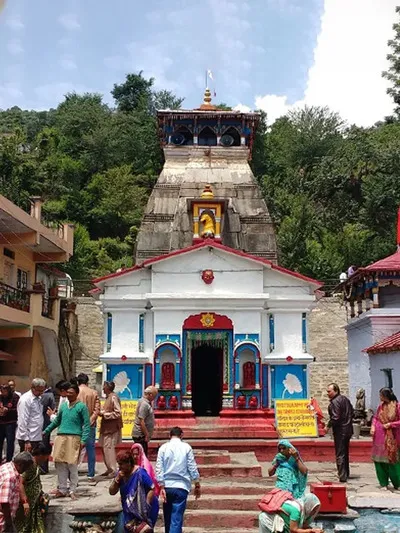
Madhyamaheshwar – The Navel of Lord Shiva in the Himalayas
Madhyamaheshwar sits at roughly 3,289–3,497 metres in the Garhwal Himalayas, depending on which source you check — Uttarakhand Tourism and the ITBP both list 3,289 m, while most current trekking guides use 3,497 m. Neither number is invented; they're just measured or reported differently. What matters more for planning is this: it's the fourth temple in the Panch Kedar pilgrimage circuit, after Kedarnath, Tungnath, and Rudranath, and it's reached only on foot.
The temple opens for 2026 on 21 May. There's no motorable road anywhere near it. You walk in, or you don't go.
Quick Facts
| Detail | Info |
|---|---|
| Region | Garhwal Himalayas, Rudraprayag district |
| Panch Kedar rank | Fourth, after Kedarnath, Tungnath, Rudranath |
| Altitude | 3,289 m per Uttarakhand Tourism/ITBP; 3,497 m per most trek operators |
| Trek distance | Uttarakhand Tourism lists 24 km; documented trekking routes describe roughly 16 km one way from Ransi (32 km round trip) |
| Duration | 5–6 days total including road travel from Rishikesh/Haridwar |
| Difficulty | Moderate |
| 2026 opening | 21 May |
| 2026 closing | Expected around 20 November; confirmed closer to the date via the Panchang |
| Roadhead/base | Ransi village (Uttarakhand Tourism's official route reference is Uniana, a short distance further along) |
Why the Distance Numbers Don't Match
If you've looked this up before landing here, you've probably seen 16 km, 19 km, 24 km, and 32 km all attached to the same trek. That's not four different treks — it's the same route measured from different starting points and counted differently. Uttarakhand Tourism's current destination page states 24 km. Its own Panch Kedar circuit page, measuring from Uniana instead, gives about 19 km. Documented trek logs describe the walk as 16 km one way from Ransi, which comes out to 32 km round trip.
Ransi is what most people mean when they say "the trek starts here" — it's the last point a private vehicle can reach. Uniana, a bit further along, is the point Uttarakhand Tourism's official route description actually names as the start. Use Ransi as your practical planning reference; don't be surprised if a guide or a signpost quotes a slightly different number than this page does.
The Panch Kedar Order — and Why Madhyamaheshwar Is Fourth, Not Second
The five Panch Kedar temples, in the order BKTC itself lists them, are Kedarnath, Tungnath, Rudranath, Madhyamaheshwar, then Kalpeshwar. Pilgrim tradition holds that Lord Shiva's body appeared across these five sites after he evaded the Pandavas by taking the form of a bull: the hump at Kedarnath, the arms at Tungnath, the face at Rudranath, the navel here at Madhyamaheshwar, and the hair at Kalpeshwar last.
You'll sometimes see Madhyamaheshwar described as the "second" temple people visit. That's a mix-up with the mythological sequence of where Shiva's body parts fell, not the pilgrimage order BKTC follows. Go by the official ranking: fourth.
The Mahabharata Story Behind the Temple
After the Kurukshetra war, the Pandavas were weighed down by guilt over killing their own kin and went looking for Lord Shiva to seek forgiveness. Shiva didn't want to face them and took the form of a bull, hiding in the Garhwal hills. When Bhima finally cornered the animal, it dived into the ground and split into five parts, each surfacing at a different spot in the mountains. The middle portion is said to have come up here — which is why the shrine is called Madhya Maheshwar, and why the Shivling inside is shaped the way it is. Locals also call the deity "Madmaheshwar."
How to Reach Ransi
There's no single route number every source agrees on for the final approach, so treat these as approximate:
- By air: Jolly Grant Airport, Dehradun, then road via Rudraprayag and Ukhimath to Ransi.
- By rail: Rishikesh Railway Station is the standard reference point most operators and BKTC itself use as the nearest railhead.
- By road: Rishikesh/Haridwar → Devprayag → Rudraprayag → Ukhimath → Ransi. Buses and shared taxis run as far as Ukhimath; local jeeps handle the last stretch to Ransi.
From Ransi, it's on foot the rest of the way.
A Sample Trek Plan
This isn't the only way to break up the walk — some trekkers do it in three days, others take longer with a rest day built in. But a common four-day pattern from Ransi looks like this:
- Day 1: Ransi to Gaundhar, through forest trail.
- Day 2: Gaundhar to Madhyamaheshwar, the steepest stretch of the whole trek — this is where most people feel it.
- Day 3: Side trip to Budha Madhyamaheshwar and back to the main temple.
- Day 4: Descend all the way back to Ransi.
Add road-travel days at either end and you're looking at 5–6 days total from Rishikesh or Haridwar.
Registration and Local Rules
The route runs through territory associated with the Kedarnath Wildlife Sanctuary, and check-post registration at Ransi is commonly mentioned by trek operators. What I couldn't pin down through an official Forest Department notice is a specific fee amount — travel blogs quote figures like ₹150 per person, but that's not something I'd publish as confirmed pricing. Carry a government photo ID either way, and check current registration requirements at Ransi before you set off; rules on remote sanctuary routes do get updated.
Places Worth the Detour
Ukhimath is where the deity moves for the winter, to the Omkareshwar Temple, once Madhyamaheshwar closes. The transfer itself is a multi-day procession — a decorated palanquin, the Utsav Doli, carried from Ukhimath through Ransi and Gaundhar to the temple.
Budha Madhyamaheshwar, about 2 km uphill from the main temple, is the older stone shrine, set right in front of the Chaukhamba range. There's a small lake here with a wide outlook toward Kedarnath, Neelkanth, Trishul, Kamet, and Panchachuli on a clear day — visibility depends entirely on weather, so don't plan the whole trip around a photo you saw online.
Kanchani Tal is a 16 km trek from the main temple, confirmed by Uttarakhand Tourism as one of the tougher add-ons on this route. It's not for everyone — even seasoned trekkers describe sections of it as demanding — but it's one of the least-visited alpine lakes in this part of Garhwal, which is exactly why people who've done it tend to bring it up unprompted.
When to Go
Late May through June, right after the temple opens, and again September into October are the two windows most guides recommend. July and August bring the monsoon, and the Rudraprayag–Ukhimath road is prone to disruption in heavy rain — I wouldn't plan this trek for those months unless you have no other choice. November gets progressively colder as the closing date approaches, and December through April the temple is shut and the upper route isn't realistically walkable.
Nights are cold even in the "good" months. Pack for it regardless of what the calendar says.
What to Pack
- Broken-in trekking shoes with real grip, not something new out of the box
- Layered woollens for cold nights, even in May and June
- A rain shell and a cover for your pack
- Basic first aid and any personal medication
- A power bank — don't count on charging points along the trail
- A water bottle, plus purification tablets or drops
- Government photo ID for check-post registration
Accommodation
There's nothing resembling a hotel on this route. What you'll find are homestays at Ransi, Gaundhar, Bantoli, and near the temple itself — simple rooms, home-cooked meals, and people who know the trail better than any guidebook. Some trekkers bring their own tents for flexibility. Book ahead if you're going in the June–September stretch; the handful of rooms at each stop fill quickly.
Common Mistakes
- Skipping registration at the Ransi check post because a blog said it wasn't required — check locally rather than trusting a single source.
- Underestimating the Gaundhar-to-temple climb. It's the hardest part of the trek by a wide margin.
- Assuming mobile coverage will hold up past Ransi. It doesn't, reliably.
- Going during peak monsoon and hoping the road cooperates.
- Packing light on warm layers because the trip is in "summer."
Frequently Asked Questions
Q1. When does Madhyamaheshwar Temple open in 2026?
21 May 2026, following a multi-day palanquin procession from Ukhimath through Ransi and Gaundhar.
Q2. When does it close?
Around 20 November, confirmed closer to the date based on the Panchang.
Q3. How far is the trek, really?
It depends who you ask. Uttarakhand Tourism says 24 km; trek logs measuring one way from Ransi put it at 16 km, or 32 km round trip. Both are defensible — they're just measuring differently.
Q4. Is Madhyamaheshwar the second Panch Kedar temple?
No. BKTC lists it fourth, after Kedarnath, Tungnath, and Rudranath. The "navel appeared second" idea comes from the mythology, not the pilgrimage order.
Q5. Do I need a permit?
Registration at the Ransi check post is commonly required for this route. I couldn't confirm a specific fee from an official source, so check current requirements locally before you go.
Q6. Where does the trek actually start?
Most people start from Ransi, the last point reachable by vehicle. Uttarakhand Tourism's official route reference names Uniana, a short distance beyond, as the formal starting point.
Q7. Is there mobile network on the trail?
Not reliably. Don't plan around having signal past Ransi.
Q8. What's the accommodation like?
Basic homestays at Ransi, Gaundhar, Bantoli, and near the temple. No hotels.
Q9. Which Panch Kedar trek is hardest?
Rudranath is the one most guides and pilgrims point to, mainly because of how remote the approach is.
Q10. Can I do this trek solo?
People do. It's remote enough, and the weather changes fast enough, that going with a local guide or a group is the safer call if you haven't done a multi-day Himalayan trek before.
Conclusion
Madhyamaheshwar doesn't have a shortcut. No road reaches it, and every number you'll find about the distance depends on where someone started counting. What's consistent across every source is this: it's the fourth Panch Kedar temple, it opens 21 May 2026, and the walk from Ransi is real work, not a stroll. Plan for that honestly and the trip goes fine.
Suggested Tour: Panch Kedar Trek Package