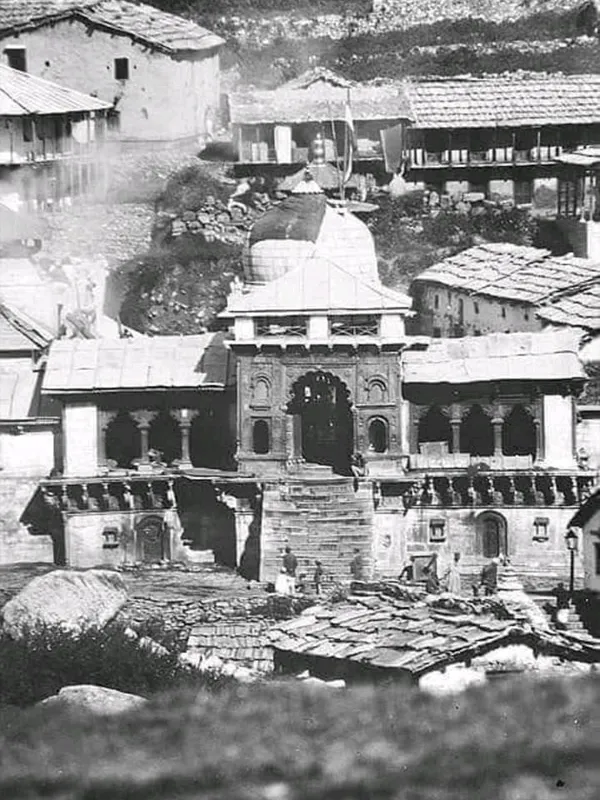
Badrinath Dham History and Legends

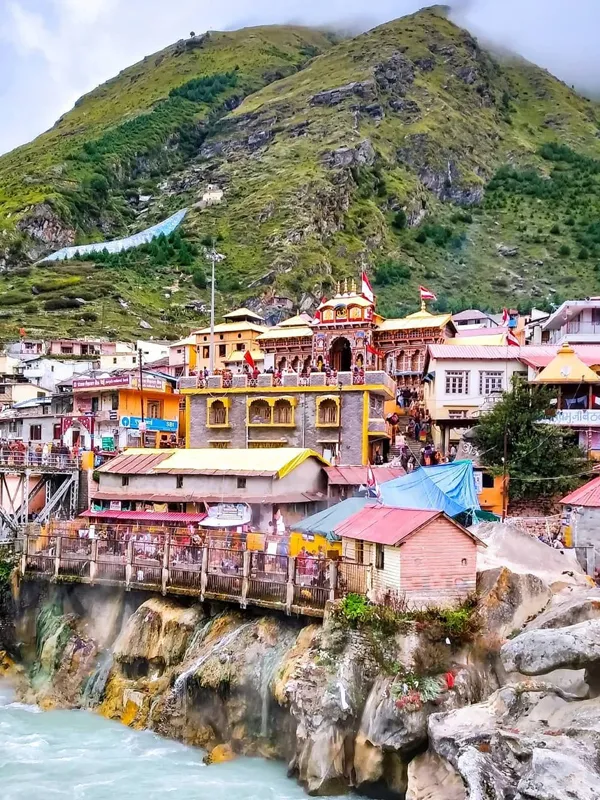
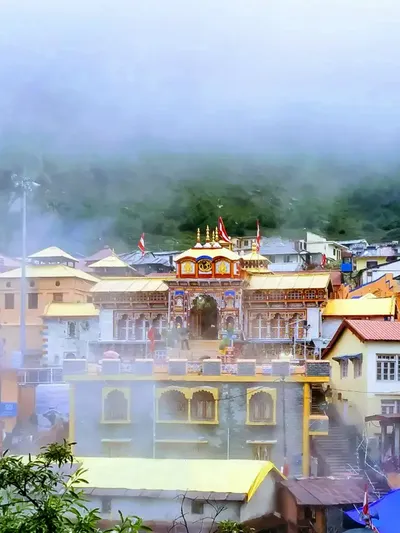
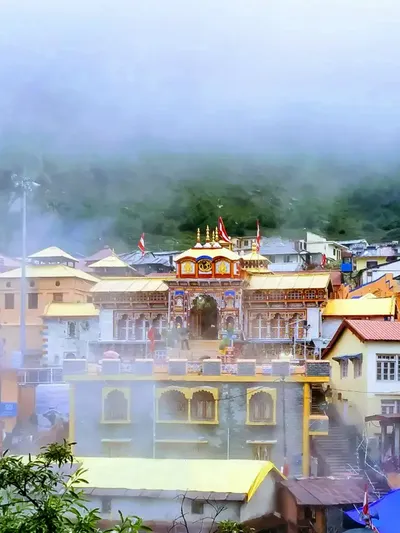
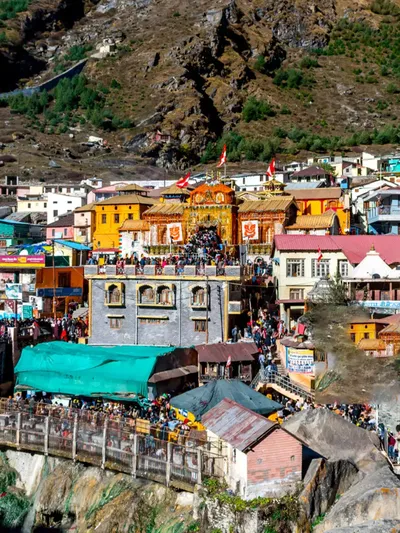
The temple is an incredibly stunning, one-of-a-kind visual treat for everyone visiting it. The temple is a mark of purity and deep spirituality for every Indian since ancient times.
But how did this temple come into being? What was the reason behind its creation? Why was it built in the first place?
There are many questions that arise when we think about this holy Dham. Here are the answers to all your questions and doubts.
Mythological Account
There are two primary mythological accounts related to the creation of Badrinath Dham:
1. Lord Vishnu and Goddess Laxmi
Once, when Lord Vishnu was criticized by a sage for his careless and luxurious lifestyle, he decided to sit in deep meditation as a way of asking for forgiveness. It was in Badrinath where he sat down to perform this meditation.
Seeing this, his wife Goddess Laxmi decided to convert herself into a jujube tree (a commonly occurring tree in that area, hence its name) and covered him from above in order to protect him from the harsh weather conditions.
2. Pandavas and Mahabharata Connection
Badrinath Dham has found its mention in various Hindu holy books as well as the Mahabharata. This place is mentioned as the destination where the Pandava brothers, along with their wife Draupadi, stopped on their way to heaven.
They stayed for a while in the village of Mana, inside a cave situated approximately 3 km from the main Badrinath temple.
There are several other tourist attractions around the temple that mark the presence of gods in this area. Places like Vyas Gufa and Ganesh Gufa, where the epic Mahabharata was written by sage Vyas and his scribe Lord Ganesh, add to the spiritual and mythological fascination of this place.
Lord Shiva in Badrinath
Another interesting mythological account of Badrinath is that initially this Dham served as the home of Lord Shiva and his consort Goddess Parvati.
Once, after returning from a stroll in the Badri Valley, Shiva and Parvati found a small crying baby at their doorstep. The baby was crying frantically and would not stop. Goddess Parvati decided to pick up the child but was stopped by Lord Shiva, who expressed concern as they did not know where the child came from, and there were no footprints nearby.
Parvati ignored Shiva’s concerns, picked up the baby, and took him inside to make him comfortable. The child appeared happy and was looking at Shiva gleefully.
By evening, when Shiva and Parvati returned, they found the house closed from inside. Lord Shiva was left with two options—to burn the house or to leave the place. They chose to leave, giving the place to Lord Vishnu, who had taken the form of the crying baby.
Historical Account
The exact date of the creation of Badrinath Dham Temple is still unknown. However, the first references relate to the idol of the presiding deity of Badrinath Ji, which can be dated between 1750–500 BC, as per Vedic scriptures.
Initially, until the 8th century, the temple was believed to be a Buddhist monastery due to its architectural design. Later, in an effort to re-establish Hinduism, Adi Shankaracharya approached King Kanak for support to remove Buddhist influence and establish a Hindu temple dedicated to Lord Vishnu.
After this, the temple went through several renovation and reconstruction phases, as it was often damaged by avalanches and landslides. The present structure was reconstructed and expanded during the 17th century by the kings of Garhwal.
Today, Badrinath Dham plays a pivotal role in the Char Dham Yatra of India, the Chota Char Dham Yatra of Uttarakhand, and is also one of the holiest 108 Divya Desams.