Binsar, The Charming Hill Station of Kumaon
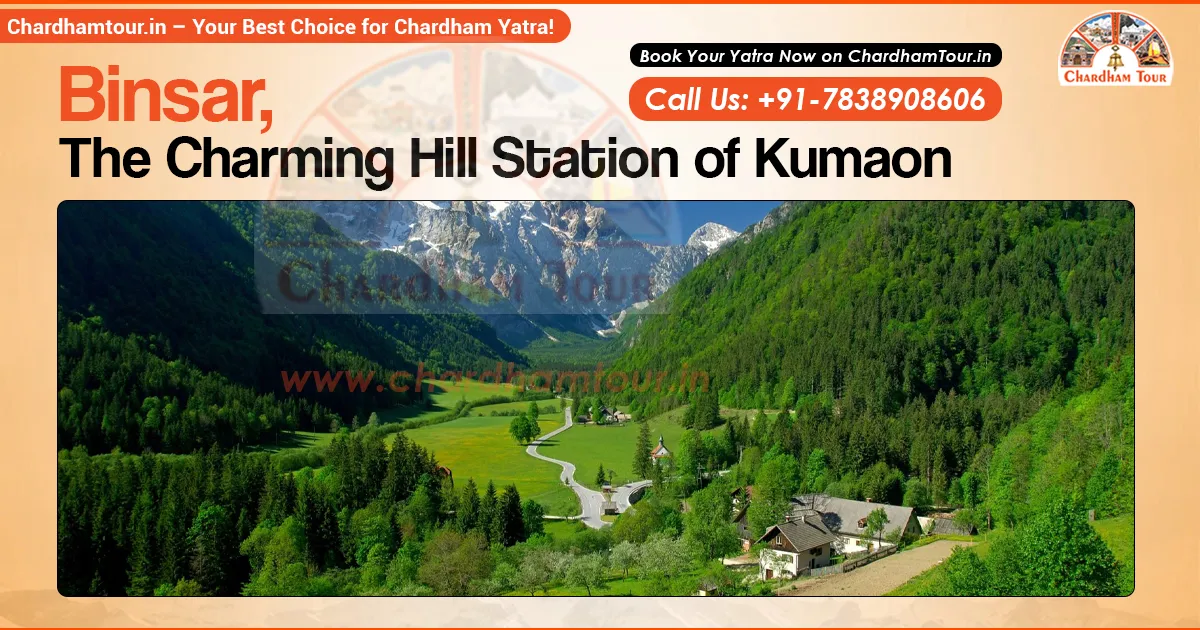
Binsar sits in the Almora district of Uttarakhand, in the Kumaon hills. Kumaon Mandal Vikas Nigam, the state's own tourism corporation, lists the elevation of Binsar at around 2,420 metres above sea level. The Binsar Wildlife Sanctuary, meanwhile, has a commonly documented average elevation of about 2,412 metres and rises to roughly 2,500 metres at its higher points. The sanctuary's altitude range is also documented as extending from around 900 to 2,500 metres. These differences reflect the distinction between Binsar as a destination and the wider wildlife sanctuary, rather than a contradiction in the figures.
There's no mall road here and no bumper-to-bumper traffic. Just oak forest, mist that moves through the valley most mornings, and a wildlife sanctuary that starts right where the town ends.
Binsar is a hill station and wildlife sanctuary about 30 km from Almora. It's known for the sanctuary itself, the Zero Point viewpoint, and a handful of colonial-era estates — Khali and Mary Budden — tucked into the forest. September to November is the clearest weather window. The forest gate, per Kumaon Mandal Vikas Nigam, runs 7 AM–6 PM in summer and 8 AM–5 PM in winter. Nearest railhead is Kathgodam (110–120 km); nearest airport is Pantnagar (around 150 km).
Binsar at a Glance
| Fact | Detail |
|---|---|
| Location | Almora district, Kumaon, Uttarakhand |
| Elevation | Binsar: ~2,420 m (KMVN); Binsar Wildlife Sanctuary: ~2,412 m average, rising to ~2,500 m. |
| Sanctuary established | 1988 |
| Sanctuary area | Reported between roughly 45.6 and 47 sq km, depending on the source |
| Distance from Almora | ~30 km |
| Distance from Kathgodam | ~110–120 km |
| Distance from Pantnagar Airport | ~150 km |
| Zero Point | ~2 km walk from the KMVN rest house |
| Forest gate timing | 7 AM–6 PM summer, 8 AM–5 PM winter (KMVN) |
| Birds recorded | 200+ across various tourism and conservation listings |
Why Visit Binsar?
Binsar isn't built for adventure sports or nightlife. Its pitch is quieter: thick oak and rhododendron cover, well over 200 recorded bird species, and — on a clear day — views of Nanda Devi, Trishul and Panchachuli from a single spot.
Government tourism material describes Binsar as the summer capital of the Chand kings, who ruled Kumaon roughly from the 7th to the 18th century. Some private travel sites narrow that to the 11th–18th century instead; either way, it was a seasonal royal base for a long stretch of that dynasty's rule, and the colonial-era estates scattered through the forest today are a later layer on top of that history.
Places to See in Binsar
Binsar Wildlife Sanctuary
This is why most people come. The sanctuary was notified in 1988 to protect the region's shrinking broadleaf oak forest. Its area gets reported differently depending on the source — some tourism pages say around 47 sq km, official biodiversity documentation puts it closer to 45.6 sq km. Both are in circulation; neither is wrong so much as measured differently.
Wildlife includes leopard, musk deer, Himalayan black bear, barking deer, goral and jungle cat, though sightings are never guaranteed — this is dense forest, not a safari circuit with jeeps chasing radio callouts. Birds are the more reliable draw. Over 200 species have been recorded, including laughing thrush, koklass and kalij pheasant, and Himalayan magpies.
On timings and fees, here's what I can actually confirm rather than guess at: KMVN's own booking page states that the forest gate, roughly 10 km before their Binsar rest house, runs 7 AM to 6 PM in summer and 8 AM to 5 PM in winter, and that access is regulated by the Forest Department. The same page notes the entry fee is paid directly at the gate — it doesn't publish an exact tariff online, and neither could I find one on a current official notice, so treat any specific rupee figure you see quoted elsewhere as indicative, not fixed. One detail worth knowing before you drive up: two-wheelers are not permitted past the designated check post, per KMVN's own guidance, so if you're travelling by bike, plan for a car or taxi for the last stretch.
Zero Point
The highest viewpoint inside the sanctuary, roughly 2 km on foot from the KMVN rest house. It's a forest hike rather than a stroll — some stretches are steep, and tourism material describing it as "a bit challenging" is closer to the mark than calling it easy. On a clear morning you get a wide sweep of peaks: Nanda Devi, Trishul, Nanda Kot and Panchachuli, among others.
Khali Estate
Just inside the forest, Khali Estate traces back to Sir Henry Ramsay, the British Commissioner of Kumaon from 1856 to 1884, who built it as a summer retreat. Mahatma Gandhi later ran a "Shail Ashram" here for a few years, and Vijaya Lakshmi Pandit, Jawaharlal Nehru's sister, is also linked to the property — sources agree on the connection but don't pin down the exact year, so I'd leave that vague rather than invent a decade. It runs as a heritage resort today; the grounds and orchards are worth a look even if you're not staying.
Mary Budden Estate
A colonial-era cottage dating to 1899, named after Mary Budden, a British missionary who ran it as a school for local orphans. It was restored by later owners and now operates as a boutique homestay at roughly 8,000 ft. It's one of the better-documented pieces of Binsar's colonial history, which is more than you can say for some of the other estates in the area.
Bineshwar (Binsar) Mahadev Temple
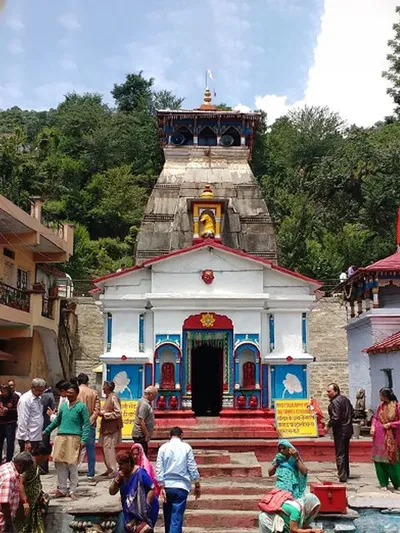
This is the temple Binsar takes its name from — worth flagging, because there's a completely unrelated "Binsar Mahadev" near Ranikhet, in Pauri Garhwal, that shows up in search results and gets confused with this one. The local temple sits about 6 km from Ayarpani, right on the road into the sanctuary, and dates to the 16th century, built during the reign of Chand king Kalyan Chand. Mary Budden Estate is close by. It doesn't draw pilgrimage crowds the way the temples on the main Char Dham route do, but it's a genuine stop if you're already driving in. Kasar Devi Temple, where Swami Vivekananda is known to have meditated, is a separate site about 8 km from Almora town — usually visited on its own rather than combined with this one.
Gananath Temple
Another Shiva temple in the wider Binsar–Almora area. Local material describes a natural rock formation associated with the site, but I couldn't verify the specific details some tourism pages add — the water-dripping stone, the exact festival crowd numbers — against anything solid. Worth a mention for travellers building a temple circuit; I'd stop short of promising specifics.
Interpretation Centre & Pariyadeva Pashan
Near the entry gate, a small interpretation centre covers Binsar's flora and fauna zones — a five-minute stop before heading in. Further out, Pariyadeva Pashan is an archaeological site often described as Megalithic; tourism sources put the relics around 1500–500 BC, though I'd treat that dating as commonly cited rather than officially confirmed.
Best Time to Visit Binsar
| Season | Months | What to Expect |
|---|---|---|
| Clearest views | Sept–Nov | Stable weather, best Himalayan visibility |
| Also recommended | Oct–Mar | District tourism material flags this stretch too, for clear winter conditions |
| Greener, warmer | Apr–Jun | Forest in bloom, good for birdwatching |
| Monsoon caution | Jul–Aug | Heavy rain, landslide risk on forest roads, slippery trekking trails |
One correction worth making explicitly: Binsar doesn't see avalanches. That's a snow-load hazard specific to much higher, permanently snow-bound terrain. The real monsoon risk here is landslides and narrow, slick forest roads — reason enough to plan around July–August rather than push through them.
How to Reach Binsar
- By Air: Pantnagar Airport, roughly 150 km away by road, is the nearest.
- By Rail: Kathgodam, roughly 110–120 km away, is the nearest railhead, connected to Delhi, Lucknow and Kolkata.
- By Road: Binsar connects to the main North Indian road network via Almora, with regular buses, taxis and shared cabs running that last stretch.
Delhi to Binsar route: Delhi → Hapur → Moradabad → Rampur → Haldwani → Almora → Binsar. Figure roughly 380–400 km depending on the exact route, and 10–12 hours of driving once you account for hill roads, traffic and stops. If you're travelling with elderly family, break the journey overnight rather than pushing straight through.
Food Scene in Binsar
Local, Pahadi, no frills:
- Aloo ke Gutke – boiled potatoes sautéed in local spices
- Madua ki Roti – finger-millet flatbread, a Kumaoni staple
- Bhang ki Khatai – tangy hemp-seed sauce
- Palak ka Kapa – spinach curry in local spices
- Rhododendron Squash – a sweet drink made from a flower that only grows at this altitude
For Kumaoni thalis, The Kasar Kitchen (Matena village, on the Binsar road) and Bird Song, inside the Club Mahindra Binsar Valley resort, are the two names that keep coming up. Confirm they're open before you make a special trip — this isn't a place with a big restaurant scene, and most stays cook home-style meals anyway.
Where to Stay
Binsar runs from a government rest house to high-end homestays:
- Binsar Forest Retreat – eco-lodge inside the sanctuary, organic meals
- Mary Budden Estate – heritage boutique homestay, five acres (see above)
- The Kumaon – minimalist-design property, Kumaoni farm-to-table food, private terraces facing the Himalayas
- Binsar Adventure Camp – tents and dorms, bonfires
- KMVN Tourist Rest House (TRH Binsar) – the government-run option, and the one with the most specific rules worth knowing before you book: electricity runs off a generator for about three hours in the evening only, non-vegetarian food isn't allowed on the premises under wildlife regulations, and the forest gate about 10 km before the property closes on the KMVN-published schedule above. Book ahead through KMVN directly.
Common Mistakes to Avoid
- Arriving after the forest gate's closing time and getting turned back
- Assuming a two-wheeler can get you all the way in — it can't, past the check post
- Expecting a restaurant scene — carry snacks if you're particular about food
- Heading to Zero Point late in the afternoon without a torch; the forest gets dark fast
Pro Tips
- Pack warm layers even for April–June trips. Evenings drop fast at this elevation.
- Book KMVN or private homestays ahead of the September–November peak.
- Hire a local guide inside the sanctuary if birdwatching or wildlife spotting is the point of the trip.
- Carry cash. Digital payment coverage in forest-area stays isn't consistent.
What to Pack for Binsar
- Layered clothing — a fleece plus a windproof shell covers most months
- Sturdy shoes with grip for the Zero Point walk and forest paths
- A torch or headlamp; several stays here, including the KMVN rest house, run limited generator power in the evening
- Binoculars, if birdwatching interests you at all
- A power bank, for the same reason
Binsar vs. Other Kumaon Hill Stations
| Destination | Best For | Crowd Level |
|---|---|---|
| Nainital | Lake, markets, families wanting activities | High, especially weekends |
| Almora | Town culture, easy access, day-trip base | Moderate |
| Binsar | Forest, birdwatching, quiet Himalayan views | Low |
Binsar isn't a substitute for Nainital's boating and markets. It's the opposite trip — built for a forest rest-house terrace and mist moving through oak trees, not a cable-car queue.
Sources checked: Kumaon Mandal Vikas Nigam's official Binsar and TRH Binsar pages, Incredible India (Ministry of Tourism), District Almora's official tourism pages, and multiple independent travel and conservation write-ups cross-checked against each other where government figures weren't available. Where sources disagreed — sanctuary area, exact historical dates, entry fees — that disagreement is flagged above rather than resolved by picking one number and presenting it as settled. Fees, timings and access rules can change; confirm at the gate or with KMVN directly before you travel.
Frequently Asked Questions
Q1. What is Binsar famous for?
The Binsar Wildlife Sanctuary, Zero Point's Himalayan views, and colonial-era estates like Khali and Mary Budden tucked into the forest.
Q2. What is the altitude of Binsar?
Kumaon Mandal Vikas Nigam lists Binsar at 2,420 metres. Some tourism sites cite 2,412 metres for the sanctuary's high point near Zero Point — both figures are in circulation, and the difference doesn't affect trip planning.
Q3. What is the entry fee for Binsar Wildlife Sanctuary?
It's collected directly at the forest gate. KMVN's own site doesn't publish a fixed tariff online, so treat any exact figure you see quoted elsewhere as indicative rather than official, and confirm the current amount at the gate.
Q4. What is the best time to visit Binsar?
September to November for the clearest Himalayan views. Some district tourism material also recommends October through March. April–June is greener and pleasant. July–August brings monsoon rain and landslide-prone roads.
Q5. How far is Binsar from Almora?
About 30 km, roughly an hour to 90 minutes depending on road conditions.
Q6. How do I reach Binsar from Delhi?
By road it's roughly 380–400 km via Hapur, Moradabad, Rampur, Haldwani and Almora, typically 10–12 hours. By train, take a Kathgodam-bound service, then a taxi for the remaining ~110–120 km.
Q7. What are the Binsar forest gate timings?
Per KMVN, 7 AM–6 PM in summer and 8 AM–5 PM in winter. The gate sits roughly 10 km before the KMVN rest house, and access is regulated by the Forest Department.
Q8. Does Binsar get snowfall?
It can, particularly in colder spells during December and January, but it isn't guaranteed every winter and isn't a heavy-snow destination the way Auli is.
Q9. Is Binsar good for a family trip?
It suits families who enjoy nature walks and quiet surroundings over activity-heavy holidays. Factor in hilly roads, forest terrain and limited entertainment options when deciding.
Q10. What is Zero Point in Binsar?
The highest viewpoint inside the sanctuary, about 2 km on foot from the KMVN rest house — a genuine forest hike rather than a flat stroll — with views of Nanda Devi, Trishul and other peaks on a clear day.
Q11. Is Binsar suitable for a one-day trip?
It can be done as a day trip from Almora, but an overnight stay lets you catch Zero Point at sunrise without rushing.
Q12. Are there avalanches in Binsar during monsoon?
No. That's a hazard specific to much higher, snow-bound terrain. Binsar's monsoon risk is landslides and slippery forest roads.
Q13. Can I take a two-wheeler into the Binsar Wildlife Sanctuary?
Not past the designated check post — KMVN's current guidance rules this out. Plan for a car or taxi for that stretch.
Q14. What food should I try in Binsar?
Aloo ke Gutke, Madua ki Roti, Bhang ki Khatai and Rhododendron Squash are the local specialities worth trying.
Chardham Travel Guide
Chardham Travel Packages

Hotels in Chardham
Beware of Fake Char Dham & Kedarnath Helicopter Booking Websites
Fake websites, WhatsApp accounts and advertisements may impersonate genuine travel companies or helicopter operators. Always verify before paying.