Adi Kailash vs Kedarnath is one of the most common questions pilgrims ask while planning a Himalayan Shiva pilgrimage. Both are sacred abodes of Lord Shiva in Uttarakhand, but the two journeys are built very differently.
Kedarnath is a Jyotirlinga temple reached by a 16 km trek, backed by decades of pilgrim infrastructure. Adi Kailash is a remote, permit-restricted mountain near the Indo-Tibet border, where the peak itself is worshipped. This guide compares both honestly so you can pick the right one for 2026.
Quick Answer:
|
Temple Worship vs Mountain Worship — What Are You Actually Visiting?
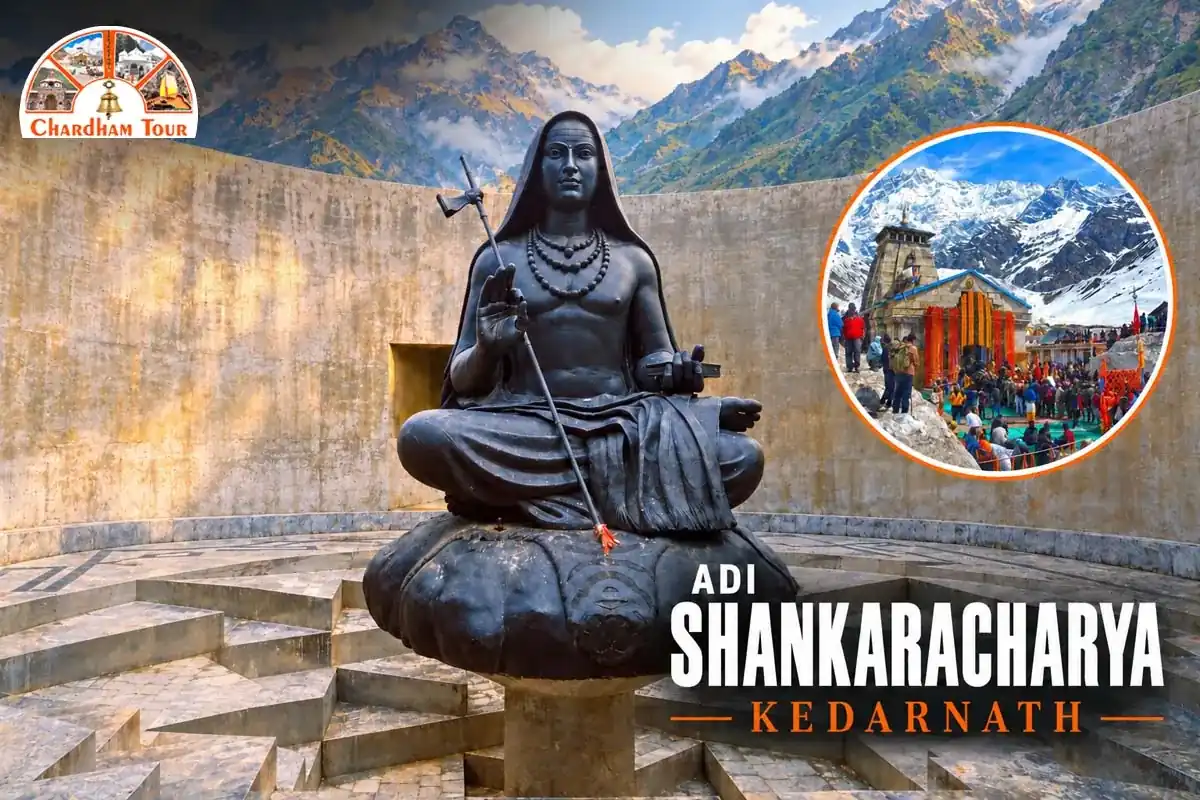
Kedarnath Temple sits at 3,583 m in Rudraprayag district and is one of the twelve Jyotirlingas, part of the Chota Char Dham circuit with Badrinath, Gangotri, and Yamunotri. Pilgrims walk into the sanctum for darshan; the temple is believed to be over a thousand years old.
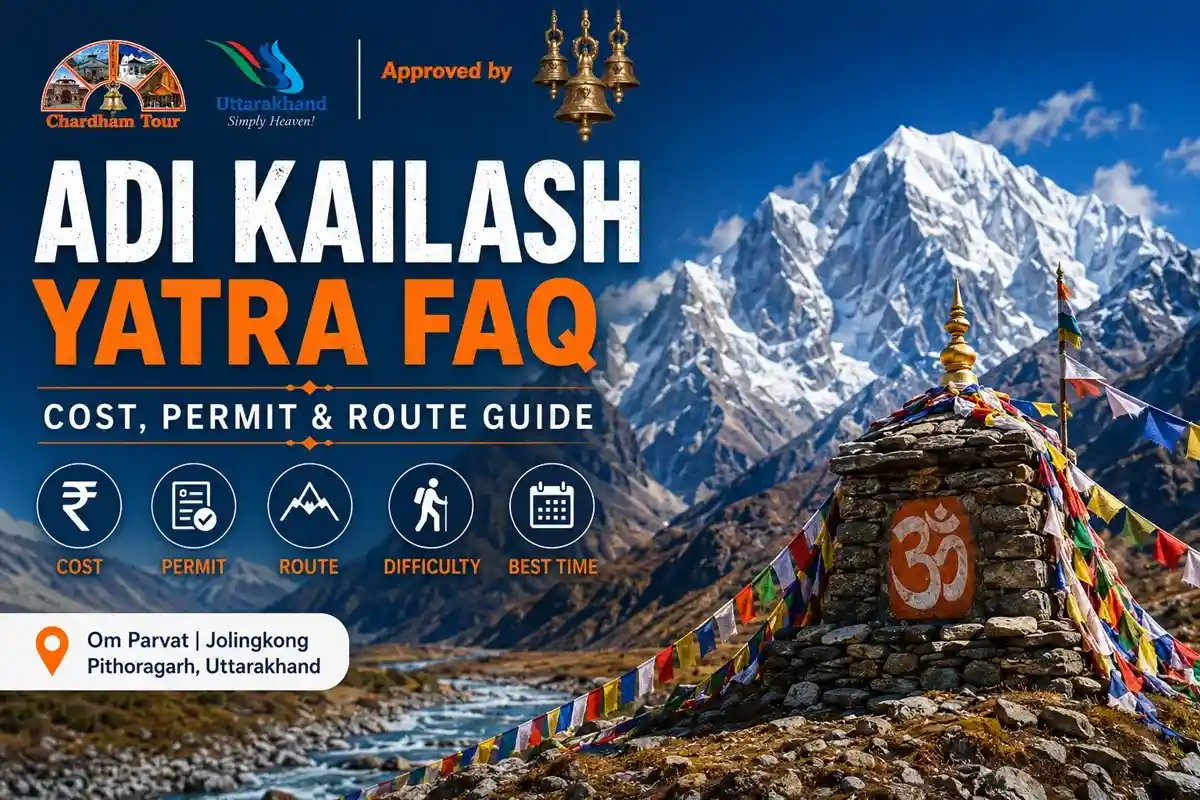
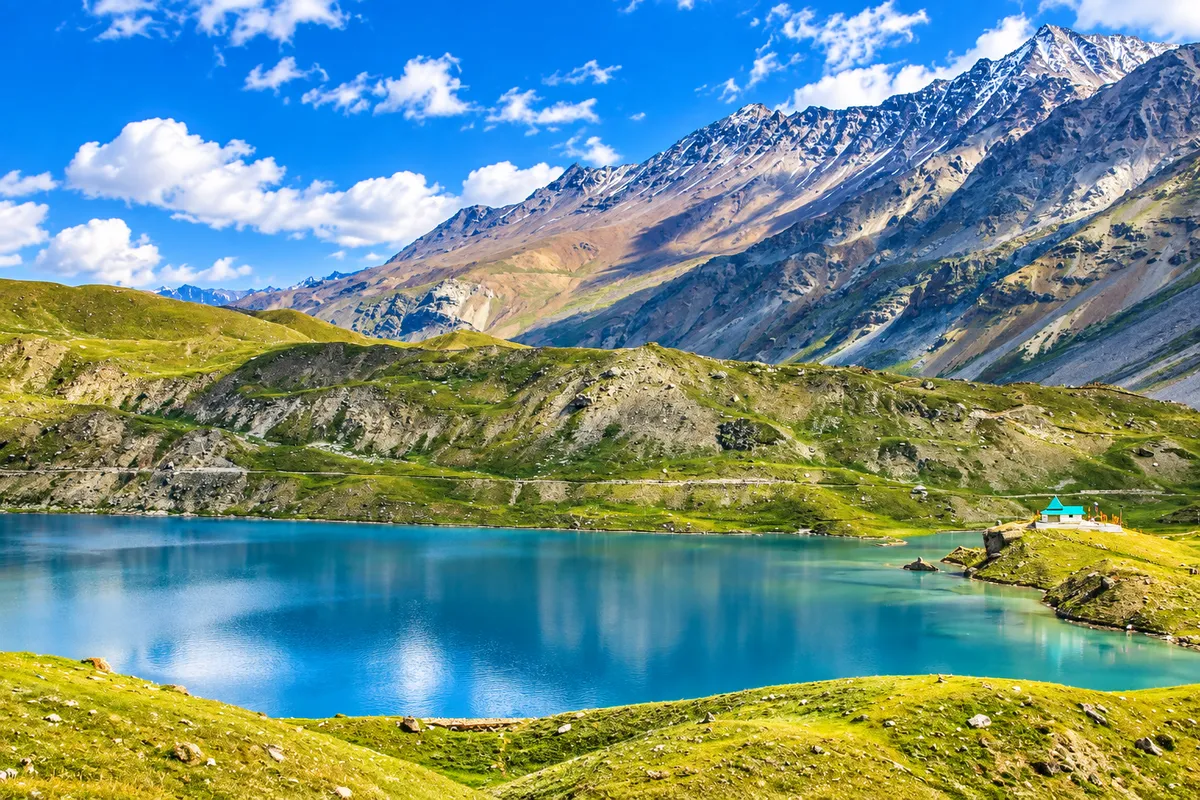
Adi Kailash, also called Chhota Kailash, is a separate snow-capped peak in Pithoragarh district that resembles Mount Kailash in Tibet. It’s considered one of the five Panch Kailash peaks in Hindu tradition. There’s no sanctum here — darshan happens from Parvati Sarovar near Jolingkong, the pilgrimage base area, not from the mountain itself.
Nearby Om Parvat, where snow forms a natural “Om” shape on bare rock, is usually visited on the same trip. This temple-versus-mountain distinction is the core difference behind every Adi Kailash vs Kedarnath comparison.
Altitude Comparison: Adi Kailash vs Kedarnath
Elevation is where the two yatras differ most. Here’s how key points along each route compare — figures are approximate and vary slightly by source.
| Location | Approx. Height |
| Sonprayag | 1,829 m |
| Gaurikund | 1,982 m |
| Kedarnath Temple | 3,583 m |
| Dharchula | ~915 m |
| Gunji | ~3,200 m |
| Nabi | ~3,600 m |
| Jolingkong / Parvati Sarovar (darshan point) | ~4,600–4,750 m |
| Adi Kailash Peak | ~5,945 m (varies by source) |
Full Comparison Table: Adi Kailash vs Kedarnath
| Parameter | Adi Kailash | Kedarnath |
| Location | Pithoragarh, near Indo-Tibet border | Rudraprayag, Garhwal Himalayas |
| Darshan altitude | ~4,600–4,750 m | 3,583 m (temple) |
| Trek distance | Approx. 4–6 km beyond Gunji/Nabi (road-head varies) | 16 km one-way Kedarnath trek distance from Gaurikund |
| Nearest airport | Pantnagar, ~300 km from Dharchula | Jolly Grant, Dehradun, ~239 km |
| Registration | Mandatory Inner Line Permit (ILP) | Mandatory Char Dham Yatra registration |
| Best season | May–June and September | May–June and September–October |
| Trip duration | 8–10 days from Delhi | 4–6 days from Rishikesh/Haridwar |
| Helicopter | No regular public shuttle service | Yes — IRCTC HeliYatra, seasonal fares |
| Crowd level | Low, capped by ILP quotas | High, especially May–June |
Route and How to Reach
Getting to Adi Kailash
Most pilgrims travel from Delhi via Kathgodam, Almora, and Pithoragarh to Dharchula — roughly 690 km over two to three days. Beyond Gunji, vehicle access is typically restricted by season and permit rules, and the final stretch to Jolingkong is on foot. An overnight halt at Gunji is usually recommended for acclimatisation.
Getting to Kedarnath
The route runs Haridwar or Rishikesh to Devprayag, Rudraprayag, Guptkashi, Sonprayag, and Gaurikund — about 220 km of driving, then a 16 km trek through Jungle Chatti and Linchauli. Starting before sunrise avoids the midday sun and heavy mule traffic.
Trek Difficulty and Altitude Sickness (AMS)
Physically, Adi Kailash’s final trek is shorter than Kedarnath’s. But logistically, Kedarnath is much easier — a paved, railed 16 km path with tea stalls, ponies, and palkis, usually done in six to eight hours.
Adi Kailash involves less walking but a far tougher road journey, and the altitude gain near Jolingkong happens fast. Acute Mountain Sickness (AMS) risk is real above 3,500 m on both routes — go slow, hydrate well, and don’t skip acclimatisation stops.
Permits and Registration
Adi Kailash Yatra Permit: Inner Line Permit
Since the route runs through an ITBP-patrolled border zone, every Indian pilgrim needs an Inner Line Permit from the Dharchula SDM office, plus a medical certificate and ID proof. Foreign nationals need a Protected Area Permit from the Ministry of Home Affairs — these rules change periodically, so confirm current requirements directly with the MHA or a registered operator.
Kedarnath: Char Dham Yatra Registration
Char Dham Yatra registration is mandatory, done online via the Uttarakhand Tourist Care portal or at counters in Haridwar and Rishikesh. Without a valid QR pass, you won’t clear the Sonprayag checkpoint — this applies to helicopter travellers too.
Best Time to Visit Kedarnath and Adi Kailash
Kedarnath typically opens late April and closes mid-November; May–June and September–October are the most reliable months, since monsoon brings landslide risk. Adi Kailash has a shorter window — May, June, and September — for the clearest Om Parvat view. Avoid both routes during monsoon.
Accommodation Options
Kedarnath offers GMVN guest houses, private lodges, and tent stays near Gaurikund and Sonprayag — book early for peak season. Adi Kailash accommodation is simpler: KMVN rest houses and homestays at Dharchula and Gunji, with basic campsites near Nabi and Jolingkong.
Approximate Budget Breakdown
These are rough, per-person, 2026-indicative estimates that change by season and operator — always confirm current rates before booking.
| Expense head | Adi Kailash (approx.) | Kedarnath (approx.) |
| Transport (Delhi to base) | ₹6,000–10,000 | ₹3,000–6,000 |
| Permit/registration fee | ₹200–400 (ILP) | Free (Char Dham registration) |
| Stay + food (package) | ₹10,000–16,000 | ₹5,000–9,000 |
| Pony/porter (optional) | ₹2,500–4,000 | ₹2,500–4,500 |
| Helicopter (optional) | Not applicable | Seasonal fares — check IRCTC HeliYatra |
| Total trip estimate | ₹20,000–30,000 | ₹10,000–20,000 |
Who Should Choose Which Pilgrimage
- First-time pilgrims and families: Kedarnath — better infrastructure and helicopter backup.
- Senior citizens: Kedarnath’s pony, palki, and helicopter options are more manageable than Adi Kailash’s high-altitude final trek.
- Experienced Himalayan travellers: Adi Kailash suits those wanting solitude and border-region culture.
- Time-constrained travellers: Kedarnath fits 4–5 days; Adi Kailash realistically needs 8–10 days.
Safety and Common Mistakes
Kedarnath’s trail gets crowded 8 a.m.–noon in peak season; darshan before 6 a.m. means shorter queues. Carry cash — ATMs thin out past Guptkashi.
On the Adi Kailash route, mobile network fades past Dharchula, so share your itinerary with family and carry your ILP at every checkpoint (multiple ITBP posts operate en route). Underestimating the cold at Gunji and Nabi is a common first-timer mistake.
Key Takeaways
- Kedarnath: 16 km trek, 3,583 m, Char Dham registration, regular helicopter access — best for families and first-timers.
- Adi Kailash: shorter final trek but a much longer journey, ILP mandatory, no regular helicopter — best for experienced trekkers.
- Kedarnath trips typically cost roughly half of an Adi Kailash yatra.
- Both peak in May–June and September–October; avoid monsoon on either route.
FAQs: Adi Kailash vs Kedarnath
Is Adi Kailash harder than Kedarnath?
Overall, yes — Adi Kailash needs a longer, tougher journey, even though its final trek is shorter than Kedarnath’s.
What is the Kedarnath trek distance from Gaurikund?
About 16 km one-way, with an altitude gain of roughly 1,600 metres.
What is the Adi Kailash peak height?
Commonly cited around 5,945 m, though pilgrims only go as high as Jolingkong’s darshan point.
Can children visit Adi Kailash or Kedarnath?
Kedarnath is more child-friendly with pony and helicopter options; Adi Kailash’s altitude makes it tougher for young children.
Can diabetic or heart patients do these yatras?
Both involve high altitude, so a doctor’s clearance is essential before either trip.
Can senior citizens do the Adi Kailash Yatra?
Yes, with ponies for the final stretch, but Kedarnath remains more practical for most seniors.
Do I need a permit for both yatras?
Yes — Kedarnath needs Char Dham registration; Adi Kailash needs a separate Inner Line Permit.
Which is cheaper, Adi Kailash or Kedarnath?
Kedarnath, roughly ₹10,000–20,000 per person versus ₹20,000–30,000 for Adi Kailash.
What is the Adi Kailash Yatra permit process in 2026?
Pre-register where available, then collect the ILP in person at Dharchula with ID and a medical certificate.
Is a regular helicopter service available for Adi Kailash?
No — unlike Kedarnath’s IRCTC HeliYatra, there’s no routine public shuttle to Adi Kailash.
Can I drive myself to Adi Kailash or Kedarnath?
Self-driving works up to Dharchula or Gaurikund; beyond that, access depends on permits and season.
Can foreigners visit Adi Kailash?
Only with a Protected Area Permit from the MHA — rules change often, so verify before planning.
What is the best time to visit Kedarnath and Adi Kailash?
May–June and September–October for Kedarnath; May, June, and September for Adi Kailash.
Final Verdict
Kedarnath remains the safer, faster choice for families, first-timers, and senior citizens, with helicopter backup and manageable logistics. Adi Kailash suits experienced travellers seeking a remote Himalayan pilgrimage with genuine solitude.
In the end, the Adi Kailash vs Kedarnath decision comes down to fitness, dates, and how much isolation you want. Whichever Shiva yatra you choose, register early, respect the altitude, and confirm current 2026 permit rules with an official portal before you travel.