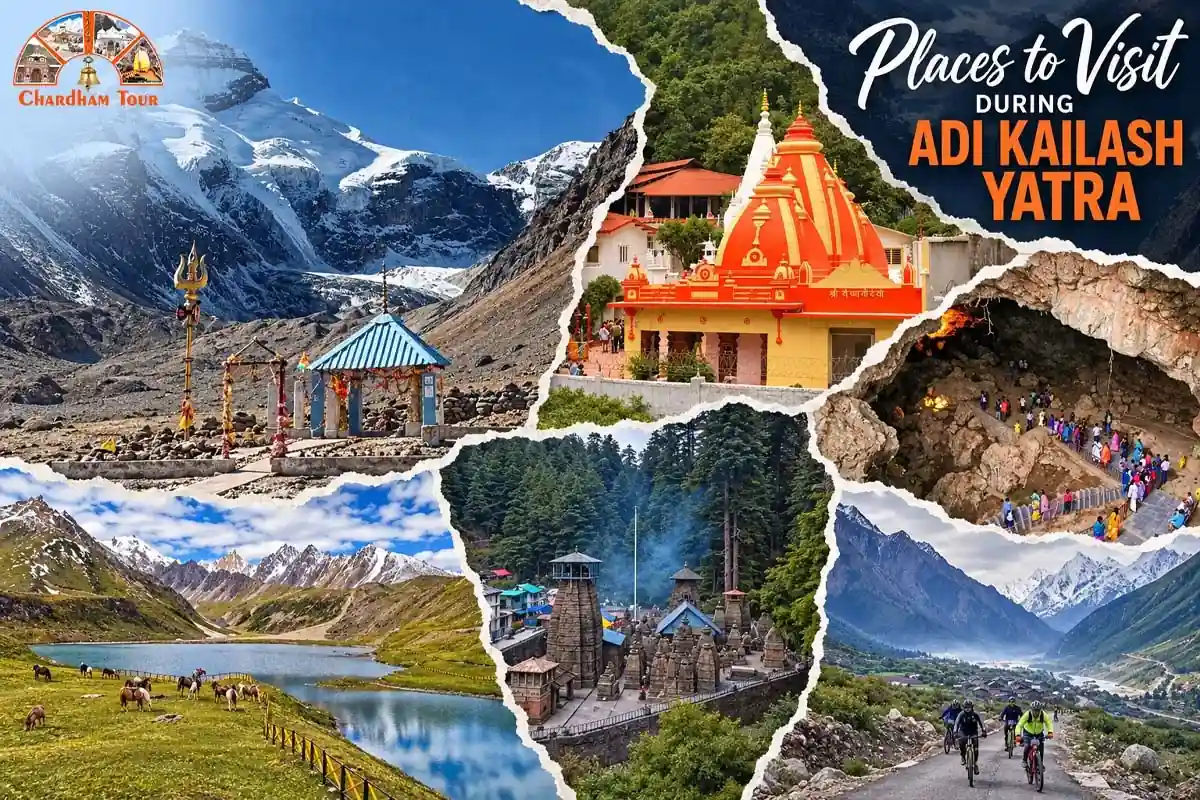
Most pilgrims plan the Adi Kailash Yatra around one darshan — then discover near Gunji that the journey was hiding a dozen destinations they never researched. The places to visit during Adi Kailash Yatra stretch far beyond the sacred peak: ancient temple complexes in the Kumaon Himalayas, a limestone cave said to shelter countless deities, border villages with living Bhotia culture, glacial lakes, and the Om Parvat viewpoint where snow settles into a shape devotees travel days to see. This guide walks you through 20 of them in route order — from the lakes of Bhimtal to the shores of Parvati Sarovar — so you can plan halts, buffer days, and camera batteries accordingly. Route access and permits depend on current administration rules, so reconfirm details with your operator before travel — and note that not every place below sits on one fixed route; several are optional detours.
Route Facts Worth Knowing First
- The circuit lies in Pithoragarh district, Uttarakhand; the area beyond Dharchula is a restricted zone needing an Inner Line Permit.
- Adi Kailash peak rises to approximately 5,945 m; pilgrims view it from the Jolingkong area (roughly 4,400 m) — the summit is not climbed.
- Much of the commonly used circuit is motorable during permitted periods, though road access and walking requirements can change with weather, landslides, and administrative restrictions.
- The Om symbol on Om Parvat is a snow-and-rock pattern — its clarity depends on season and weather.
- Permits and identity documents are checked at designated security points along the restricted route; carry documents everywhere.
Places to Visit During Adi Kailash Yatra: The Five Zones
The yatra splits into five natural zones — Kumaon foothills, the mid-hill temple belt, gateway towns, the high Vyas Valley villages, and the sacred darshan points. One honest clarification: only the gateway and high-valley zones sit on the core permit route; the foothill and mid-hill stops are sightseeing halts and optional detours that depend on your operator’s itinerary. The list follows the order you’d typically meet these places.
| # | Place | Zone | Known for |
| 1 | Bhimtal | Foothills | Kumaon’s largest lake |
| 2 | Kainchi Dham | Foothills | Neem Karoli Baba ashram |
| 3 | Chitai Golu Devta | Foothills | Temple of justice, thousands of bells |
| 4 | Jageshwar Dham | Foothills | ~125 ancient Shiva temples |
| 5 | Pithoragarh | Foothills | Soar Valley, district base |
| 6 | Chaukori | Mid-hills | Himalayan sunrise views, tea gardens |
| 7 | Patal Bhuvaneshwar | Mid-hills | Deep limestone cave temple |
| 8 | Dharchula | Gateway | Indo-Nepal border town on the Kali |
| 9 | Narayan Ashram | Gateway | 1930s spiritual retreat |
| 10 | Chialekh Valley | Gateway | Alpine meadows at the valley gateway |
| 11 | Garbyang | Gateway | Historic “sinking village” |
| 12 | Budhi | Gateway | Roadside halt amid waterfalls |
| 13 | Gunji | Vyas Valley | Acclimatisation base (~3,100–3,200 m) |
| 14 | Nabi | Vyas Valley | Homestay village |
| 15 | Kuti & Pandav Kila | Vyas Valley | Last village; fort ruins tied to Pandava legend |
| 16 | Bheem ki Kheti | Vyas Valley | Terraced “fields of Bheem” |
| 17 | Kalapani | High points | Kali temple, river origin, Ved Vyas Gufa |
| 18 | Nabhidhang | High points | Om Parvat viewpoint |
| 19 | Jolingkong | High points | Adi Kailash darshan (~4,400 m) |
| 20 | Parvati Sarovar & Gauri Kund | High points | Sacred lakes below the peak |
Zone 1: The Kumaon Foothills (Kathgodam to Pithoragarh)
Most itineraries start from Kathgodam or Haldwani; the first day’s drive doubles as a temple trail.
1. Bhimtal
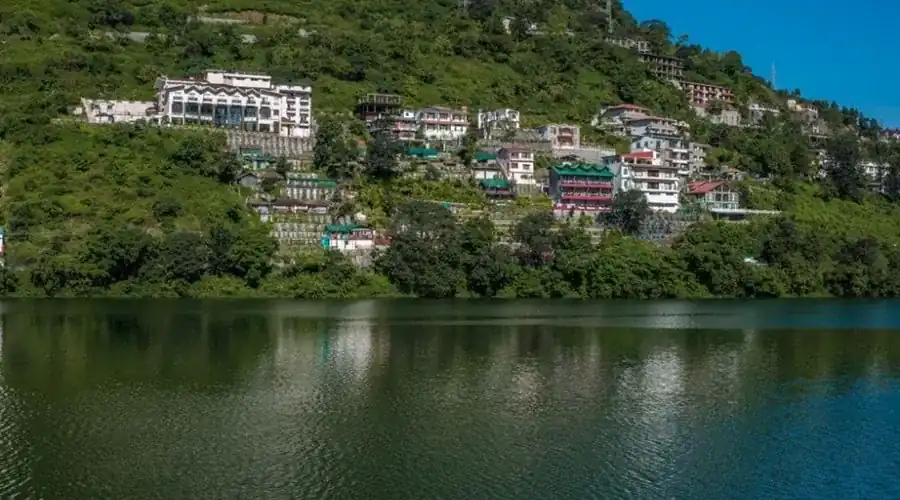
A C-shaped lake — one of the largest and best-known in the Kumaon region — with an island at its centre and hills folding around it. Local legend links its name to Bheema of the Mahabharata. It appears within the first couple of hours from Kathgodam — the natural tea-and-photos halt. Keep it to 30–40 minutes; the day’s real distance lies ahead.
2. Kainchi Dham (Neem Karoli Baba Ashram)
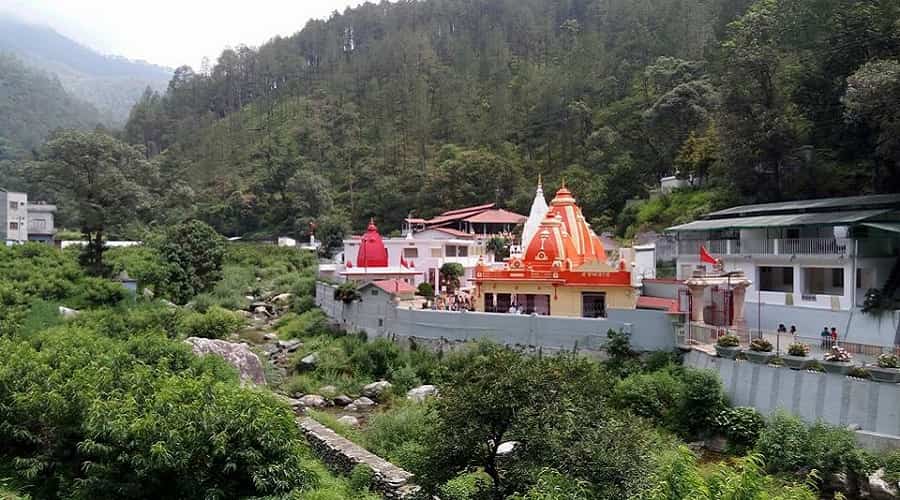
The ashram takes its name from the distinctive scissor-like bends — kainchi in Hindi — in the road and landscape around it. Established by Neem Karoli Baba in 1964, it draws devotees from across the world. Most yatra groups stop for a short darshan; it sits right on the highway, so even ten minutes adds no real detour. Weekends get crowded — local drivers usually recommend crossing this stretch before 9 a.m.
- Suggested Tour: Baba Neem Karoli Kainchi Dham Tour Package
3. Chitai Golu Devta Temple
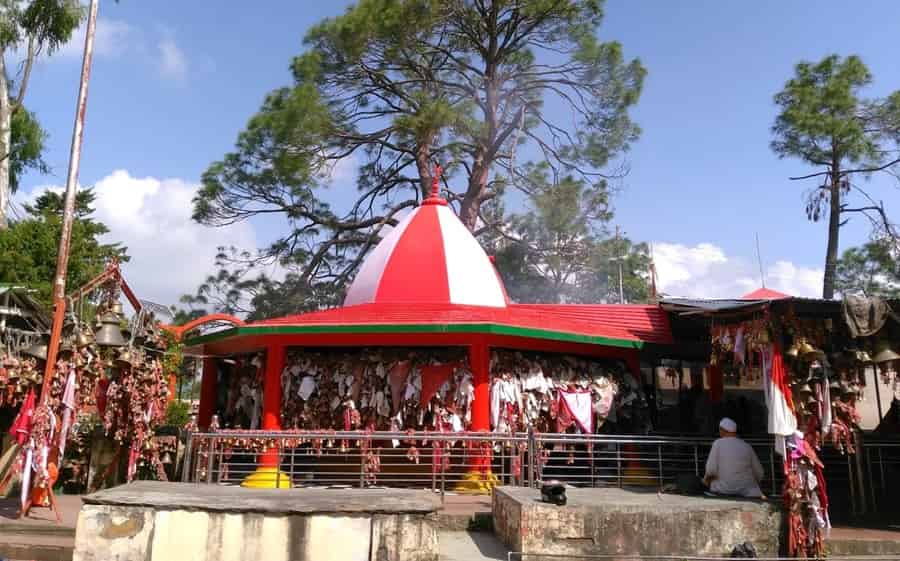
Near Almora stands the temple of Golu Devta, revered in Kumaon as the god of justice. What you’ll remember is the sound: thousands of brass bells, traditionally offered by devotees whose prayers are believed to have been fulfilled, ringing alongside hand-written petitions. It’s a short, moving stop — and a very Kumaoni introduction to the culture you’re driving into. Budget 20–30 minutes.
4. Jageshwar Dham
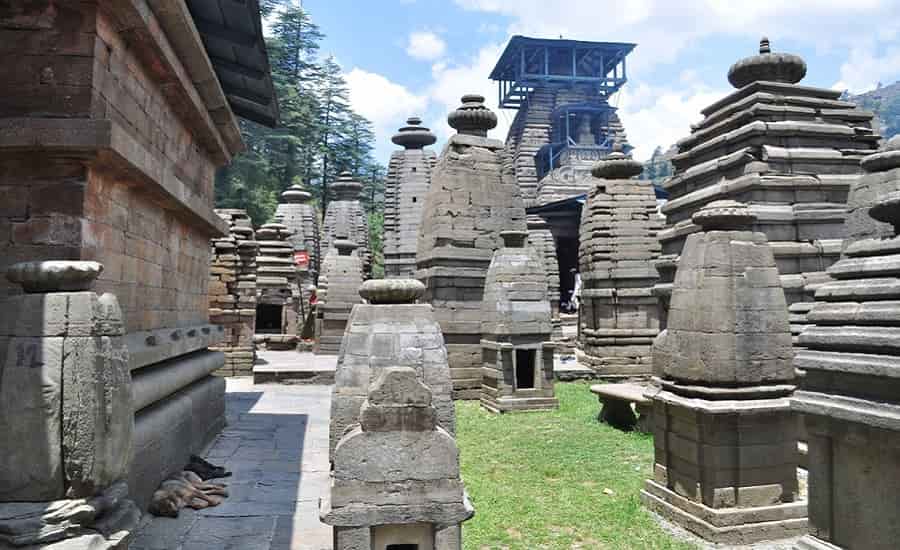
A deodar-shaded complex of more than 100 ancient stone temples (the main group is commonly counted at around 124, though tallies vary by source) on the banks of the Jata Ganga at roughly 1,870 m, most dedicated to Lord Shiva. Many pilgrims treat a Jageshwar darshan as the auspicious beginning of the yatra. Give it 45–60 minutes; the carved shikharas and forest silence justify every one.
5. Pithoragarh
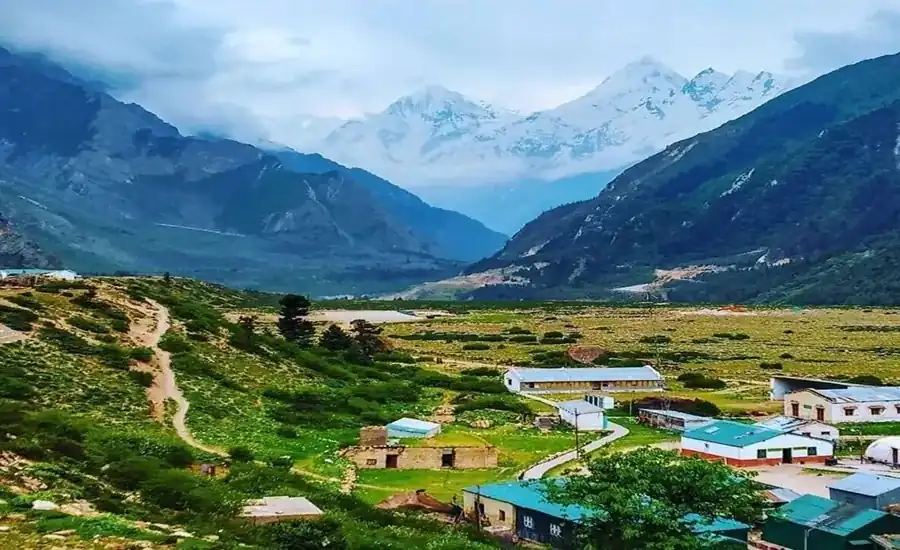
The district headquarters, spread across the Soar Valley, is typically your first overnight halt; the old fort area and valley viewpoints make an easy evening walk. Practically, this is one of the last major urban centres before the border route — pharmacies, ATMs, and mobile network all work reliably here. Dharchula ahead also has markets and essentials, but choices thin out, so finish big errands now. Buy missing warm layers, batteries, or medicines in the main bazaar before moving on.
Zone 2: The Mid-Hill Detours (Often on the Return Leg)
Many operators place these two stops on the return leg, when the mind is ready for gentler sightseeing.
6. Chaukori
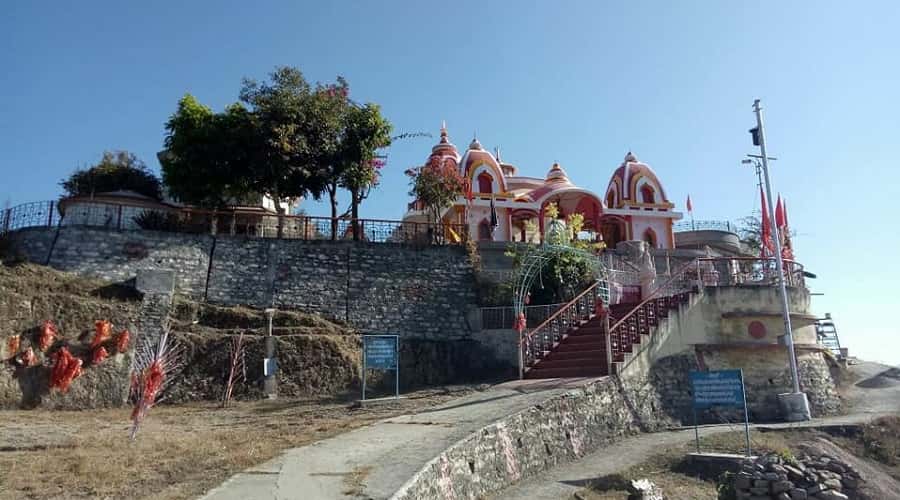
A quiet hill station at roughly 2,000 m, famous for sunrise over the high Himalaya. On clear mornings the peaks feel close enough to touch, and tea gardens fill a relaxed half-day. Its lower altitude and comparatively comfortable stays make it a relaxing halt before or after the high-altitude section. Wake before dawn, carry chai to the viewpoint, and watch the range catch fire peak by peak — the gentlest grand moment of the whole yatra.
7. Patal Bhuvaneshwar
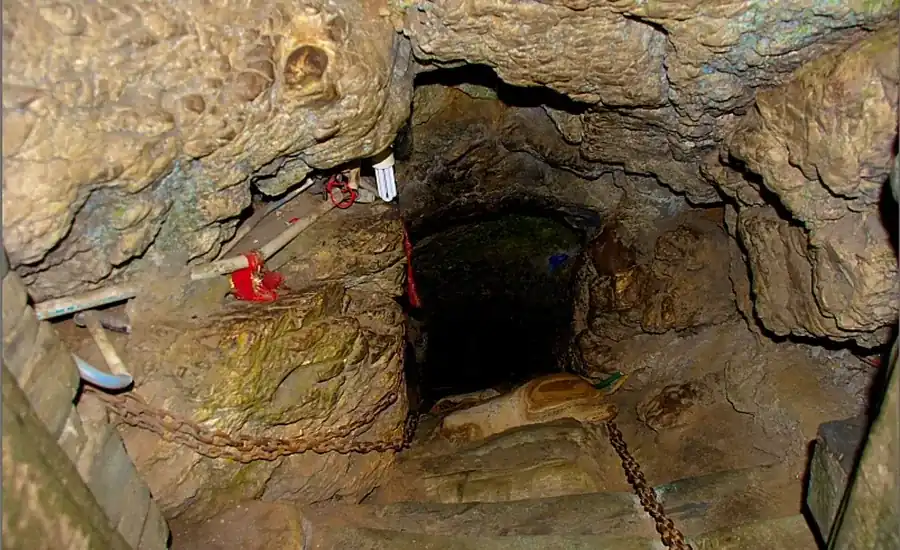
One of the best places to see on the Adi Kailash route even though it sits off the border road: a limestone cave temple entered through a steep, narrow descent using support chains. Inside, naturally formed rock shapes are venerated as deities — local belief holds the cave houses countless gods. The passage is enclosed and physically demanding for some, so skip it if you’re claustrophobic; everyone else should not miss it. Guides narrate the legends chamber by chamber; wear grippy footwear on the damp stone, and check photography rules and timings locally.
Zone 3: The Gateway — Dharchula to Budhi
Beyond this zone the Inner Line Permit rules take over, the Kali river becomes your constant companion, and every village carries trade-route history.
8. Dharchula
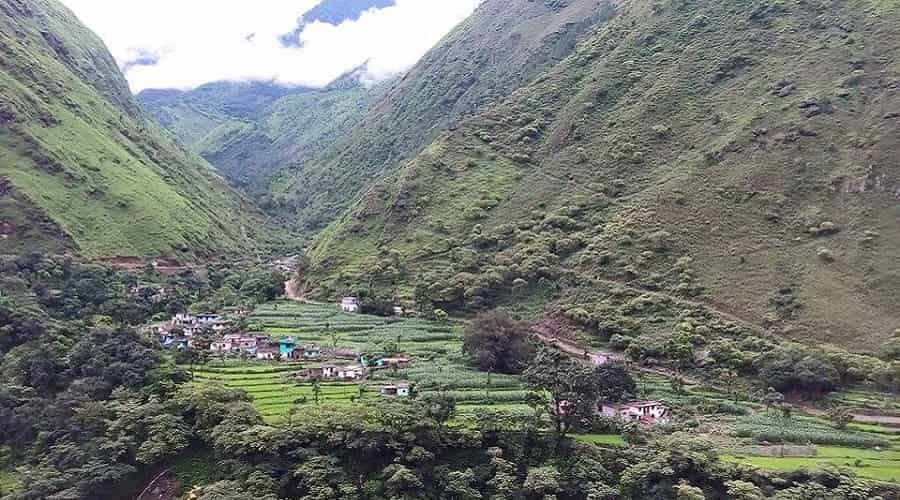
A border town on the Kali river, with Nepal’s Darchula facing it across the water — and generally the administrative base for permit processing, subject to the current procedure. Verify documents, buy last-minute supplies, and walk the riverbank in the evening; the two-nation township vibe is unique. Mobile connectivity becomes limited and unreliable beyond Dharchula, so make your calls home. Its mixed Kumaoni–Bhotia–Nepali character shows in the food stalls, and most pilgrims sleep here one night in each direction — the yatra’s true logistics hub.
9. Narayan Ashram
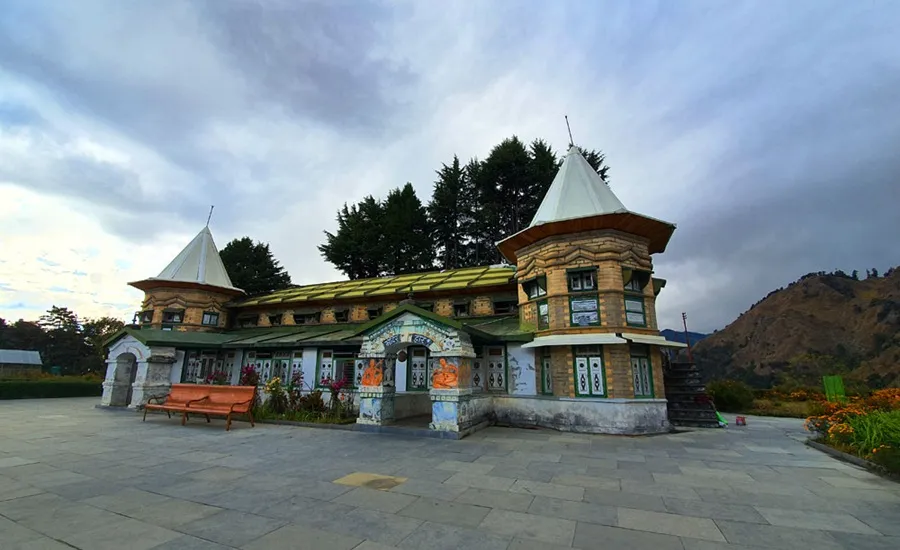
Founded by Narayan Swami in the 1930s, this serene ashram sits amid orchards above the valley; it historically served travellers on the old Kailash Mansarovar route and offers meditation halls, simple stays, and deep quiet. Some extended or return-route itineraries include an overnight halt here — a gentle re-entry into lower altitudes — but it is not part of every standard Adi Kailash plan, so check yours. The ashram’s disciplined calm — fixed meal times, evening prayers — resets the mind after days of rough roads.
10. Chialekh Valley
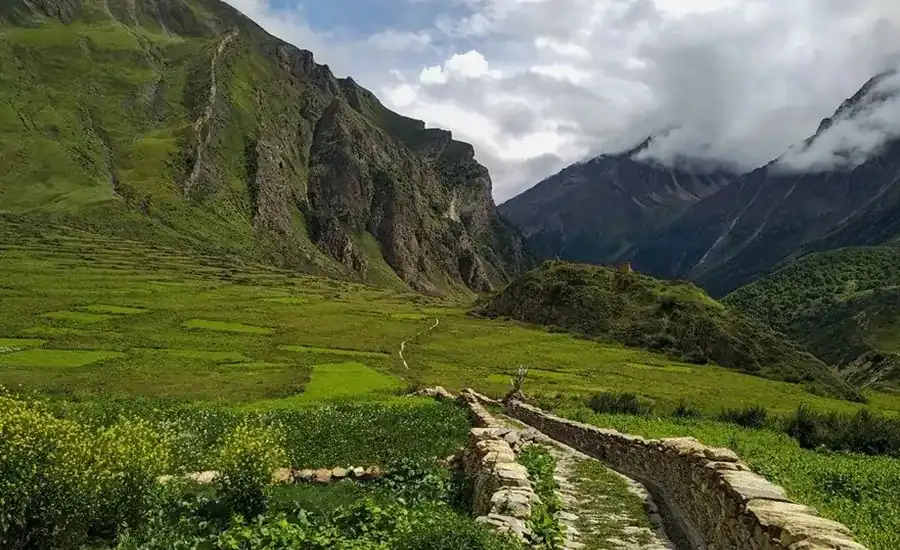
Climbing out of the Kali gorge, the road suddenly opens into Chialekh’s alpine meadows and vast valley views — the point where the high Himalaya announces itself. Most groups stop for photographs; with twenty spare minutes, walk away from the road and simply listen. Wildflowers are commonly seen in late spring and early summer, depending on snowmelt and weather, and a checkpost near the meadows marks entry into the high valley. The gradient of change here — gorge to grassland in one bend — surprises everyone.
11. Garbyang
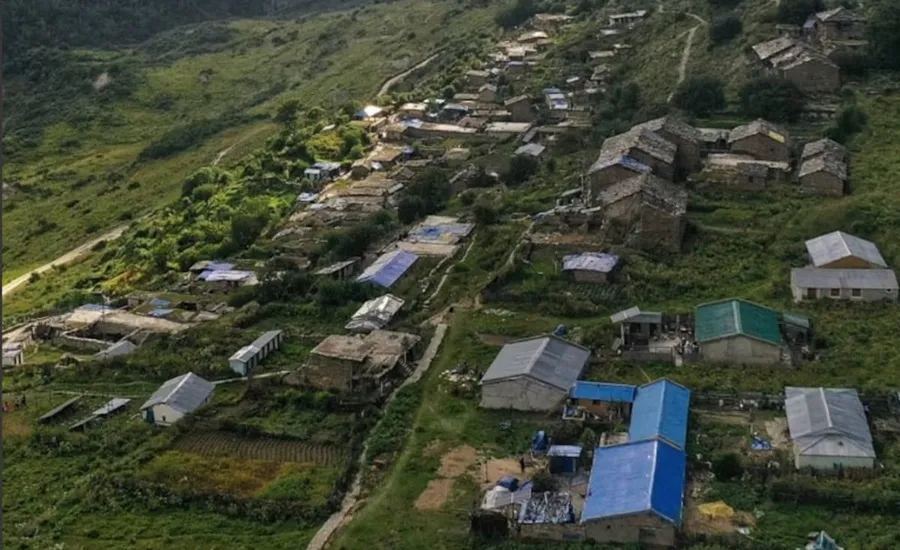
A historic village known for its role on the old Indo-Tibet trade route and its slow-motion geology — buildings here have tilted and sunk over decades, earning the “sinking village” label. It’s a haunting, photogenic reminder of how alive this terrain is. The multi-storey wooden architecture belongs to a Himalaya that’s disappearing; walk gently and photograph respectfully — people still live in many of these homes.
12. Budhi
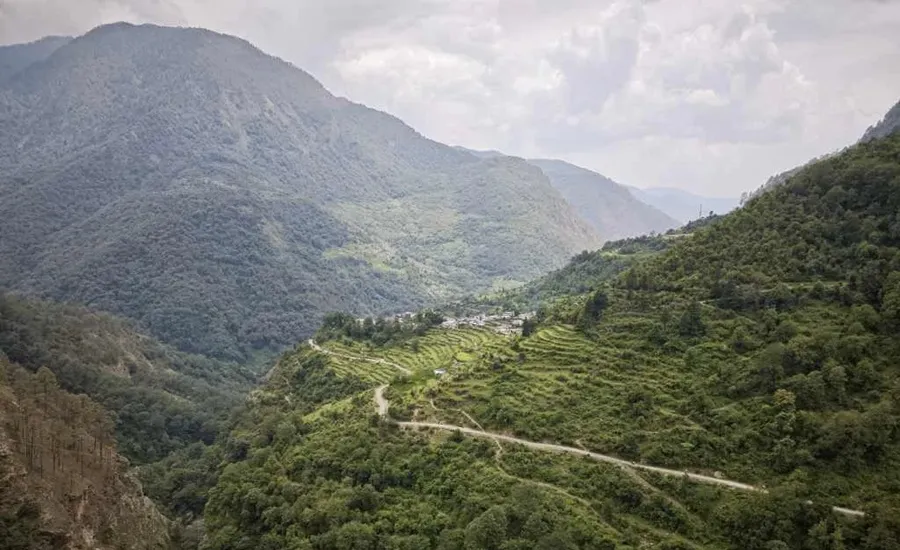
A small settlement where groups break the climb with tea or lunch, waterfalls threading the cliffs around it; altitude gain becomes noticeable from here. Altitude effects can begin around this stretch — report any headache, nausea, unusual fatigue, or breathlessness to your tour leader rather than ignoring it as the road climbs. The dhabas serve simple hot food, and some itineraries overnight here when Gunji runs full.
Zone 4: The Vyas Valley Villages
The high valley — associated in tradition with sage Ved Vyas — holds a string of Bhotia settlements — the true villages on the Adi Kailash route — that are destinations in themselves, not mere halts.
13. Gunji
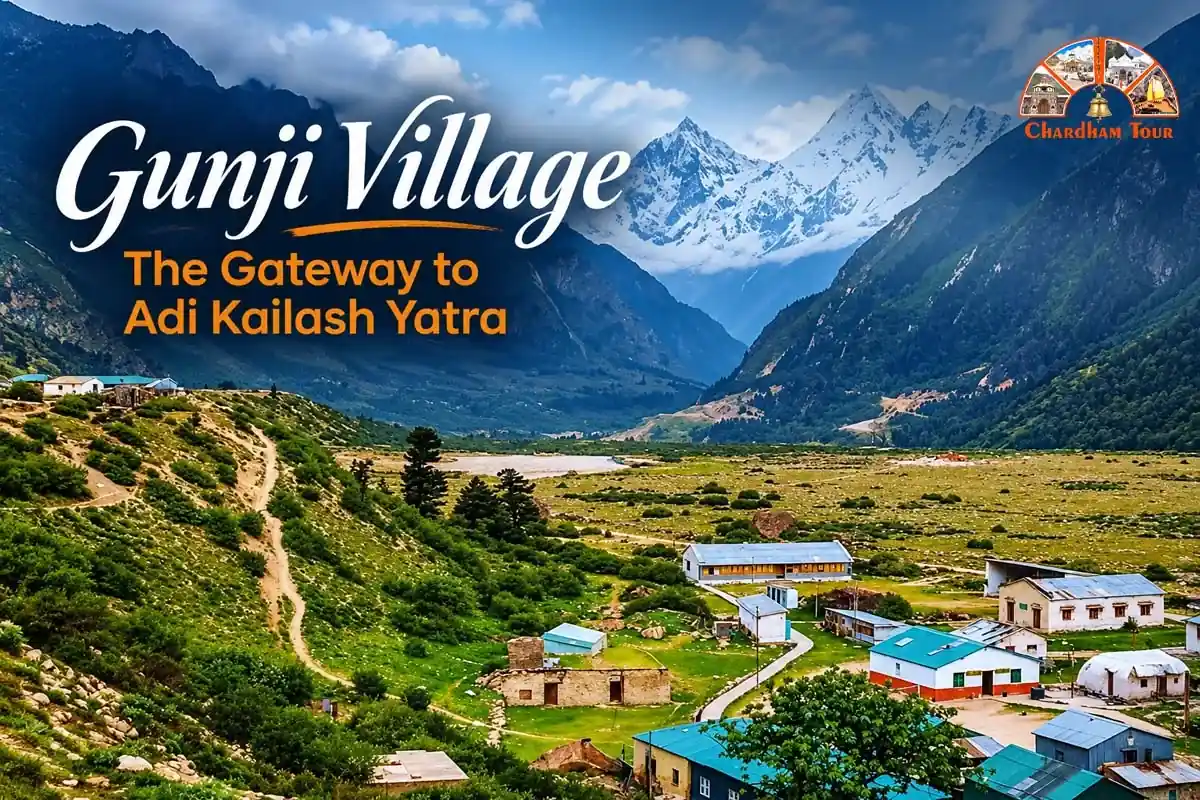
At roughly 3,100–3,200 m, Gunji is the operational heart of the yatra: the standard acclimatisation halt, an ITBP presence, and the junction from which the Adi Kailash and Om Parvat roads diverge. Use the rest day well — gentle walks, village lanes, and conversations with residents. Health first here: our Adi Kailash health guide covers exactly how to use the Gunji halt. Limited seasonal medical assistance may be available here — never a substitute for preparation — and the wide riverine flat gives gentle walking terrain for the rest day.
14. Nabi
A traditional hamlet near Gunji known for locally operated homestays — wooden homes, Bhotia food, and hosts whose families have lived this valley for generations. Many operators now overnight groups at Nabi instead of (or alongside) Gunji. If cultural immersion matters, request a Nabi homestay when booking, but note that heating, washrooms, and meals vary by property and season. Your night here directly supports these families.
15. Kuti Village & Pandav Kila
Generally regarded as the last permanently inhabited village on the commonly used route toward Jolingkong, its name linked by legend to Kunti, mother of the Pandavas. Nearby stand ruins locally known as Pandav Kila, associated in oral tradition with the Pandavas’ final journey. Document checks are routine on this stretch, so keep papers handy. Jolingkong lies roughly 17 km beyond Kuti, though actual travel distance varies with road alignment. The stone houses against the barren high valley make it one of the yatra’s most photographed frames.
16. Bheem ki Kheti
Near Kuti lie broad terrace-like formations that local tradition names “Bheem’s fields” — ploughed, the folklore goes, by the mightiest Pandava himself. The story belongs to regional belief rather than documented history, but standing before the terraces you understand why it endures. It’s a quick roadside stop your driver will point out; ask, because it’s easy to miss. The terraces read clearest in slanting light and cost barely ten minutes of the day.
Zone 5: The Best Places to See on the Adi Kailash Route — Sacred High Points
Everything converges here — the darshan points that name this journey, all weather-dependent, all unforgettable.
17. Kalapani
Site of an ancient Kali temple beside springs regarded as an origin point of the Kali river. Nearby is Ved Vyas Gufa, the cave where tradition holds sage Ved Vyas meditated and dictated the Mahabharata. Pilgrims heading to the Om Parvat viewpoint at Nabhidhang stop here for darshan. Tradition ties Ved Vyas Gufa to the dictation of the Mahabharata to Lord Ganesha, giving this austere spot outsized weight in the epic’s geography; darshan and photography follow security personnel’s instructions.
18. Nabhidhang (Om Parvat Viewpoint)
The viewpoint for Om Parvat, where snow settling against dark rock creates a pattern resembling the sacred ॐ across the mountain face — a sight local belief also ties to the nabhi (navel) of Goddess Parvati. Two honest cautions: the symbol’s clarity varies with snow cover and season, and visibility is entirely weather-dependent — earlier visits sometimes offer clearer conditions, but nothing guarantees darshan. Published elevation figures for the viewpoint vary by source, so treat exact numbers loosely. Give the halt 30–45 minutes so a passing cloud doesn’t decide your darshan, and keep warm layers on — the wait is cold.
19. Jolingkong — The Adi Kailash Darshan Point
Under normal conditions, vehicles reach the Jolingkong area at roughly 4,400 m, with Adi Kailash — Chhota Kailash, revered by devotees as one of the Panch Kailash peaks — rising ahead. According to local religious tradition, Shiva and Parvati’s wedding procession halted here. The remaining walk to the Shiva–Parvati temple depends on the current vehicle drop-off point and access arrangements — confirm the walking requirement with your operator; darshan is possible from the vehicle point too. Start early from Gunji or Nabi — documents are rechecked en route, and the wind at the roadhead cuts through casual layers even in June.
20. Parvati Sarovar & Gauri Kund
Below the peak lies a glacial lake whose still water can mirror Adi Kailash on windless mornings — the image most pilgrims carry home. A naming note: local accounts and maps refer to the sacred water bodies here by varying names — Parvati Sarovar, Parvati Kund, Parvati Tal, Jolingkong Lake, and Gauri Kund — so follow locally recognised names and current route guidance. The lakes carry deep ritual significance; some pilgrims collect water to take home. The cold is severe and the air thin — move slowly, and think twice before any dip. Sit quietly instead; the reflection and the wall of rock behind the water do the rest.
Possible Add-On: Mount Kailash Viewpoint Near Old Lipulekh (Separate Permission)
Recent seasons have seen administration-supported darshan of Mount Kailash (in Tibet) from a vantage near the old Lipulekh pass. This is not part of every Adi Kailash itinerary — access depends on current administrative approval, security restrictions, weather, and operator arrangements, so ask about the latest status before assuming it.
Day-Wise Flow Covering Temples, Villages & Darshan Points
An extended 8–10 day itinerary may cover most of these places, depending on route selection, permits, road conditions, and operator planning — no fixed duration guarantees all 20. A typical flow: Day 1 Kathgodam to Pithoragarh via Bhimtal, Kainchi Dham, Chitai, and Jageshwar; Day 2 to Dharchula for permits; Day 3 into the valley via Chialekh, Garbyang, and Budhi to Gunji; Day 4 rest and acclimatisation around Gunji and Nabi; Day 5 Kuti, Bheem ki Kheti, Jolingkong, Parvati Sarovar; Day 6 Kalapani and Nabhidhang for Om Parvat; Day 7 descend via Narayan Ashram; Day 8 Chaukori and Patal Bhuvaneshwar; Day 9 return to Kathgodam. Rushed 6-day plans cut the foothill temples and squeeze acclimatisation — families and older travellers should think hard before choosing them.
Best Time to See These Places
Late spring to early summer (May–June) and the post-monsoon autumn window (September–October) are the commonly used periods, subject to official opening, road clearance, and weather. Monsoon months carry higher landslide risk and — as seen in July 2026 — possible temporary permit suspension, while winter access is normally severely restricted by snow. The Om symbol tends to read most clearly when fresh snow outlines the rock — another argument for the shoulder months.
Practical Tips for Covering All 20 Places to Visit During Adi Kailash Yatra
Carry your ILP and ID everywhere — document checks at designated points are routine. Keep one buffer day for weather; it converts stress into sightseeing. Fuel up and withdraw cash at Pithoragarh or Dharchula. Respect village photography etiquette in Nabi, Kuti, and Garbyang — ask before shooting people or homes. And treat altitude as the trip’s real gatekeeper: acclimatise at Gunji, skip nothing in our health advisory, and remember that every place on this list is enjoyed better with a clear head than a pounding one.
Where to Stay Along These 20 Places
Accommodation drops in comfort as altitude rises — plan expectations accordingly. Kathgodam to Pithoragarh offers regular hotels; Dharchula has decent budget and mid-range stays; beyond it, expect KMVN guesthouses, homestays, and camps at Gunji, Nabi, and Kuti with shared facilities and vegetarian meals. During the May–June rush the high-valley beds fill first, so booking early — or travelling with an operator who blocks them — is genuinely worth it.
Short on Time? What to Skip First
If you must compress to six days, drop the foothill temple stops (Bhimtal, Kainchi Dham, Chitai) and Chaukori first — they’re accessible on any future Kumaon trip. Avoid removing the Gunji acclimatisation halt or the weather buffer unless your itinerary and medical guidance genuinely support it — those protect the two darshans this journey exists for. Patal Bhuvaneshwar is the hardest call — keep it if the return-day energy allows.
Local Culture & Food Along the Way
The route crosses three cultural belts worth savouring: Kumaoni hill towns (try bhatt ki churkani and bal mithai around Almora and Pithoragarh), the mixed border bazaar of Dharchula, and the Bhotia villages of the high valley, where homestay kitchens serve local grains, butter tea, and mountain greens. Meals above Dharchula are simple and largely vegetarian — treat that as part of the pilgrimage, not a shortcoming. Buying local, from woollens in Dharchula to homestay nights in Nabi, keeps yatra money in the valley that hosts it.
Photography & Timing Guide
Three rules cover most great shots here. Mornings tend to win — Om Parvat, Adi Kailash, and the Chaukori panorama usually read best before clouds build, though weather decides everything. Water gives you the frame: the lake reflection at Jolingkong and the Kali gorge are the signature compositions. And people need permission — in Garbyang, Kuti, and Nabi, ask before photographing homes and faces. Keep batteries warm in an inner pocket, and near security posts keep the camera down entirely.
Key Takeaways
- The yatra offers five distinct zones — foothill temples, mid-hill caves, gateway towns, Vyas Valley villages, and high darshan points — not just one peak.
- Jolingkong (~4,400 m) is the Adi Kailash darshan point; the summit itself is never part of the itinerary.
- Om Parvat’s clarity at Nabhidhang depends on snow and weather; keep expectations flexible.
- Permits, road status, and the Lipulekh add-on change by season — as July 2026’s monsoon suspension showed, always reconfirm current status.
Related reads: Adi Kailash Yatra Travel Tips, Inner Line Permit process, Best Time to Visit Adi Kailash
FAQs
Q-1: What are the best places to see on the Adi Kailash route?
Jolingkong, Parvati Sarovar, the Om Parvat viewpoint at Nabhidhang, Kuti village, and Patal Bhuvaneshwar top most pilgrims’ lists.
Q-2: Is Om Parvat always visible from Nabhidhang?
No — the snow-formed ॐ depends on season, snow cover, and clouds; mornings give the best chance.
Q-3: Do I need to trek to see Adi Kailash?
A long traditional trek is generally no longer required, but short walks may be needed depending on road and vehicle access.
Q-4: Which villages on the Adi Kailash route are worth an overnight stay?
Gunji for acclimatisation and Nabi for homestays; Kuti makes a memorable daytime stop.
Q-5: Can I visit Patal Bhuvaneshwar on this yatra?
Yes — most itineraries include it on the return leg; the cave descent is avoidable if you’re claustrophobic.
Q-6: Are permits needed for these places?
Beyond Dharchula, yes — the Inner Line Permit is mandatory and checked en route, including at Kuti.
Q-7: Can senior citizens cover all 20 places?
Suitability depends on fitness, medical history, and altitude tolerance — a slower itinerary with medical clearance helps many manage it.
Q-8: Which temples on the Adi Kailash Yatra route come before Dharchula?
Kainchi Dham, Chitai Golu Devta, and Jageshwar Dham — usually covered on Day 1.
Q-9: Is the Mount Kailash view from Lipulekh included?
Only when currently permitted by the administration and weather — confirm the latest status with your operator.
Q-10: Is photography allowed everywhere on the route?
No — it’s restricted near security posts and checkpoints; in villages, ask residents before photographing homes or people.
Q-11: Is the Adi Kailash Yatra route motorable?
Largely yes during permitted periods, though landslides, snow, and administrative restrictions can change vehicle access.
Q-12: How do I reach Jolingkong?
By road via Dharchula, Gunji, and Kuti under normal conditions — Jolingkong lies roughly 17 km beyond Kuti.
Q-13: Are all 20 places on one fixed route?
No — the foothill and mid-hill stops are optional detours; only the gateway and Vyas Valley places sit on the core permit route.
Q-14: Can permits get suspended during the season?
Yes — the administration can pause permits for weather or security, as during the July 2026 monsoon; check current status before travel.
Conclusion: One Yatra, Twenty Reasons
The places to visit during Adi Kailash Yatra turn a single darshan into a layered pilgrimage — temple bells at Chitai, cave silence at Patal Bhuvaneshwar, living villages at Nabi and Kuti, and finally the peak mirrored in Parvati Sarovar. Plan 8–9 days, keep a buffer, acclimatise honestly, and these Adi Kailash sightseeing spots will each get the attention they deserve. The mountain is the destination; these twenty places are the journey. Planning your dates? Compare itinerary length, acclimatisation halts, permit assistance, and included sightseeing before booking — the right plan decides how many of these twenty you actually see.

Related Posts
Narad Kund, Badrinath
Neelkanth Peak, Badrinath