Picking the best time to visit Adi Kailash isn’t only about comfort — at this altitude, timing affects whether the road and permits are even available. This Himalayan pilgrimage site in Pithoragarh sits above 5,900 metres, and conditions can shift from pleasant spring mornings to a snowbound route within weeks. This guide breaks the season down month by month, using real 2025–2026 patterns rather than generic advice.
Quick Facts Box
| Detail | Information |
|---|---|
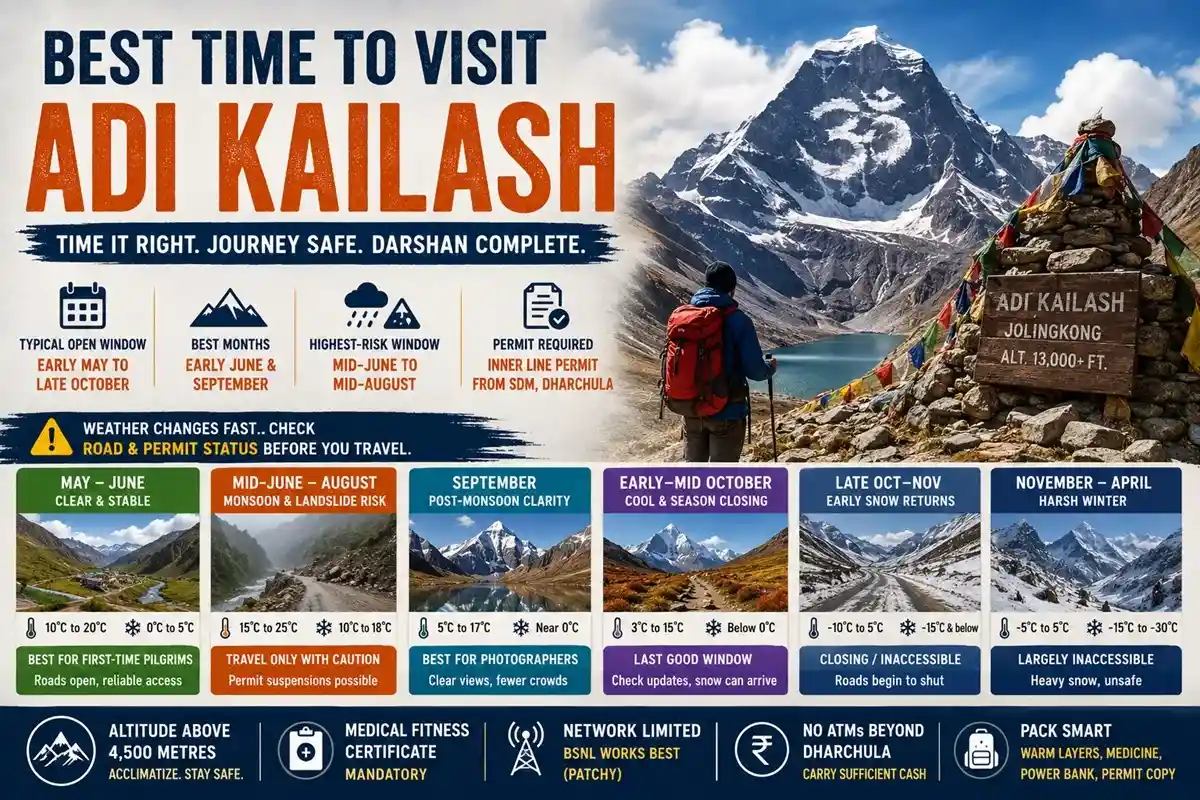
| Typical open window | Early May to late October |
| Typically inaccessible | November to April (heavy snow) |
| Commonly recommended months | Early June and September |
| Highest-risk window | Mid-July to mid-August (monsoon) |
| Daytime temperature (open season) | Roughly 3°C to 20°C, varies by month |
| Night temperature at Jolingkong | Can fall well below 0°C even in season |
| Permit authority | SDM office, Dharchula (Inner Line Permit) |
Why Timing Matters So Much Here
Adi Kailash isn’t a destination you visit on a whim. The route crosses three altitude zones — Dharchula at the base, Gunji mid-route, and Jolingkong near the peak — and each behaves differently by season. Dharchula stays warm and monsoon-heavy through summer; Gunji cools faster once autumn begins; Jolingkong is where winter bites hardest. Access also depends on more than weather alone — road clearance by the Border Roads Organisation (BRO) and Inner Line Permit issuance by the district administration both factor in, and permits have been temporarily suspended in past monsoon seasons when landslide risk spiked. So the best time to visit Adi Kailash is really a combination of season, road status, and current permit availability — not weather alone.
Month-by-Month Weather Breakdown
| Month(s) | Weather | Day Temp | Night Temp | Typical Access |
|---|---|---|---|---|
| Jan–Mar | Harsh winter, heavy snow | -5°C to 5°C | -15°C to -30°C | Largely inaccessible |
| April | Transitional, melting snow | 5°C to 15°C | Near 0°C | Reopening begins |
| May–June | Clear, comparatively stable | 10°C to 20°C | 0°C to 5°C | Usually accessible |
| Mid-June–Aug | Monsoon, rain, landslide risk | 15°C to 25°C | 10°C to 18°C | Unreliable; suspensions possible |
| September | Post-monsoon clarity | 5°C to 17°C | Can approach freezing | Usually accessible |
| Early–mid Oct | Cool, clear, season closing | 3°C to 15°C | Below 0°C | Accessible, closing soon |
| Late Oct–Nov | Early snow returns | -10°C to 5°C | -15°C and below | Closing/inaccessible |
Exact opening and closing dates shift each year based on snow clearance and administrative decisions, so treat this table as a general guide rather than a fixed calendar.
Season-by-Season Breakdown
Spring to early summer (May–June) is a popular window. Snow typically clears from the main trails, and the approach to Jolingkong becomes walkable in standard trekking shoes. Many pilgrims prefer early June specifically, since roads tend to be more reliable before monsoon conditions build up. Booking two to three months ahead is a reasonable idea, since this window overlaps with school holidays.
Monsoon (mid-June to August) is what most tour operators discourage. Rain makes trails slippery, landslides can block the Tawaghat–Gunji stretch for hours or days, and in some past seasons district authorities have temporarily stopped issuing Inner Line Permits altogether until conditions improved. If you’re traveling in this window for religious reasons such as Sawan month, confirm current permit status before departure and build in generous buffer days.
Post-monsoon autumn (September–mid-October) is, among experienced travelers, one of the most recommended stretches — not the only “best” month, but consistently favored alongside early June. Skies often turn crisp and Om Parvat’s snow-formed symbol tends to be clearer, though visibility still depends on fresh snowfall and cloud cover on a given day. Crowds are usually thinner than in May–June. By mid-October the window narrows quickly as early snowfall can arrive with little warning.
Winter (November–April) is not a suitable time to visit Adi Kailash. Heavy snowfall typically blocks the Tawaghat–Gunji road, Jolingkong temperatures can fall well below -20°C, and the region becomes largely inaccessible to pilgrims for safety reasons.
Altitude and Health Advisory
Adi Kailash’s darshan point sits well above 4,500 metres, and altitude sickness (AMS) is a real risk regardless of which month you travel. Common symptoms include headache, nausea, and dizziness — if these appear, descend and seek help rather than pushing ahead. Travelers with heart conditions, asthma, COPD, or high blood pressure should consult a doctor before booking, and a medical fitness certificate is generally expected for the yatra. Acclimatizing at Gunji for a night, staying hydrated, walking at a steady pace, and avoiding alcohol all reduce risk meaningfully.
Best Time by Traveler Type
- First-time pilgrims: Early June, for generally reliable weather and road access.
- Photographers: September, for typically clearer Om Parvat visibility and post-monsoon light.
- Senior citizens: Early June or September, with a medical fitness check beforehand regardless of season.
- Families with children: May–June, when road conditions are steadier; check age-related permit rules first, since flexibility depends on medical fitness.
- Budget travelers: Late September, when peak-season price spikes have usually eased.
How to Check Live Weather and Permit Status
Don’t rely on last year’s averages once your travel dates approach. Cross-check the India Meteorological Department (IMD) regional forecast, Uttarakhand State Disaster Management Authority bulletins, and the Pithoragarh district administration’s advisories, which reflect real-time landslide and road-clearance status. The SDM office in Dharchula and your tour operator can confirm same-day permit and road status before the final stretch.
Registration, Permits and Practical Basics
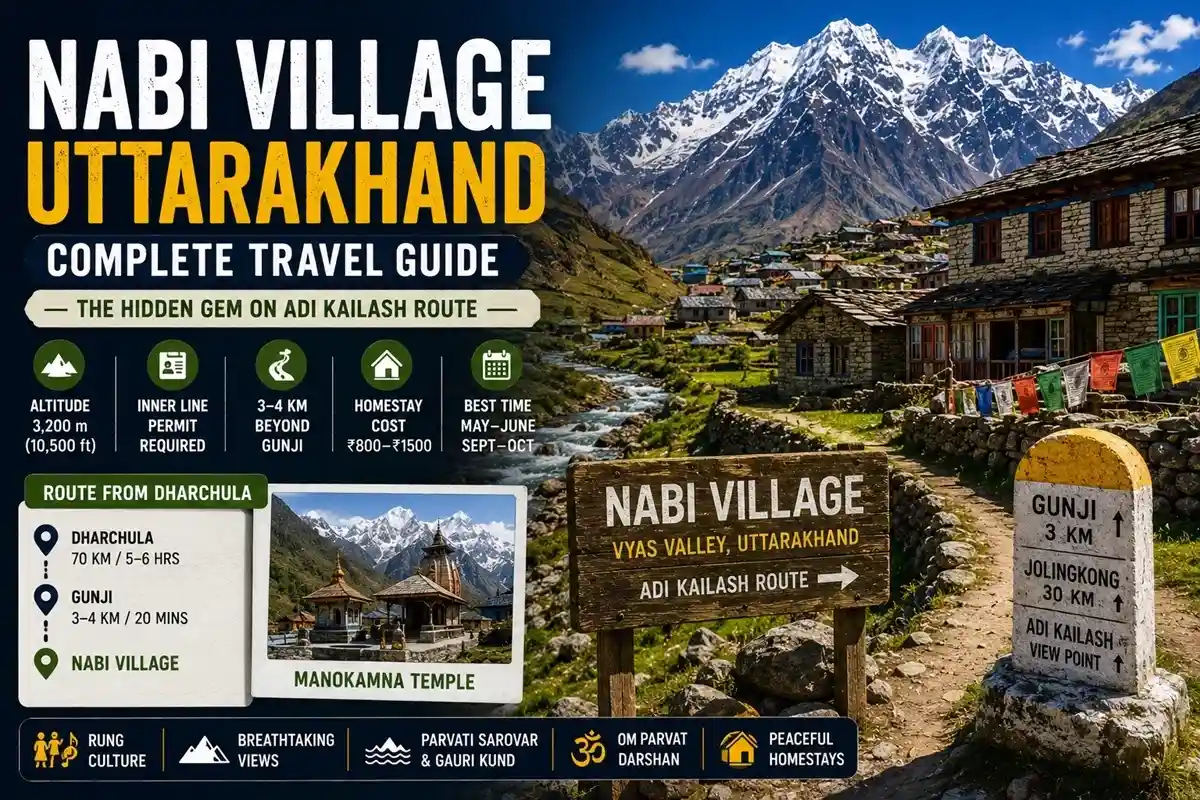
An Inner Line Permit, issued from the SDM office in Dharchula, is mandatory and currently limited to Indian citizens. Registration typically opens ahead of the May season, and booking early is wise since demand peaks quickly once dates are announced. Cash access is limited beyond Dharchula, so carry sufficient cash; mobile network is patchy past Dharchula, with BSNL generally offering the widest (though still intermittent) coverage. Accommodation along the route is basic — KMVN guest houses, homestays, and tents in Gunji, Nabi, and Kuti — so book ahead, especially in peak weeks.
What to Pack, Season by Season
- May–June: Light woolens, sun protection, comfortable trekking shoes.
- Monsoon months: Waterproof jacket, quick-dry clothing, extra buffer food and medication.
- September–October: Heavier woolens, thermal layers, and a windproof jacket for cold nights.
- Any season: A physical copy of your permit, basic altitude medication, and a power bank.
Common Mistakes to Avoid
- Assuming June weather holds steady all month — conditions can shift quickly once monsoon builds.
- Traveling in October without checking the latest road and permit bulletin.
- Underestimating night temperatures in “warm” months — even May and September nights can approach freezing at Jolingkong.
- Ignoring early AMS symptoms instead of descending or informing your guide.
Key Takeaways
- The best time to visit Adi Kailash is generally May–June and September–October, based on typical road and weather patterns.
- Early June and September are both commonly recommended, without one being a universally fixed “best” month.
- Monsoon (mid-June to August) carries real landslide and permit-suspension risk; winter (November–April) is largely inaccessible.
- Altitude sickness is a genuine concern at this elevation, independent of season, so basic acclimatization matters every time.
Ultimately, the ideal time to visit Adi Kailash comes down to two dependable windows — early summer and post-monsoon autumn — with everything else being a trade-off worth checking against current conditions, not assuming from a calendar alone.
Suggested Tour:
FAQs
Q1. What is a good month to visit Adi Kailash?
Early June and September are both commonly recommended for stable weather and road access.
Q2. Is June a good time for the Adi Kailash Yatra?
Yes, especially early June, before monsoon conditions typically build by mid-month.
Q3. Can I visit Adi Kailash during the monsoon season?
It’s possible but risky; permits have been temporarily suspended in past monsoon seasons due to landslides.
Q4. Is Adi Kailash open in winter?
No, the region is typically inaccessible from November to April due to heavy snowfall.
Q5. What is the worst time to visit Adi Kailash?
Mid-July to mid-August, when landslide risk and possible permit suspensions peak.
Q6. Is altitude sickness common on this yatra?
Yes, since the darshan point sits above 4,500 metres; watch for headache, nausea, or dizziness.
Q7. Can senior citizens or children visit Adi Kailash?
Yes, with a medical fitness certificate; age flexibility depends on district administration rules.
Q8. Is mobile network available on the route?
Coverage is patchy beyond Dharchula, with BSNL generally offering the widest availability.
Q9. Which month has the clearest Om Parvat view?
September is often favored, though visibility still depends on same-day cloud cover and snowfall.
Q10. Do I need to check permit status before traveling?
Yes — Inner Line Permits can be temporarily suspended during heavy monsoon rainfall.
Q11. Which season has fewer crowds?
Late September typically sees thinner crowds compared to the May–June rush.
Q12. Are ATMs available along the route?
No reliable ATMs exist beyond Dharchula, so carry sufficient cash in advance.
Q13. What should I pack regardless of season?
A physical permit copy, warm layers, basic altitude medication, and a power bank.
Q14. When does the Adi Kailash season typically open and close?
It generally opens in early May and winds down by late October, depending on snow and road conditions.
Also Reads on: