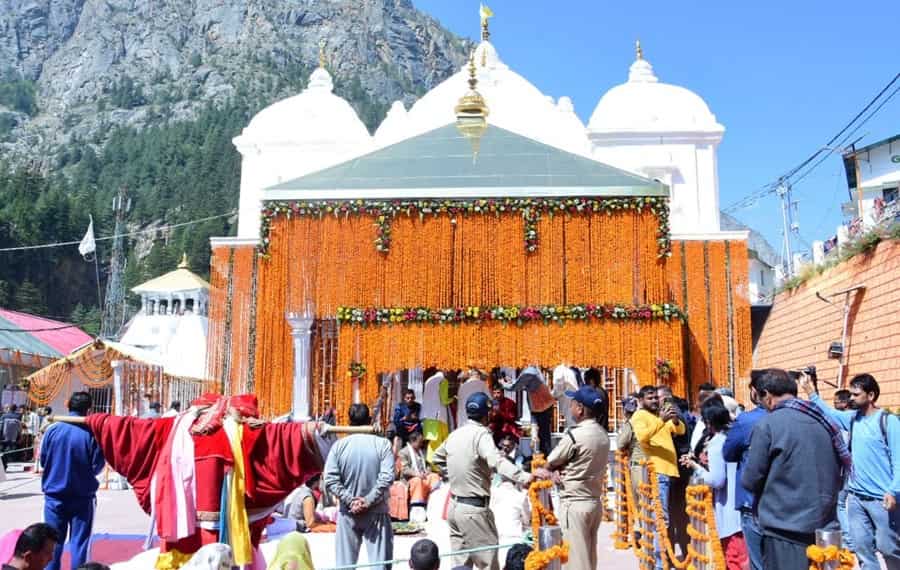
Every year, when the Gangotri temple closes around Diwali, something extraordinary happens. The idol of Goddess Gangotri does not simply disappear into storage. She travels. Carried in a ceremonial palanquin with Vedic chants and devotional music, the deity is brought down to Mukhba village in Harsil — where she is worshipped through the winter months until the temple reopens in spring.
Season status: as of August 2026, Gangotri Dham is open for Darshan and the idol is still at the main temple. The goddess returns to her winter seat at Mukhba only after the temple’s Bhai Dooj closing, expected around 10–11 November 2026 — so if you’re reading this mid-season, plan a Mukhba winter Darshan trip for late November onward.
In 2026, Gangotri temple is expected to close around 10–11 November (the exact date is confirmed closer to the season by the temple committee). From that date until the temple’s next spring opening, Mukhba serves as the winter seat of Goddess Gangotri, where devotees continue worship while the main Dham temple stays shut.
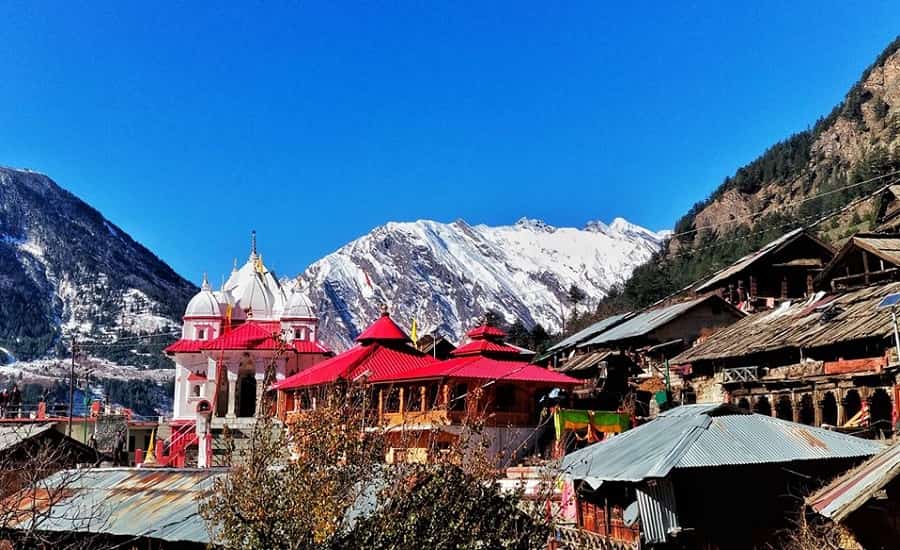
Quick Facts
Note on distances: figures below are the most consistent numbers found across tourism sources. Local road/trek distance can vary a little depending on the exact route and starting point — treat them as close estimates rather than survey-precise measurements.
| Detail | Information |
| Location | Approx. 1–3 km from Harsil (via Dharali or the direct village road), Uttarkashi district, Uttarakhand |
| Elevation | Approx. 2,620 meters above sea level |
| Nearest airport | Jolly Grant Airport, Dehradun (approx. 232 km from Harsil) |
| Nearest railhead | Rishikesh (approx. 205 km from Harsil) |
| Distance to Gangotri Temple | Approx. 26 km by road [corrected — was 28 km] |
| Best time to visit | April–June (summer scenery) or after the winter darshan period begins (see season status above) |
| Famous for | Winter abode of Goddess Gangotri, deodar wood temple, Himalayan views |
| Nearest ATM | ATM access is limited in the Harsil–Mukhba valley — carry sufficient cash |
| Registration needed | Not for the main Char Dham registration system, which applies to the four Dham temples. As rules can be revised season to season, confirm current requirements for Mukhba on the official portal before travelling (see registration section below) |
Religious Significance of Mukhba Village
Mukhba holds a unique position in the Char Dham pilgrimage calendar. It is one of only four villages in Uttarakhand where a Char Dham deity resides during winter — making it a site of continuous worship across all twelve months of the year.
There are two temples in Mukhba dedicated to Goddess Gangotri. The older temple is built entirely of deodar wood and brass — a remarkable example of traditional Garhwali craftsmanship and one of the most architecturally distinctive temples in Uttarkashi district. The newer temple uses marble and concrete. Both temples are actively worshipped during the winter months.
The arrival ceremony at Mukhba — when the deity’s palanquin reaches the village around Diwali — is accompanied by Vedic chanting, devotional music, and a large gathering of local devotees. If you can be here for this event, it is one of the most spiritually charged moments in the entire Char Dham calendar.
Winter Char Dham Yatra — All Four Winter Abodes
| Dham | Winter Abode | Temple Name |
| Gangotri | Mukhba, Harsil | Mukhba Temple (deodar wood) |
| Yamunotri | Kharsali village | Shani Dev Temple, Kharsali |
| Kedarnath | Ukhimath | Omkareshwar Temple, Ukhimath |
| Badrinath | Joshimath | Vasudev Temple, Joshimath |
Char Dham Registration — Does It Apply to a Mukhba Visit?
Quick answer: the mandatory Char Dham e-Pass system applies to the four main Dham temples, not to winter-abode villages like Mukhba. Registration mainly becomes relevant if your trip also touches Gangotri Dham (open season) or any of the other three main shrines — but since these rules are revised by the state government from season to season, confirm the current position on the official portal before a winter-only Mukhba trip, especially if you’re combining it with any part of the main Char Dham route.
If you are combining Mukhba with a Gangotri Dham visit during the open season (roughly 19 April to 10–11 November), here’s what to know:
- Registration is free and mandatory for the four main Dham temples — Yamunotri, Gangotri, Kedarnath, Badrinath — not for winter-abode villages like Mukhba, Kharsali, Ukhimath, or Joshimath.
- Register online at uk.gov.in, through the Tourist Care Uttarakhand mobile app, or by sending “YATRA” on WhatsApp to the official registration number.
- You’ll receive a QR-coded e-Pass (Yatra Parchi) — keep both a phone screenshot and a printed copy, since mobile network is patchy near Harsil.
- Offline counters are available in Haridwar, Rishikesh, and Uttarkashi for pilgrims who prefer in-person registration or need help filling the form.
- For a winter-only Mukhba darshan trip (November–March, when Gangotri Dham itself is shut), no Char Dham registration is required at all — you’re free to travel directly.
How to Reach Mukhba Village
By Air
Nearest airport is Jolly Grant Airport, Dehradun — approximately 232 km from Harsil. A limited number of domestic flights operate from Delhi. Hire a cab from the airport directly to Harsil (7–8 hours). Mukhba is 3 km further from Harsil.
By Rail
Nearest railhead is Rishikesh, about 205 km from Harsil. From Rishikesh, hire a private cab or take a local bus toward Uttarkashi and then Harsil. Journey time is approximately 6–7 hours from Rishikesh.
By Road
Mukhba is well connected by road from Rishikesh, Uttarkashi, Barkot, and Tehri. Private taxis and government buses operate from these towns. The journey from Delhi is approximately 500 km and takes 12–14 hours. Roads are generally good but can be disrupted during heavy monsoon rain and after snowfall in winter.
What a Winter Visit to Mukhba Actually Looks Like
The road to Harsil generally stays open through winter, since the village sits at a relatively low altitude compared to the main Char Dham temples. That said, snowfall, ice, and temporary closures can affect access at short notice — carry tyre chains or traction equipment in December and beyond, and check current road conditions from Uttarkashi before you start.
The village is quiet in winter. There are no large crowds — this is one of the few places in the entire Char Dham circuit where you can have genuinely peaceful darshan. The two temples are open, and the local priests conduct the puja daily. The pace is completely different from what you experience at Gangotri Dham in peak season.
The landscape itself is extraordinary in winter. Snow-covered peaks above, the Bhagirathi River below, deodar forests all around — and the old deodar wood temple glowing in the winter light. Come prepared for genuinely cold conditions — nights fall below freezing, and colder spells can reach around -5°C or. ATM access is limited across the Harsil-Mukhba valley, so carry enough cash for your whole stay.
What to Pack for Mukhba
A Harsil-Mukhba trip covers two very different climates depending on when you go — pack accordingly.
For a winter Darshan trip (Nov–March)
- Heavy woollens, thermal layers, a down jacket rated for sub-zero nights
- Waterproof, insulated trekking shoes with good grip (icy patches on village paths)
- Gloves, a woollen cap, and a scarf or muffler for wind protection
- A power bank — electricity in Garhwali villages can be intermittent in winter
- Torch or headlamp for early-morning or evening darshan
- Cash in small denominations — no ATMs beyond Uttarkashi
For a summer visit (April–June)
- Light layers for the day, one warm layer for mornings and evenings
- Comfortable walking shoes for village lanes and the Sattal trek
- Sunscreen and a cap — high-altitude sun is stronger than it feels
- A basic first-aid kit and any personal medication
Accommodation Options
Homestays
Mukhba and Harsil have family-run homestays offering basic but comfortable rooms and home-cooked pahadi meals. These are the best option for an authentic village experience. Book in advance for October–November (peak winter darshan) and May–June (summer season).
Hotels
Hotels with better amenities are available in Harsil town and in Dharali village (3 km from Harsil). These are more comfortable but book fast during the pilgrim season.
Lodges
Lodges in Harsil and Dharali offer mid-range accommodation at affordable rates — a good option for budget travelers and small groups.
Food Availability
Mukhba is a small Garhwali village. Expect simple, wholesome pahadi food — parathas, dal, rice, and seasonal vegetables at local dhabas. There is no restaurant variety here.
If you want authentic Garhwali cuisine, ask your homestay host in advance. The region’s specialties — Gahat Dal, Chainsoo, Sisunak Saag, Pahadi Raita, and Bhang ki Chutney — are deeply satisfying and warming in cold weather. These dishes are not found on menus; they are made in homes.
Carry dry snacks for road travel. There are very few options between Uttarkashi and Harsil.
Places of Interest Near Mukhba)
Dharali Village (3 km from Harsil)
Dharali sits on the banks of the Bhagirathi River and is known for mountain apple orchards and rajma cultivation. Covered in deodar and pine forests, it is a peaceful stop with river valley views. Hotels here are a comfortable base if Mukhba homestays are full.
Gangnani (46 km from Uttarkashi, en route to Harsil)
Gangnani has natural hot water springs and is a worthwhile stopover on the road from Uttarkashi to Harsil. The springs are open for bathing and offer a refreshing break during the long road journey.
Gangotri National Park
Spanning 2,390 sq. km, Gangotri National Park is home to snow leopards, bharal (Himalayan blue sheep), musk deer, and numerous glacial lakes. Accessible from Harsil and the Gangotri road, it is a destination in itself for wildlife and high-altitude trekking enthusiasts.
Sattal Harsil (uphill trek from Dharali)
Sattal is traditionally described as a group of seven high-altitude lakes surrounded by dense pine forests. The uphill trek from Dharali is generally easy to moderate, but it can take a few hours round trip and conditions vary with the weather — worth checking your fitness level and the day’s conditions before setting out, especially for seniors or young children.
Activities
- Winter Pilgrimage — Offer prayers to Goddess Gangotri at Mukhba temple from November to March.
- Village Walks — Walk through the village lanes, apple orchards, and riverside paths for an unfiltered experience of Garhwali mountain life.
- Trekking — Sattal Harsil (from Dharali) is the most accessible short trek. Longer routes toward Lamkhaga Pass and Gaumukh Glacier start from the Harsil valley for experienced trekkers.
Weather at Mukhba
| Season / Months | Conditions |
| Summer (April–June) | Pleasant. Best for sightseeing and village walks. Peak tourist season. |
| Monsoon (July–Sept) | Heavy rain, landslide risk on the route. Generally best avoided; check current road status if travel is unavoidable. |
| Autumn (Oct–Nov) | Good conditions. Gangotri closes around November — deity arrives at Mukhba. |
| Winter (Nov–March) | Snowfall. Cold (down to -5°C at night). Winter darshan at Mukhba temple. Prepare well. |
Senior Citizens & Families — Practical Tips
Mukhba is gentler than the main Char Dham circuit — there’s no steep trek to the temple itself — but the road journey is long, so plan around that.
- The village sits at 2,620 m, a moderate altitude most people adjust to without difficulty. Still, take it slow on day one and avoid overexertion.
- Break the road journey into two days (overnight at Uttarkashi or Harsil) rather than trying Rishikesh-to-Mukhba in one stretch — 6–7 hours of mountain driving is tiring for elderly travelers.
- Choose a homestay or hotel with easy, flat access rather than one requiring many stairs, especially for winter visits when paths can be icy.
- Carry regular medication in original packaging, plus a basic prescription copy — the nearest well-stocked pharmacy is in Uttarkashi.
- Families with young children should time the visit for daylight hours; mountain roads are best avoided after dark.
- If mobility is a concern, our team can arrange a private cab with a driver experienced on this specific route, plus rest stops at Gangnani.
Common Mistakes to Avoid
- Visiting in monsoon without checking road conditions — landslides on the Uttarkashi–Harsil road are common July–September.
- Not confirming the Gangotri temple closing date before planning a winter darshan visit — the deity typically arrives at Mukhba around 10–11 November 2026.
- Arriving without cash — no ATMs in Mukhba or Harsil. Nearest ATMs are in Uttarkashi. Withdraw before entering the Harsil valley.
- Packing without warm clothing — temperatures drop to -5°C at night in winter. Even in April, mornings are cold.
- Assuming Char Dham registration is needed just to visit Mukhba — it isn’t, unless you’re also visiting Gangotri Dham itself during the open season. Don’t waste time registering for a winter-only Mukhba trip.
Pro Tips
- If possible, arrive around 10–11 November 2026 for the Gangotri deity procession arriving at Mukhba — one of the most spiritually and visually striking events in the entire Char Dham calendar.
- Combine your Mukhba visit with Dharali and Sattal Harsil for a complete Harsil valley experience in one trip.
- Book homestays in advance for October–November and May–June — accommodation is limited and fills fast.
- Carry a portable power bank — electricity supply in remote pahadi villages can be intermittent, especially in winter.
- Download offline maps before entering the Harsil area — mobile data is very limited or absent in this region.
Why Book with Chardham Tour?
- Government-registered tour operator with Uttarakhand Tourism.
- We handle Char Dham Yatra registration, accommodation, and transport — including for winter Mukhba visits.
- Custom itineraries available: Mukhba day trip from Rishikesh, or combined with Gangotri Dham visit in summer.
- 24×7 WhatsApp support — real help when you need it on the route.
- Transparent pricing, no hidden charges.
Key Takeaways
- Mukhba is Goddess Gangotri’s winter seat, 3 km from Harsil, active roughly mid-November to mid/late-April each year.
- In 2026, Gangotri Dham is expected to close around 10–11 November; the idol then moves to Mukhba until the next Akshaya Tritiya opening.
- No Char Dham registration is needed for Mukhba alone — only for the main Gangotri Dham temple during its open season.
- Nearest ATM is in Uttarkashi; carry cash for the whole Harsil valley.
- Best combined with Dharali and Sattal Harsil for a fuller Harsil-valley trip.
Frequently Asked Questions
When does Goddess Gangotri come to Mukhba in 2026?
The Gangotri Dham temple is expected to close around 10–11 November 2026 (Bhai Dooj). The idol of Goddess Gangotri is then ceremonially brought to Mukhba village, where she remains until the temple reopens the following spring on Akshaya Tritiya.
Can I visit Mukhba in winter?
Yes. Winter is the most spiritually significant time to visit Mukhba, as Goddess Gangotri is present here. Roads to Harsil are generally accessible in winter, but carry warm clothing and check current road conditions from Uttarkashi before setting out.
Is Char Dham registration required for Mukhba?
The mandatory Char Dham e-pass registration applies specifically to the four main Dham temple sites (Gangotri, Yamunotri, Kedarnath, Badrinath). Mukhba is a winter darshan site, not the official Dham checkpost — but it is advisable to complete registration if you plan to visit Gangotri as part of your trip. Confirm current rules at registrationandtouristcare.uk.gov.in.
What is the distance from Mukhba to Gangotri temple?
Mukhba is approximately 28 km from the Gangotri temple via Harsil and Bhaironghati.
Are there ATMs near Mukhba?
No. The nearest ATMs are in Uttarkashi. Always carry sufficient cash when visiting Mukhba, Harsil, or Dharali.
What is the best way to reach Mukhba from Rishikesh?
The most practical option is a private taxi from Rishikesh to Harsil (approximately 205 km, 6–7 hours). From Harsil, Mukhba is just 3 km further.
Is Mukhba worth visiting even when Gangotri temple is open in summer?
Absolutely. The village itself is beautiful year-round — the old deodar wood temple, Himalayan peaks, apple orchards, and the Bhagirathi river make it worth visiting in summer as well. April–June is the best time for scenery.
What food is available in Mukhba?
Basic pahadi food at local dhabas — parathas, dal, rice, seasonal vegetables. For authentic Garhwali dishes like Gahat Dal or Chainsoo, request your homestay host in advance.
What trekking options are available near Harsil?
Sattal (from Dharali, a short uphill trek), Lamkhaga Pass, and the Gaumukh Glacier area are accessible from the Harsil valley. Sattal is the most accessible for casual visitors.
Is it safe to visit Mukhba solo?
Mukhba is generally a quiet, low-crowd Garhwali village and solo travelers are welcome. As with any mountain destination, follow normal precautions: carry enough cash, download offline maps, and let someone know your travel plan before entering the Harsil valley.
How do I register for the Char Dham Yatra QR e-Pass if I’m combining Mukhba with Gangotri Dham?
Register free at registrationandtouristcare.uk.gov.in or via the Tourist Care Uttarakhand app, or send “YATRA” on WhatsApp to the official registration number. You’ll get a QR-coded e-Pass to show at checkpoints — keep a printed copy since mobile signal is weak near Harsil.
Is Mukhba suitable for senior citizens?
Yes, more so than the main Char Dham circuit — there’s no steep temple trek. The main challenge is the long road journey, so break it into two days and book easy-access accommodation.
What should I pack for a winter trip to Mukhba?
Heavy woollens, a down jacket, insulated waterproof shoes, gloves, a power bank, and cash in small denominations. Nights drop to around -5°C, and ATMs and charging points are unreliable beyond Uttarkashi.
Conclusion
Mukhba is a place that most people have heard of but few actually visit. In 2026, if the Gangotri Dham temple closes on schedule around 10–11 November, the goddess comes home to Mukhba — and stays until the temple’s next Akshaya Tritiya opening.
Visit in summer for the views, the orchards, and the peace. Visit in winter for the darshan, the silence, and the experience of a living pahadi village in its truest form. Either way, Mukhba will stay with you.
Call: +91-7838908606 | Email: yatra@chardhamtour.in | info@chardhamtour.in WhatsApp 24×7: +91-7838908606

Related Posts
Planning a Gangotri Yamunotri Yatra Package
Gangotri Dham Opening & Closing Dates 2026