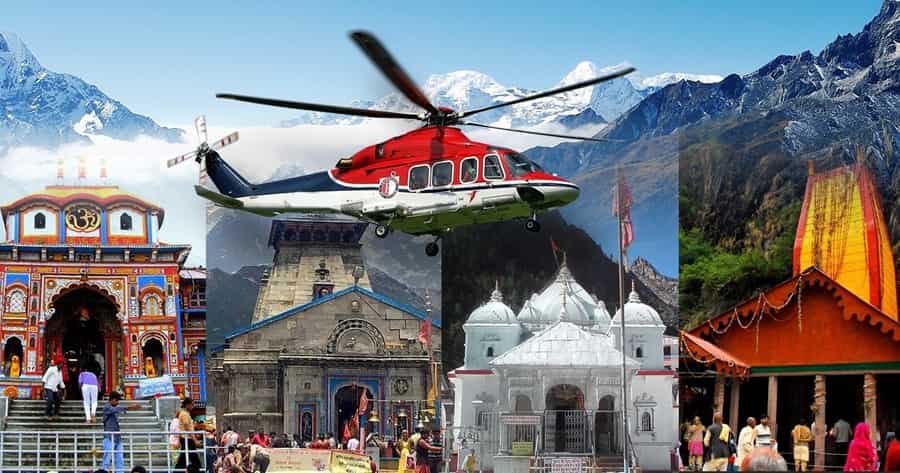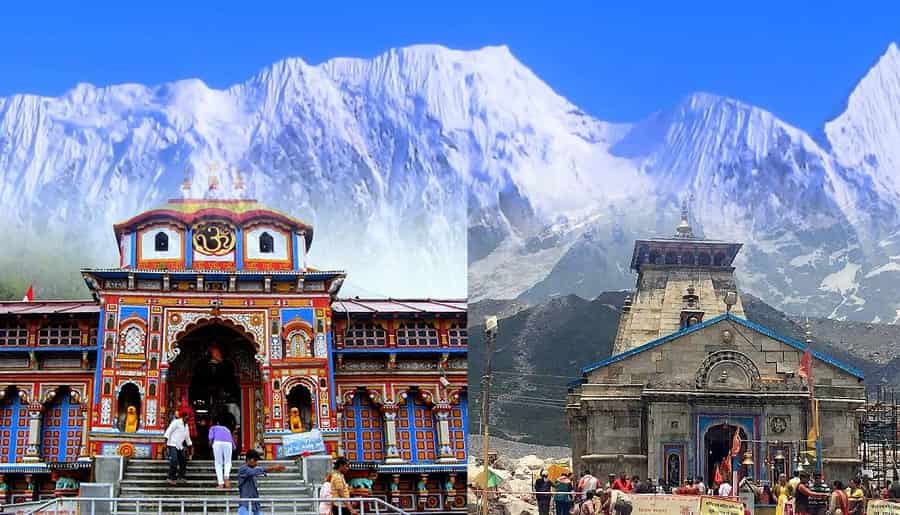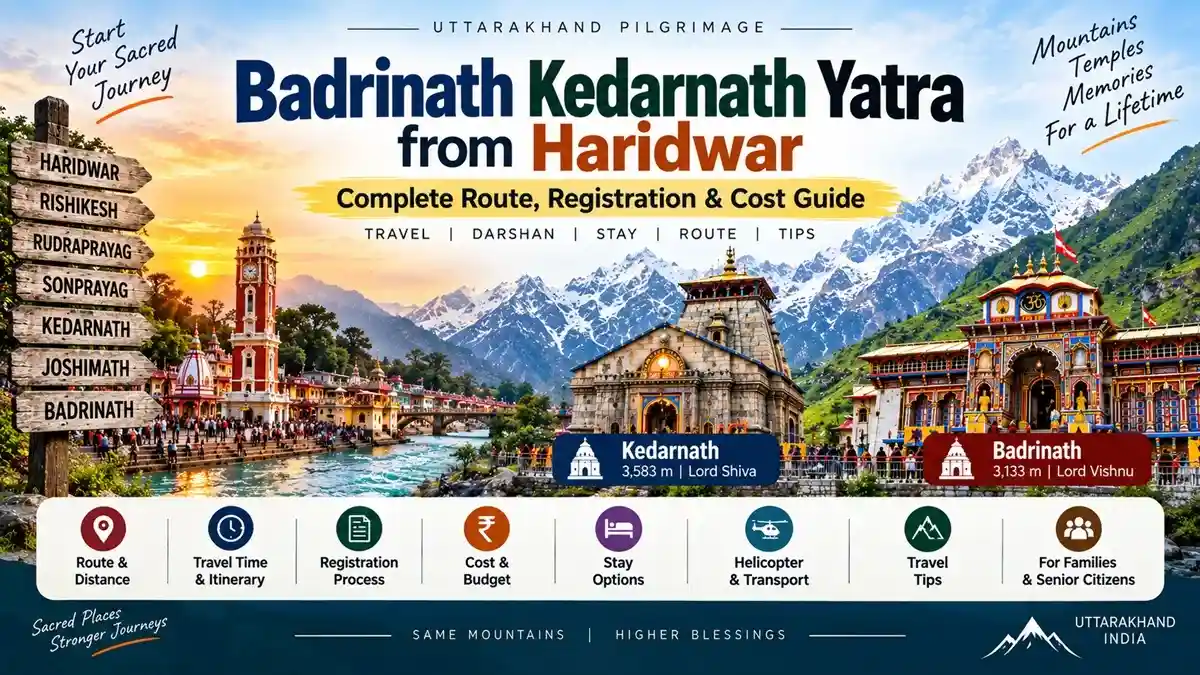
Planning a Badrinath Kedarnath Yatra from Haridwar is easier once you have the real numbers in front of you: distance, registration rules, road conditions, and how much time to actually set aside. Haridwar is one of the most common starting points for this pilgrimage, and from here the road runs through Rishikesh, Rudraprayag, and the Alaknanda valley before splitting toward the two shrines. This guide covers the current route, registration process, cost, and a realistic itinerary, based on how the yatra runs on the ground right now.
Quick Answer: From Haridwar, Kedarnath is about 240 km by road up to Gaurikund, followed by a 16 km trek (or a short helicopter hop from Phata, Sersi, or Guptkashi). Badrinath is about 320 km by road, fully motorable. Char Dham registration is mandatory for both — online is fastest, though physical counters exist too. Most pilgrims need 6–8 days to cover both dhams comfortably from Haridwar.
Why This Yatra Matters
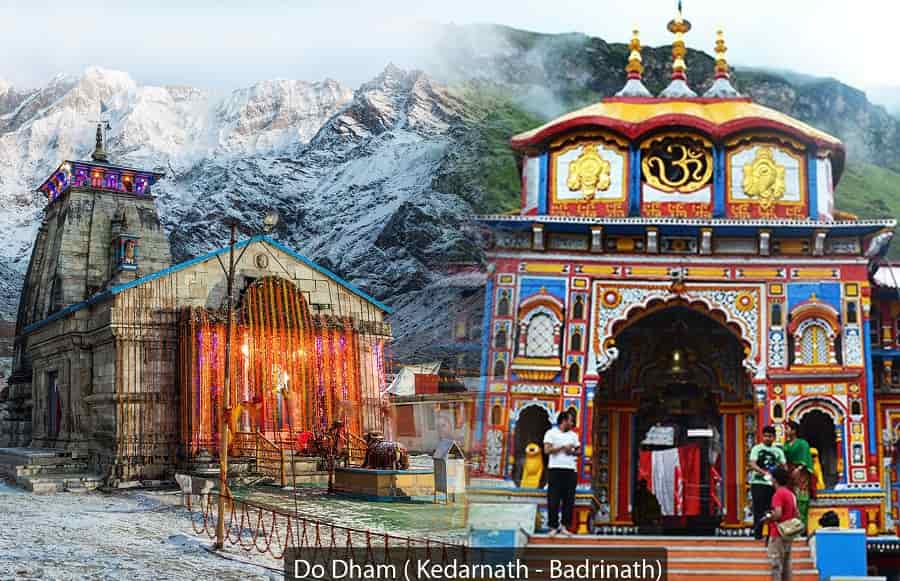
Kedarnath and Badrinath are two of Uttarakhand’s most visited pilgrimage sites, each with a distinct character. Kedarnath, dedicated to Lord Shiva, is one of the twelve Jyotirlingas and sits at roughly 3,583 metres. There’s no road to the temple — you get there on foot, by pony, by palki, or by helicopter. Badrinath, dedicated to Lord Vishnu, sits at 3,133 metres and is connected by a motorable road, so it doesn’t demand a trek the way Kedarnath does. That difference alone shapes how you should plan the trip, especially if you’re travelling with elderly family members.
Doing both from Haridwar in one trip is the standard way this pilgrimage has been done for years. In Hindu religious tradition, visiting these shrines is tied to spiritual merit and devotion. What most people don’t realize until they’re already planning is that the order — Kedarnath first or Badrinath first — changes your entire road route, so decide that before booking anything else.
Route and Connectivity from Haridwar
Haridwar connects well by rail and air (Jolly Grant Airport, Dehradun, is about an hour away), so most yatris arrive here first and start the road journey the same or next morning. Buses, taxis, and shared jeeps are all available from Haridwar’s ISBT and taxi stands.
The road is scenic but slow — mountain speeds of 25–35 km/h are normal on many stretches, especially after Rudraprayag.
Distance Chart: Haridwar to Kedarnath and Badrinath
| Route Stage | Distance from Haridwar | Approx. Travel Time |
| Haridwar → Rishikesh | 24 km | 45 min |
| Rishikesh → Devprayag | 70 km | 2 hrs |
| Devprayag → Rudraprayag | 70 km | 2–2.5 hrs |
| Rudraprayag → Sonprayag (for Kedarnath) | 71 km | 3–3.5 hrs |
| Sonprayag → Gaurikund (shuttle) | 5 km | 20 min |
| Gaurikund → Kedarnath (trek) | 16 km | 6–8 hrs on foot |
| Rudraprayag → Joshimath (for Badrinath) | 110 km | 4–5 hrs |
| Joshimath → Badrinath | 45 km | 1.5–2 hrs |
Haridwar to Kedarnath ≈ 240 km by road + 16 km trek — about 9–10 hours on the road, plus 6–8 hours on foot, or a 7–15 minute helicopter hop from Sersi, Phata, or Guptkashi instead of the trek.
Haridwar to Badrinath ≈ 320 km, fully by road, roughly 10–12 hours of driving.
Private vehicles aren’t allowed beyond Sonprayag on the Kedarnath route — everyone switches to a government shuttle or walks the last 5 km to Gaurikund. Book your taxi with this in mind; the driver waits at Sonprayag, not Gaurikund.
Char Dham Yatra Registration — The Step Most People Get Wrong
This is where older guides fall short: registration used to be a formality, a biometric card picked up somewhere en route. It isn’t anymore. Registration is mandatory for every pilgrim heading to Kedarnath, Badrinath, Gangotri, or Yamunotri. Online is simpler and faster, but it isn’t the only route — physical registration centres also run at Haridwar, Rishikesh, and at each dham, so forgetting to register at home doesn’t strand you.
How to register:
- Visit registrationandtouristcare.uk.gov.in or use the Tourist Care Uttarakhand app. WhatsApp registration works too: send “Yatra” to +91-8394833833.
- Create an account with your mobile number and email.
- Enter personal details and upload a valid photo ID (Aadhaar, passport, voter ID, PAN, or driving licence).
- Select your travel dates and the dhams you’re visiting, in order.
- Download your Yatra Registration Letter with its QR code.
- Carry a printed copy plus the digital version. Verification happens at checkpoints along the route and again at the shrine entrance, where a Yatrimitra scans your QR code.
Doing this before you travel is worth it — queues at physical counters during the May–June rush can take a while, and having it sorted removes one worry on arrival day. Check the portal directly for slot availability on your dates rather than going by last season’s numbers; daily limits reset each year.
The portal has a View/Modify Tour option if your plans change after registering. Foreign nationals can register too, using passport and visa details instead of Aadhaar.
If you have a heart condition, asthma, diabetes, or another condition that could complicate a high-altitude trek, talk to your doctor before you go and carry prescribed medicines — the portal runs a separate Health Advisory for current guidance. If you get stuck anywhere in the process, the Tourist Care Uttarakhand toll-free number is 1364 (also 0135-3520100) — the actual registration helpline, not a generic call centre.
Best Time to Visit and 2026 Temple Status
May–June and mid-September to October are the most commonly preferred months, with more stable weather and fewer road disruptions. Monsoon months bring rain to the Rudraprayag–Rishikesh stretch, and landslides close sections of the road most years — the yatra continues, but delays are common.
Kedarnath’s kapat opened on 22 April 2026 and Badrinath’s on 23 April 2026. As of this writing (17 September 2026), both temples are open for the season. Closing falls around Bhai Dooj, two days after Diwali, when the deities move to their winter seats — Ukhimath for Kedarnath, Joshimath for Badrinath — but BKTC confirms the exact date closer to the time. For a late-October or November trip, check the official announcement before booking, since a late-season closing date can shift your travel window by a week or more.
Once winter closure begins, both temples stop regular darshan until spring, and roads beyond Joshimath and Sonprayag typically close under snow.
Suggested Itinerary: Badrinath Kedarnath Yatra from Haridwar (7 Days)
Here’s one practical 7-day option. A 6-day version is common in other guides, but it usually skips a rest day and, in some cases, gets the route order wrong between Kedarnath and Badrinath.
Day 1: Haridwar → Rishikesh → Guptkashi (approx. 210 km): Start early, stop briefly at Devprayag to see the Alaknanda–Bhagirathi confluence, and reach Guptkashi by evening. Overnight stay here rather than pushing on to Sonprayag — Guptkashi has far better hotel options.
Day 2: Guptkashi → Sonprayag → Gaurikund → Kedarnath (trek): Drive to Sonprayag, shuttle to Gaurikund, then begin the 16 km trek (or book a heli slot in advance). Reach Kedarnath by late afternoon, attend the evening Aarti, and stay overnight near the temple.
Day 3: Kedarnath Darshan → Trek back to Gaurikund → Guptkashi: Morning darshan is usually calmer and less crowded — most pilgrims prefer it over the afternoon rush. Trek down, drive back to Guptkashi, and rest.
Day 4: Guptkashi → Joshimath (approx. 180 km): Head north via Rudraprayag, Karnaprayag, and Chamoli. Roads narrow after Joshimath, and low light makes the turns harder to judge, so plan to arrive before dusk.
Day 5: Joshimath → Badrinath (45 km) → Darshan: A short, steep drive in the morning. Visit the temple, take a holy dip in Tapt Kund, and if time allows, see the Mana village and Vasudhara Falls nearby. Overnight in Badrinath.
Day 6: Badrinath → Rudraprayag (approx. 160 km): Return journey begins. Stop at Vishnuprayag and Nandprayag en route. Overnight in Rudraprayag or Srinagar.
Day 7: Rudraprayag → Haridwar (approx. 165 km): Final leg back to Haridwar, with a stop at Devprayag if you missed it on Day 1.
This 7-day structure builds in one buffer day, which matters more than people expect — weather delays or extra rest after the Kedarnath trek can eat into a tighter 6-day plan.
How to Reach: Transport Options from Haridwar
- By Road (Taxi): Most convenient for families and groups. An Innova-type cab for the full circuit typically costs ₹18,000–₹30,000 depending on days and vehicle type.
- By Bus: GMOU and UTC run government buses from Haridwar to Rudraprayag, Guptkashi, and Joshimath. Fares are budget-friendly (₹800–₹1,500 per leg) but schedules are less flexible.
- By Helicopter: Heli services to Kedarnath operate from Phata, Sersi, and Guptkashi — you still need to drive about 190–210 km first, since none of them fly from Haridwar directly. For Badrinath, helicopter services generally run from Dehradun’s Sahastradhara helipad. Book Kedarnath shuttle tickets only through the official IRCTC HeliYatra portal (heliyatra.irctc.co.in) — third-party sites or agents offering “guaranteed” slots are a common scam during peak season.
- By Train: Haridwar Junction is the last major railhead. There’s no direct rail line beyond it yet; the Rishikesh–Karnaprayag project is under construction but not operational for pilgrim travel.
Cost Breakdown (Per Person, Approximate)
Costs on this route swing a lot depending on group size, vehicle type, hotel category, and whether you use pony/palki or a helicopter — so treat the numbers below as a starting point for budgeting, not a quote.
| Expense Head | Budget Option | Mid-Range Option |
| Transport (7 days, shared taxi) | ₹4,500–6,000 | ₹8,000–10,000 |
| Accommodation (per night) | ₹800–1,500 | ₹2,500–4,500 |
| Food (per day) | ₹400–600 | ₹800–1,200 |
| Kedarnath trek (pony/palki, optional) | ₹3,500–6,000 | — |
| Kedarnath helicopter, Sersi (round trip, IRCTC fare) | — | ₹6,390 |
| Kedarnath helicopter, Phata (round trip, IRCTC fare) | — | ₹10,164 |
| Kedarnath helicopter, Guptkashi (round trip, IRCTC fare) | — | ₹12,762 |
| Badrinath helicopter (round trip from Dehradun) | — | roughly ₹85,000–90,000, charter pricing |
| Registration | Free | Free |
A full road-based 7-day trip on a budget-to-mid-range plan works out to roughly ₹12,000–₹20,000 per person, before any helicopter upgrade — an illustrative range, not a fixed tariff, since hotel category and vehicle choice move it either way. The Kedarnath heli fares above are IRCTC-published rates for the 2026 season and exclude the ₹300 convenience fee plus 18% GST; confirm the live fare on the portal before paying, since UCADA can revise these mid-season. Badrinath’s charter fare is a private, unregulated service — get a current quote from the operator rather than relying on last season’s figure.
Where to Stay
Accommodation ranges from GMVN guesthouses and dharamshalas to private hotels and Swiss tents near Kedarnath. Gaurikund has very limited stay options compared to Guptkashi or Sonprayag, so base yourself there instead. Near Badrinath, hotel supply is better and prices more stable, though rooms still fill up on weekends and festival dates. Book ahead once May–June arrives — availability tightens fast.
Essential Preparations Before You Leave
- Registration first: Online is faster, but physical counters exist too if you didn’t get to it beforehand.
- Documents: Photo ID and your Yatra Registration Letter, printed and on your phone.
- Clothing: Even in May–June, Kedarnath temperatures drop close to freezing at night. Pack a windproof jacket, thermal layers, gloves, and sturdy trekking shoes.
- Medication: Altitude sickness (headache, breathlessness, nausea) is common above 3,000 metres. If you have a medical condition, talk to a doctor before the trip and carry prescribed medicines.
- Cash: ATM access thins out past Guptkashi and Sonprayag. Carry what you’ll need before Rudraprayag.
Practical Planning Considerations
The biggest gap between expectation and reality on this trip is the Kedarnath trek. Sixteen kilometres sounds manageable on paper, but the last 3–4 km climb steeply, and altitude slows down even fit trekkers. First-timers tend to underestimate this and end up descending in fading light. Starting by 6–7 AM, rather than after a leisurely breakfast, buys you the daylight buffer that matters most.
The Haridwar–Badrinath stretch is driveable in one long day, but splitting it across two is worth the extra night’s stay — fatigue on hill roads compounds faster than the distance on paper suggests.
Common Mistakes Pilgrims Make
- Skipping registration entirely, assuming it can be sorted out on arrival — this can mean long waits at physical counters during peak season.
- Underpacking for cold weather, especially at Kedarnath, where even summer nights go below 10°C.
- Booking Gaurikund hotels instead of Guptkashi or Sonprayag, then finding very limited options on arrival.
- Attempting the Kedarnath trek without any fitness prep, particularly for senior travellers who might be better served by pony, palki, or helicopter.
- Driving the Joshimath–Badrinath or Gaurikund stretches after dark, where narrow roads and sharp turns are harder to judge in low light.
- Not carrying enough cash, assuming card payments or ATMs will be available past Guptkashi.
Pro Tips for a Smoother Yatra
- Register the moment your travel dates are fixed — one less thing to sort out on the road.
- Book Kedarnath helicopter tickets as early as the IRCTC portal allows; popular helipads fill up fast once the booking window opens.
- Keep a printed copy of your registration letter even with the QR code saved on your phone — network connectivity is patchy near Sonprayag and Gaurikund.
- If you’re travelling with elderly parents, plan Badrinath first (motorable throughout) and decide on Kedarnath separately based on their comfort with the trek or pony ride.
- Carry a downloaded offline map — mobile signal drops for long stretches between Rudraprayag and Joshimath.
Planning This Yatra with Chardham Tour
Chardham Tour puts together Badrinath Kedarnath Yatra packages from Haridwar, covering transport, stays, and Char Dham registration paperwork. For a package built around a specific group size, budget, or travel window — a faster helicopter-based trip or a slower road journey with extra rest days — reach out with your dates.
Frequently Asked Questions
What is the distance from Haridwar to Kedarnath and Badrinath?
Kedarnath is about 240 km by road plus a 16 km trek from Gaurikund. Badrinath is about 320 km, fully by road.
Is Char Dham registration mandatory for this yatra?
Yes, for Kedarnath, Badrinath, Gangotri, and Yamunotri. Online registration at registrationandtouristcare.uk.gov.in or through the Tourist Care Uttarakhand app is the fastest route, but physical registration centres also exist at Haridwar, Rishikesh, and each dham.
How many days are needed for Badrinath Kedarnath Yatra from Haridwar?
Around 6–8 days, depending on your itinerary, the trekking method you choose for Kedarnath, and how much buffer you build in for weather or road delays.
Can senior citizens do this yatra?
Yes, though Kedarnath’s trek is demanding. Pony, palki, or helicopter are the practical alternatives to walking. Anyone with a heart, respiratory, or other chronic condition should check with a doctor before attempting the trek, regardless of age.
What is the best time to visit Kedarnath and Badrinath from Haridwar?
May–June and late September to October see more stable weather. Monsoon months bring rain and occasional landslides on the road, so expect possible delays if you travel in July or August.
Is there a direct road to Kedarnath temple?
No. The road ends at Gaurikund; the last 16 km is covered on foot, by pony/palki, or by helicopter from Phata, Sersi, or Guptkashi.
How much does the yatra cost from Haridwar?
A 7-day road-based trip runs roughly ₹12,000–₹20,000 per person on a budget-to-mid-range plan, excluding helicopter services. Group size, hotel category, and vehicle type move this figure, so treat it as a starting estimate.
Are helicopter services available for both dhams?
Yes. Kedarnath heli services operate from Phata, Sersi, and Guptkashi, bookable only via the official IRCTC HeliYatra portal — 2026 round-trip fares are ₹6,390 (Sersi), ₹10,164 (Phata), and ₹12,762 (Guptkashi), plus fees. Badrinath helicopter services run from Dehradun’s Sahastradhara helipad as a separate charter, priced well above the Kedarnath shuttle fares given the longer distance.
When do Kedarnath and Badrinath temples close for winter?
Around Bhai Dooj, two days after Diwali, reopening the following April around Akshaya Tritiya. BKTC confirms the exact date closer to the time each year.
Can I change my registered travel dates later?
The portal has a View/Modify Tour option in your account. Check what fields you can edit there directly, since this has changed across seasons.
Is train travel possible up to Kedarnath or Badrinath?
No. Haridwar Junction is the last major railhead; the rest of the journey is by road and, for Kedarnath, on foot.
What documents should I carry for the yatra?
A valid government-issued photo ID (Aadhaar, passport, voter ID, PAN, or driving licence) and your Yatra Registration Letter with its QR code, printed and saved on your phone.
Conclusion
A Badrinath Kedarnath Yatra from Haridwar rewards proper planning more than most pilgrimages do. The difference between a smooth trip and a stressful one usually comes down to registering early, packing for genuinely cold nights, and not underestimating the Kedarnath trek. With the route, registration steps, and cost ranges laid out here, you should be able to plan dates, book transport, and prepare documents without last-minute surprises. Chardham Tour puts together Badrinath Kedarnath packages from Haridwar if you’d rather have the transport, stays, and registration handled as one booking — get in touch with your travel dates and group size for a package built around them.