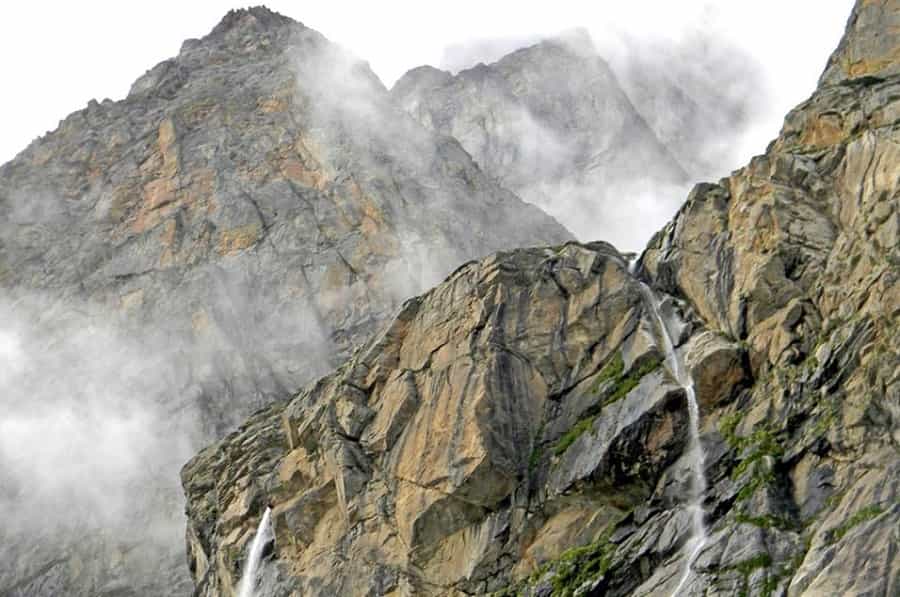
Phata sits at roughly 1,500 metres in the Rudraprayag district of Uttarakhand, on the Gopeshwar-Gaurikund road en route to Kedarnath. It’s the busiest of the three helicopter bases that fly pilgrims to the shrine, and most people who pass through are here for one of two reasons: they’re catching a shuttle flight, or they’re staying the night before an early departure.
Phata Village at a Glance
| Detail | Information |
|---|---|
| Location | Rudraprayag District, Uttarakhand |
| Altitude | ~1,500 m |
| Known for | Kedarnath helicopter base, overnight stopover |
| Nearest town | Guptkashi (~14 km by road) |
| Distance from Rishikesh | ~200 km |
| Distance from Haridwar | ~230–235 km |
| Distance from Dehradun / Jolly Grant Airport | ~220–235 km (route-dependent) |
| Kedarnath by helicopter | 8–10 min flight |
| Kedarnath by road + trek | ~34–36 km, 6–8 hrs on foot from Gaurikund |
| Kedarnath Temple opens 2026 | 22 April 2026 |
| Helicopter booking | heliyatra.irctc.co.in |
| Yatra registration | registrationandtouristcare.uk.gov.in / WhatsApp 8394833833 |
| Emergency | Police 112, Ambulance 108, SDRF 1070, Tourist Care 1364 |
A note on the numbers above: road distances around Phata vary by a few kilometres depending on which measurement point a source uses. Where I found conflicting figures across otherwise reliable sources, I’ve given a range instead of pretending there’s one exact number.
Distance and Route: Phata to Kedarnath
Here’s where a lot of Phata guides get sloppy, so let’s be precise about what’s actually verified.
| Leg | Distance | Time |
|---|---|---|
| Phata → Guptkashi | ~14 km by road | ~30–45 min |
| Phata → Sonprayag | ~13–15 km by road | ~30–45 min |
| Sonprayag → Gaurikund | ~5 km | 15–20 min (government shuttle only) |
| Gaurikund → Kedarnath (trek) | ~16 km | 6–8 hrs ascent, 4–6 hrs descent |
| Phata → Kedarnath, total road + trek | ~34–36 km | 7–9 hrs |
| Phata → Kedarnath, by helicopter | — | 8–10 min flight |
One correction worth flagging directly: older versions of this guide, and a lot of other Phata pages online, list Guptkashi as roughly 5 km away. It isn’t. Every route-distance source I checked — including simple taxi-fare listings from Guptkashi itself — puts it at 14 km by road, about a 30-minute drive. If you’re using this page to plan a same-day dash to Guptkashi’s hospital or market, budget for 14 km, not 5.
On the trek distance: you’ll see both 14 km and 16 km quoted for Gaurikund to Kedarnath. The 16 km figure is the one nearly every current 2026 source uses, and it reflects the trail rebuilt after the 2013 floods — it’s genuinely a different, longer route than the pre-2013 path some older figures refer to. Treat 16 km as the number to plan around, and don’t be alarmed if you see 14 km on an older blog; it isn’t a typo, it’s an outdated route.
I also don’t give a fixed kilometre figure for the helicopter’s aerial distance, because sources disagree on it by a wide margin depending on whether they mean straight-line distance or the actual flight path. The flight time — 8 to 10 minutes — is consistent across current sources and is the number that actually matters for planning.
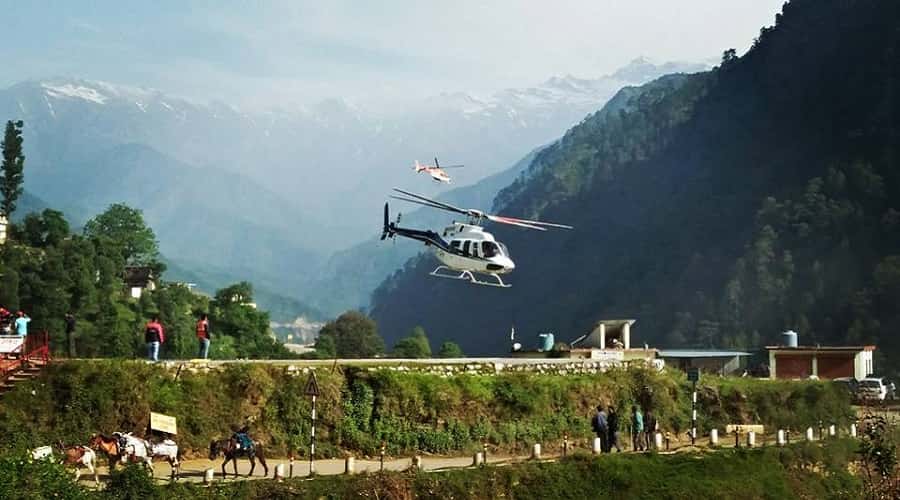
Helicopter Fare from Phata
The round-trip shuttle fare from Phata for 2026 is ₹10,164 per person, set by UCADA. IRCTC adds a convenience fee and GST on top at checkout — the total you pay will be somewhat higher than the base fare, and I’d rather send you to the portal for the exact final number than guess at a combined figure that might not match what you’re actually charged.
Fares get revised season to season. Don’t budget off any number you see on a blog, including this one — confirm on heliyatra.irctc.co.in before you commit.
Helipad comparison:
| Helipad | 2026 Base Fare (Return) | Flight Time | Notes |
|---|---|---|---|
| Sirsi | ~₹6,390 | ~8–11 min | Cheapest, shortest sector |
| Phata | ~₹10,164 | ~8–10 min | Most flights, busiest in peak season |
| Guptkashi | ~₹12,762 | ~10–15 min | Priciest, most facilities nearby |
If Phata is sold out, Sirsi is genuinely worth checking — it’s not a downgrade, just a shorter, cheaper flight from a different starting point.
Baggage and weight: current operator terms allow one soft bag up to 5 kg per passenger — no hard suitcases or trolley bags. Passengers over roughly 80 kg are typically charged extra per kilo. These numbers show up consistently across operator terms and conditions, but confirm the exact figure on your ticket, since it’s the kind of rule an operator can revise.
Children: infants under 2 fly free on a parent’s lap. Anyone 2 and older pays the full adult fare — there’s no discounted child ticket on the shuttle service.
Operators: current 2026 listings for the Phata route include Thumby Aviation, Pilgrimage Aviation, United Helicharters and Rajas Aerosports. You don’t choose your operator — IRCTC assigns it at booking, and the roster of approved operators can change between seasons. Book only through heliyatra.irctc.co.in. Fake booking sites have caused real financial losses to pilgrims in past seasons, and the pattern is always the same: a search result or ad that looks official but isn’t.
Flight Timings and Registration
Flights generally run from around 6 AM to 6 PM in season, weather permitting, in assigned time slots. Morning slots are worth chasing if you can get them — Himalayan weather tends to get less predictable as the day goes on, though nothing here is ever guaranteed.
Char Dham registration is separate from your helicopter ticket, and you need both. Register online at registrationandtouristcare.uk.gov.in, through the Tourist Care Uttarakhand app, or by WhatsApping “Yatra” to 8394833833 — all three are official channels. Keep your QR-coded pass on your phone and as a printout; it gets checked at multiple points along the route, and mobile signal is unreliable past Sonprayag.
Places Near Phata
Kedarnath Temple — one of the 12 Jyotirlingas, at roughly 3,583 m in the Garhwal Himalayas. Opens for the 2026 season on 22 April; closes around Bhai Dooj in mid-November, with the exact date announced closer to the time. Helicopter passengers land 500–700 m from the temple, a 15–20 minute walk.
Gaurikund (~18 km from Phata) — the trekking base, and where Goddess Parvati is said to have meditated to win Shiva as her husband. There’s a hot-water kund here that pilgrims traditionally bathe in before the trek, though access can vary with conditions. Pony and doli services operate from here for anyone who can’t walk the full route.
Vasuki Tal — a glacial lake around 4,135 m, reached by a demanding trek from Kedarnath. Best attempted in the more stable late-summer to autumn window; winter conditions make the trail genuinely dangerous, not just uncomfortable.
Augustmuni (~46 km) — sits on the Mandakini, with a temple marking where the sage Agastya is believed to have meditated. Has its own helipad and a bigger market than Phata.
Ukhimath (~41 km from Rudraprayag) — where the Kedarnath deity is ceremonially moved during the winter closure. If you’re visiting between December and April, this is where the darshan tradition continues while the main temple is shut.
Guptkashi (~14 km) — home to the Vishwanath and Ardha Narishwar temples, and considerably better equipped than Phata: more hotels, a hospital, more places to eat.
Triyuginarayan Temple (~25 km) — the site tradition holds as Shiva and Parvati’s wedding ground, with an eternal flame said to have burned since then. Quieter than the main Kedarnath route temples.
Weather and Best Time to Visit
May–June and September–October are the two windows that work best. April opens the season but can still be cold; July–August is monsoon, and helicopter services are typically suspended through most of it due to landslide risk. November brings the temple’s winter closure.
Post-monsoon 2026 flights resume September 15 (see the update box above), and that window through late October tends to bring clearer skies and thinner crowds than the May rush — worth considering if your dates are flexible.
I’ve left exact monthly temperatures off this page rather than publish numbers I can’t point to a solid source for. Check IMD’s Uttarakhand forecast closer to your travel date for that.
How to Reach Phata
By air: Jolly Grant Airport, Dehradun is roughly 220–235 km away — figures vary by route — which works out to 7–9 hours by road. Book your taxi at the airport counter; skip unlicensed cabs outside the terminal.
By rail: Rishikesh (~200 km) or Haridwar (~230–235 km) are the nearest stations. From either, a private taxi, GMOU bus, or shared Sumo/Bolero gets you to Phata via Rudraprayag and Guptkashi.
By road: Delhi to Phata runs roughly 490–520 km via Haridwar, Rishikesh, Devprayag, Srinagar Garhwal, Rudraprayag, Agastyamuni and Guptkashi. Direct buses run from ISBT Kashmiri Gate to Guptkashi (12–16 hours), then it’s a short local cab to Phata. Build in buffer time on the Rudraprayag–Guptkashi stretch during peak season — traffic there is unpredictable, not just slow.
Staying and Eating in Phata
Phata’s accommodation is functional — guesthouses, dharamshalas, a handful of basic hotels. Nothing luxurious. If you want more comfort, Guptkashi, 14 km away, has better hotels and a hospital. Prices swing a lot with season and demand, so I won’t quote fixed rates here; book ahead for May–June, when Phata fills fast as the main helicopter staging point.
Food is simple dhaba fare — dal, rice, sabzi, roti, chai. Don’t expect variety. ATMs exist but run dry in peak season, so carry cash from Haridwar or Rishikesh; UPI works at most hotels and shops but cash is essential once you’re past Sonprayag. Mobile coverage (Jio, BSNL) is workable in town and weakens toward Gaurikund — download offline maps before you leave cell range. There’s a petrol pump near Phata/Guptkashi worth using, since stations get scarce beyond this point. Medical facilities in Phata itself are basic; Guptkashi’s hospital is the nearer serious option, with Srinagar Garhwal beyond that for anything more.
If You Can’t Get a Helicopter Slot
Peak-date slots from Phata sell out in minutes. If you miss one:
- Drive Phata to Sonprayag (~15 km, 30–45 min).
- At Sonprayag, switch to the government shuttle to Gaurikund (~5 km) — private vehicles aren’t allowed past this point.
- From Gaurikund, begin the 16 km trek: Jangla Chatti, Bheembali, Linchauli, Rambara, then Kedarnath.
- Budget 6–8 hours up, 4–6 hours down, more if you’re not used to altitude.
Pony and doli services run from Gaurikund at government-fixed rates — book at the official counters, not from anyone approaching you on the trail.
On altitude: Kedarnath sits at roughly 3,583 m, and helicopter passengers get no acclimatisation buffer — you’re exposed to the altitude the moment you land, same as someone who trekked up. Watch for headache, dizziness, or nausea. Stay hydrated, don’t push hard in the first hour, and talk to your doctor before travel if you have any relevant heart, lung or blood pressure condition — including about whether altitude medication makes sense for you. I won’t recommend a specific drug here; that’s a conversation for a doctor who knows your history, not a travel page.
Practical Tips for 2026
- IRCTC’s booking window opens with almost no warning and peak slots vanish in under five minutes — set a reminder and have your account pre-verified.
- Stay overnight in Phata or Guptkashi before an early flight. Coming up same-day from Rishikesh is a gamble against road delays.
- Pack light: 5 kg is the baggage limit, in a soft bag, no exceptions for hard suitcases.
- Carry small notes — dhabas, porters and return shuttles run on cash.
- Warm layers matter even in May; 3,583 m is cold regardless of season.
- Complete your Yatra registration 2–3 weeks out and keep both digital and printed copies.
- If Phata’s sold out, check Sirsi before assuming you’re stuck trekking.
- Travel insurance that explicitly covers high-altitude helicopter travel and medical evacuation is worth the cost — standard domestic policies often don’t include either.
FAQs
What’s the helicopter fare from Phata to Kedarnath in 2026?
₹10,164 base round-trip fare, plus IRCTC’s convenience fee and GST at checkout. Confirm the final amount on heliyatra.irctc.co.in — don’t budget off a number from any blog.
How do I book a Kedarnath helicopter from Phata?
Complete Char Dham registration first, then book on heliyatra.irctc.co.in. Registration and the flight ticket are two separate steps — you need both.
How far is Kedarnath from Phata?
8–10 minutes by helicopter. By road and trek, roughly 34–36 km total, 7–9 hours. Ignore any page quoting an exact aerial kilometre figure — sources disagree too widely for that number to be reliable.
Is Phata better than Sirsi?
Phata has more flights and is the more established base. Sirsi is cheaper and has a shorter flight. If Phata’s sold out or you’re watching the budget, Sirsi is a genuine alternative, not a compromise.
What’s the best time to visit?
May–June for peak season, September–October for clearer skies and fewer people. Skip July–August (monsoon, flights usually suspended) and December–March (temple closed).
How much time do I get at Kedarnath on a shuttle flight?
Roughly 30–90 minutes, including the walk from helipad to temple. Confirm with your operator — it varies. Book a private charter if you want longer.
What’s the baggage limit?
5 kg per passenger, soft bag only. Passengers over roughly 80 kg pay extra per kilo — check your ticket’s exact terms.
Is Char Dham registration checked at Phata?
Yes — carry your QR pass along with your ticket and ID; it’s checked at multiple points on the route, including around the helipads.
Are there ATMs in Phata?
Limited, and they run out in peak season. Bring cash from Haridwar or Rishikesh. UPI works at most shops but not everywhere past Sonprayag.
Is Phata suitable for senior citizens?
The helicopter removes the trekking requirement, which helps a lot. It doesn’t remove the altitude — Kedarnath is high regardless of how you get there, so a doctor’s input beforehand is worth having for anyone with a relevant health condition.
Should I get travel insurance?
Yes, and specifically check that it covers high-altitude helicopter travel and medical evacuation — many standard domestic policies exclude both.
What documents do I need at the helipad?
Government photo ID matching your registration (Aadhaar works), your Yatra registration pass, and your helicopter ticket, printed or digital.
What are the helicopter operating hours?
Roughly 6 AM to 6 PM in season, weather permitting, in assigned slots. Your exact slot is set at booking.
What emergency numbers should I save?
Police 112, Ambulance 108, SDRF 1070, Tourist Care Uttarakhand 1364. Save these before you leave — signal gets patchy past Sonprayag.

Related Posts

Sayanachatti to Yamunotri Guide

Dharchula: Gateway to Adi Kailash, Om Parvat & Kailash Mansarovar