
Pandukeshwar sits at 1,829 meters on the banks of the Alaknanda, directly on the road between Joshimath and Badrinath. Most road-based pilgrims heading to Badrinath pass through it. Few stop long enough to notice what’s actually here.
The village takes its name from King Pandu, father of the Pandava brothers in the Mahabharata. Hindu tradition holds that he spent his final years here in penance, and that the Pandavas themselves were connected to this place. That’s religious tradition, not verified history — treat it that way, and it doesn’t lose any of its weight. Pandukeshwar also has a real, checkable role in the Badrinath Yatra: Yog Dhyan Badri Temple here hosts winter worship once Badrinath closes, and the village is one of the government’s official Char Dham registration points.
Quick Answer: Pandukeshwar is a Chamoli district village 18 km from Joshimath and 22.6 km from Badrinath, home to Yog Dhyan Badri and Vasudev temples. BKTC’s own figures put it at 274 km from Rishikesh Railway Station and 290 km from Jolly Grant Airport. Best months are May, June, September and October. It’s also one of the Uttarakhand government’s designated Char Dham registration points.
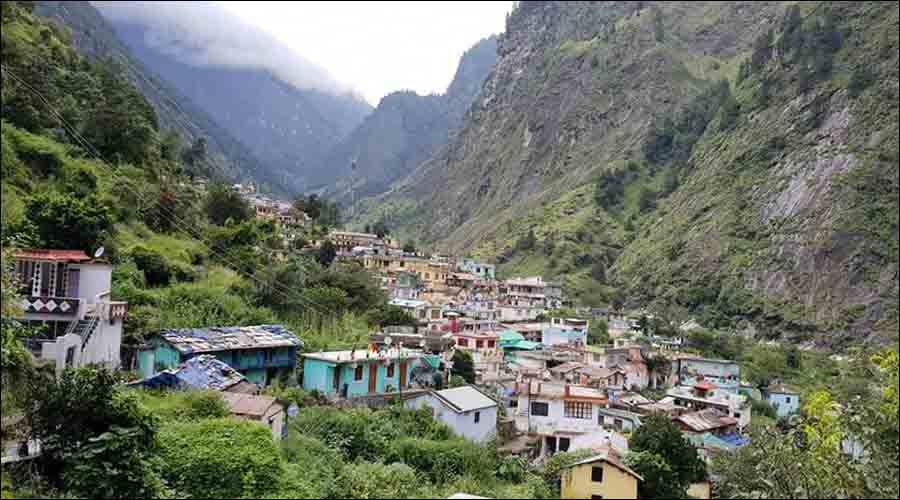
Pandukeshwar at a Glance
| Detail | Figure | Source |
|---|---|---|
| District | Chamoli, Uttarakhand | — |
| Altitude | 1,829 m | BKTC |
| Distance from Joshimath | 18 km | BKTC |
| Distance from Badrinath | 22.6 km (~34 min) | BKTC |
| Distance from Rishikesh Railway Station | 274 km | BKTC |
| Distance from Jolly Grant Airport | 290 km | BKTC |
| Best months | May, June, September, October | BKTC |
| Char Dham registration | Designated registration point | Uttarakhand Tourist Care |
Location and How Pandukeshwar Fits Into the Badrinath Route
Pandukeshwar sits in Chamoli district on the Joshimath–Badrinath road, part of what’s signed as NH-7 today (older maps and some travel sites still label this stretch NH-58, so don’t be thrown off if you see both). Badrinath is 22.6 km away, Joshimath 18 km, and BKTC’s own figures put Rishikesh Railway Station at 274 km. The exact distance from Dehradun depends on your starting point and route, so treat any single number for that leg as approximate.
Most travelers stop here briefly on the way to Badrinath rather than treating it as a destination in itself. Budget at least an hour if darshan at Yog Dhyan Badri matters to you.
History of Pandukeshwar
According to Hindu tradition, the Pandavas came to Pandukeshwar during their exile to perform their father’s funeral rites, and Arjuna meditated here seeking Lord Indra’s blessing. Local legend also credits the Pandavas with building the Vasudev Temple. None of this is something to state as settled history — it’s the religious tradition attached to the place, and it’s worth knowing as tradition rather than fact.
What is independently documented is more interesting in its own way: copper-plate inscriptions found at Pandukeshwar record early Katyuri-dynasty history, and Uttarakhand Tourism’s own master plan cites them as some of the earliest historical records from the region. That’s the part with a paper trail. The Pandava connection is the part with a story.
The Legend of King Pandu (Tradition, Not History)
The most-told legend, drawn from the Mahabharata, centers on King Pandu himself. After handing his throne to his elder brother Dhritarashtra, Pandu retired to this region with his wives, Kunti and Madri.
While hunting, Pandu accidentally killed a sage who had taken the form of a deer. Dying, the sage cursed Pandu — he would never be able to embrace anyone again without dying himself.
To atone, Pandu came to what is now Yog Dhyan Badri, installed a bronze idol of Lord Vishnu, and meditated deeply. It was during this period that Kunti and Madri gave birth to the Pandavas. Years later, when Madri bathed in the Alaknanda, Pandu forgot the curse — and it claimed his life exactly as the sage had foretold.
Places to Visit in and Around Pandukeshwar
Yog Dhyan Badri Temple
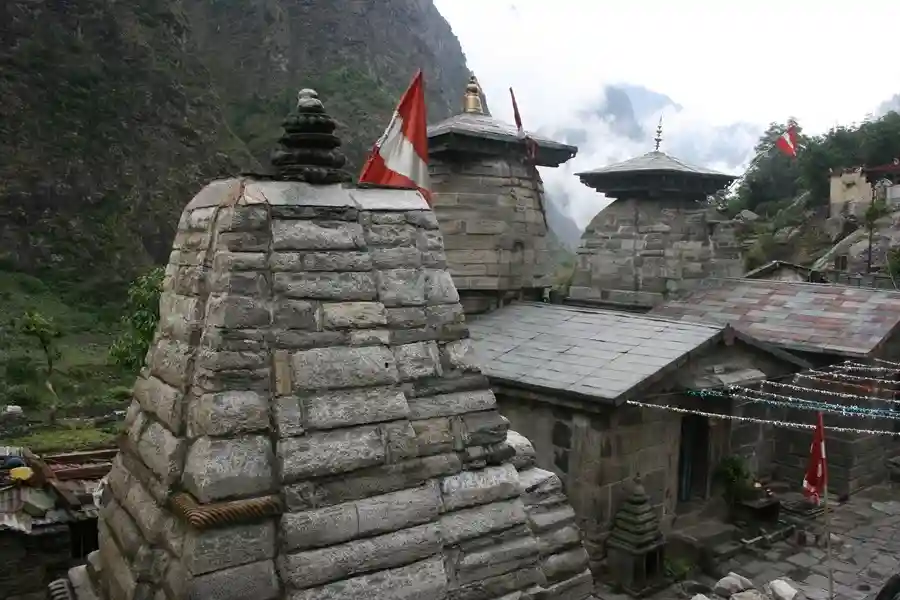
This is Pandukeshwar’s main draw. BKTC’s own site lists it as one of the Sapta Badri — the seven Badri temples — rather than the five-temple “Panch Badri” grouping you’ll see on some travel pages; the two classifications exist side by side in different sources, and BKTC’s wording is the one to trust here. The idol shows Lord Vishnu in a meditative pose, which gives the temple its name — “Yog Dhyan” means meditative posture. Devotees also pay homage to Lord Kuber and Lord Udhava.
Once Badrinath Temple closes for winter, worship connected to Badrinath continues here — the temple hosts winter worship tied to Udhava and Kuber until Badrinath reopens in spring. Exactly which festival images move and how that’s marked each year is something BKTC announces closer to the closing date, so treat the broad strokes as reliable and the specifics as worth checking that season.
Vasudev Temple
Located alongside Yog Dhyan Badri, local tradition attributes this temple’s construction to the Pandavas, in honor of Lord Vasudev (Krishna). Take that as tradition, not documented history. It’s smaller and quieter than the main shrine.
Badrinath Temple (23 km ahead)
Most Pandukeshwar visitors are en route to Badrinath itself — one of the four Char Dham and part of the Chota Char Dham circuit. The temple sits at 3,133 meters, per the official Uttarakhand Tourist Care portal, and is traditionally credited to Adi Shankaracharya in the 8th century CE.
Tapt Kund (near Badrinath)
A naturally hot sulphur spring beside the Alaknanda, right next to Badrinath Temple. Sources give the water temperature anywhere from 45°C to 55°C, and it reportedly climbs further through the day — there’s no single official figure, so treat any exact number you see as approximate. Pilgrims traditionally bathe here before entering the temple for darshan.
Char Dham Yatra 2026: Dates That Affect Your Pandukeshwar Trip
These are the confirmed 2026 opening dates from the Uttarakhand Tourist Care portal:
| Dham | 2026 Opening (confirmed) |
|---|---|
| Yamunotri | 19 April |
| Gangotri | 19 April |
| Kedarnath | 22 April |
| Badrinath | 23 April |
Closing dates are a different story. The official Badrinath page itself currently states that opening and closing times will be announced separately, and the exact closing date each year is only confirmed close to Vijayadashami. Commonly reported estimates put Badrinath’s 2026 closing somewhere around mid-November, but treat that as a placeholder, not a booking date — confirm it with BKTC before locking in late-October or November travel.
Registration Is Mandatory — And Pandukeshwar Is a Registration Point
Char Dham registration has been compulsory since 2014, mainly for pilgrim tracking and emergency response in high-altitude terrain. The official FAQ confirms it’s open to ages 10–65, requires an emergency contact, and costs nothing. You can register:
- Online: through registrationandtouristcare.uk.gov.in or the Tourist Care Uttarakhand app
- Via WhatsApp: message “YATRA” to the official registration number
- Offline: at counters on the route and at each Dham — Pandukeshwar is named directly in the government’s own list of registration locations
Carry a valid photo ID (Aadhaar, Voter ID, or Passport) and keep your QR-coded registration accessible, since it’s checked at verification points along the route. One thing worth flagging honestly: several travel sites claim pilgrims above 50 or 60 need a medical fitness certificate. I couldn’t find that requirement stated on the official registration FAQ itself, so don’t treat it as confirmed — if you’re in that age bracket, it’s worth calling the registration helpline directly rather than trusting a blog post (including this one) on that specific point.
Best Time to Visit Pandukeshwar
Pandukeshwar is technically accessible most of the year since it’s inhabited year-round, but travel conditions vary sharply by season.
- May–June: Pleasant weather, coincides with the start of the Char Dham season — busiest window
- September–October: Clear post-monsoon skies, cooler temperatures, fewer crowds than peak May–June
- July–August (monsoon): Avoid if possible — landslides and road blockages are common on this stretch due to the region’s elevation and rainfall
- November–April (winter): Badrinath is closed and winter worship has shifted to Yog Dhyan Badri, so Pandukeshwar sees quieter, colder visits — expect real snow at this elevation, not just a chill
How to Reach Pandukeshwar
- By Air: Jolly Grant Airport, Dehradun, is the nearest airport — 290 km away per BKTC. From there, taxis and pre-booked cabs run the full route to Badrinath via Pandukeshwar.
- By Rail: Rishikesh Railway Station is the nearest railhead, 274 km away per BKTC — the standard gateway for most Char Dham travelers coming from Delhi or elsewhere in North India.
- By Road: This is the most practical option. State buses, shared taxis, and private cabs run this route regularly between Rishikesh, Joshimath, and Badrinath. Car rental with a local driver is strongly recommended above Joshimath, where roads narrow and hairpin bends increase.
Where to Stay Near Pandukeshwar
Pandukeshwar isn’t a major overnight hub, but a few practical options exist if you’d rather break the journey here than push straight to Badrinath:
- GMVN Tourist Rest House, Pandukeshwar — government-run, budget-friendly, bookable through GMVN’s official portal
- Local guest houses and homestays — basic but functional, useful for an early-morning darshan at Yog Dhyan Badri before continuing on
Most pilgrims, though, still prefer pushing on to Badrinath or Joshimath, where accommodation options are considerably wider.
Common Mistakes Pilgrims Make Here
- Skipping registration because “it’s just a stop on the way.” Registration is checked at verification points along the route, not just at the Dhams themselves — don’t assume a brief stop exempts you.
- Treating monsoon months as safe for travel. July–August landslide risk on this stretch is well documented, not a theoretical warning.
- Assuming Pandukeshwar has the same facilities as Badrinath. Joshimath, 18 km back, generally has a wider spread of fuel, food and banking options than Pandukeshwar does.
Pro Tips for Visiting Pandukeshwar
- If you’re traveling in winter, plan your Pandukeshwar stop around Yog Dhyan Badri’s darshan timings rather than treating it as a quick photo stop — this is when the temple sees its most significant worship of the year.
- Pack warm layers even for a May–June trip. At this elevation the chill after sunset catches people off guard.
- If registering offline, go early. Counters get busy fast during the April–June rush.
Planning Your Badrinath Route
Chardham Tour is a registered travel agency with Uttarakhand Tourism, offering Badrinath and full Char Dham itineraries that route through stops like Pandukeshwar. If you’d rather not coordinate registration, transport and accommodation separately, check current package details before booking.
Conclusion
Most people treat Pandukeshwar as a bend in the road to Badrinath, and technically, it is one. But it’s also where the Pandava legends are set, where Badrinath’s winter worship actually happens, and where a fair number of pilgrims complete their Char Dham registration without realizing they could have. Confirm the 2026 opening dates, register ahead of time, and give Yog Dhyan Badri the hour it’s owed. The rest of the drive to Badrinath will still be there.
FAQs
What is Pandukeshwar famous for?
Pandukeshwar is known for its association with King Pandu and the Pandavas in Hindu tradition, and for the Yog Dhyan Badri Temple, which hosts winter worship connected to Badrinath once the main temple closes.
How far is Pandukeshwar from Badrinath?
22.6 km by road, according to BKTC — about a 34-minute drive under normal conditions.
How far is Pandukeshwar from Joshimath?
18 km, per BKTC.
What is the altitude of Pandukeshwar?
1,829 meters above sea level, per BKTC’s own listing for the village.
Is Pandukeshwar a Char Dham registration point?
Yes. It’s named directly in the Uttarakhand government’s list of registration locations, alongside Haridwar and Rishikesh.
Does the main Badrinath idol move to Pandukeshwar in winter?
Not exactly. Winter worship connected to Udhava and Kuber shifts to Yog Dhyan Badri once Badrinath closes — it’s not a simple relocation of the main temple deity, and the specifics of what moves each year are best confirmed with BKTC.
What is the best time to visit Pandukeshwar?
May, June, September and October, per BKTC’s own recommendation. July–August brings monsoon landslide risk on this stretch.
Can I stay overnight in Pandukeshwar?
Yes — GMVN runs a tourist rest house here, and a few local guest houses exist. Most pilgrims still push on to Joshimath or Badrinath for wider options.
Is Char Dham registration mandatory for Badrinath pilgrims?
Yes, registration is mandatory for Char Dham pilgrims. Pandukeshwar is one of the designated registration points on the Badrinath route — that’s different from saying anyone merely driving through must register.
Is Yog Dhyan Badri one of the Panch Badri or Sapta Badri temples?
BKTC’s own site describes it as one of the Sapta Badri (seven Badri temples). You’ll also see it listed under the five-temple “Panch Badri” grouping on other sites — both classifications exist, but BKTC’s wording is the more authoritative one.
How do I reach Pandukeshwar from Delhi?
Via Rishikesh and Joshimath by road. Total distance depends on your exact route and starting point in Delhi, so treat any single figure as approximate rather than exact.
Is there reliable mobile network in Pandukeshwar?
Connectivity in this stretch of the Himalayas is inconsistent and varies by operator and exact location — don’t plan around having a signal.
One thought on “Pandukeshwar: Birthplace of the Pandava Brothers”
Leave a Reply



I am suffering paralysis disease since the last week of October 2019 , from West Bengal near Kolkata , 56 years old lady