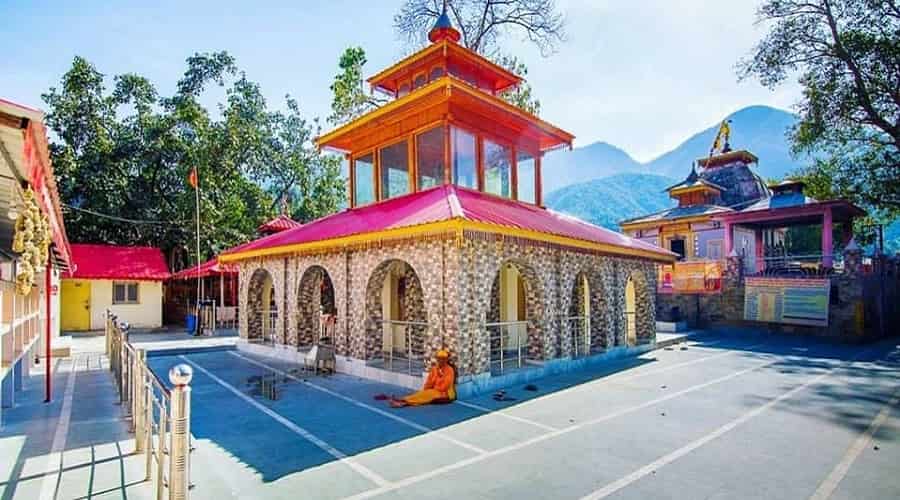
On the banks of the Bhagirathi river, in the small Himalayan town of Uttarkashi, stands a Shiva temple that locals simply call “North Kashi.” This is the Kashi Vishwanath Temple, not to be confused with the more famous Kashi Vishwanath Temple in Varanasi. Most pilgrims run into it on their way to Gangotri or Yamunotri as part of the Char Dham Yatra, and once you’re standing in front of the sanctum, it’s easy to see why people stop and stay a while longer than planned.
The temple’s centerpiece is a Shivling that doesn’t sit dead-center like most — it tilts noticeably toward the south, and that one detail has kept storytellers busy for centuries.
Quick Answer
Kashi Vishwanath Temple sits in Uttarkashi town, Uttarakhand, on the Bhagirathi river bank, about 154 km from Rishikesh by road, according to the district administration. Entry is understood to be free, though no official fee policy is published. March to June and October to November are generally the more comfortable months for mountain travel here.
The Mystery of the Tilted Shiv Ling
The Puranas trace the temple’s tilted lingam to Sage Markandeya, who was destined to die young and was meditating on this spot when his time came. Yamraj arrived to take him. Markandeya clung to the Shiv Linga. Lord Shiva intervened and granted him a longer life.
Yamraj tried once more, throwing his noose at the sage. Markandeya held on tighter, and the pull is said to have tilted the Shivling south — the direction it still faces. This is religious tradition, not a claim about what physically happened to the stone. Locals treat the tilt as proof of the legend, and pilgrims come specifically to see it.
History of the Temple
The district administration’s own account of the temple gives a different origin story than the one most tourism sites repeat. According to an inscription on the trident in the Shakti Temple, the Vishwanath Temple was built by King Ganeshwar, and his son Guh, a noted warrior, built the trident itself. Separately, local tradition also credits the original construction to Sage Parashurama, with a rebuild in 1857 under Maharani Khaneti, wife of Raja Sudarshan Shah of Tehri. Both accounts circulate. I’m not going to pretend one cancels the other out — they’re two different traditions, and the honest thing is to name both rather than smooth them into one tidy story.
According to local belief tied to the Skanda Purana, Uttarkashi is where Lord Shiva took shelter, and he’s said to remain here permanently once the original Kashi in Varanasi is submerged in the later half of the Kaliyuga. That’s the reason for the name Uttarkashi — North Kashi.
Right across from the main shrine sits the Shakti Temple, dedicated to the goddess of strength. Its trident is brass, not iron, and the district administration gives real measurements for it: 26 feet high, with a base 8 feet 9 inches wide and a top circumference of about 18½ inches. Locals say it can’t be pushed over with full body weight but vibrates when touched with a single finger. Take that as local lore, not a claim I’m making.
Sanctum Layout
Inside the main sanctum, along with the Shivling, you’ll find idols of Goddess Parvati and Lord Ganesha, with a Nandi statue placed in the outer chamber — standard for Shiva temples across India. Photography rules inside the sanctum aren’t published anywhere official that I could find, so follow whatever the on-site staff tell you rather than assuming either way.
Kashi Vishwanath Temple Uttarkashi: Darshan Timings
I couldn’t find any official schedule published by the temple or the district administration. What’s out there — including the temple’s own general listing — points to darshan running through the day with an evening puja, but no fixed opening and closing hour I’d stand behind. Confirm the day’s timing locally when you arrive, especially around festivals or peak Yatra season.
- Entry Fee: No official ticket or fee policy for general darshan turned up in my search. Treat entry as free unless told otherwise on site.
- Darshan Process: No confirmed booking system exists as far as I could verify. Don’t rely on an app or website reservation — go in person.
How to Reach Kashi Vishwanath Temple, Uttarkashi
The temple sits centrally in Uttarkashi town, near NH 34, a short walk from the local bus stand. Uttarkashi’s elevation gets reported differently depending on the source — Wikipedia lists 1,158 m, other government pages give figures as high as 1,588 m for the town itself. I won’t pick one and present it as settled; either way, it’s low enough to stay comfortable compared to Gangotri or Yamunotri further up the route.
| Mode | Nearest Point | Distance from Uttarkashi |
|---|---|---|
| Road | Rishikesh, via NH 34 | 154 km (district administration) |
| Air | Jolly Grant Airport, Dehradun | ~200 km (district administration) |
| Road | NH 34 direct | Temple is centrally located |
By Road: Most pilgrims drive in via Rishikesh–Narendra Nagar–Chamba–Dharasu. Travel time depends heavily on traffic, weather, and road conditions this stretch of the Himalayas is known for — I won’t give you a fixed hour count, because a landslide or a slow convoy ahead can add hours regardless of distance.
By Rail: Rishikesh is the closest railhead. Shared taxis and buses run from there to Uttarkashi.
By Air: Jolly Grant Airport in Dehradun is the nearest airport. The district administration’s own figure is roughly 200 km — treat any number tighter than that with some skepticism, since it likely measures to a different point in Uttarkashi than the temple itself.
Uttarkashi’s Place on the Char Dham Route
Uttarkashi is a common halt for pilgrims heading toward Gangotri, and it’s frequently built into Char Dham itineraries — I won’t claim “most” packages do this, because I don’t have the data to back that up. Gangotri is 100 km further up the road, confirmed by the district administration’s own page. Yamunotri sits further out; figures I found range from 130 to 150 km depending on the source, so I’d treat that one as approximate rather than fixed.
Best Time to Visit
Uttarkashi’s weather swings hard between seasons because of its Himalayan altitude, so timing your visit matters more than in a plains town.
- Summer (March to June): Days are warmer, evenings stay comparatively cool, and this is generally the busier stretch for pilgrim traffic.
- Monsoon (July to September): This stretch of NH 34 sees landslides and road disruptions in a bad monsoon, particularly further up toward Gangotri. Keep plans flexible.
- Autumn (October to November): Clearer skies, cooler air, thinner crowds than peak summer.
- Winter (December to February): Cold, with snow that can disrupt road travel higher up. The temple stays open regardless.
Festivals Celebrated Here
Occasions associated with the temple and the wider Uttarkashi calendar:
- Maha Shivratri — an important annual occasion here, marked with special rituals
- Shravan Month (July–August) — a rise in daily devotees throughout the month
- Magh Mela — pilgrims take a holy dip in the Bhagirathi as part of the observance
- Akshaya Tritiya — significant for the opening of several Himalayan shrines and the wider Char Dham season, though it isn’t specific to this temple alone
Common Mistakes First-Time Visitors Make
- Arriving during the afternoon lull. No confirmed schedule exists, but multiple accounts point to mornings being more active — worth planning around if you can.
- Skipping the Shakti Temple across the courtyard. It’s a five-minute stop, and the trident is genuinely worth seeing.
- Not budgeting a night in Uttarkashi when doing Gangotri or Yamunotri in one long day. The roads ahead are winding, and rushing through costs more than it saves.
Sightseeing Places Near Uttarkashi
Dodital Lake
A freshwater lake at the end of a moderate trek through pine and oak forest, popular with anglers who’ve got a permit and with families looking for something beyond temple-hopping. I’ve seen it described as home to a fish species unique to the lake, but I couldn’t pin that down to a source I’d trust, so I’ll leave the claim out rather than repeat it.
Nachiketa Tal
A short, scenic trek away from the town’s religious bustle, this lake is known for its calm water and a small white hut on its bank that’s become something of a local landmark.
Dayara Bugyal
A popular alpine meadow for trekking and camping. I don’t have a verified elevation or trek distance to give you — figures I found ranged from source to source, so ask me for the exact numbers if you need them for the page rather than me guessing.
Kuteti Devi Temple
About 2 km from the main temple, on Hari Parvat overlooking the Bhagirathi. The temple’s own legend is specific: it was built by the daughter and son-in-law of the Maharaja of Kota, Rajasthan — not Tehri, a mix-up that shows up on other sites. The story goes that the Maharaja lost a bag of money on pilgrimage, prayed at the Vishwanath Temple for its return, and promised his daughter’s marriage to whoever found it. The priest found it. The couple later saw the goddess in a dream and discovered three stones on this spot, which became the temple.
Pro Tips for Visiting
- Carry warm layers even in summer. Evenings in Uttarkashi cool down fast once the sun drops behind the ridgeline.
- Keep travel dates flexible during monsoon. Road clearance after heavy rain in this stretch of the Himalayas can take hours, sometimes longer.
- If you’re combining this with Gangotri, plan the Uttarkashi halt on the way up rather than the way back — you’ll have more daylight for the onward drive.
Planning a Char Dham Yatra?
Chardham Tour runs pilgrimage packages that build Uttarkashi in as a proper stop rather than a drive-through. Explore the routes, transport, and accommodation options if you’re planning the trip.
Conclusion
Kashi Vishwanath Temple in Uttarkashi carries the kind of quiet weight that doesn’t need decoration — a lingam tilted by legend, a Trishul nobody can move, and a town that carries the name of Shiva’s northern refuge. Whether you’re here as part of a full Char Dham Yatra or making a dedicated trip to Uttarkashi, the temple, the Shakti shrine opposite it, and the treks and lakes surrounding the town are worth building a proper day — or two — around, not rushing through between longer stops.
FAQs
Where is the Kashi Vishwanath Temple located?
The temple is in Uttarkashi town, Uttarakhand, on the banks of the Bhagirathi river, right along NH 34. It sits centrally in town, within easy walking distance of the local bus stand, which makes it one of the more accessible temples on the Char Dham route compared to Gangotri or Yamunotri further ahead.
Is this the same as the Kashi Vishwanath Temple in Varanasi?
No, it’s a completely separate temple. This one is in Uttarkashi, Uttarakhand, and is sometimes called “North Kashi” because tradition holds that Lord Shiva will eventually settle here permanently. Both temples are dedicated to Lord Shiva and share a name, but they have different histories, structures, and locations entirely.
Why does the Shivling tilt to the south?
According to Puranic legend, Sage Markandeya was meditating at this spot when Yamraj came to take him. The sage clung to the Shiv Linga for protection, and when Yamraj made a final attempt to pull him away, the force is said to have tilted the lingam toward the south — the direction it still faces today.
What are the temple’s darshan timings?
No official schedule is published by the temple or district administration. Darshan runs through the day with an evening puja, but treat any specific opening/closing hour you see online as unconfirmed. Ask locally when you arrive.
Is there an entry fee to visit the temple?
No official fee policy turned up in my research. Treat entry as free unless told otherwise on site — donations toward upkeep are common practice at temples like this.
How far is the temple from Rishikesh?
The Uttarkashi district administration puts it at 154 km by road. Rishikesh is also the nearest railhead, with shared taxis and buses running from there to Uttarkashi.
What is the nearest airport?
Jolly Grant Airport in Dehradun. The district administration’s own figure is roughly 200 km — shorter figures floating around online likely measure to a different reference point.
What is the best time to visit Kashi Vishwanath Temple?
March to June and October to November tend to offer the more comfortable travel conditions for this stretch of the Himalayas.
Is Uttarkashi part of the Char Dham Yatra route?
Yes. It’s a common halt for pilgrims heading toward Gangotri, which sits 100 km further up the road (confirmed by the district administration). Yamunotri is further out — figures range from 130 to 150 km depending on the source.
What other temples are near Kashi Vishwanath Temple?
The Shakti Temple sits directly across the courtyard. Kuteti Devi Temple is about 2 km away, on Hari Parvat overlooking the Bhagirathi.
Can I take photographs inside the temple?
No published rule either way. Follow whatever the on-site staff tell you.
What festivals are celebrated at the temple?
Maha Shivratri, the full Shravan month, Magh Mela, and Akshaya Tritiya are the major observances here.

Related Posts
Narad Kund, Badrinath
Neelkanth Peak, Badrinath