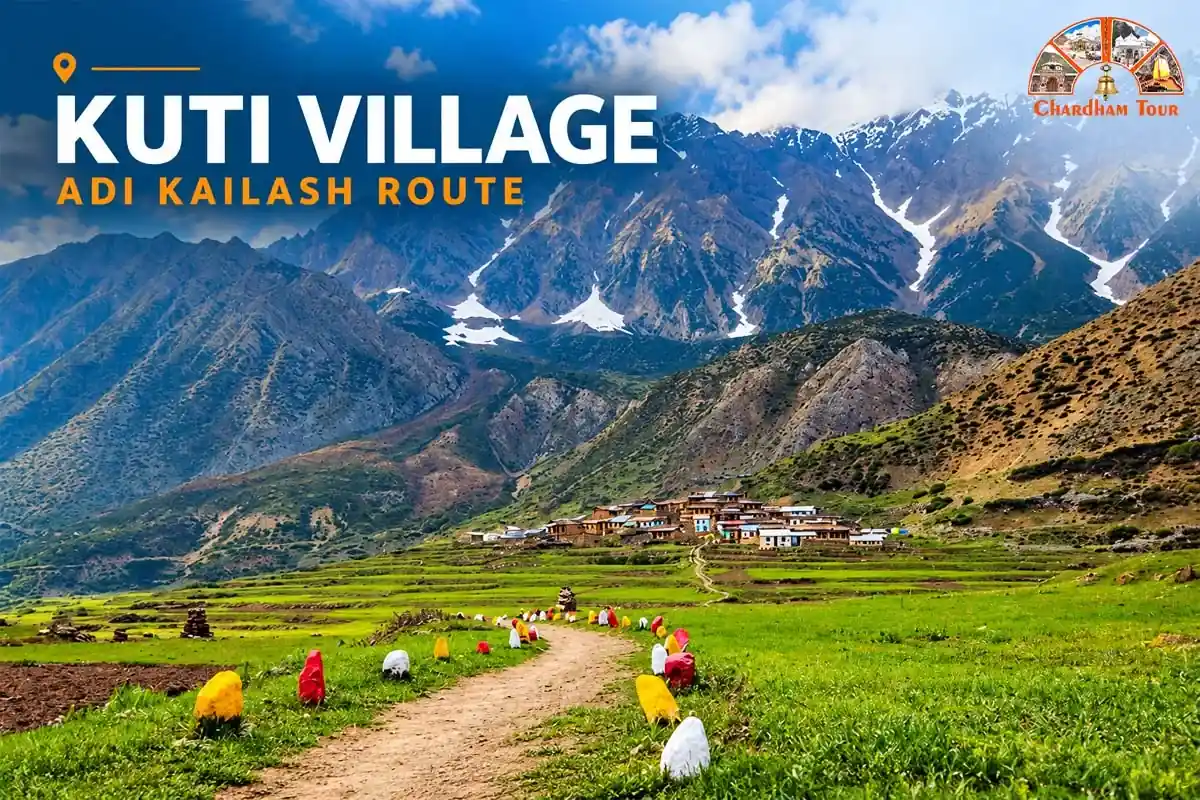
Kuti Village is the last inhabited stop before the road climbs into the high-altitude Jolingkong basin on the Adi Kailash route. Tucked into the Kuthi Valley of Pithoragarh district, it’s where Himalayan village life, centuries-old legend, and raw mountain terrain meet before the landscape turns stark.
If you’re planning the Adi Kailash Yatra, Kuti Village deserves more than a passing mention — it’s often the most memorable overnight stop of the trip. Here’s a fact-checked look at its altitude, route, permits, and homestay options for 2026.
| In Short:
Kuti Village is the last inhabited village before Adi Kailash, on the Jolingkong side of Gunji. It sits at roughly 3,600–3,700 m, about 18–20 km from Gunji, and is known for its Byansi culture, homestays, and the Kunti legend. The same Inner Line Permit used for the Adi Kailash Yatra covers Kuti — no separate permit is needed. |
Kuti Village at a Glance: Quick Facts
| Attribute | Details |
| State / District | Uttarakhand / Pithoragarh |
| Region | Kuthi (Kuti) Valley, Kumaon Himalaya |
| Altitude | Approx. 3,600–3,700 m |
| Permit required | Yes — Inner Line Permit (shared with Adi Kailash) |
| Nearest base village | Gunji (~18–20 km) |
| Road condition | Rough, off-road, 4×4 only, weather-dependent |
| Best months | May, June, September |
| Accommodation | Homestays (as of the 2026 season) |
| Mobile network | Limited/inconsistent — do not rely on it |
| ATM / fuel station | None — last ATM and petrol pump at Dharchula |
| Nearest hospital | Community health centre at Dharchula |
Where Is Kuti Village on the Adi Kailash Route?
Kuti lies in the Kuthi Valley (also spelled Kuti Valley), one of several Byans villages strung along the Kuthi Yankti river in Pithoragarh’s Dharchula block, near the Indo-Tibet border. From Gunji, the road splits — the left branch runs through Kuti toward Jolingkong for Adi Kailash darshan, while the right branch heads toward Lipulekh for the Kailash Mansarovar route (see our Inner Line Permit guide for how this affects registration).
Kuti is the last inhabited settlement before the terrain opens into the high-altitude Jolingkong basin, offering views of Brahma Parvat and Pandav Parvat along the way. It’s a natural overnight halt for most Adi Kailash Yatra itineraries — pair this page with our Gunji Village guide and Adi Kailash Yatra guide for the complete route.
Kuti Village Altitude and Key Distances
Figures vary a little across sources, so treat these as planning estimates rather than exact survey data.
| Location | Approx. Height / Distance |
| Dharchula | ~915 m |
| Gunji | ~3,200 m |
| Kuti Village | ~3,600–3,700 m |
| Jolingkong (Adi Kailash base) | ~4,400–4,570 m |
| Gunji to Kuti distance | ~18–20 km by 4×4 |
| Kuti to Jolingkong distance | ~16–17 km by 4×4 |
How to Reach Kuti Village from Gunji
The drive from Gunji to Kuti covers about 18–20 km on a rough, largely off-road mountain track, typically done in Scorpio or Bolero 4×4 vehicles — private cars generally can’t manage this stretch. Past Kuti, the road toward Jolingkong gets rougher still, with stream crossings like Ganesh Nala adding to the adventure.
Most itineraries treat Kuti as an overnight halt on the way up, then continue to Jolingkong (our Om Parvat / Nabhidhang guide covers the return-leg detour) the next morning for Adi Kailash darshan, returning via Kuti to Gunji or Nabi Village.
The Legend Behind Kuti Village’s Name
Local tradition links Kuti’s name to Kunti, mother of the Pandavas from the Mahabharata, who is said to have stayed here during their Himalayan exile. A ruined structure near the village, sometimes called Pandav Fort or Kunti Killa, is locally believed to be connected to this period.
A separate regional account traces the name to “kutia,” meaning hut, and links the village to Sage Ved Vyasa, said to have composed the Mahabharata nearby — which is also why the wider region is known as Vyas Valley. Neither story is archaeologically verified; treat both as oral tradition rather than documented history.
Life in Kuti: The Byansi Community
Kuti is home to the Byansi community, part of the wider Bhotia group of the Kumaon Himalaya, historically associated with trans-Himalayan wool trade and seasonal herding rather than year-round settlement. No official updated census exists for the village specifically, and population changes seasonally as families move to lower altitudes for winter — though regional reporting shows Vyas Valley tourist footfall has grown sharply over the past decade as the Adi Kailash Yatra has gained popularity.
Kuti Village vs Gunji and Nabi: What’s the Difference?
Gunji and Nabi are the main base villages where most Adi Kailash itineraries spend their acclimatisation nights, each about 3,200 m and roughly 2 km apart. Kuti sits higher and further along the route, closer to Jolingkong, and functions more as a scenic overnight halt than a base camp — its terraced barley and buckwheat fields and traditional stone-and-timber houses give it a distinct character. If your itinerary allows only one high-altitude stop, Gunji or Nabi is the safer acclimatisation choice.
Permits and Registration
Kuti Village falls within the same ITBP-patrolled restricted zone as the rest of the Adi Kailash Yatra. As per SDM Dharchula and Uttarakhand Tourism guidelines, the standard Inner Line Permit (ILP) issued at Dharchula covers Kuti too — no separate permit is needed, but you cannot enter this zone without one. Permit charges do change from time to time, so confirm current ILP fees directly with SDM Dharchula before travel.
Accommodation: Homestays Only
As of the 2026 season, accommodation is limited to homestays run by local Byansi families, serving home-cooked meals of dal, mountain rice, local greens, and roti. Most current operator listings confirm there are no hotels, though a few older travel pages still mention basic lodges. Book through a registered operator, since rooms are limited and fill quickly in peak season.
Best Time to Visit Kuti Village
May, June, and September are the most reliable months, matching the wider Adi Kailash Yatra season. Avoid the monsoon months entirely — river crossings past Kuti become genuinely unsafe, and access to this border zone has paused with little notice in past monsoon seasons, including in 2026. Always confirm current status before travelling.
Weather and Temperature at Kuti Village
Expect cool days and cold nights even in peak season, with daytime temperatures around 8–17°C dropping close to freezing after sunset. Winters bring heavy snow and the village empties out. Pack thermal layers regardless of the month — the sun is intense here, but the wind chill after dark is sharp.
Altitude Sickness, Safety, and Packing Tips
You gain noticeable elevation between Gunji and Kuti, so treat this stretch as part of your acclimatisation plan. Watch for AMS symptoms — headache, breathlessness, nausea — and rest if they appear.
- Carry a basic first-aid kit; medical facilities beyond Gunji are minimal.
- Pack thermal layers, sturdy shoes, and cash — there’s no ATM past Dharchula.
- Avoid photographing ITBP posts or personnel; check current drone rules before flying one.
- Don’t rely on a single distance or time estimate — build buffer time into your plan.
Latest 2026 Updates You Should Know
- Limited Jio connectivity has been reported in parts of Gunji and Kuti, but service is inconsistent — never rely on it for emergencies.
- Access to this border zone has paused during monsoon in past seasons, including 2026 — confirm current ILP and road status with SDM Dharchula before travelling.
- Vyas Valley tourist footfall has risen sharply over the past decade, per regional reporting — expect more company on the trail than in previous years.
Approximate Budget Near Kuti Village
These are rough, per-person, indicative-only figures on top of your main Adi Kailash package — actual cost depends on operator, season, and inclusions, so confirm current rates before booking.
| Expense head | Approximate cost (indicative) |
| 4×4 hire, Gunji–Kuti–Jolingkong return | ₹3,000–5,500 per vehicle (shared cost) |
| Homestay stay + meals | ₹1,500–2,500 per person, per night |
| ILP / permit fee | Confirm current charges with SDM Dharchula |
Who Should Visit Kuti Village
- Culture and heritage travellers: the Kunti legend and Byansi homestays make this more than a transit stop.
- Photographers: alpine meadows and traditional stone houses against a high-Himalayan backdrop.
- Adi Kailash pilgrims: nearly everyone passes through, so it’s worth planning time to actually experience it.
- Not ideal for: travellers wanting hotel-style comfort, oxygen-supported stays, or a quick, low-altitude trip.
Key Takeaways
- Kuti Village sits at roughly 3,600–3,700 m, about 18–20 km from Gunji by 4×4.
- It’s the last inhabited village before the Jolingkong basin and Adi Kailash darshan point.
- Same Inner Line Permit as Adi Kailash; no separate registration required.
- Only homestays are available as of 2026 — plan accommodation through a registered operator.
FAQs
What is the Kuti Village distance from Gunji?
Approximately 18–20 km one-way by 4×4, usually taking 1.5–2 hours on rough mountain roads.
How to reach Kuti Village on the Adi Kailash route?
Drive to Gunji first via Dharchula, stay overnight, then continue by 4×4 to Kuti the next day.
What is the Kuti Village altitude?
Roughly 3,600–3,700 m, with figures varying slightly across sources.
Is there hotel accommodation in Kuti Village?
No — as of 2026, only local homestays run by Byansi families are available.
Do I need a separate permit for Kuti Village?
No, the standard Inner Line Permit for the Adi Kailash Yatra also covers Kuti.
Can you visit Kuti Village without a permit?
No. The Inner Line Permit is mandatory for this restricted border zone, even on an organised tour.
Why is Kuti Village named after Kunti?
Local legend says Kunti, mother of the Pandavas, stayed here during their exile, though this isn’t archaeologically verified.
What is the best time to visit Kuti Village?
May, June, and September, avoiding the monsoon months entirely.
Is Kuti Village inhabited year-round?
It’s seasonally inhabited — many Byansi families move to lower altitudes for winter.
Is mobile network available in Kuti Village?
Limited Jio connectivity has been reported, but it’s inconsistent — don’t rely on it for emergencies.
Can private vehicles reach Kuti Village?
Only 4x4s like Scorpio or Bolero manage this stretch; ordinary private cars generally can’t.
Is Kuti Village worth visiting?
Yes, if you have an extra day — the homestays and Kunti legend add real depth beyond a quick drive-through.
What food is available in Kuti Village?
Homestays serve simple home-cooked Byansi meals — dal, mountain rice, local greens, and roti — included with your stay.
Check out: