Undertaking the Chardham Yatra — a pilgrimage to Yamunotri, Gangotri, Kedarnath, and Badrinath in Uttarakhand — is spiritually significant for millions each year. But for senior citizens, this journey carries distinct physical and logistical challenges that are rarely discussed in brochures. The high Himalayan terrain, steep ascents, fluctuating weather, long road travel, and limited medical access in remote stretches make thoughtful planning not just helpful — it can be lifesaving.
This guide distills credible, official travel advisories and real-world concerns into practical, experience‑based insights seniors and their families should consider before, during, and after the yatra.
Why This Yatra Is Different for Older Adults
The four dhams are located in the Garhwal Himalayas, at altitudes that reach well above 3,000 meters (≈9,800 ft). At these elevations:
-
Oxygen levels drop, increasing strain on the heart and lungs.
-
Cold, low humidity, and UV intensity rise noticeably.
-
Physical effort — even routine walking — feels harder than at sea level.
For many older travelers, these aren’t abstract risks — they are real physiological stressors that interact with common conditions such as hypertension, diabetes, asthma, heart disease, and earlier COVID‑19 complications. Government health advisories explicitly caution seniors and those with comorbidities to reconsider or postpone the journey if they are not well prepared.
A Reality Check: Health Risks on the Trail
Recent official figures compiled by Indian news agencies indicate significant health‑related emergencies during the yatra. Reports show:
-
Hundreds of pilgrims have died annually from health complications tied to altitude and exertion.
-
Many of these involve cardiac issues, oxygen scarcity, dehydration, or falls on uneven terrain.
-
Uttarakhand authorities say a high number of pilgrim deaths occur among older adults with underlying medical conditions.
This isn’t meant to alarm — but to ground expectations. A pilgrimage of faith does not have to ignore medical risk.
Before You Go: Medical Prep (Do This First)
1. Complete a Full Medical Evaluation
This is more than a routine check‑up. A physician experienced with high‑altitude travel should assess:
-
Cardiovascular fitness
-
Lung function
-
Diabetes control
-
Medication needs at altitude
If your doctor advises against high altitude travel, that advice deserves serious weight. Government advisories recommend postponing the yatra for those with serious health conditions.
2. Build Fitness Gradually
Rather than waiting for the journey date, start:
-
Light daily walking (20–30 minutes)
-
Breathing exercises (“pranayama”)
-
Heart‑strengthening activities cleared by your doctor
This isn’t “pilgrim training” — it’s risk management.
Planning the Itinerary: Comfort Over Speed
Many commercial yatra packages rush to cover all four sites in a fixed number of days. For seniors, a gentler pace is far more important.
1. Schedule Extra Rest Days
Instead of back‑to‑back travel days:
-
Stay 1–2 nights at key checkpoints (Haridwar/Rishikesh → Guptkashi/Joshimath → final dhams).
-
Allow your body time to adjust to lower oxygen and cold.
Rapid ascents are directly linked to Acute Mountain Sickness (AMS) symptoms: headache, nausea, dizziness, fatigue. Official guidance stresses gradual progression and rest.
2. Avoid Peak Crowds
High pilgrim density can mean:
-
Longer waits for toilets or food
-
Slower travel between points
-
Crowded medical relief points
If possible, plan your yatra just before or after the peak pilgrimage surge in May, June, or September.
On the Ground: Daily Safety Checklist
Hydration & Nutrition
Even mild dehydration magnifies altitude effects:
-
Drink bottled/clean water often, even if you don’t feel thirsty.
-
Eat easily digestible, warm food regularly — heavy meals can worsen fatigue.
Clothing & Gear
Temperatures can swing from cold mornings to milder afternoons:
-
Layered warm clothing
-
Good hiking shoes with traction
-
Sunscreen (high SPF), UV‑protective sunglasses
Oxygen & Monitoring
Bring:
-
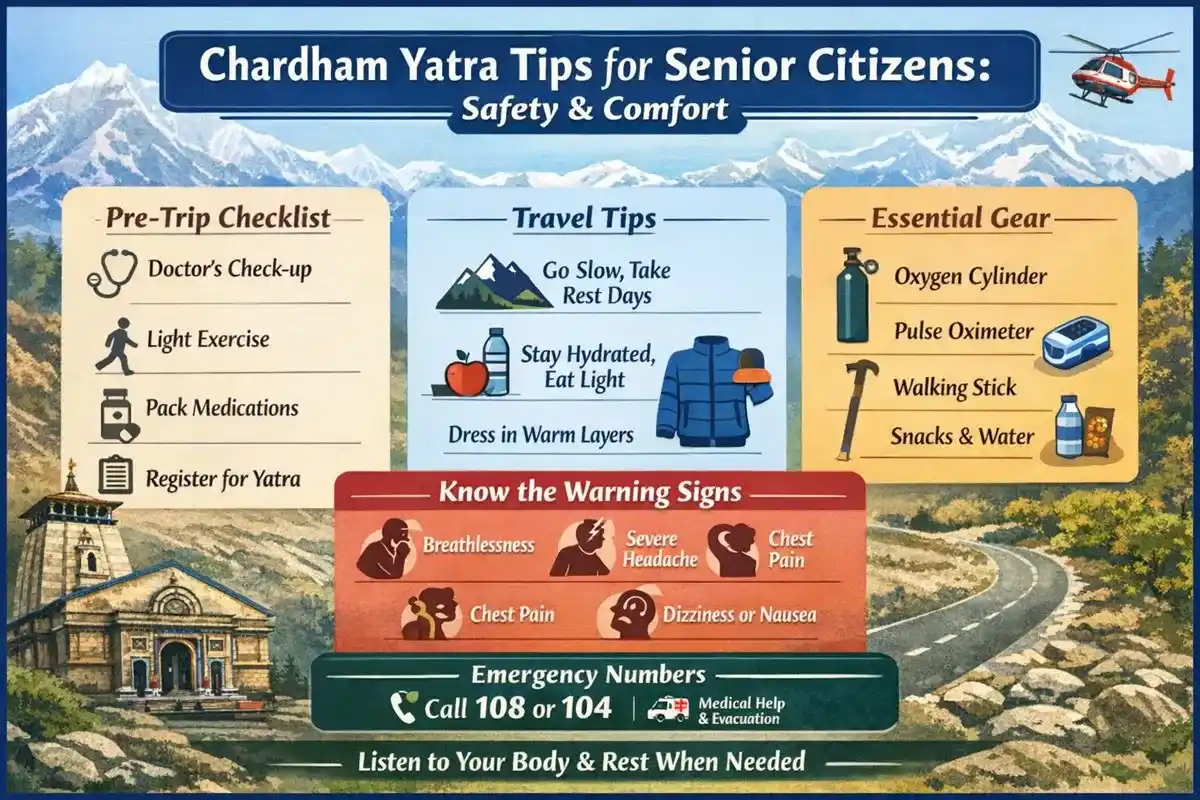
Portable pulse oximeter (to check oxygen levels)
-
Extra prescription medications
-
A small oxygen cylinder for emergencies
Some travel services now include oxygen support for senior packages, which helps with breathlessness at altitude.
Know the Warning Signs
If you or a travel companion experience:
-
Headache that doesn’t ease
-
Shortness of breath at rest
-
Vomiting or extreme fatigue
-
Chest pain
…seek medical help immediately. Government advisories list these as red‑flag symptoms requiring professional attention.
Choosing Accommodation
For older travelers, the difference between a shared dorm and a mid‑range hotel can be significant:
-
Ground–floor rooms reduce stairs
-
Reliable hot water aids comfort and health
-
Proximity to medical relief posts should influence booking choices
Sacred lodge (“dharamshala”) stays are economical, but sometimes lack comforts seniors depend on. Balance budget with health needs.
Comfort Travel Options: Road vs Helicopter
Long bus or taxi rides on winding mountain roads can exhaust even healthy adults. Helicopter options — now more organized under official yatra schemes — reduce travel time significantly and limit physical strain.
Pros of Helicopter Yatra for Seniors
-
Faster access to remote dhams
-
Less exposure to road fatigue
-
Reduced risk of altitude illness from hurried ascents
Cons / Reality
-
Costs are higher
-
Services may book out quickly
-
Weather delays can still impact schedules
Most importantly, helicopter travel doesn’t replace the need for physical preparation and medical readiness — it complements them.
Emergency Services Along the Route
Authorities have enhanced the health infrastructure on the yatra paths with:
-
Medical relief posts and health screening centers
-
Ambulances, including advanced life support units
-
Dedicated helpline numbers (e.g., 108 and 104) for emergencies
Despite these measures, remote sections are not equivalent to city hospitals. Always have a contingency plan for evacuation and know the nearest healthcare touchpoints on your itinerary.
Realistic Comfort Expectations
Even with perfect planning, three things are rarely predictable:
-
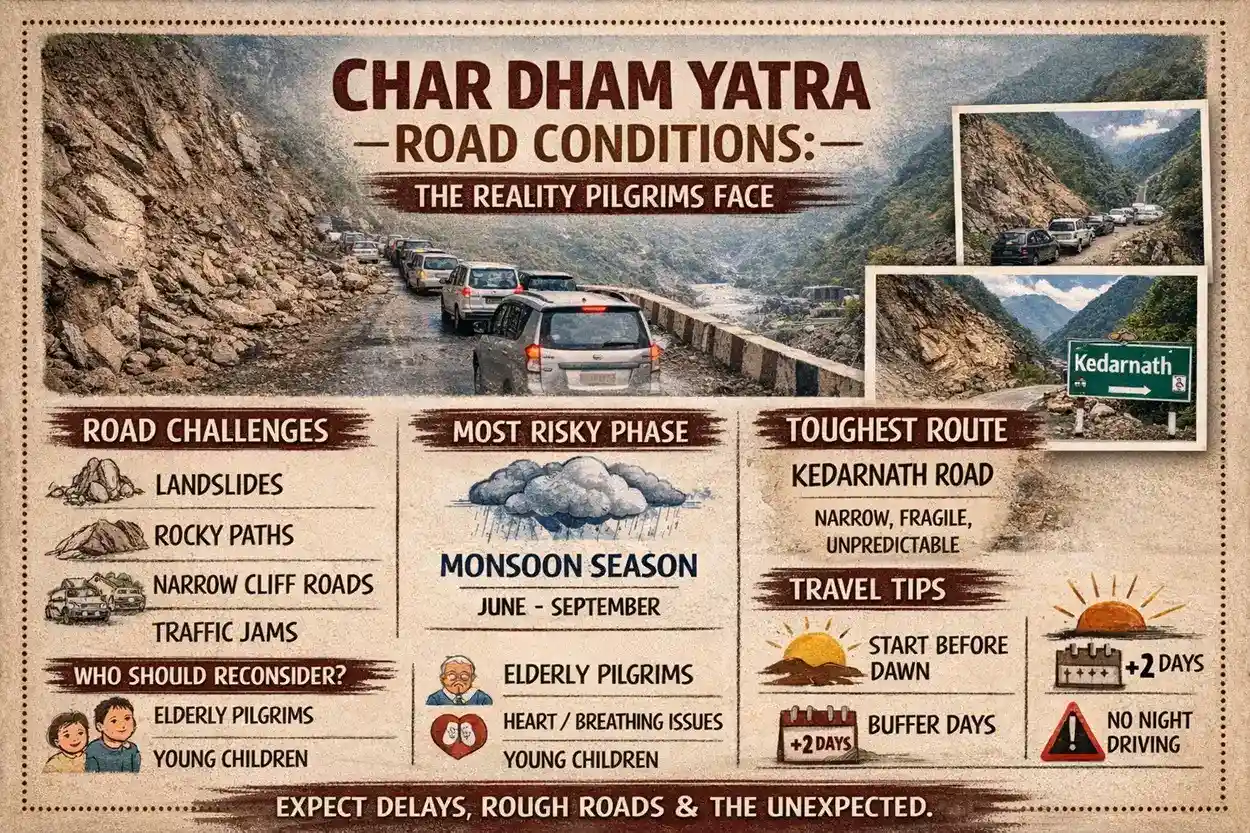
Weather changes — sunshine can turn into rain or snow within hours.
-
Road delays — due to landslides or traffic bottlenecks.
-
Physical ups and downs — altitude and long days can tire anyone.
Accepting these realities helps you prepare — mentally and logistically — rather than being surprised mid‑trip.
Who Should Think Twice
This Yatra may not be suitable for those who:
-
Have unstable cardiovascular conditions
-
Recently suffered respiratory illness
-
Cannot walk short distances without breathlessness
-
Are unwilling to slow pace or cancel plans if unwell
Skipping the pilgrimage temporarily to improve health isn’t giving up — it’s preserving a future chance to complete it safely.
After the Yatra: Recovery Matters
Once the sacred journey is done:
-
Allow at least 1–2 days of rest before long travel home.
-
Rehydrate, reflect, and monitor heart/lung symptoms.
-
Follow up with your doctor if you experienced any unusual shortness of breath or fatigue.
Many seniors return feeling exhilarated — but the days right after matter for long‑term health.
Frequently Asked Questions (Based on Real Yatri Concerns)
1. Is Chardham Yatra safe for a 65‑year‑old with well‑controlled hypertension?
If you’ve had normal check‑ups and your doctor clears you, it can be done — with extra caution, breaks, and hydration. However, you must prepare physically and monitor symptoms daily.
2. Should senior citizens do this Yatra in summer or post‑monsoon?
Summer (May–June) is common but crowded; post‑monsoon (Sep–Oct) can be quieter — yet weather risks like rain and landslides increase. Plan with buffer days.
3. How critical is helicopter travel for seniors?
It isn’t mandatory, but it reduces physical exertion and travel fatigue, making it significantly more comfortable for many seniors.
4. Should I carry oxygen cylinders?
Absolutely. Portable oxygen and a pulse oximeter help you identify low oxygen levels before symptoms worsen.
5. Can fasting or dietary changes before the yatra help?
Avoid drastic diets. Focus on balanced, heart‑healthy eating leading up to the journey and stay well‑hydrated during it.
6. Are medical screens compulsory?
Official advisories stress health screening pre‑departure but compulsory rules can vary by year and policy. Always register and avail screenings when offered.
7. What are the biggest dangers on this pilgrimage?
Altitude sickness, oxygen deficiency, cardiac strain, dehydration, and slippery terrain are real concerns — not just legends.
8. How do I handle emergencies mid‑yatra?
Use the helpline numbers (108/104), go to medical relief posts, or request transport back to lower altitude immediately.
9. Is a guide necessary?
Guides can help with route decisions, weather changes, and emergency spotting — they aren’t mandatory but are highly advisable.
10. What’s the single best tip for senior pilgrims?
Take rest seriously. If you need to stop, do — oxygen levels and comfort are non‑negotiable.
Final Thought
There’s deep spiritual fulfillment in the Chardham Yatra — but it shouldn’t come at the cost of well‑being. With measured planning, honest self‑assessment, and respect for the physical demands of this journey, senior citizens can make this pilgrimage safe, meaningful, and comfortable.