Parvati Sarovar: Complete Adi Kailash Guide 2026 (Altitude, Route, Permit & Best Time)
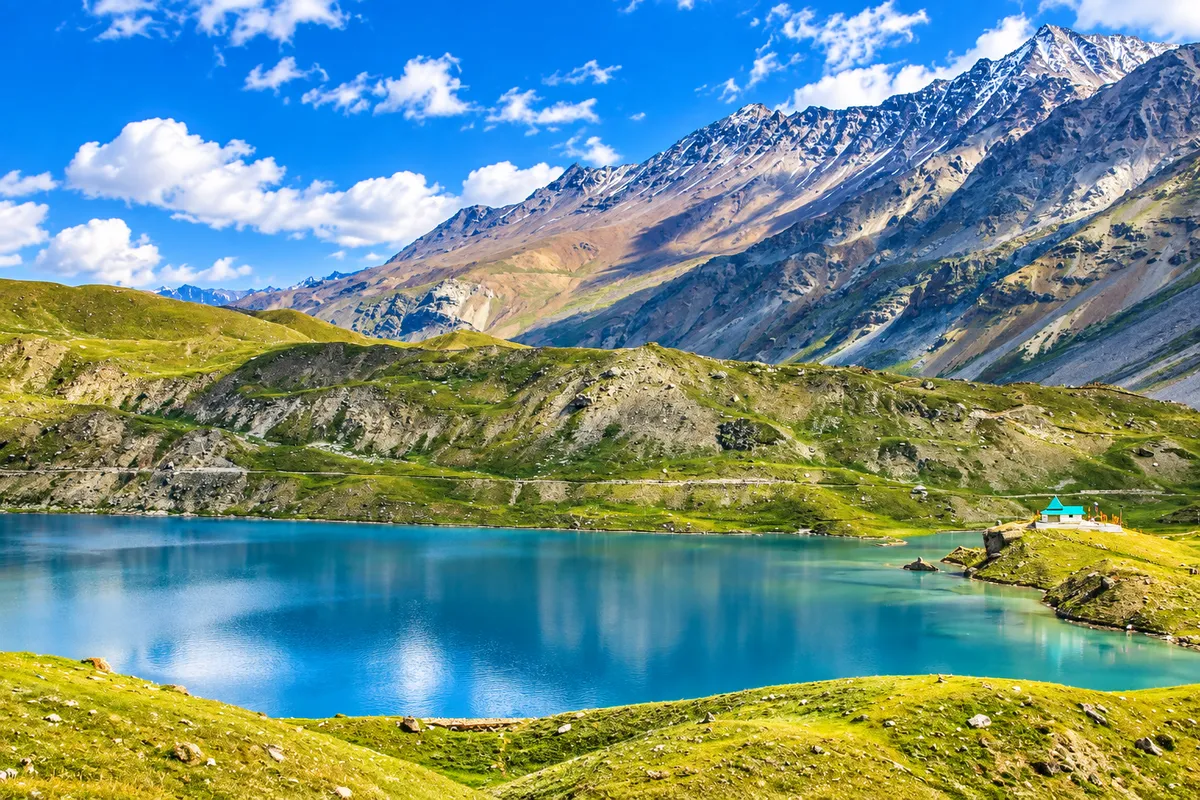
Parvati Sarovar sits at approximately 4,500 metres, a short walk from Jolingkong meadow, directly below Adi Kailash in Pithoragarh district, Uttarakhand. For most pilgrims on this yatra, the lake is where the journey truly arrives — the peak’s reflection settles on still water, and every rough kilometre of the Kumaon Himalayas roads suddenly feels worth it. Here’s what actually matters: the route, the permit, when to go, and what nobody tells you about the cold.
Quick Answer
Parvati Sarovar is a glacial lake at roughly 4,500 m, a short walk from Jolingkong base camp, believed to be Goddess Parvati’s bathing place. Adi Kailash rises directly behind it, with a small Shiva-Parvati shrine on the bank. Visit early May–June or mid-September to October, once the Gunji–Jolingkong road opens for the season.
Quick Facts
| Detail | Info |
| Altitude | ~4,500 m (sources vary, 4,480–4,600 m) |
| District | Pithoragarh, Uttarakhand |
| Nearest village | Gunji |
| Nearest airport | Pantnagar (~300 km) |
| Nearest railhead | Kathgodam / Tanakpur |
| Permit needed | Inner Line Permit (ILP) |
| Season | Early May–June, mid-Sept–October |
What Is This Sacred Lake
This shallow, glacier-fed lake is believed in local tradition to be where Goddess Parvati bathed during her tapasya to win Lord Shiva. On the far bank lies Bheem Ki Kheti — according to local belief, a patch where Bhima once grew wheat that reappears unplanted each season, though this remains folklore rather than a documented fact. A short walk uphill leads to Gauri Kund, a smaller, colder pool where pilgrims are generally advised not to bathe.
Adi Kailash — also called Chhota Kailash, a roughly 5,945-metre peak considered a mirror of Mount Kailash in Tibet and one stop on the wider Panch Kailash circuit — rises almost directly behind the lake. On a still morning, the reflection sits on the water, and pilgrims often describe that moment as the reason they made the trip. The area sits within a designated border-tourism zone monitored by the ITBP.
How to Reach It
There’s no independent road here — you reach it through the Adi Kailash Yatra route, ending at Jolingkong.
Standard route: Delhi/Kathgodam → Almora → Pithoragarh → Dharchula → Gunji → Jolingkong
From Jolingkong, it’s an optional walk of approximately 2 km to the lakeside shrine — estimates range from 1.5 to 3 km depending on the exact starting point. Much of the commonly used pilgrim trail is now paved, making it manageable for moderately fit senior pilgrims.
Distance Chart
| Segment | Approx. Distance | Travel Time |
| Kathgodam to Pithoragarh | ~190 km | 6–7 hrs |
| Pithoragarh to Dharchula | 100–120 km | 3–4 hrs |
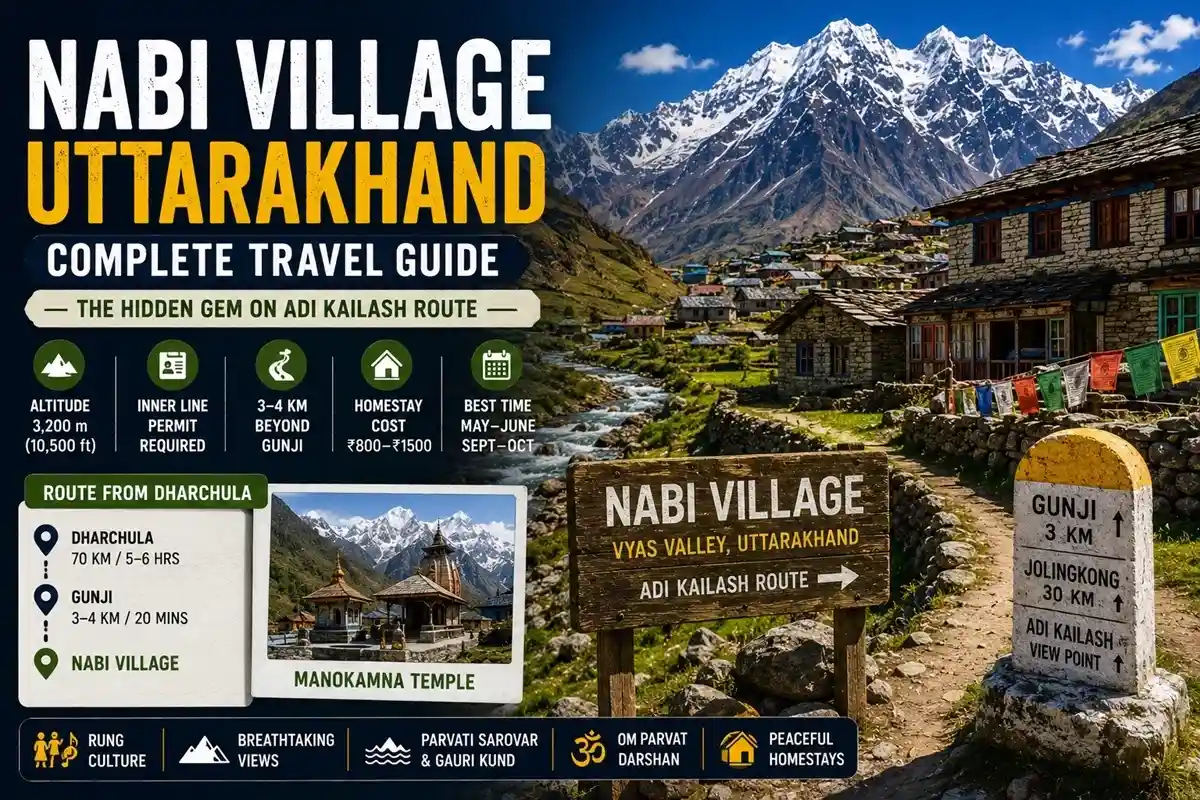
| Dharchula to Gunji | 70–80 km | 4–6 hrs |
| Gunji to Jolingkong | 30–34 km | 3–4 hrs |
| Jolingkong to the lake | ~2 km (walk) | 45–60 mins |
Treat these as planning estimates — exact figures vary by source and route.
Road conditions near Tawaghat, Sirkha, and Malpa are the toughest stretch — narrow and cut into the Kali river gorge. Local drivers usually recommend an early start from Dharchula to clear this section before afternoon cloud buildup.
Best Time to Visit
Most pilgrims prefer early May–June, right after the season opens, and again mid-September to October once the monsoon clears. Both windows give the clearest views of the reflection.
July–August technically stay open too, but this is monsoon season — landslides near Tawaghat and Malpa are common, and the ITBP frequently pauses movement for a day or more. Winter usually closes the route by late October or early November, depending on snowfall, reopening the following May.
Registration and Permits
An Inner Line Permit is mandatory beyond Dharchula, since the route runs through a restricted India–Tibet border zone. You can typically register online via the KMVN portal or Uttarakhand eDistrict system, or offline at the SDM office in Dharchula.
You’ll generally need an Aadhaar card, a few passport photos, and a medical fitness certificate — an ECG may be required for pilgrims above 50, depending on the medical board. Age eligibility is commonly cited around 10–70 years, but this, like exact fees and documents, is set by current government notification and can change; confirm with KMVN before travel, since permit rules have occasionally been revised or briefly suspended in past seasons. Permits are checked at Tawaghat, Sirkha, Malpa, Budhi, and Gunji, where the ITBP also runs a basic health screening.
The Temple on the Bank
A small Shiva-Parvati shrine stands at the water’s edge, with Adi Kailash as backdrop. It’s generally open through the yatra season and closed under snow otherwise. Many local guides recommend bathing at Gauri Kund first and then coming down for darshan — a customary sequence rather than an official rule. Morning darshan tends to work better, since cloud cover often builds by early afternoon.
Weather
Even in June, expect near-freezing mornings. The water stays cold year-round, fed by glacial melt — a full dip is possible but genuinely uncomfortable, and most pilgrims settle for a symbolic touch instead. Nights near Jolingkong hover around or below freezing, occasionally dropping to minus 5°C. Pack thermal layers regardless of season; the sun feels strong at this altitude, but temperatures fall fast once clouds roll in.
Transport, Accommodation and Packing
Transport: Shared jeeps run Dharchula–Gunji, though availability varies by season. Beyond Gunji, general tourists need KMVN or registered-operator vehicles — no self-drive or app-cabs this deep in the border zone. Nearest airport is Pantnagar (~300 km); nearest railhead is Kathgodam or Tanakpur. Helicopter darshan tours from Pithoragarh have run in recent seasons, subject to weather and permissions.
Accommodation: Dharchula has a KMVN rest house and a few private hotels — the last reliable stop for hot water. Gunji offers a KMVN guest house, circuit house, dharamshalas, and Bhotiya-run homestays, basic but functional, filling up fast during peak windows. Jolingkong has no permanent stay; it’s a day trip from Gunji.
Packing: Insulated down jacket and thermal layers, high-ankle waterproof trekking shoes (not sneakers), trekking poles, sunglasses and high-SPF sunscreen, cash in small denominations (ATMs are unreliable beyond Dharchula), and originals plus photocopies of your ID and medical certificate in a waterproof pouch.
Senior Citizen and Health Tips
Can senior citizens visit this route? Many do, since most of it beyond Gunji is now motorable and the final walk is short and largely paved. Even so:
- Acclimatize a full day at Gunji (~3,200 m) before heading up.
- A medical fitness certificate is strongly advised above 60 or with cardiac/respiratory history.
- Mild AMS symptoms above 4,000 m — headache, breathlessness — should be reported to your guide immediately.
Budget Breakdown (Approximate, 2026)
| Component | Approx. Cost (per person) |
| ILP-related charges | ₹200–800 |
| Shared jeep, Dharchula–Gunji–Jolingkong | ₹4,000–6,000 |
| KMVN/homestay stay (per night) | ₹1,500–2,500 |
| Meals (per day) | ₹500–800 |
| Full package, 6–8 days from Kathgodam | ₹28,000–50,000 |
Booking early is recommended during the May–June rush, when Gunji homestays fill up fast. Prices vary by season and operator.
How It Compares
Unlike Hemkund Sahib, which draws pilgrims across faiths, this lake retains an intimate, largely Hindu devotional character tied to the Panch Kailash tradition. And unlike Kailash Mansarovar in Tibet, which needs international travel, Adi Kailash lies entirely within India — a more accessible route to a similar spiritual experience.
Latest Updates for 2026
The season typically opens in early May and runs, with a monsoon pause in July–August, through late October or early November depending on snowfall. KMVN has expanded online registration to ease queues at Dharchula, and helicopter darshan options from Pithoragarh have grown. Permit fees, age limits, and transport availability are all administrative and can change; confirm current details with KMVN (kmvn.in), Uttarakhand Tourism, or the Pithoragarh district administration before finalizing your trip.
Common Mistakes to Avoid
- Skipping acclimatization at Gunji — a leading cause of AMS on this route.
- Not carrying enough cash beyond Dharchula.
- Packing only monsoon-weight clothing for a June trip.
- Assuming private vehicles can go beyond Gunji.
Key Takeaways
- The lake sits at approximately 4,500 m, a short walk from Jolingkong, directly below Adi Kailash.
- Best visited early May–June or mid-September–October; closed through winter.
- An Inner Line Permit is mandatory beyond Dharchula — confirm current fees and age rules with KMVN.
- The lakeside shrine is generally open through the yatra season only.
- Treat all permit, pricing, and transport details as planning estimates, and reconfirm closer to travel.
Conclusion
Parvati Sarovar isn’t a detour on this yatra — for many pilgrims, it’s the destination itself. Plan around the early-summer or post-monsoon window, sort your permit early, acclimatize properly at Gunji, and this sacred lake is likely to feel every bit as moving as the accounts that brought you here.
Frequently Asked Questions
-
What is the altitude of Parvati Sarovar?
Approximately 4,500 metres, though sources cite figures between 4,480 m and 4,600 m depending on the exact spot measured.
-
What is the distance from Jolingkong to Parvati Sarovar?
Roughly 2 km on average, with estimates ranging from 1.5 to 3 km depending on the operator and starting point.
-
Is the walk to the lake difficult?
Not usually. Much of the trail is paved and manageable for moderately fit pilgrims, including many seniors, after proper acclimatization.
-
Can senior citizens visit Parvati Sarovar?
Yes, many do. The route is largely motorable up to Jolingkong, though a medical fitness check is advisable above 60.
-
What permit is required?
An Inner Line Permit, arranged through KMVN or the SDM office in Dharchula. Confirm current fees and documents before travel.
-
What is the weather like here?
Cold year-round, with near-freezing mornings even in June and occasional sub-zero nights, since the lake is glacier-fed.
-
When is Parvati Sarovar open for visitors?
Generally through the yatra season, early May to around late October, weather permitting; inaccessible through winter.
-
Can I bathe in the lake?
Yes, a dip is possible, but the water is extremely cold. Most pilgrims opt for a symbolic touch instead.
-
Is Gauri Kund the same as Parvati Sarovar?
No. Gauri Kund is a smaller, higher pool nearby where pilgrims are generally advised not to bathe.
-
Why is Parvati Sarovar considered sacred?
Local tradition holds it as the spot where Goddess Parvati bathed during her tapasya, making it one of the most revered stops on the Panch Kailash circuit.