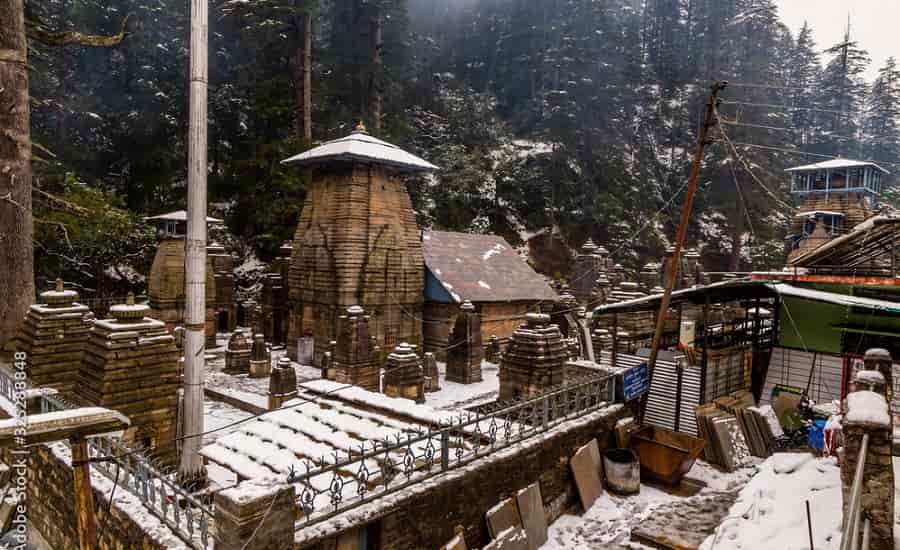
Jageshwar Dham is one of the most ancient and spiritually significant Shaivite pilgrimage sites in India, located in the Almora district of Uttarakhand. The history of Jageshwar Dham is deeply rooted in Indian mythology, early Hindu traditions, and medieval temple architecture. This sacred site has remained a center of Lord Shiva worship for over a thousand years and continues to attract devotees, scholars, and travelers from across the country.

Ancient Origins of Jageshwar Dham
The origins of Jageshwar Dham can be traced back to early medieval India, roughly between the 7th and 11th centuries CE. Archaeological evidence, temple inscriptions, and architectural styles indicate that the temple complex was constructed over several centuries rather than at one time.
Jageshwar was established as a major Shaivite religious center during a period when Himalayan regions played an important role in spiritual learning, meditation, and temple culture.
Connection with Hindu Mythology
According to Hindu belief, Jageshwar Dham is considered one of the sacred places where Lord Shiva manifested his divine presence. The name “Jageshwar” itself means “Lord of the Universe”, a title associated with Shiva.
Local legends suggest that sages and ascetics chose this forested valley for meditation due to its isolation and spiritual energy. It is believed that the peaceful environment of Jageshwar provided the perfect setting for penance and devotion to Lord Shiva.
Role of the Katyuri Dynasty
The Katyuri dynasty, which ruled large parts of present-day Uttarakhand between the 7th and 11th centuries, played a major role in the development of Jageshwar Dham. Most historians agree that the majority of temples at Jageshwar were built during this period.
The Katyuri rulers were strong followers of Shaivism and patronized temple construction across the Kumaon region. Jageshwar emerged as one of their most important religious centers, showcasing their architectural and cultural legacy.
Contribution of the Chand Rulers
After the decline of the Katyuri dynasty, the Chand rulers of Kumaon continued to support and maintain Jageshwar Dham. During their reign, several temples were renovated, and new structures were added to the complex.
The Chand kings ensured that Jageshwar remained an active pilgrimage site and preserved its religious traditions. Many of the inscriptions found in and around the temple complex belong to this period.
Architectural Evolution Through Centuries
Jageshwar Dham is unique because it reflects multiple phases of temple construction. The complex consists of more than 100 stone temples, primarily built in the Nagara architectural style.
Over time, architectural elements evolved, showing variations in:
-
Temple size and layout
-
Carving styles
-
Decorative motifs
This gradual evolution provides valuable insights into the development of temple architecture in the Himalayan region.
Association with Adi Shankaracharya
Jageshwar Dham is traditionally associated with Adi Shankaracharya, the great 8th-century philosopher and saint. It is believed that he visited Jageshwar during his travels across India to revive Hindu spiritual practices.
A monastery (math) near the temple complex is attributed to his influence, strengthening Jageshwar’s status as an important center of Shaivism and spiritual learning.
Decline and Rediscovery
With changing political conditions and shifts in trade routes, Jageshwar Dham experienced periods of decline. Dense forests and remote geography led to reduced pilgrim activity for several centuries.
However, during the British colonial period, scholars and historians rediscovered the site. Systematic documentation brought attention to Jageshwar’s historical and archaeological significance.
Modern Preservation and Religious Importance
In modern times, Jageshwar Dham is protected as a heritage and religious site. Efforts have been made to preserve its ancient structures while maintaining traditional worship practices.
Today, Jageshwar is not only a place of devotion but also an important site for:
-
Historical research
-
Architectural studies
-
Cultural tourism
Spiritual Importance Today
Even today, devotees believe that worshipping at Jageshwar Dham brings peace, prosperity, and spiritual growth. Major festivals like Maha Shivratri and Shravan month rituals continue traditions that have been practiced for centuries.
Conclusion
The history of Jageshwar Dham is a remarkable journey through time, blending mythology, royal patronage, spiritual devotion, and architectural brilliance. From ancient sages and dynasties to modern-day pilgrims, Jageshwar has remained a sacred space dedicated to Lord Shiva.
Jageshwar Dham stands as a living symbol of Uttarakhand’s rich spiritual heritage and continues to inspire devotion and reverence in the heart of the Himalayas.
Suggested to Read:

Related Posts

Popular Places to Visit in Jageshwar

How to Reach Jageshwar