Drive the Rishikesh–Badrinath road and you’ll pass a small temple standing on a platform in the Alaknanda River. It’s easy to miss if you don’t already know to look for it. Locals treat it as one of the more important stops on the whole route, and pilgrims heading to Kedarnath or Badrinath rarely skip it.
The temple sits at Kalyasaur, in Pauri Garhwal district, on the river between Srinagar Garhwal and Rudraprayag. Two things bring people here: the belief that the goddess’s face changes through the day, and the story of how the original shrine was moved just before the 2013 floods hit Uttarakhand.
Quick Answer: Dhari Devi Temple is at Kalyasaur, Pauri Garhwal district, on the Rishikesh–Badrinath road — about 120–124 km from Rishikesh and roughly 15 km from Srinagar Garhwal. Darshan is commonly reported as 6:00 AM–12:00 PM and 2:00 PM–7:00 PM, though no government source publishes these hours, so confirm locally if your schedule is tight. Entry is free. October–February and March–June are the better windows to visit; July–August brings landslide risk on this stretch and is worth avoiding if you have flexibility.
Quick Facts About Dhari Devi Temple
| Detail | Information |
|---|---|
| Location | Kalyasaur, Pauri Garhwal district, Uttarakhand |
| Deity | Maa Dhari Devi, worshipped as a form of Goddess Kali |
| River | Alaknanda River |
| Elevation | Approximately 560 m above sea level (Wikipedia) |
| Darshan timings | Commonly reported 6:00 AM–12:00 PM, 2:00 PM–7:00 PM; not officially published |
| Entry fee | No standard fee is charged for darshan |
| Distance from Srinagar Garhwal | Approx. 15 km |
| Distance from Rudraprayag | Approx. 19–20 km |
| Distance from Rishikesh | Approx. 120–124 km |
| Nearest railway station | Rishikesh, approx. 120 km |
| Nearest airport | Jolly Grant Airport, Dehradun, approx. 135–140 km |
| Photography | Restricted at the sanctum/idol; follow instructions on arrival |
The Legend Behind Maa Dhari Devi
According to Garhwali tradition, the upper half of the goddess is worshipped at Kalyasaur, while the lower half is enshrined at Kalimath, further down the valley. Wikipedia lists the shrine among the 108 Shakta pithas named in the Srimad Devi Bhagwat, which gives the belief some textual weight beyond pure local folklore.
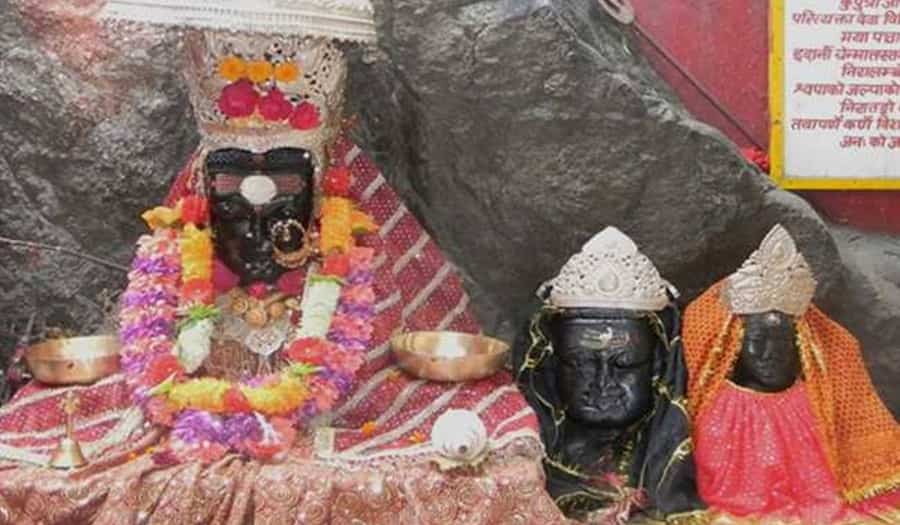
Devotees believe the idol’s appearance shifts across the day — a young girl in the morning, a grown woman by afternoon, an elderly woman by evening, standing for the three stages of a woman’s life. Because of this belief, tradition holds that the idol should never sit under a covered roof. That’s why the shrine remains open to the sky, directly above the river, even after being rebuilt.
She’s traditionally revered as the guardian deity of Uttarakhand and protector of the Char Dham route — Kedarnath, Badrinath, Gangotri, and Yamunotri all fall under her watch in local belief.
The 2013 Flood: How the Temple Was Relocated
This is the part most pilgrims ask about first, and it’s the best-documented part of the story.
In June 2013, work on the 330 MW Alaknanda Hydro Electric Dam required the original idol to be moved from its riverside spot. The shift happened on 16 June 2013. Severe rainfall and flooding struck Uttarakhand shortly after — among the worst disasters in the state’s recent history.
Locals connected the timing to the goddess being disturbed, and that belief spread fast and has stayed strong since. It’s worth being direct about what this is: a temporal coincidence that became a powerful local interpretation, not an established cause. No evidence ties the relocation to the flooding as a matter of hydrology or geology. The belief is real and widely held. The causation isn’t.
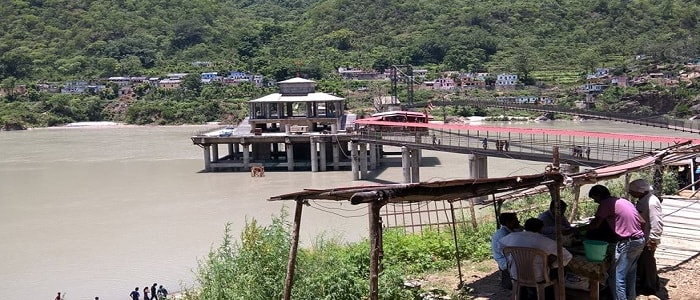
The temple was later rebuilt on a raised concrete platform above the original site, engineered to sit clear of the river. A pedestrian bridge and pathway now connect the highway to the temple, so visitors no longer wade across the water to reach her.
Origins of the Temple
According to a temple legend recorded by the district government itself, a severe flood centuries ago washed away an earlier shrine, and the idol was found lodged against rocks near the village of Dharo. Villagers heard a cry near the water, and — the story goes — a divine voice directed them to install the idol at this spot. That’s the account passed down locally, and it’s the one the temple still tells about its own founding.

Darshan Timings and Temple Rules
Temple hours reported by multiple current travel sources are 6:00 AM to 12:00 PM and 2:00 PM to 7:00 PM, with the gate closed in between. No government source publishes these officially, and at least one current source lists hours extending later into the evening. Treat the 6–12, 2–7 window as the reliable default, but check locally if you’re planning around it closely.
A few practical points:
- Photography and filming of the main idol or inside the sanctum is restricted. Follow the temple staff’s instructions when you arrive rather than assuming a blanket photography ban applies everywhere on the grounds.
- No standard entry fee is charged.
- The final approach involves a pathway, a pedestrian bridge, and some steps. Anyone with mobility limitations should budget extra time and bring someone to help.
- Unlike Kedarnath or Badrinath, Dhari Devi is generally accessible through the year rather than closing for winter.
How to Reach Dhari Devi Temple
The temple sits directly on the Rishikesh–Badrinath road, so most traffic heading toward Srinagar, Rudraprayag, Kedarnath, or Badrinath passes near it. Road sources disagree on the exact highway number for this stretch — you’ll see it referenced as NH-58, NH-7, and even the older “National Highway 55” designation on the district government’s own page — so we’re not going to commit to one here.
- By Air: Jolly Grant Airport, Dehradun, is the nearest, roughly 135–140 km away.
- By Rail: Rishikesh Railway Station, around 120 km, is the closest railhead.
- By Road: From Haridwar or Rishikesh, the drive runs via Devprayag and Srinagar Garhwal, tracking the Alaknanda most of the way. From Delhi, plan for 360–390 km depending on route, which usually takes 9 to 12 hours or more once you factor in mountain roads and stops.
| From | Approx. Distance |
|---|---|
| Srinagar Garhwal | ~15 km |
| Rudraprayag | ~19–20 km |
| Rishikesh | ~120–124 km |
| Haridwar | ~140–145 km |
| Jolly Grant Airport | ~135–140 km |
| Delhi | ~360–390 km |
Drive times shift with traffic and road conditions on the mountain stretches — treat any number you see quoted as a rough guide, ours included.
Places to Visit Near Dhari Devi Temple
Maletha, a village close to Srinagar, is remembered for Madho Singh Bhandari, a Garhwali figure associated with the historic Maletha irrigation canal. Some regional accounts also connect him to boundary demarcation in the India–Tibet region, but that claim sits in the territory of local legend rather than settled history, so we’re leaving it there rather than stating it as fact.
Festivals Celebrated at Dhari Devi Temple
Navratri is the biggest occasion at the temple — decorations go up, and footfall rises sharply across all nine days. Diwali and Kartik Purnima also draw larger crowds than an ordinary weekday visit.
Where to Stay Near Dhari Devi Temple
Srinagar and Rudraprayag are the practical base towns, both a short drive from the temple, with a mix of budget and mid-range hotels. Most Char Dham and Do Dham travelers treat Dhari Devi as a stop along the route rather than an overnight halt, since Srinagar and Rudraprayag have the better accommodation options anyway.
Best Time to Visit Dhari Devi Temple
The temple stays open year-round, so timing comes down to road conditions rather than temple closures. March to June and September to November are the strongest windows — stable roads, manageable temperatures. December to February works too, just colder, especially early morning and evening. July and August are the months to be careful about: this stretch of road is prone to landslides during heavy rain, and if you’re traveling then, check current road advisories before you leave rather than after you’re already on the highway.
Common Mistakes to Avoid
- Arriving during the 12 PM–2 PM closure without checking timings first.
- Assuming photography is banned everywhere on the grounds rather than just at the sanctum — ask on arrival instead of guessing.
- Underestimating the walk to the temple. There’s a pathway, a bridge, and steps, so wear proper shoes, not sandals.
- Treating a Delhi-to-Dhari Devi trip as a same-day round journey. At 360–390 km each way over mountain roads, that’s a long day to attempt without a halt.
Pro Tips for Visiting Dhari Devi Temple
- If you’re doing a Char Dham or Do Dham trip by road, build in a Srinagar or Rudraprayag overnight stop — Dhari Devi fits naturally into that leg.
- Early darshan, right after opening, means fewer crowds on the pathway and cooler walking conditions.
- Carrying a red chunari or coconut for the offering is common practice here; keep small change handy.
- Traveling with elderly family? Factor the steps and bridge into your timing, not just the drive.
Why Visit Dhari Devi Temple With Chardham Tour
[Placeholder — need one specific, real detail from you here: something a generic competitor page couldn’t write. A named driver-briefing process, a specific advisory-tracking method you use during monsoon, an actual policy on itinerary changes — whatever’s true. I don’t want to invent one.]
Key Takeaways
Dhari Devi Temple stands at Kalyasaur, Pauri Garhwal district, on the Alaknanda River — about 15 km from Srinagar Garhwal, roughly 20 km from Rudraprayag, and 120–124 km from Rishikesh. Darshan hours are commonly reported as 6 AM–12 PM and 2 PM–7 PM, but they aren’t government-published, so confirm locally if you’re timing a visit tightly. The 2013 relocation and the flooding that followed are both well documented; the belief that one caused the other is exactly that — a belief, not an established fact.
FAQs
Q1. Where is Dhari Devi Temple located?
At Kalyasaur, in Pauri Garhwal district, Uttarakhand, on the banks of the Alaknanda River between Srinagar Garhwal and Rudraprayag.
Q2. What are the darshan timings at Dhari Devi Temple?
Commonly reported as 6:00 AM–12:00 PM and 2:00 PM–7:00 PM, with a midday closure in between. These hours aren’t published by any government source, so it’s worth confirming locally before you plan tightly around them.
Q3. Is there an entry fee for Dhari Devi Temple?
No standard fee is charged for darshan.
Q4. Why is Dhari Devi Temple famous?
It’s revered as the guardian deity of Uttarakhand and protector of the Char Dham route, and for the belief that the idol’s face changes through the day — girl to woman to elder.
Q5. How far is Dhari Devi Temple from Rishikesh?
Around 120–124 km, roughly 3.5 to 4.5 hours by road via Devprayag and Srinagar Garhwal.
Q6. How far is Dhari Devi Temple from Haridwar?
Approximately 140–145 km.
Q7. What happened to Dhari Devi Temple in 2013?
The idol was relocated on 16 June 2013 to make way for a hydroelectric dam. Severe flooding hit Uttarakhand shortly afterward, and many locals believe the two events are connected. That belief is widely held; it isn’t established as a scientific or historical cause.
Q8. Is photography allowed inside the temple?
Photography of the main idol and inside the sanctum is restricted. Ask temple staff on arrival rather than assuming the rule extends to the whole complex.
Q9. What is the best time to visit Dhari Devi Temple?
March to June and September to November. December to February is fine but colder. Avoid July–August if you can — landslide risk runs high on this stretch during heavy rain.
Q10. Can senior citizens visit Dhari Devi Temple easily?
Yes, but budget extra time. The approach includes a pathway, a bridge, and steps, so go at a comfortable pace and bring assistance if needed.
Q11. Is Dhari Devi Temple open during winter?
Yes — it doesn’t follow the seasonal closure pattern of Kedarnath or Badrinath and is generally accessible year-round.
Q12. Which is the nearest airport and railway station to Dhari Devi Temple?
Jolly Grant Airport, Dehradun, roughly 135–140 km away, and Rishikesh Railway Station, around 120 km away.

Related Posts
Narad Kund, Badrinath
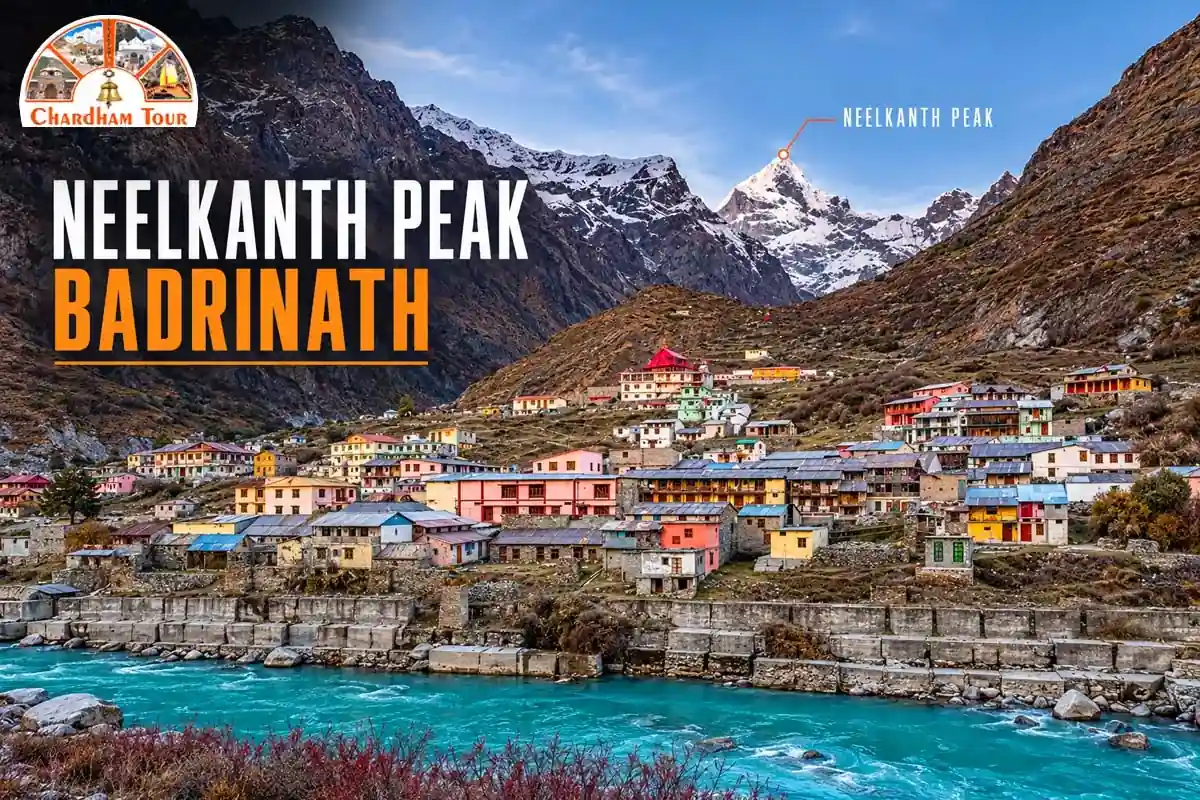
Neelkanth Peak, Badrinath