Before you start planning the Char Dham Yatra, one practical question quietly decides everything else: how are the roads, actually?
Not the official updates. Not promotional photos. But the real, everyday condition that decides how tired you will feel, how safe you will be, and how smoothly your journey will move.
Char Dham Yatra is not a regular road trip. It is a long mountain journey through fragile Himalayan terrain, where roads change with weather, traffic, landslides, and even time of day. A stretch that feels smooth in the morning can become broken and blocked by afternoon.
If you are travelling with elders, children, or anyone with health concerns, understanding road conditions is not optional. It is essential.
This guide shares the real on-ground picture – based on current infrastructure, travel patterns, seasonal behaviour, and practical difficulties pilgrims regularly face.
Why Road Condition Matters More Here Than Anywhere Else
In plains, bad roads mean discomfort. In the mountains, they directly affect safety, health, and stamina.
During Char Dham Yatra, pilgrims typically spend:
- 8–12 hours daily inside vehicles
- Multiple days crossing high-altitude terrain
- Long stretches without medical or mechanical support
Bad roads increase:
- Travel fatigue
- Motion sickness
- Dehydration
- Back and knee pain
- Anxiety for nervous travellers
More importantly, poor road conditions can multiply delays, which then disturb hotel check-ins, darshan slots, and even next-day routes.
This is why road awareness becomes a planning tool, not just a travel detail.
Overall Reality of Char Dham Roads Today
Over the last few years, road infrastructure in Uttarakhand has improved significantly. Many stretches have been widened, reinforced, and stabilised.
However, the Himalayas remain young mountains. This means:
- Slopes remain unstable
- Landslides occur frequently
- Heavy rainfall easily damages road layers
So while some stretches now feel comfortable, others remain narrow, broken, or temporarily blocked.
Road conditions in Char Dham are never static. They change:
- Week to week
- Month to month
- Sometimes even hour to hour
The correct approach is not to expect perfect roads, but to be mentally prepared for variation and uncertainty.
Route-wise Ground Reality
Haridwar / Rishikesh → Barkot (Yamunotri Base)
This is where the mountain journey truly begins.
Up to Mussoorie, roads are largely smooth and wide. Beyond Mussoorie, the terrain becomes steeper and narrower.
You will notice:
- Sharp curves
- Gradual reduction in road width
- Occasional broken patches
Traffic congestion is common near Mussoorie, Kempty Falls zone, and during peak pilgrimage season.
During monsoon, landslides around Nainbagh and Damta often cause delays.
Travel Experience: Moderate fatigue, steady mountain driving.
Barkot → Janki Chatti → Yamunotri
This stretch is narrow, steep, and highly sensitive to rain.
In many places, only one vehicle can pass at a time. Traffic congestion is common, especially during morning and evening hours.
After reaching Janki Chatti, the motorable road ends. From here, pilgrims must trek about 6 km to reach Yamunotri temple.
This combination of narrow road + steep trek makes Yamunotri physically demanding.
For elderly pilgrims, this section often becomes the first major test of stamina.
Barkot → Uttarkashi → Gangotri
One of the most scenic routes of the entire yatra, but also mentally demanding for drivers.
The road follows deep valleys and steep mountain slopes. Certain zones remain landslide-prone year after year.
Though many stretches are now better surfaced, road width remains limited.
You constantly pass through:
- Cliff edges
- Narrow bridges
- Sharp bends
The journey feels beautiful, but tiring.
Uttarkashi → Guptkashi → Sonprayag → Gaurikund (Kedarnath Base)
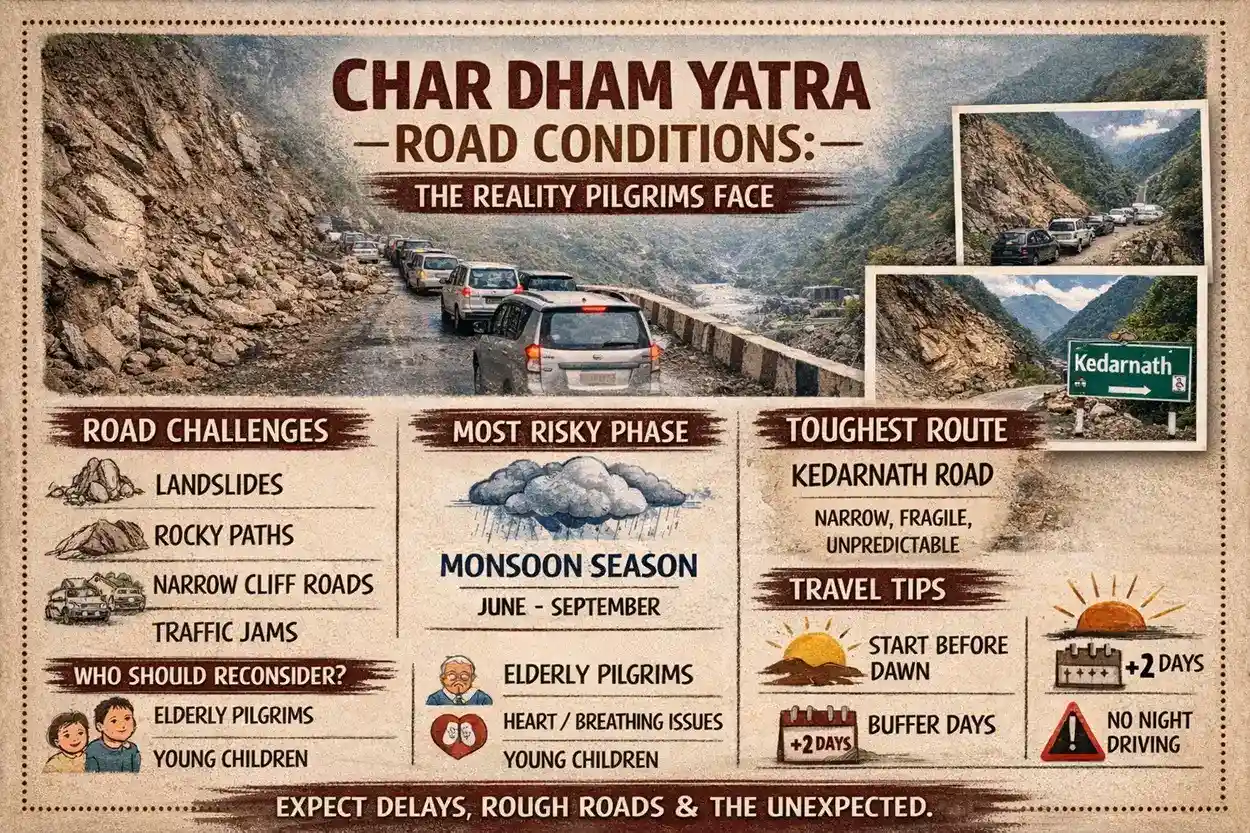
This is widely considered the most difficult road sector of the entire Char Dham circuit.
Here, you face:
- Frequent traffic jams
- Regular landslide zones
- Narrow, congested town crossings
During peak season, traffic blocks near Lambagad, Helang, and Pipalkoti can stretch for hours.
From Sonprayag to Gaurikund, road width reduces further, and traffic pressure increases due to Kedarnath pilgrims, ponies, and local taxis.
After Gaurikund, an 18 km trek leads to Kedarnath temple.
This section demands patience, physical strength, and mental calm.
Joshimath → Govindghat → Badrinath
Compared to Kedarnath route, this stretch is relatively better developed, but remains sensitive.
Wide roads exist in many sections, but landslide-prone zones still occur near Vishnuprayag and Hanuman Chatti.
Traffic congestion increases sharply near Badrinath town during peak darshan hours.
Month-wise Road Condition Reality
May to Early June – Stable but Crowded
This is when roads are at their best condition.
Rainfall is low, landslides are limited, and road surfaces remain stable.
However, this is also peak pilgrimage season. Heavy vehicle movement leads to:
- Long traffic jams
- Slow driving pace
- High driver fatigue
You trade comfort of road condition for pressure of crowd.
Mid-June to September – High Risk Phase
Monsoon changes everything.
During these months:
- Landslides become frequent
- Road washouts occur
- Sudden closures happen
Traffic blocks of 4–6 hours are not uncommon. In extreme cases, pilgrims remain stranded overnight.
This period demands flexibility and mental readiness.
For elderly travellers and families, this phase is best avoided.
October to Early November – Calm and Clear
After monsoon withdraws, roads stabilise again.
Crowds reduce, weather becomes crisp, and driving conditions improve.
This short window offers one of the most balanced travel experiences, provided early snowfall does not arrive.
Real Difficulties Pilgrims Experience
Many travellers underestimate the physical impact of long mountain drives.
Common complaints include:
- Lower back pain
- Knee stiffness
- Headaches from altitude change
- Motion sickness
- Dehydration
- General exhaustion
Long sitting hours, uneven roads, and constant vehicle movement slowly drain energy.
This becomes especially noticeable after the third or fourth day.
Who Should Reconsider Full Road Yatra
A road-based Char Dham journey may not suit:
- Senior citizens above 70
- People with severe cardiac, respiratory, or spinal issues
- Very young children
- Travellers uncomfortable with long driving hours
For them, helicopter services or partial helicopter routes offer a safer alternative.
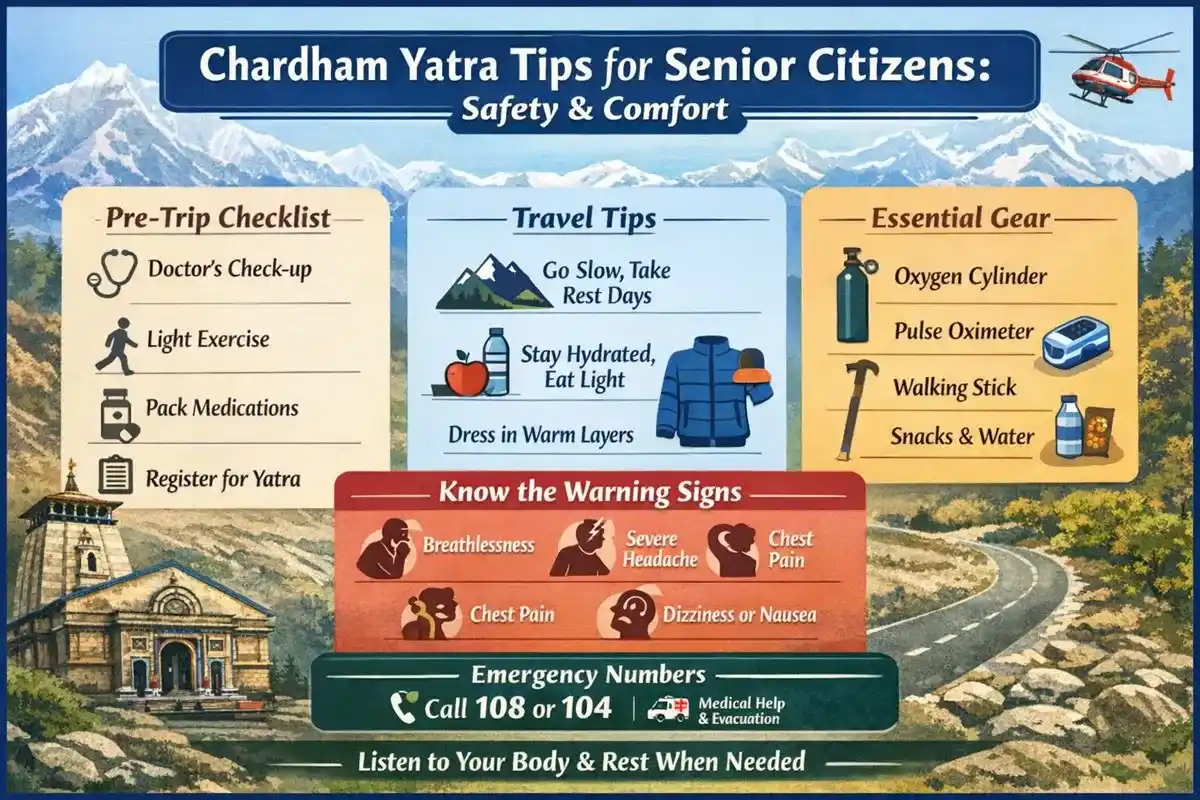
Practical Tips That Actually Help
- Start daily travel early, preferably before sunrise
- Keep at least two buffer days in your itinerary
- Hire experienced local drivers
- Avoid night driving completely
- Carry dry food, ORS, and water
- Monitor daily weather and road advisories
Most importantly, plan emotionally for delays.
Real Risks People Underestimate
- Sudden landslides
- Multi-hour traffic blocks
- Medical emergencies in remote areas
- Driver fatigue
- Rapid weather deterioration
This is why rigid schedules often fail in Char Dham Yatra.
FAQs – Real Traveller Doubts
1. Are Char Dham roads safe for self-driving?
Only for experienced mountain drivers. First-time hill drivers should avoid it.
2. Is sedan suitable for this route?
Possible, but SUVs handle broken patches better.
3. How long do traffic jams last?
From 30 minutes to 6+ hours, depending on season and location.
4. Is night driving allowed?
Strongly discouraged due to visibility and landslide risks.
5. Which route is toughest?
Kedarnath sector is the most unpredictable.
6. Can elderly people complete road yatra?
Only if medically fit and mentally prepared.
7. Are emergency services easily available?
Available, but response time can be slow in remote areas.
8. How many hours do we travel daily?
Usually 7–12 hours depending on route and traffic.
9. Is monsoon travel safe?
High risk due to landslides.
10. Should I trust online road updates?
Local drivers and district advisories are more reliable.
Honest Closing Advice
Char Dham Yatra by road is not about comfort. It is about patience, endurance, and mental preparedness.
If you approach it expecting smooth highways and fixed schedules, frustration is guaranteed.
If you approach it accepting delays, uncertainty, and physical effort, the journey becomes deeply meaningful.
Faith grows strongest when comfort fades.
That is the true rhythm of Char Dham Yatra.