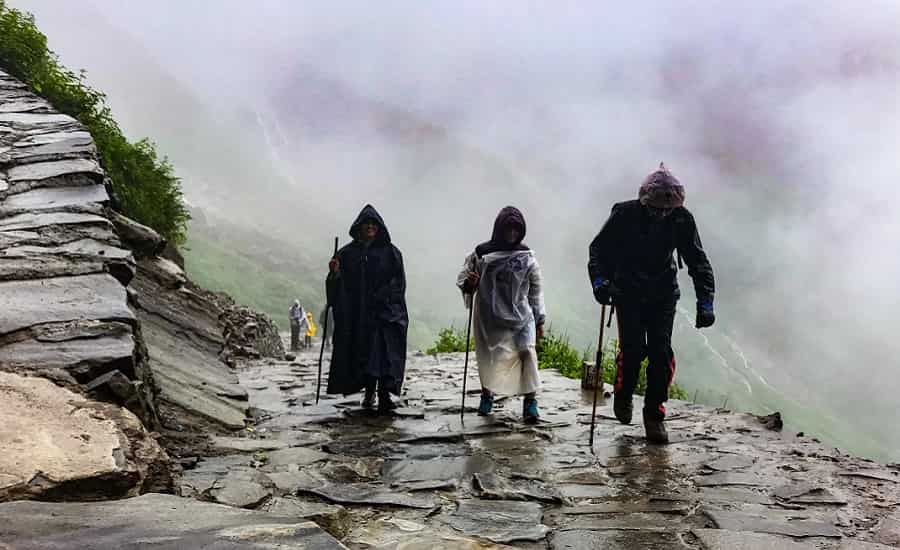
Sri Hemkunt Sahib is one of the most revered and spiritually powerful pilgrimage sites in Sikhism. Situated at an altitude of about 4,632 meters (15,200 feet) in the Garhwal Himalayas of Uttarakhand, Sri Hemkunt Sahib is not only remarkable for its breathtaking natural setting but also for its deep historical, scriptural, and spiritual significance.
The history of Sri Hemkunt Sahib is a unique blend of ancient Hindu references, Sikh scriptural revelations, and modern rediscovery, making it one of the most extraordinary sacred sites in India.
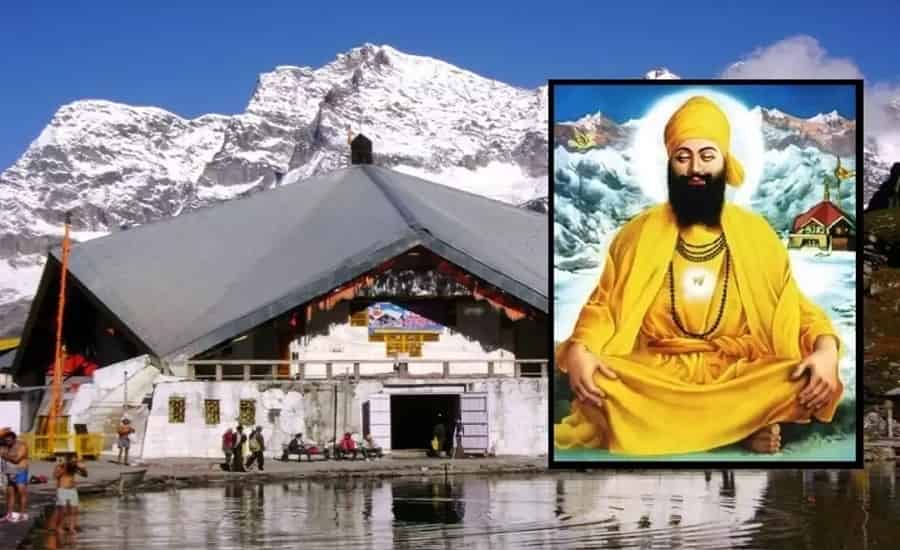
Meaning and Etymology of “Hemkunt”
The name Hemkunt (also spelled Hemkund) is derived from two Sanskrit words:
-
“Hem” meaning snow
-
“Kunt” meaning bowl or lake
Together, Hemkunt means “a bowl of snow”, symbolizing the glacial lake surrounded by seven snow-covered Himalayan peaks. This sacred lake is known as Lokpal Lake, which lies beside the Gurudwara.
Ancient References in Hindu Scriptures
Long before Sri Hemkunt Sahib became a Sikh pilgrimage site, the region found mention in ancient Hindu texts. The Puranas refer to a sacred lake named Lokpal, where great sages performed deep penance.
According to Hindu belief:
-
Lakshmana, the brother of Lord Rama, meditated at Lokpal Lake
-
The area was considered a tapasya bhoomi (land of penance)
-
The surrounding peaks symbolized divine protection
These early references established the area as a spiritually potent Himalayan zone long before Sikh history became associated with it.
Sri Hemkunt Sahib and Guru Gobind Singh Ji
The most important historical and spiritual significance of Sri Hemkunt Sahib comes from its mention in the Dasam Granth, a sacred Sikh scripture attributed to Guru Gobind Singh, the tenth Sikh Guru.
In the composition “Bachitra Natak”, Guru Gobind Singh Ji describes a previous life of intense meditation at a place called Hemkunt Parbat. He writes that before taking birth as Guru Gobind Singh, he meditated at Hemkunt, absorbed in devotion to the Divine.
This revelation firmly established Hemkunt as a spiritually ordained site in Sikh theology, believed to be the place where the Guru attained spiritual realization before his earthly mission.
The Lost Location of Hemkunt
For centuries after Guru Gobind Singh Ji’s time, the exact geographical location of Hemkunt Parbat remained unknown and lost. While the scripture clearly mentioned the name, there was no physical shrine or known pilgrimage route.
The region itself was:
-
Remote and inaccessible
-
Covered in snow most of the year
-
Known only to local shepherds
As a result, Sri Hemkunt Sahib remained a spiritual concept rather than a physical destination for a long time.
Rediscovery in the 20th Century
The modern history of Sri Hemkunt Sahib begins in the early 20th century, with the remarkable efforts of Sant Sohan Singh, a scholar and missionary.
While studying the Dasam Granth, Sant Sohan Singh became deeply inspired to locate the actual Hemkunt described by Guru Gobind Singh Ji. Through years of research, travel, and consultation with local communities, he identified Lokpal Lake as the true Hemkunt Sahib.
In 1934, Sant Sohan Singh reached the site, confirming its geographical features matched the scriptural description—a high-altitude lake surrounded by seven peaks.
Early Pilgrimage and Construction
Once the site was identified, Sikh devotees began organizing pilgrimages despite extreme hardships. Early yatras involved:
-
Long treks through unmarked paths
-
Severe cold and altitude challenges
-
Lack of shelter and food
The first modest Gurudwara structure was built near Lokpal Lake in the 1930s, marking the beginning of organized worship at Sri Hemkunt Sahib.
Development of the Modern Gurudwara
Significant development took place after India’s independence, when the Sikh community came together to establish proper infrastructure.
Key milestones include:
-
Construction of the present star-shaped Gurudwara
-
Creation of a well-defined trekking route from Govindghat
-
Establishment of Ghangaria as a base camp
-
Introduction of langar (free community kitchen) and medical facilities
The Gurudwara’s architecture is symbolic, blending simplicity with spiritual grandeur, standing resilient against extreme Himalayan weather.
Role of the Indian Army and Local Support
Due to the high altitude and harsh terrain, the Indian Army has played a supportive role during the pilgrimage season, assisting with:
-
Route maintenance
-
Emergency medical help
-
Disaster response during bad weather
Local Garhwali communities also contribute significantly by offering porter services, accommodation, and logistical support, making the yatra possible each year.
Sri Hemkunt Sahib Today
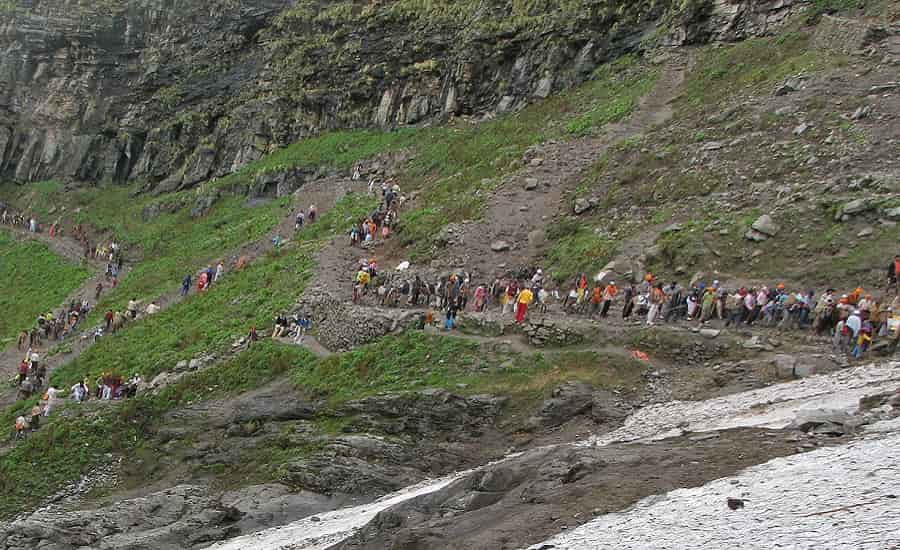
Today, Sri Hemkunt Sahib is visited by hundreds of thousands of devotees annually during its open season (June to September). Despite modern facilities, the yatra remains physically demanding, preserving the spirit of devotion and sacrifice.
Key features of present-day pilgrimage:
-
Daily prayers and kirtan
-
Continuous langar service
-
Medical aid for altitude sickness
-
Eco-sensitive travel practices
The site remains closed during winter due to extreme snowfall, emphasizing respect for nature’s power.
Spiritual Significance in Sikhism
Sri Hemkunt Sahib symbolizes:
-
Renunciation and meditation
-
Spiritual preparation before divine mission
-
Unity of nature and devotion
-
Discipline and humility
For Sikhs, visiting Sri Hemkunt Sahib is not just a journey to a place, but a journey into the Guru’s spiritual past.
Connection with Valley of Flowers
Nearby lies the famous Valley of Flowers National Park, which pilgrims often visit alongside Hemkunt Sahib. The contrast between the serene floral valley and the stark, snow-bound shrine highlights the balance of beauty and austerity in Himalayan spirituality.
Conclusion: A Living History of Faith
The history of Sri Hemkunt Sahib is a powerful testament to faith, perseverance, and divine calling. From ancient Hindu references to Guru Gobind Singh Ji’s spiritual revelation, and from centuries of obscurity to modern pilgrimage, Sri Hemkunt Sahib stands as a symbol of unwavering devotion in one of the world’s harshest landscapes.
Every step taken toward Sri Hemkunt Sahib echoes the footsteps of saints, sages, and devotees who believed that true spirituality requires both inner surrender and physical endurance.
FAQs
Q1. What is the historical significance of Sri Hemkunt Sahib?
Sri Hemkunt Sahib is historically significant as it is believed to be the place where Guru Gobind Singh Ji meditated in his previous life, as mentioned in the Dasam Granth. The site represents deep spiritual preparation before his divine mission.
Q2. Which Sikh scripture mentions Hemkunt Sahib?
Hemkunt Sahib is mentioned in the Dasam Granth, specifically in Bachitra Natak, where Guru Gobind Singh Ji describes intense meditation at Hemkunt Parbat.
Q3. Was Hemkunt Sahib known before Sikh history?
Yes, ancient Hindu scriptures refer to a sacred lake called Lokpal, where sages performed penance. It is also believed that Lakshmana, brother of Lord Rama, meditated here.
Q4. Who rediscovered the location of Sri Hemkunt Sahib?
The modern location of Sri Hemkunt Sahib was rediscovered in the early 20th century by Sant Sohan Singh, a Sikh scholar, after extensive research based on Sikh scriptures and local geography.
Q5. When was the Hemkunt Sahib Gurudwara constructed?
The first simple Gurudwara structure was built in the 1930s, while the present star-shaped Gurudwara was developed gradually after India’s independence with support from the Sikh community.
Q6. Why is Sri Hemkunt Sahib considered a unique pilgrimage site?
Sri Hemkunt Sahib is unique due to its extreme altitude, scriptural importance, Himalayan setting, and its connection to Guru Gobind Singh Ji’s spiritual journey, making it one of the most challenging and revered Sikh pilgrimages.
- Suggested Tour: Hemkund Sahib Tour Packages

Related Posts

Month-Wise Guide to Weather Conditions in Hemkund Sahib
How to Reach Hemkund Sahib