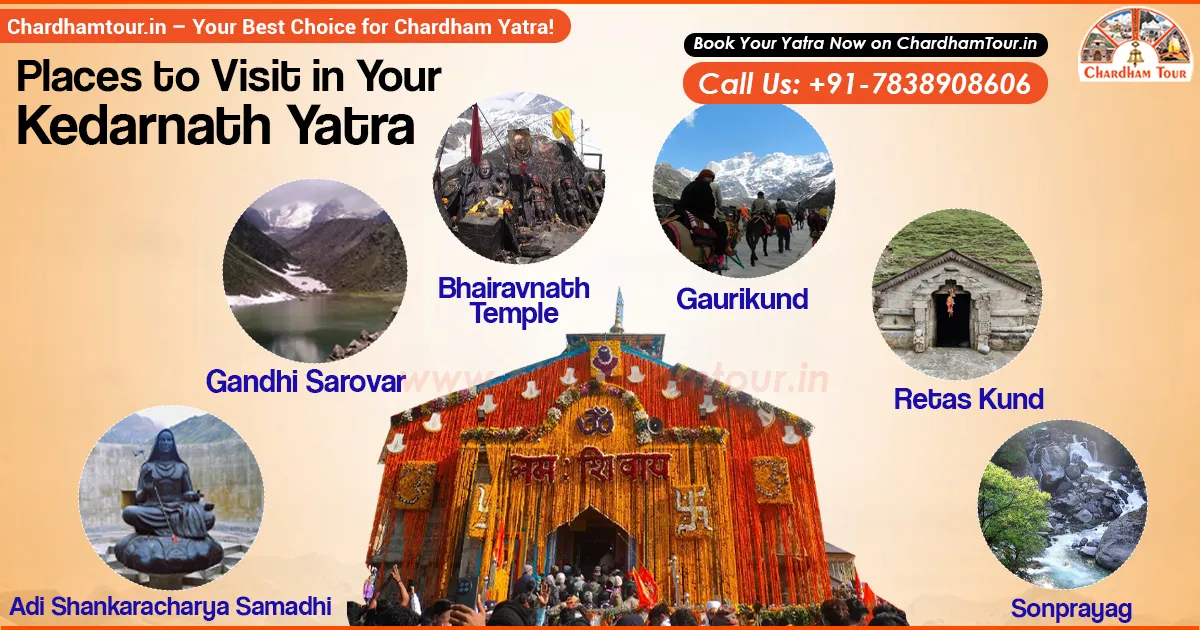
Places to Visit in Your Kedarnath Yatra
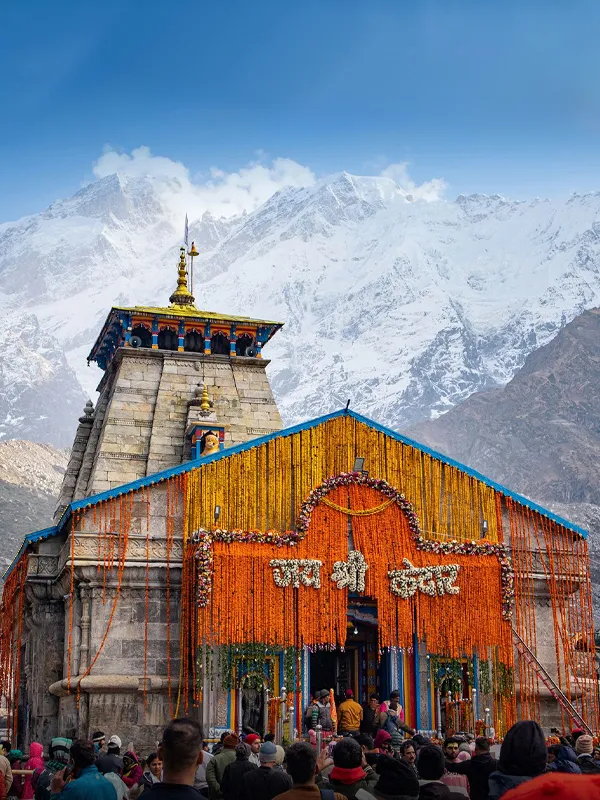
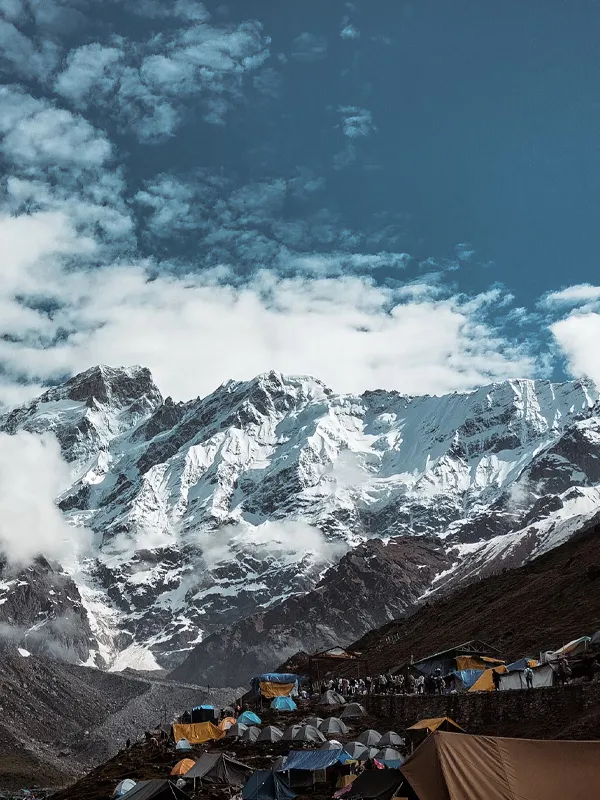
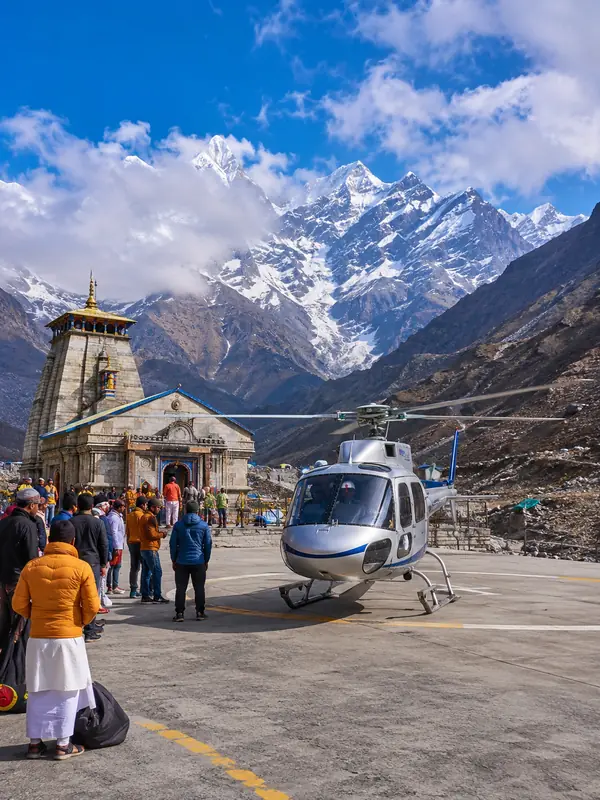
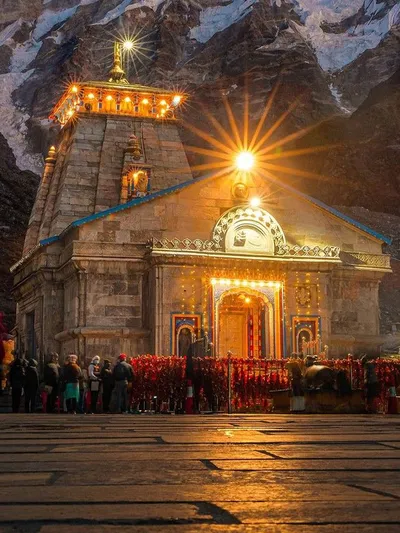
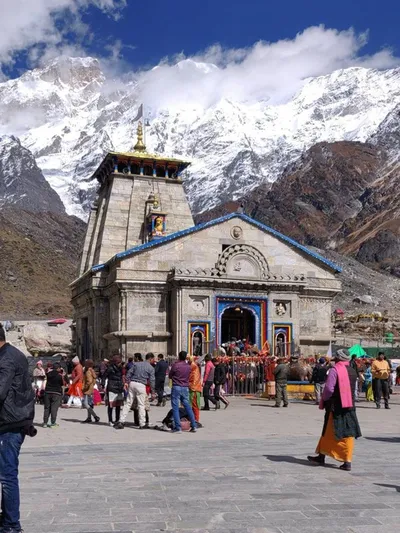
If you're wondering about the best places to visit near Kedarnath beyond the main Darshan, the region has more to offer than most itineraries account for. Kedarnath sits inside the Garhwal Himalayas in Rudraprayag district, framed by the Kedarnath range, at an elevation of roughly 3,583–3,584 metres — the highest-altitude Jyotirlinga among the twelve in India. The Gaurikund–Kedarnath trek itself is commonly reported anywhere from 14 to 19 km depending on the source and exact route measurement; don't take any single figure as exact. But the Yatra isn't just about the main shrine. From glacial lakes and hermit caves around the temple to temple towns and meadows lower down the valley, the wider Kedarnath region rewards anyone willing to add a day or two to their trip.
Quick Overview
| Place | Distance from Kedarnath | Best For | Best Time |
|---|---|---|---|
| Adi Shankaracharya Samadhi | Right behind the temple | Spiritual visit | Kedarnath temple season (roughly May–Oct) |
| Bhairavnath Temple | 800 m | Views, short walk | Temple season |
| Gandhi Sarovar (Chorabari Tal) | 3 km trek | High-altitude lake | May–June, Sept–Oct, weather permitting |
| Vasuki Tal | 8 km trek | Experienced trekkers | May–June, subject to trail conditions |
| Gaurikund | 14–19 km by trek route | Hot spring, trek start | Main yatra season |
| Sonprayag | ~19–20 km, 4–5 km before Gaurikund | River confluence, stopover | Main yatra season |
| Ratus Kund | Local attraction near the helipad; exact distance not officially documented | Quiet local stop | Temple season |
| Triyuginarayan Temple | 14 km by road + 5 km on foot from Sonprayag | Mythology, Shiva-Parvati wedding site | Spring–autumn |
| Guptkashi | En route to Kedarnath, elevation 1,319 m | Overnight stop, temple town | Year-round, winter conditions possible |
| Ukhimath | 13 km from Guptkashi, elevation 1,311 m | Winter seat of Kedarnath | Year-round |
| Deoria Tal | Via Sari village, near Ukhimath | Reflection lake, short trek | Spring–autumn |
| Chopta & Tungnath | Beyond Ukhimath, Chopta at ~2,900 m | Highest Shiva temple, trekking | May–June, Sept–Nov |
Places to Visit Near Kedarnath
1. Adi Shankaracharya Samadhi
- Located right behind Kedarnath Temple
- Traditionally believed to mark where Adi Shankaracharya took samadhi
- Offers a quiet view over the temple complex
This is where the philosopher Adi Shankaracharya is traditionally said to have taken samadhi, at a young age, after reviving temple worship across India. Hindu tradition credits him with organising the Char Dham Yatra circuit and with founding several mathas to spread Advaita Vedanta. Because it sits directly behind the main shrine, most pilgrims visit it as a natural extension of their Kedarnath darshan.
2. Bhairavnath Temple
- 800 metres from Kedarnath Temple
- Dedicated to Bhairavnath, considered the protector deity of Kedarnath
- Good viewpoint over the valley
Perched slightly uphill from the main temple, this shrine is dedicated to a fierce form of Shiva believed to guard Kedarnath through the six winter months when the main temple is closed. The short uphill walk is worth it for the view alone — the Kedarnath valley opens up below in a sweep of green slopes and rolling hills.
3. Gandhi Sarovar (Chorabari Tal)
- 3 km trek from Kedarnath
- Where Mahatma Gandhi's ashes were partly immersed
- Sits at around 3,900 metres, framed by the Kedarnath and Kirti Stambh peaks
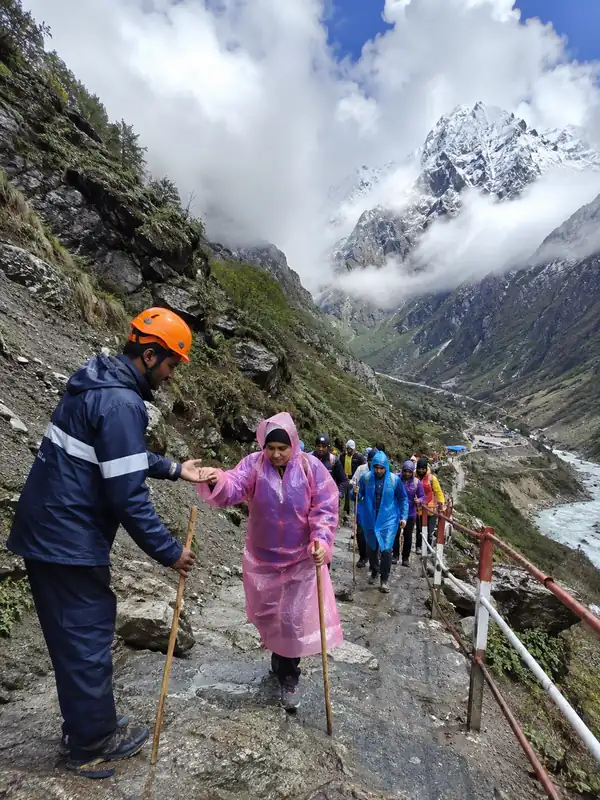
Also known as Chorabari Tal after the glacier that feeds it, this high-altitude lake is a popular half-day trek from the main temple. The path runs through forest cover with a waterfall en route, and the lake itself sits in one of the most dramatic settings in the whole Kedarnath valley.
4. Vasuki Tal
- 8 km trek from Kedarnath
- High-altitude lake at approximately 4,135–4,150 metres (official sources vary by about 15 m)
- Associated with Lord Vishnu's ritual bath on Raksha Bandhan
Vasuki Tal is further and higher than Gandhi Sarovar, ringed by views of the Chaukhamba peaks. Tradition holds that Lord Vishnu bathed here on Raksha Bandhan, which gives the lake its name and its religious weight. This isn't a casual walk — the route involves continuous ascent at high altitude, and it's better suited to fit trekkers with some prior high-altitude experience than to a family outing.
5. Gaurikund
- Base camp for the Kedarnath trek, at approximately 1,981–1,982 metres
- Dedicated to Goddess Parvati
- Known for its natural hot-water spring and the Gauri Temple
Gaurikund is where the actual trek to Kedarnath begins, and most pilgrims stop to bathe in its hot-water spring before setting off. Hindu tradition holds this as the spot where Parvati performed penance to win Shiva's favour — a fitting start to a journey that ends at his shrine.
6. Sonprayag
- About 4–5 km before Gaurikund; roughly 19 km from Kedarnath by the pilgrimage route, per District Rudraprayag
- Sits at about 1,829 metres, at the confluence of the Mandakini and Basuki rivers
- Close to Triyuginarayan Temple
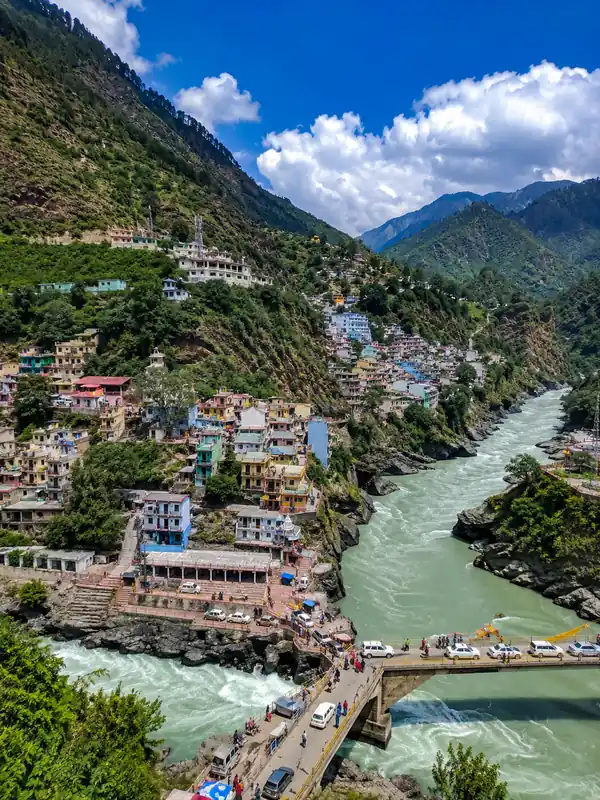
Sonprayag is the last point private vehicles can usually reach before Gaurikund, and most yatris pass through it as a stopover — though onward transport arrangements can change from season to season, so it's worth confirming current arrangements before you travel. The name comes from the confluence — "prayag" — of two rivers here, and the surrounding Himalayan views make it worth more than a quick photo stop if you have the time.
7. Ratus Kund
- A small freshwater reservoir near the Kedarnath helipad
- Also called Ret Kund locally
- Houses a small Shiva idol inside a rocky structure
This is a lesser-known, lightly documented spot — online sources give inconsistent figures for its exact distance and elevation above Kedarnath, and we couldn't find an official government or tourism source confirming a precise number, so we're not going to invent one here. Treat it as a local point of interest worth asking about once you're in Kedarnath, rather than something to plan a fixed itinerary slot around.
8. Triyuginarayan Temple
- 14 km by road plus a 5-km walk from Sonprayag, per District Rudraprayag — sits at roughly 1,980 metres
- Believed to be the site of Shiva and Parvati's wedding
- Home to the Akhand Dhuni, an eternal flame said to have burned since the wedding
Triyuginarayan temple is a side trip, not a stop directly on the Kedarnath route, so budget an extra half-day for it rather than treating it as something you'll pass on the way. Local tradition holds that Vishnu presided over the wedding of Shiva and Parvati here, and the eternal flame in front of the sanctum is said to have witnessed the ceremony. The temple's stone architecture echoes Kedarnath's own style.
9. Guptkashi
- A major stop on the Kedarnath route, sitting at about 1,319 metres
- Home to the ancient Vishwanath Temple
- A convenient overnight stop before the much higher elevation of Kedarnath
Guptkashi works well as a stopover, with better hotel options than the smaller towns closer to Kedarnath — staying a night here eases the jump in altitude somewhat, though one overnight stop shouldn't be treated as a guarantee against altitude discomfort further up. The Vishwanath Temple here is dedicated to Shiva and is believed, in local tradition, to be where Shiva hid from the Pandavas before eventually revealing himself at Kedarnath.
10. Ukhimath
- 13 km from Guptkashi and 41 km from Rudraprayag, at an elevation of about 1,311 metres
- Winter seat of the Kedarnath deity at the Omkareshwar Temple
- Significant year-round, not just during the yatra season
When Kedarnath closes for winter, the deity is brought down to Omkareshwar Temple in Ukhimath, where worship continues through the cold months. That's what makes Ukhimath worth a stop even outside the main pilgrimage window, unlike most of the other places on this list.
11. Deoria Tal
- Reached via Sari village, roughly 10 km from Ukhimath, followed by a short trek — treat this as approximate, since sources vary on the exact trek length
- A reflection lake known for mirroring the Chaukhamba peaks on clear days
- Popular with photographers and casual trekkers
Deoria Tal isn't directly on the Kedarnath route, but it's close enough to add on if you're already in the Ukhimath area. The final stretch from Sari is short and manageable, and the lake's calm surface on a still morning is one of the better photo opportunities in the region.
12. Chopta & Tungnath
- Reached via Ukhimath, further along the road; Chopta itself sits at roughly 2,900 metres
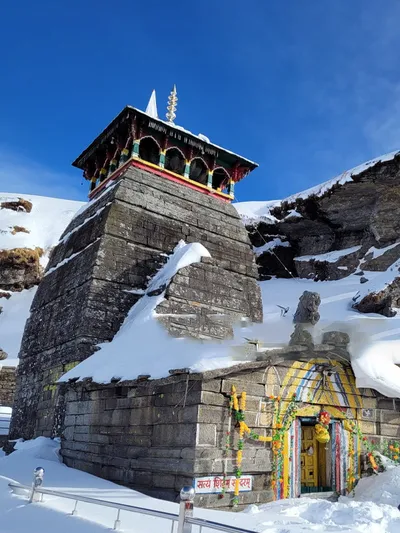
- Home to Tungnath, the highest of the Panch Kedar temples at 3,680 metres
- Chandrashila summit trek starts from here
Chopta is known for its alpine meadows, forested slopes, and views of the surrounding Himalayan peaks. Tungnath — reachable by a moderate trek from here — is one of the highest Shiva temples in the world. Many travellers pair a Kedarnath yatra with a side trip here, especially if they're interested in trekking rather than just darshan.
Getting Around: Practical Tips
- Book stays early. Guptkashi and Sonprayag have the widest range of hotels; rooms closer to Kedarnath fill up fast in peak season (May–June, September–October).
- Watch the altitude. Vasuki Tal and Gandhi Sarovar are both above 3,800 m — take it slow, especially if you've just arrived from lower altitude.
- Start early for day treks. Mountain weather can change quickly, so an early start for Gandhi Sarovar or Vasuki Tal gives you a better chance of getting back before conditions shift.
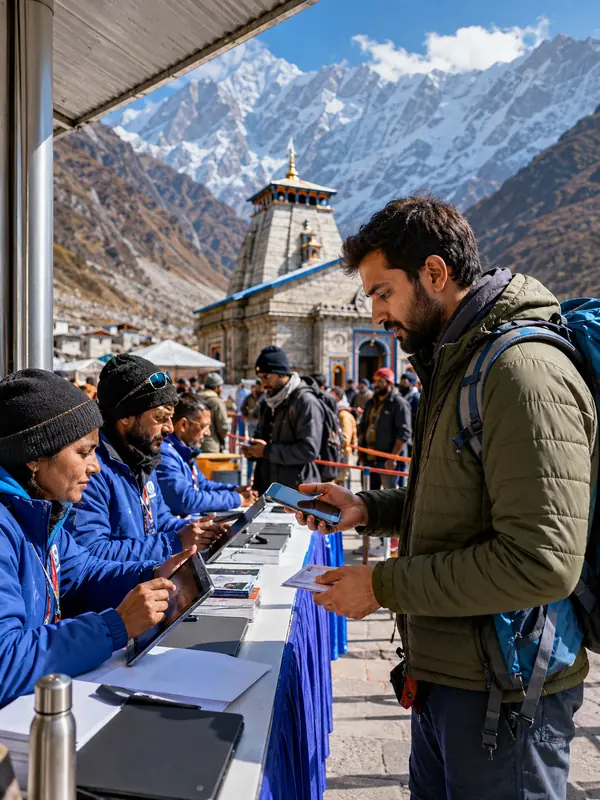
- Carry some cash. Digital payments are widely accepted in most towns now, but ATM and network reliability drop off beyond Guptkashi.
- Check road status. The Sonprayag–Guptkashi stretch can see landslide-related closures during monsoon; check current conditions before travelling in July–August.
Frequently Asked Questions
Q1. How many places can I realistically cover along with Kedarnath darshan?
Adi Shankaracharya Samadhi and Bhairavnath Temple can be covered in the same day as your darshan. Gandhi Sarovar and Vasuki Tal need a half-day to full-day trek each.
Q2. Is Vasuki Tal suitable for beginners?
Not really. It's a high-altitude trek with continuous ascent, better suited to physically fit travellers with some trekking experience than to a casual family outing. Check current trail conditions before you set out.
Q3. Can I visit Triyuginarayan and Kedarnath in the same trip?
Yes, but treat it as a separate side trip rather than a stop "on the way" — it's about 14 km by road plus a 5-km walk from Sonprayag, so budget an extra half-day.
Q4. What's the best time to visit Chopta and Tungnath along with Kedarnath?
May–June and September–November, when the road is clear and the weather is stable enough for both the temple visit and the trek to Tungnath.
Q5. Is Ukhimath worth visiting outside the Char Dham season?
Yes. Since the Kedarnath deity moves to Ukhimath for winter, it's one of the few places in this region worth visiting even when the main temple is shut.
Q6. Do I need a guide for Gandhi Sarovar or Vasuki Tal?
It depends on current local route rules, which we'd recommend confirming on the ground. For Vasuki Tal especially, a local guide is a sensible choice given the altitude and less-trodden path.
Q7. How far is Deoria Tal from the main Kedarnath route?
It's a detour through Ukhimath and Sari village, not directly on the Gaurikund–Kedarnath trail, so it needs a separate half-day if you want to include it.
Q8. Is Sonprayag the same as Gaurikund?
No — they're separate towns about 4–5 km apart. Sonprayag is where private vehicles usually stop; Gaurikund is the actual base camp for the Kedarnath trek.
Conclusion
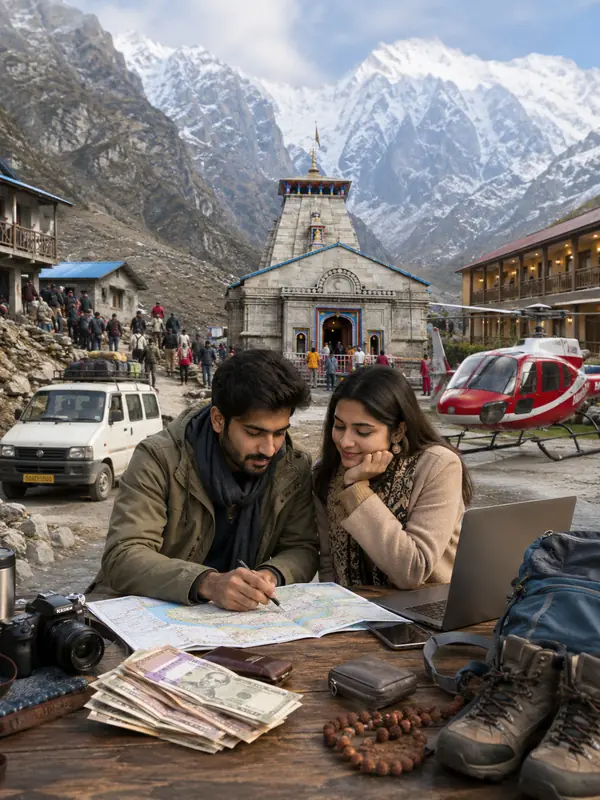
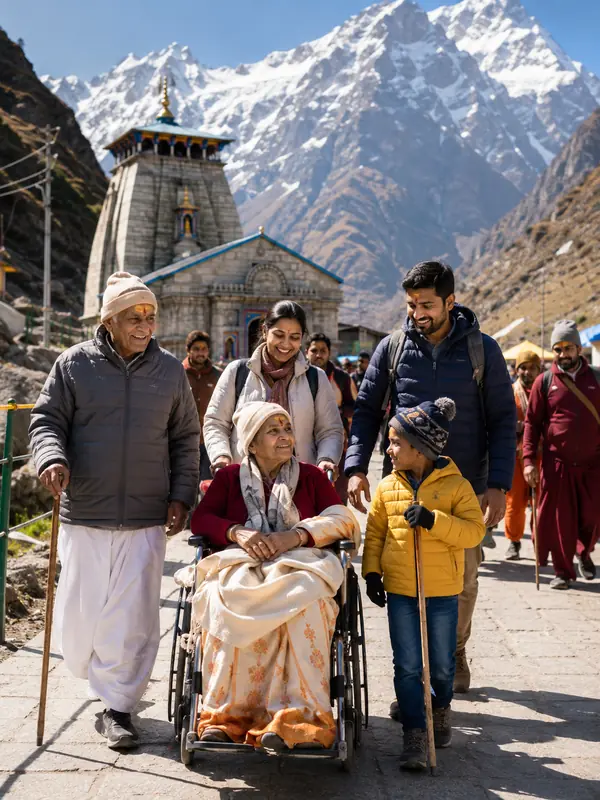
Kedarnath's spiritual weight comes from the main temple, but these places to visit near Kedarnath — from Gandhi Sarovar's high-altitude stillness to Ukhimath's year-round significance — give the yatra more depth than a single darshan can. Pilgrims with time to spare should build in at least one extra day for Guptkashi, Ukhimath, or the Triyuginarayan detour; trekkers can add Vasuki Tal or the Chopta-Tungnath side trip. Either way, plan the extra stops before you leave rather than deciding on the road, since accommodation and transport both get tighter the closer you get to peak season.
Kedarnath Travel Guide
Kedarnath Travel Packages
Important Safety Notice
Beware of Fake Char Dham & Kedarnath Helicopter Booking Websites
Fake websites, WhatsApp accounts and advertisements may impersonate genuine travel companies or helicopter operators. Always verify before paying.
Chardhamtour.in is not the official website of the Uttarakhand Government. We are a registered travel agency with Uttarakhand Tourism and provide travel-related services. For Chardham Yatra registration, visit registrationandtouristcare.uk.gov.in for pooja booking, visit badrinath-kedarnath.gov.in for Kedarnath helicopter tickets, visit heliyatra.irctc.co.in for Uttarakhand tourism info, visit uttarakhandtourism.gov.in for Karnataka government subsidy, visit sevasindhuservices.karnataka.gov.in.
Chardhamtour.in aims to provide helpful information, latest updates about Chardham Yatra, and services related to tourism in Uttarakhand.